







































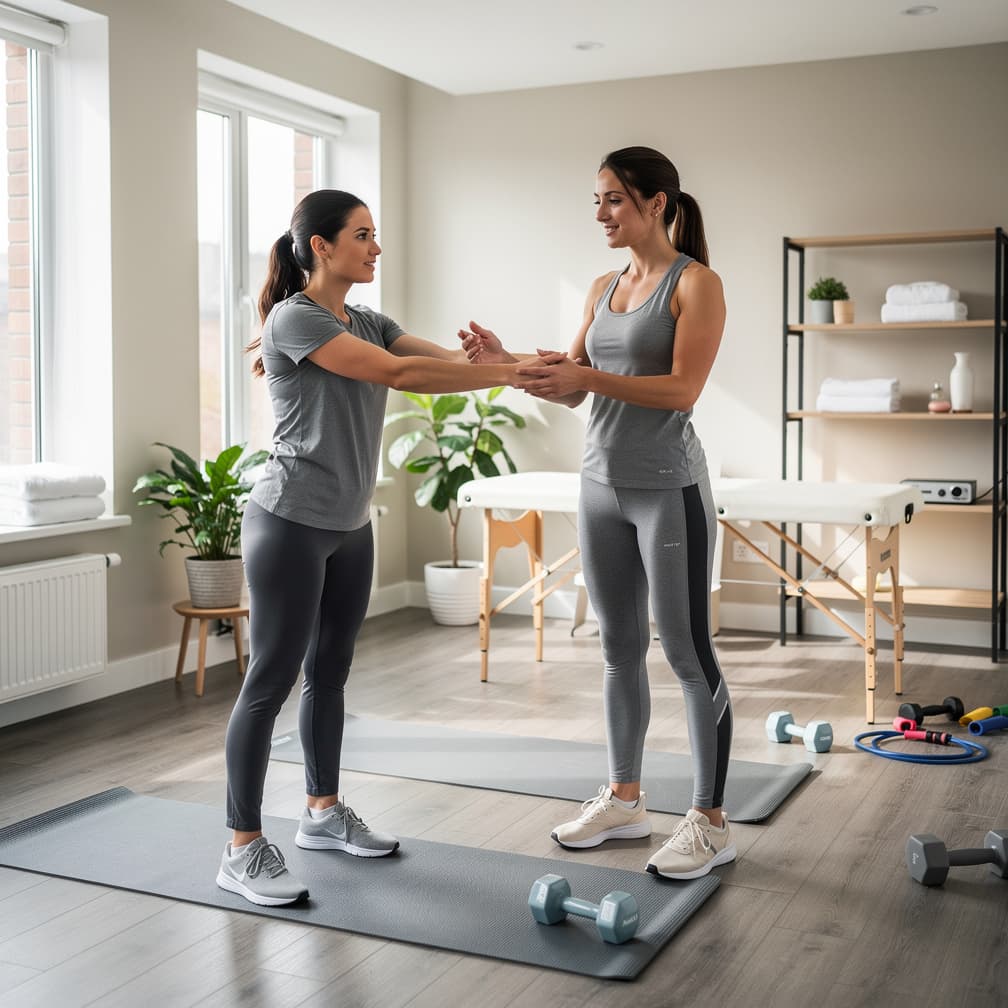

Setting up in a client's living room means moving a bench past a television and a glass table, and the damage claim that follows has nothing to do with fitness. Third-party property damage is a real exposure in this trade, sitting right beside the injury risk everyone thinks about first. Personal trainer insurance in Birmingham gets bought for the torn rotator cuff and then earns its keep on a cracked floorboard. A homeowner can demand repair costs from you directly, and the landlord behind a rented studio in Birmingham can hold your deposit while it gets sorted. Neither conversation goes anywhere pleasant without a policy number to hand over. What follows explains what each line is for and, just as usefully, where it stops.
What Makes Birmingham Different
A storm week does not damage a trainer's business the way it damages a roofer's, and that fools people. What it does is empty the calendar, because clients cancel outdoor sessions and skip the drive to a gym. Lost sessions are lost revenue, and a liability form has nothing at all to say about that. Property damage is a separate story, and a closed facility is different again from your own gear getting soaked. If the studio you rent in Birmingham floods, its policy answers for the building and yours may answer for your racks. The seam between those two is where trainers discover what a stated address really means. Ask whether your equipment is insured at a location you do not own, or only at home. Participating carriers in Alabama answer that differently, which is worth confirming before a wet spell rather than during one.
Local Risk Factors in Birmingham
Severe storms hit this trade sideways. A tornado does not have to touch your street to kill the power in the building you rent, and a gym with no lights runs no sessions. Debris, a failed roof, and broken glass can leave your racks and mats sitting in a space nobody may enter for days. Commercial Property may respond to your own business property damaged by wind, subject to how the policy describes the location and the peril. What it typically will not do is refill the week of sessions lost while the doors were shut. Ask what a policy says about property at a location you rent rather than own in Birmingham and elsewhere across Jefferson County.
What Coverage Does a Personal Trainer in Birmingham Need?
Professional Liability
A client says the block you wrote aggravated an old knee, and a conversation turns into a demand letter. That argument is about judgment, and Professional Liability is the line commonly aimed at it, including defense costs when the complaint turns out to have no merit. It typically will not answer a slip on a wet floor, which is a separate exposure with a separate home.
Example: Eight weeks into a rehab-focused block, a client's shoulder gives out and their attorney argues the progression was too aggressive. Professional Liability may pick up defense costs and any settlement, subject to the policy limit.
General Liability
Gyms, studios, building managers, and event organizers ask for this one by name before they let you work, and the certificate they want is proof it exists. General Liability generally responds to third-party bodily injury and property damage: the client who falls, the mirror your bench cracked. Arguments about your programming judgment usually sit elsewhere.
Example: You slide a rack back against a wall and take a chunk out of a client's hardwood floor. The homeowner wants it repaired, and General Liability may respond to that property damage claim.
Commercial Property
Racks, benches, adjustable dumbbells, mirrors, screens, and the laptop your whole client roster lives on are business property, and a personal policy at the same address commonly excludes them. Commercial Property is intended to answer for that gear after fire, theft, vandalism, or storm damage, subject to where the form says the property lives. Rising water is the standard exclusion, priced on its own.
Example: Someone forces the door of your rented studio in Birmingham overnight, and the dumbbell set and two screens are gone by morning. Commercial Property might answer for the replacement cost, after the deductible.
Business Owners Policy
Buying liability and property separately works; putting them on one form often costs less. A Business Owners Policy packages the two, which suits a trainer with a fixed space and serious equipment inside it. Whether the package beats standalone quotes depends on your property values and the limits your facility agreements demand.
Example: A storm strips the roof off the studio you rent in Birmingham, soaking your mats and screens, while a client separately claims a fall in the doorway. One Business Owners Policy is meant to take both sides of that.
How Much Does Personal Trainer Insurance Cost in Birmingham?
Personal Trainer Insurance is a bundle of separate policies, priced separately. The ranges below are typical figures for Birmingham for each line; a quote prices each one against your own operations.
| Coverage | Typical range | What moves your price |
|---|---|---|
| Professional Liability Insurance | $40 - $130 per month | The services you actually perform, annual revenue or billed fees, limit and retention selected |
| General Liability Insurance | $50 - $150 per month | Industry and risk classification, annual revenue, number of employees |
| Commercial Property Insurance | $45 - $150 per month | Building value and construction type, roof age and condition, fire protection class |
| Business Owners Policy Insurance | $70 - $200 per month | Annual revenue and industry class, building and contents values, square footage and building age |
Prices shown are general estimates, not guaranteed rates or quotes. Your actual premium will depend on the insurer, coverage selected, business details, location, claims history, and other underwriting factors. Learn about our pricing methodology.
What Are the Insurance Requirements for a Personal Trainer in Birmingham?
Workers' comp is generally required once you have 5 or more employees. Alabama generally requires employers to carry workers' compensation at that point. Common exemptions include sole proprietors, partners, and farm laborers. Confirm current thresholds with your state's workers' compensation agency before you hire.
Flood damage is typically excluded from standard policies. Standard commercial property and builders-risk-type policies typically exclude flood damage. Flood exposure varies address by address, so check your premises in FEMA's Flood Map Service Center before deciding; if you sit in a mapped flood zone, a separate policy through the National Flood Insurance Program is the usual starting point.
Where to verify licensing and coverage rules. The Alabama Department of Insurance publishes consumer guidance and current insurance requirements for Alabama businesses. When a contract or lease demands specific wording, the Alabama Department of Insurance's guidance is the authoritative place to check.
Get Your Personal Trainer Quote in Birmingham
Compare rates from multiple carriers. Free quotes, no obligation.
Operating in Birmingham
- Your premises is a car trunk for most of the week. Kettlebells, bands, and a folding bench live back there between sessions, and a policy tied to a stated address may not follow them.
- A client's living room is a worksite with a glass coffee table in it. Move a bench wrong and the damage claim comes from a homeowner in Birmingham who never signed anything with you.
- Complaints about programming arrive in writing, weeks after the last session, usually from someone who has stopped answering your texts. By then the argument is about your judgment rather than your cueing.
- A property manager in Birmingham can hold a start date until your certificate names the building exactly the way their contract spells it. One misspelled holder name resets the whole request.
How to Buy: Advice for Birmingham Owners
Certificates are the part of this that eats time, so set the system up once and stop improvising. Write down the exact legal name and address of every gym, studio, building, and employer that has ever asked you for proof, plus the renewal date on your policy. Ask a carrier up front who may request a certificate on your behalf and whether naming a facility as additional insured carries a fee. Some policies cap how many holders they will carry, which matters if you work half a dozen rooms across Jefferson County. General Liability is what those requests usually turn on, though a Business Owners Policy can satisfy the same wording when it is written properly. Check the Alabama Department of Insurance's guidance before deciding what limit to carry. Then compare what participating carriers quote for a trainer working Birmingham on identical terms.
FAQ
Personal Trainer Insurance in Birmingham: FAQ
Generally no. A liability form is built around claims other people bring against you, and empty slots are lost revenue rather than a claim. Property coverage might respond when damage hits business property you own, subject to the cause and the location. What no policy does is refill a calendar. Deposits and cancellation terms in your own client agreements are the practical tool there.
It depends on how the policy defines your services and where they may be performed. Some forms tie coverage to a listed location, and a park in Birmingham sits nowhere near a studio address. Group work also puts more bodies in motion at once, which underwriters price differently from one-on-one work. Say plainly on the application that you run outdoor group sessions, or the answer may arrive at claim time.
Per-occurrence caps what a policy may pay on one client's incident. Aggregate is the ceiling across the whole policy period, no matter how many incidents land inside it. A trainer with a full book has more chances for a second claim before the term resets, which is when an aggregate stops being theoretical. Ask for both figures on every quote, since a thin aggregate hides behind a friendly per-occurrence number.
Remote programming removes the slip and the dropped plate, and it keeps the argument about your judgment. A client who follows your written plan and reports an injury can still bring a claim about the plan itself. Many forms define professional services narrowly, and remote coaching may or may not sit inside that definition. Get the definition in writing before assuming the exposure left with the gym.
Standard property forms typically exclude flood, so the answer is usually no without a separate purchase. Water from a burst pipe is a different peril and is often treated differently from rising water outside the door. That distinction decides claims, and it surprises people every year. If your space in Jefferson County sits low or near water, price the separate flood option rather than assuming the property section handles it.
Their policy is built to answer for their business. An independent contractor is a separate party, and a claim from your client generally lands on you regardless of whose floor it happened on. That is exactly why facilities ask outside trainers for proof of their own coverage. Assume the exposure is yours alone unless a contract says in writing that you have been named on theirs.
Sources
- 1.Alabama Department of Insurance(Alabama Department of Insurance publishes consumer guidance for insurance buyers.)
- 2.FEMA / FloodSmart(Flood coverage is typically purchased separately; FEMA administers the National Flood Insurance Program.)


