
Where fitness studios get sued or hit with claims
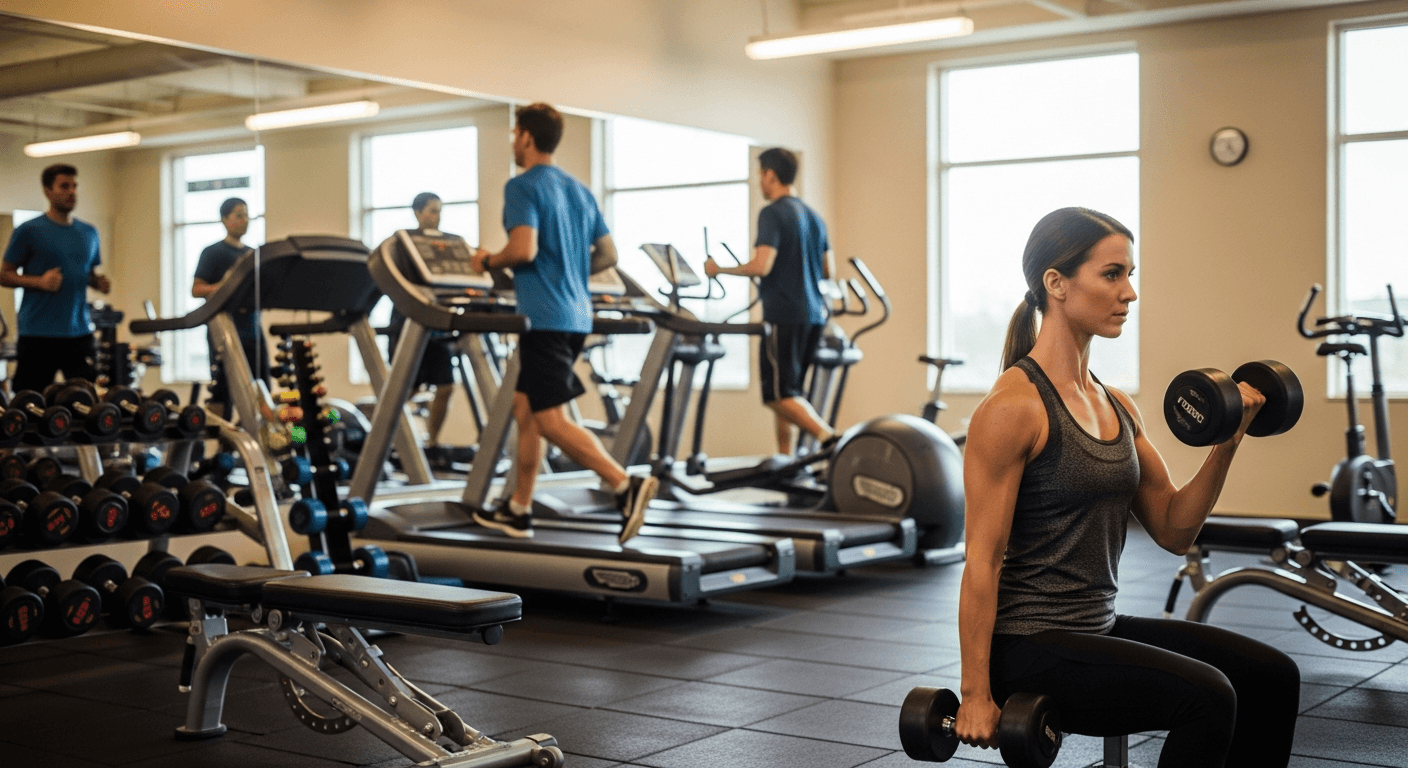
Fitness studios create injury exposure in several places at once: the workout floor, locker or restroom areas, entryways, stairs, parking access, and anywhere staff demonstrate movement or correct form. A member can slip on sweat near a mat station, trip over a resistance band left in a walkway, strain a shoulder during a coached class, or claim your staff pushed them past safe limits after disclosing a prior condition. Those are not abstract risks. They are the ordinary ways a studio turns a busy class schedule into a liability claim.
The Insurance Information Institute notes that a lawsuit over injury or property damage can financially devastate a business, and that defense costs alone can be significant, so your first buying decision is whether your limits match the size of a serious member injury claim and the legal expense of defending it. III also points to common negligence triggers such as unsafe premises, inadequate training, and failing to provide safe-use directions, which maps directly to fitness operations where cueing, spotting, equipment orientation, and floor checks happen every day.
That means your insurance review should start with operations, not price. List every class format you run, whether instructors are employees or independent contractors, whether you offer one-on-one training, whether minors attend classes, and whether members use equipment before staff orientation. Then compare that list against your lease requirements, client waivers, and incident procedures. If a quote treats your studio like a quiet office tenant, it is probably missing how people actually get hurt in your business.
What insurance a fitness studio usually needs
Most fitness studios start with a core stack: general liability insurance, professional liability insurance, and commercial property insurance. Each one answers a different part of the loss picture, and problems start when an owner assumes one policy does the whole job.
General liability is the base layer for third-party bodily injury, property damage, and related legal defense tied to your premises and routine operations. If you are comparing options, start with general liability insurance, then check how the quote handles participant injury allegations, guest property damage, and any landlord insurance requirements. III says the usual small-business way to buy liability coverage is through a Businessowners Policy because that is typically the most efficient and least expensive structure. III also explains that BOP liability coverage responds to damages you are legally obligated to pay for bodily injury, property damage, or personal and advertising injury, subject to policy limits and deductible.
Professional liability belongs in the conversation because fitness instruction is advice and supervision, not just premises exposure. If a client says your instructor gave unsafe modification guidance, missed obvious distress, or designed a session that caused harm, that allegation may be framed around professional judgment rather than a simple slip-and-fall.
Commercial property matters because studios invest heavily in mirrors, flooring, front-desk systems, sound equipment, reformers, bikes, weights, mats, and tenant improvements. If your policy only protects a narrow slice of that property, a shutdown after a building incident becomes much harder to absorb. Ask each quote to separate building-related responsibility, business personal property, and improvements and betterments so you can see what is actually insured.
Why property details matter more for studios than many owners expect
A fitness studio depends on usable space and functioning equipment. If the floor is unsafe, the mirrors are broken, the sound system is down, or key training equipment is damaged, you may not be able to run classes even if the business still technically exists. That is why property insurance deserves the same attention you give liability limits.
III warns that business property can be damaged by many causes beyond fire, including flooding, embezzlement, electrical surges, sprinkler activation, and computer viruses. For a studio, that means the loss review should go beyond obvious gym equipment. Include point-of-sale hardware, scheduling systems, member management computers, branded inventory, office contents, and any specialized flooring or build-out you paid for under the lease. III also states that without appropriate insurance, property losses can easily cause the entire enterprise to fail, so the practical question is not whether you own expensive items, but whether a partial shutdown would interrupt payroll, rent, and member retention long enough to threaten the business.
Flood deserves a separate check because many owners assume water damage is handled somewhere in the package. FEMA says flood insurance is separate, and can cover buildings, contents, or both. If your studio is in a flood-prone area, below grade, near drainage issues, or in a center with a history of water intrusion, ask specifically whether you need separate flood coverage rather than assuming the property form picks it up.
Before you bind coverage, walk the studio room by room and build a property schedule from what it would cost to replace what keeps classes running.
What drives fitness studio insurance cost
Insurance cost for a fitness studio usually moves with exposure, not just square footage. Carriers and brokers will look at what you teach, how intense the classes are, whether instruction is hands-on, how many instructors work under your brand, how often members use equipment, how well the premises are maintained, and whether your loss controls are documented. A studio built around low-impact guided sessions presents a different profile than one running packed, high-intensity classes with rapid station changes and frequent first-time participants.
Your claims history matters because it signals whether the operation is controlled or chaotic. III says businesses that invest in risk reduction and risk control tend to have fewer claims, and firms with a good claims record often find coverage more easily and at a lower price. In practice, that means cleaner quotes tend to follow from operational discipline: written equipment checks, documented cleaning and floor inspection routines, instructor onboarding, incident reporting, participant screening, and clear class capacity rules.
Staff structure also affects the quote. If you use independent contractors, ask whether their work is contemplated by the policy and whether the insurer expects certificates of insurance from each instructor. If you sell retail products, host pop-up events, or stream classes online, make sure those activities are disclosed up front rather than discovered after a claim.
The best way to control cost is to present a studio that is easy to underwrite. Prepare a clean description of class types, payroll or contractor setup, prior claims, safety procedures, and property values. That gives you a more accurate quote and reduces the chance of buying a policy that looks affordable only because key exposures were left out.
Gym Insurance is a bundle of separate policies, priced separately. The ranges below are typical figures nationally for each line, except workers compensation, which is rated per $100 of payroll; a quote prices each one against your own operations.
| Coverage | Typical range | What moves your price |
|---|---|---|
| General Liability Insurance | $130 - $460 per month | Industry and risk classification, annual revenue, number of employees |
| Commercial Property Insurance | $85 - $380 per month | Building value and construction type, roof age and condition, fire protection class |
| Professional Liability Insurance | $65 - $250 per month | The services you actually perform, annual revenue or billed fees, limit and retention selected |
| Workers Compensation Insurance | $0.75 - $2.74 per $100 of payroll | Employee classification codes, total annual payroll, experience modification rate |
Prices shown are general estimates, not guaranteed rates or quotes. Your actual premium will depend on the insurer, coverage selected, business details, location, claims history, and other underwriting factors. Learn about our pricing methodology.
How to compare quotes for a fitness studio
A useful quote comparison for a fitness studio is not just premium against premium. You need to compare assumptions. Start by checking the named operations and class formats on each application. If one quote describes your business broadly and another specifically lists personal training, group instruction, equipment-based sessions, and retail sales, the broader one may be cheaper for the wrong reason.
Next, compare the coverage stack line by line. Confirm whether general liability, professional liability, and commercial property are all included or whether one of them is missing and would need to be added separately. Review liability limits, deductibles, property valuation method, and any exclusions that affect participant injury, instructor services, water damage, or damage to tenant improvements. If your lease requires additional insured status or specific liability limits, verify that before you buy, not after the landlord rejects your certificate.
Then test the quote against real claim scenarios. Ask how the policy would respond if a member slips entering class, if an instructor is accused of unsafe coaching, if a reformer or bike is damaged by a covered event, or if a sprinkler discharge shuts down a room. Scenario testing exposes gaps faster than reading policy labels alone.
Finally, compare the insurer's underwriting questions with your own records. If you cannot support your answers with incident logs, maintenance routines, contractor certificates, or property inventories, fix that before binding. A quote is strongest when the application matches how the studio actually operates day to day.
Mistakes fitness studio owners make when buying insurance
The most common mistake is buying only for the obvious slip-and-fall exposure and ignoring the instruction side of the business. Fitness studios do not just provide space. You provide coaching, demonstrations, corrections, and programming. If your policy review stops at premises liability, you may miss the professional liability piece that becomes central when a client alleges bad guidance rather than a dangerous floor.
Another mistake is underdescribing property. Owners count large equipment and forget mirrors, reception systems, sound equipment, flooring, signage, storage fixtures, and leasehold improvements. That creates a painful surprise after a loss, especially if the studio cannot reopen until the space is rebuilt and re-equipped.
Documentation failures also create insurance problems. OSHA says many employers with more than 10 employees must keep records of recordable work-related injuries and illnesses using forms 300, 300A, and 301 or equivalent forms. OSHA also requires employers to report severe events quickly, including within 8 hours after a work-related death and within 24 hours for certain serious injuries. Even if your studio is small, you should still run disciplined incident reporting, preserve witness statements, and document corrective action after any injury event. Good records help you manage claims, show underwriters that risks are controlled, and spot recurring hazards before they become larger losses.
The last mistake is treating renewal as automatic. Before each renewal, review new class formats, new equipment, contractor changes, lease amendments, and any prior incidents so the next quote reflects the studio you run now, not the one you opened with.
Frequently Asked Questions
General liability insurance, professional liability insurance, and commercial property insurance form the core stack. III says a Businessowners Policy is often the most efficient and least expensive way for a small business to buy liability coverage, so ask whether your quote bundles liability with property appropriately.
For a fitness studio, general liability may help with third-party bodily injury claims tied to premises and operations, subject to policy terms. III says liability coverage can help pay damages you are legally obligated to pay for bodily injury or property damage, up to policy limits and subject to deductible.
Yes, in most cases, because claims can focus on coaching, instruction, supervision, or exercise guidance, not just unsafe premises. If an instructor is accused of poor cueing or unsafe modifications, you want that exposure reviewed separately instead of assuming general liability handles it.
For a fitness studio, commercial property insurance should be reviewed for equipment, computers, mirrors, flooring, and tenant improvements. III warns that property losses from causes such as electrical surges, sprinkler activation, or flooding can threaten the business, so schedule what keeps classes operating.
Sometimes. FEMA says flood insurance is written as a separate policy that can cover buildings, contents, or both, so if your studio has water exposure, ask the question directly instead of assuming the package includes it.
Sources
- 1.iii.org(A lawsuit over injury or property damage can financially devastate a business, and defense costs alone can be significant.; Common negligence triggers include unsafe premises, inadequate training, and failing to provide safe-use directions.; For small businesses, buying liability coverage through a Businessowners Policy is often the most efficient and least expensive approach.; BOP liability coverage can pay damages you are legally obligated to pay for bodily injury, property damage, or personal and advertising injury, subject to policy limits and deductible.)
- 2.iii.org(Business property can be damaged by causes beyond fire, including flooding, embezzlement, electrical surges, sprinkler activation, and computer viruses.; Without appropriate property insurance, a business can fail after a property loss.; Businesses that invest in risk reduction and maintain a good claims record often find coverage more easily and at a lower price.)
- 3.osha.gov(Many employers with more than 10 employees must keep records of recordable work-related injuries and illnesses using OSHA forms 300, 300A, and 301 or equivalent forms.; Employers must report severe work-related events quickly, including within 8 hours after a death and within 24 hours for certain serious injuries.)
- 4.fema.gov(Flood insurance is separate and can cover buildings, contents, or both.)
Request a Quote Comparison
Enter your ZIP code to compare insurance rates from top carriers.
Updated July 17, 2026