







































Updated July 10, 2026

Why Restaurant Businesses Need Insurance
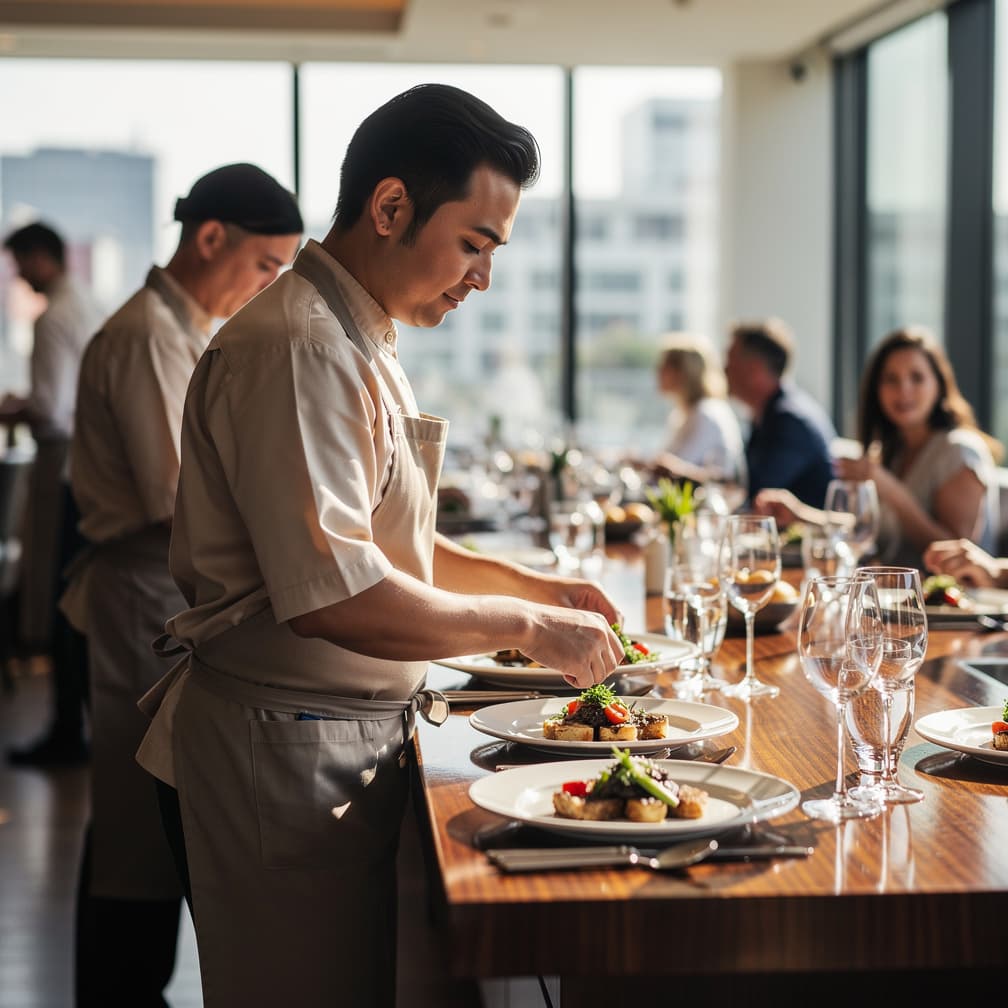
Dinner rush is where restaurant risk becomes real. Guests are moving through tight aisles, staff are carrying hot plates and glassware, the kitchen is running at full pace, and one equipment problem can interrupt service for the entire shift. Insurance for a restaurant works best when it is built from that operating reality. You are not insuring a generic retail space. You are insuring a business that stores food, serves the public, relies on specialized equipment, and often operates under lease terms, vendor contracts, and alcohol related obligations.
General liability insurance is the first place owners focus, and for good reason. Restaurants create constant public interaction. A customer can slip near an entry during bad weather, trip around a crowded table layout, or claim property damage caused during service. The right policy accounts for how guests enter, wait, dine, pay, and exit. It should also account for takeout traffic, delivery pickup, private events, sidewalk seating if applicable, and whether your staff moves through shared common areas in a mixed use property.
Commercial property insurance needs the same operational approach. A restaurant often has more invested in buildout and equipment than a buyer realizes at first glance. Cooking lines, refrigeration, freezers, prep tables, point of sale hardware, furniture, décor, and tenant improvements all need to be scheduled or valued correctly under the policy structure you choose. If you lease the space, read the repair and insurance clauses carefully. Some owners are responsible for betterments and improvements, glass, signage, or portions of the interior that would be expensive to replace after a fire, water event, or other covered property loss.
Liquor liability insurance deserves separate attention whenever alcohol is sold or served. Owners sometimes assume a general liability policy handles every alcohol related claim, then find out too late that the policy structure needs a specific liquor liability solution. If your concept includes beer and wine, a full bar, catered events, or private parties, ask how alcohol service changes underwriting, limits, and any contract requirements tied to the premises or event work.
Workers compensation insurance is not just a box to check. Restaurant payroll shifts with seasonality, overtime, new hires, tipped roles, kitchen staff, managers, and delivery or catering activity. Classifications and payroll estimates deserve care so the policy matches who is actually working and what they do. A mismatch can create problems at audit or after an injury claim.
Cost makes sense only through the lens of exposure, not guesswork. Premium is shaped by payroll, alcohol sales, occupancy, hours, claims history, location characteristics, construction details, limits, and deductibles. A single neighborhood café and a multi location bar and grill group do not present the same risk, even if they share a menu category. Before requesting quotes, gather your lease, current policy, loss runs if available, payroll estimates, and any lender or landlord insurance requirements. That gives you a cleaner comparison and helps you spot gaps before the next busy service exposes them.
Recommended Coverage for Restaurant Businesses
Based on the risks restaurant businesses face, these coverage types are essential:

General Liability
Essential coverage for every business, protect against third-party bodily injury, property damage, and advertising claims.

Commercial Property
Safeguard your business property, equipment, and inventory against damage and loss.

Liquor Liability
Coverage for businesses that sell, serve, or distribute alcohol against alcohol-related liability claims.

Workers Compensation
Help cover your employees' medical expenses and lost wages for work-related injuries and illnesses.
Common Risks for Restaurant Businesses
- Customer injury in the dining room, entryway, or restroom
- Slip and fall claims on wet floors, spilled drinks, or delivery traffic
- Kitchen fire risk from fryers, ovens, grease, or cooking equipment
- Theft or vandalism affecting cash, inventory, or dining room property
- Equipment breakdown involving refrigeration, prep equipment, or ventilation systems
- Liquor-related third-party claims tied to serving liability or overserving
Get Your Restaurant Insurance Quote
Compare rates from multiple carriers. Free quotes, no obligation.
What Happens Without Proper Coverage?
Restaurant losses rarely stay small because service depends on people, equipment, and public access all at once. A customer injury claim can start with something as ordinary as a wet floor near the host stand or a crowded path between tables. Property damage can begin in the kitchen, spread through smoke or water, and leave you dealing with repairs to equipment, furniture, and tenant improvements while service is disrupted. If alcohol is part of the concept, one incident tied to service can create a claim that reaches beyond the dining room and into your broader business assets.
You also need to think about the contracts around the restaurant, not just the daily rush. Landlords often require proof of coverage before move in, renewal, or buildout work. Lenders may expect certain policy forms or limits tied to financed equipment or the premises. Event venues, delivery partners, and private clients can ask for certificates before they let you operate under their agreement. If you wait until the last minute, you may end up binding a policy that meets a paperwork deadline but does not fit the way your restaurant actually runs.
Workers compensation insurance matters for the same practical reason. Restaurant work is physical, repetitive, and fast. Kitchen staff handle hot surfaces, sharp tools, and slippery floors. Front of house employees carry trays, move furniture, and work long shifts in crowded spaces. An injury can affect staffing, scheduling, and payroll immediately, so settle classifications, estimated payroll, and hiring plans before the policy starts.
Insurance also becomes more important as the business changes. Adding alcohol service, extending hours, opening a patio, starting catering, or taking a second location can all change the exposure enough to justify a fresh look. The goal is not to buy every option available. It is to line up your liability, property, liquor, and workers compensation coverage with your lease obligations, staffing model, and service style. Before you request a quote, gather the documents that drive the decision, then ask for coverage options built around your actual operation.
Insurance Tips for Restaurant Owners
Read your lease before quoting, because responsibility for tenant improvements, interior repairs, glass, and signage changes what commercial property insurance should include.
Separate alcohol exposure from general customer traffic in the quote request, especially if you serve beer, wine, cocktails, or host private events with bar service.
Update payroll estimates and job classifications before renewal, because restaurant staffing changes quickly and workers compensation insurance is sensitive to who does what work.
Ask how takeout, delivery pickup, catering, and private events affect your general liability insurance, since each changes how the public interacts with your operation.
Match property limits to the real replacement cost of kitchen equipment, refrigeration, furniture, and buildout, not just what you originally paid for used items.
Compare deductibles alongside service interruption tolerance, because a lower premium can still hurt cash flow if a property loss happens during a busy season.
If you operate more than one location, check whether each site has different alcohol service, hours, occupancy, or landlord requirements before combining everything under one approach.
How Much Does Restaurant Insurance Cost?
Restaurant Insurance is a bundle of separate policies, priced separately. The ranges below are typical figures nationally for each line, except workers compensation, which is rated per $100 of payroll; a quote prices each one against your own operations.
| Coverage | Typical range | What moves your price |
|---|---|---|
| General Liability Insurance | $90 - $290 per month | Industry and risk classification, annual revenue, number of employees |
| Commercial Property Insurance | $130 - $440 per month | Building value and construction type, roof age and condition, fire protection class |
| Liquor Liability Insurance | $60 - $270 per month | Share of sales that comes from alcohol, type of venue and how late you serve, server training and service procedures |
| Workers Compensation Insurance | $0.75 - $2.74 per $100 of payroll | Employee classification codes, total annual payroll, experience modification rate |
Prices shown are general estimates, not guaranteed rates or quotes. Your actual premium will depend on the insurer, coverage selected, business details, location, claims history, and other underwriting factors. Learn about our pricing methodology.
FAQ
Frequently Asked Questions About Restaurant Insurance
General liability, commercial property, workers compensation, and liquor liability if alcohol is served. The right mix depends on customer traffic, kitchen equipment, payroll, lease terms, and how pickup activity changes your daily flow.
Yes, beer and wine trigger the same question as a full bar. Alcohol claims sit outside what standard general liability was built for, so liquor liability needs to be quoted directly, with terms that reflect how and where drinks are served. Contracts and leases sometimes require it explicitly.
Payroll, alcohol sales, claims history, occupancy, hours of operation, location characteristics, limits, deductibles, and the value of your equipment and buildout all feed the premium. A useful quote ties the number to those factors instead of treating every food business the same.
Commercial property insurance is the piece that carries them, subject to the policy terms and the values you declare. Count cooking equipment, refrigeration, furniture, and decor at replacement cost, and check the lease, because tenant improvements you are responsible for belong in the limit too.
Proof of coverage that matches the lease: specific limits, named parties on certificates, and sometimes requirements tied to buildout responsibilities. Read the insurance and repair clauses early so your quote is structured around the actual obligations rather than patched afterward.
Yes, in nearly every state once you have employees. Kitchen duties, front of house roles, managers, and delivery or catering activity each classify differently, and because restaurant staffing changes fast, accurate payroll estimates matter before the policy starts and again at renewal.
It can be structured that way, but each site still gets underwritten on its own facts. Differences in alcohol service, hours, occupancy, landlord requirements, and property values affect limits and pricing, so one blanket approach only works when the locations genuinely resemble each other.
Yes, before the new work becomes routine rather than after. Off site service, temporary venues, alcohol service, and added staff change your liability, liquor, property, and workers compensation exposure in practical ways, and an insurer told about the change is far easier to deal with than one surprised by it.
Updated March 31, 2026