Updated July 5, 2026

Key Takeaways
- Gather your current declarations, endorsements, loss runs, vehicle schedule, and driver list before requesting quotes so you can compare terms side by side.
- Review whether you need cargo coverage, trailer interchange, bobtail coverage, or non-trucking liability based on your dispatch pattern and contracts.
- Compare physical damage deductibles and valuation terms before renewing, especially on financed tractors, trailers, or recently added units.
- Check every broker, shipper, lender, and lease agreement against your policy endorsements so certificate wording does not hide a coverage gap.
- Start your renewal review early enough to update drivers, units, garaging, and operating radius before underwriters price the account.
What Commercial Truck Insurance Covers
Commercial truck insurance is usually built in layers, and the right mix depends on what you haul, who owns the equipment, and when the truck is under dispatch. Motor carrier liability is the core piece for road exposure involving bodily injury or property damage to others. If you operate under your own authority or haul under contract, this is often the first coverage shippers, brokers, and lenders want to see on your certificate.
Physical damage is the part many owners review next because tractors and trailers are expensive to repair or replace after a collision, fire, theft, vandalism, or certain weather events, depending on policy terms. If you finance equipment, your lender may expect this coverage to stay in force for the life of the loan. Deductible choices matter here because they change both premium and what you pay out of pocket after a loss.
Cargo coverage is separate from truck damage. It is designed to respond when the freight you are transporting is damaged, stolen, or lost in transit, subject to the commodity, cause of loss, packaging, and policy exclusions. If you haul temperature-sensitive goods, high-theft items, or loads with strict contract language, review the covered commodities and special conditions carefully before binding.
Trailer interchange applies when you pull a trailer you do not own under a written interchange agreement. That is different from cargo and different from physical damage on your own scheduled equipment. Bobtail coverage and non-trucking liability also solve different problems. Bobtail generally addresses liability when the tractor is operated without a trailer in business use, while non-trucking liability is usually considered for personal use when the truck is not under dispatch. Because those triggers are narrow, ask for examples based on your actual dispatch pattern before you choose one or both.

Motor Carrier Liability
Can help cover injuries and property damage your truck causes to others, a coverage federal regulators require most for-hire carriers to maintain.

Physical Damage
Can help pay to repair or replace your own truck after an accident, fire, theft, or vandalism.
Cargo Coverage
May pay for damage to or theft of the freight you are hauling while it is in your care.
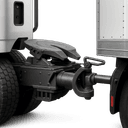
Trailer Interchange
Can help cover damage to trailers you haul under an interchange agreement but do not own.

Bobtail Coverage
May provide liability protection when you drive your tractor without a trailer attached, such as after dropping off a load.

Non-Trucking Liability
Can help cover accidents that happen when you use your truck for personal errands rather than dispatched work.
How Much Does Commercial Truck Insurance Cost?
Average Cost
$400 - $1,125
per month
- Radius of operation
- Commodities hauled and cargo value
- Number and value of power units
- Driver motor vehicle records and CDL experience
- DOT safety record, inspections, and FMCSA scores
- Liability limits and physical damage deductibles
Contact CPK Insurance for a personalized quote.
Commercial truck insurance pricing depends on exposure, not just the truck itself. Underwriters usually start with the unit type, stated value, operating radius, garaging location, and whether you run long-haul, regional, or local routes. A tractor pulling different trailers across multiple states presents a different risk profile than a box truck making short delivery runs from one terminal each day, so the quote should reflect how your operation actually moves.
Driver quality is one of the biggest pricing factors. Expect the application to look closely at experience, license class, years in similar equipment, prior losses, and motor vehicle records. If you use multiple drivers, turnover can affect both pricing and placement because every new hire changes the risk the insurer is evaluating. Clean, stable driver rosters usually give you more options than frequent last-minute additions.
The freight itself also changes cost. Cargo type, theft exposure, spoilage potential, load value, and whether you haul under contract all influence how underwriters view the account. Refrigerated loads, specialized equipment, hazardous operations, and heavy or oversized hauling often need more careful review than standard dry freight. Trailer interchange, bobtail, and non-trucking liability add cost too, but they may be necessary to close real coverage gaps created by your contracts or dispatch setup.
Your limits, deductibles, filing needs, and claims history round out the picture. Higher liability limits, lower physical damage deductibles, and recent losses usually push premiums up. The fastest way to get a usable quote is to submit complete information the first time: vehicle schedules, VINs, driver lists, loss runs, current policy documents, and any broker or shipper insurance requirements. That lets you compare not just price, but also exclusions, valuation method, downtime implications, and whether the policy fits the work you do every week.
How Commercial Truck Insurance Costs Vary by State
State rules, local claim patterns, and market competition all feed into pricing, so the same coverage can quote differently across state lines. Select a state for coverage details and carrier options in that market.
| State | Typical range | Vs national |
|---|---|---|
| Alabama | $350 - $1,050 per month | 8% below national average |
| Alaska | $430 - $1,175 per month | 5% above national average |
| Arizona | $480 - $1,175 per month | 9% above national average |
| Arkansas | $430 - $1,175 per month | 5% above national average |
| California | $575 - $1,675 per month | 48% above national average |
| Colorado | $500 - $1,325 per month | 20% above national average |
| Connecticut | $470 - $1,425 per month | 24% above national average |
| Delaware | $370 - $1,025 per month | 9% below national average |
| District of Columbia | $430 - $1,150 per month | 4% above national average |
| Florida | $460 - $1,475 per month | 27% above national average |
| Georgia | $480 - $1,425 per month | 25% above national average |
| Hawaii | $390 - $1,125 per month | 1% below national average |
| Idaho | $380 - $1,000 per month | 10% below national average |
| Illinois | $470 - $1,325 per month | 18% above national average |
| Indiana | $360 - $925 per month | 16% below national average |
| Iowa | $350 - $875 per month | 20% below national average |
| Kansas | $380 - $1,075 per month | 5% below national average |
| Kentucky | $360 - $925 per month | 16% below national average |
| Louisiana | $500 - $1,325 per month | 20% above national average |
| Maine | $340 - $850 per month | 22% below national average |
| Maryland | $500 - $1,425 per month | 26% above national average |
| Massachusetts | $360 - $1,100 per month | 4% below national average |
| Michigan | $430 - $1,225 per month | 9% above national average |
| Minnesota | $480 - $1,275 per month | 15% above national average |
| Mississippi | $400 - $1,100 per month | 2% below national average |
| Missouri | $380 - $1,125 per month | 1% below national average |
| Montana | $410 - $1,000 per month | 8% below national average |
| Nebraska | $420 - $1,200 per month | 6% above national average |
| Nevada | $390 - $1,125 per month | 1% below national average |
| New Hampshire | $360 - $1,050 per month | 8% below national average |
| New Jersey | $420 - $1,250 per month | 10% above national average |
| New Mexico | $400 - $1,125 per month | near national average |
| New York | $550 - $1,700 per month | 48% above national average |
| North Carolina | $360 - $950 per month | 14% below national average |
| North Dakota | $330 - $875 per month | 21% below national average |
| Ohio | $340 - $850 per month | 22% below national average |
| Oklahoma | $480 - $1,275 per month | 15% above national average |
| Oregon | $500 - $1,375 per month | 23% above national average |
| Pennsylvania | $410 - $1,125 per month | 1% above national average |
| Rhode Island | $390 - $975 per month | 10% below national average |
| South Carolina | $470 - $1,300 per month | 16% above national average |
| South Dakota | $360 - $950 per month | 14% below national average |
| Tennessee | $390 - $1,050 per month | 6% below national average |
| Texas | $525 - $1,500 per month | 33% above national average |
| Utah | $420 - $1,025 per month | 5% below national average |
| Vermont | $360 - $975 per month | 12% below national average |
| Virginia | $350 - $1,025 per month | 10% below national average |
| Washington | $420 - $1,125 per month | 1% above national average |
| West Virginia | $360 - $1,100 per month | 4% below national average |
| Wisconsin | $350 - $1,025 per month | 10% below national average |
| Wyoming | $380 - $1,025 per month | 8% below national average |
Show all 51 statesShow fewer states
Which states tend to have the cheapest commercial truck insurance?
| State | Typical range | Vs national |
|---|---|---|
| North Dakota | $330 - $875 per month | 21% below national average |
| Maine | $340 - $850 per month | 22% below national average |
| Ohio | $340 - $850 per month | 22% below national average |
| Iowa | $350 - $875 per month | 20% below national average |
| Virginia | $350 - $1,025 per month | 10% below national average |
Which states tend to be the most expensive for commercial truck insurance?
| State | Typical range | Vs national |
|---|---|---|
| New York | $550 - $1,700 per month | 48% above national average |
| California | $575 - $1,675 per month | 48% above national average |
| Texas | $525 - $1,500 per month | 33% above national average |
| Florida | $460 - $1,475 per month | 27% above national average |
| Maryland | $500 - $1,425 per month | 26% above national average |
In our compiled ranges, North Dakota tends to see the lowest commercial truck insurance premiums, while New York generally runs highest. Actual pricing varies with your business profile, so a quote comparison is the only way to know where you land.
Prices shown are general estimates, not guaranteed rates or quotes. Your actual premium will depend on the insurer, coverage selected, business details, location, claims history, and other underwriting factors. Learn about our pricing methodology.
Request a Quote Comparison
Enter your ZIP code to compare commercial truck insurance rates from top carriers.
Business insurance starting at $25/mo
Who Needs Commercial Truck Insurance?
Commercial truck insurance fits more than one kind of trucking business. If you operate as an owner-operator under your own authority, you usually need a policy structure that can satisfy filings, protect the truck itself, and address the freight or trailers tied to your contracts. If you lease on to a motor carrier, you still need to review what the carrier provides and what remains your responsibility, especially for physical damage, bobtail, non-trucking liability, and any gaps around downtime or deductibles.
Small fleets need a different level of review because one claim can affect several units, driver scheduling, and customer commitments at once. If you run a few power units and rotate drivers, make sure the policy can keep up with substitutions, newly acquired equipment, and certificate requests that come in on short notice. Larger fleets often focus on consistency across terminals, driver onboarding, and claims handling procedures so coverage stays aligned as operations change.
This coverage also matters outside traditional over-the-road freight. Local delivery companies, contractors with dump or flatbed units, moving companies, food distributors, and businesses that use medium-duty trucks for regular hauling all need to check whether a standard commercial auto form is enough. Once the vehicle type, cargo exposure, trailer use, or operating pattern becomes more specialized, a truck-specific policy is often the safer place to start.
You should also review commercial truck insurance if another party controls part of the job. Brokers, shippers, warehouse operators, and prime contractors often set insurance requirements in contracts before a load is assigned or a job starts. If you sign those agreements without matching your policy to them, you can end up with a certificate that looks acceptable at first glance but leaves a gap when a claim or tender arrives. Read the contract, then compare it line by line against your declarations and endorsements before renewing.
How to Buy Commercial Truck Insurance
Buying commercial truck insurance goes more smoothly when you prepare the account the way an underwriter reviews it. Start with a current vehicle schedule that includes year, make, model, VIN, stated value, and how each unit is used. Then build a driver list with license details, experience in similar equipment, and any recent incidents. If you have prior coverage, pull your declarations, endorsements, and loss runs so the next quote can be compared against what you already carry instead of guessed from memory.
Next, define the operation clearly. Underwriters want to know your operating radius, the commodities you haul, where units are garaged, whether you cross state lines, and if you pull owned or non-owned trailers. They also need to understand whether you operate under your own authority, lease on to another carrier, or use a mix of dispatch arrangements. If you need certificates, additional insured wording, loss payees, or filings, say that upfront so the quote is built for the contracts you actually sign.
Once quotes come back, compare more than the premium. Check liability limits, physical damage deductibles, valuation method, covered commodities, trailer interchange terms, and any exclusions tied to unattended vehicles, theft, spoilage, or driver eligibility. A lower-priced option can become expensive if it leaves out a coverage part your broker agreement assumes you carry.
Before binding, ask how changes are handled during the policy term. You want to know how quickly drivers can be added, how newly acquired units are reported, what documents are needed for certificates, and how claims should be reported after hours. Then review the final application carefully. Small errors in garaging, radius, driver status, or unit value can create problems later, so correct them before the policy is issued.
How to Save on Commercial Truck Insurance
The most reliable way to save on commercial truck insurance is to make the account easier to underwrite and easier to trust. Start with accurate submissions. Incomplete driver histories, missing VINs, vague cargo descriptions, and old loss information often lead to conservative pricing or delayed quotes. A clean, organized application gives underwriters fewer reasons to assume the worst and more confidence that the policy matches the operation.
Driver management is another practical place to control cost. Review motor vehicle records before hiring, document training for the equipment each driver uses, and remove ineligible drivers quickly instead of leaving them on the roster. If you use telematics, dash cameras, maintenance logs, or formal safety procedures, include that information in the submission. Those details do not erase losses, but they can help show that your operation is managed rather than improvised.
You can also save by matching coverage to real exposure instead of buying by habit. For example, choose deductibles you can actually absorb, schedule equipment at supportable values, and review whether bobtail, non-trucking liability, trailer interchange, and cargo limits still fit your current contracts. Paying for outdated endorsements or inflated values can cost more over time without improving the protection you need.
Finally, shop the renewal before it becomes urgent. Start early enough to gather updated loss runs, review contract requirements, and correct any changes in units, drivers, or operating radius. Last-minute renewals often force rushed decisions and weaker comparisons. A structured review gives you time to negotiate terms, tighten the application, and decide whether a quote is cheaper for the right reasons or simply narrower than your operation can afford.
FAQ
Frequently Asked Questions
Commercial truck insurance can be written for many working vehicles, including semis, tractor-trailers, box trucks, flatbeds, dump trucks, refrigerated units, tankers, tow trucks, and delivery vehicles. The key question is how each unit is used, who drives it, and whether trailers or cargo create added exposure.
Commercial truck insurance can include cargo coverage, but it is usually reviewed as its own coverage part with its own terms, limits, and exclusions. If you haul high-value, temperature-sensitive, or theft-prone freight, check the covered commodities and causes of loss before binding.
Commercial truck insurance treats these as separate exposures. Bobtail coverage generally addresses liability when a tractor is operated without a trailer in business use, while non-trucking liability is usually considered for personal use when the truck is not under dispatch.
Leased owner-operators often do, because the motor carrier's policy may not cover every exposure that stays with you. Review who insures the truck, who carries liability while under dispatch, and whether you still need physical damage, bobtail, or non-trucking liability.
Commercial truck insurance pricing usually depends on the unit type, operating radius, garaging, driver experience, loss history, cargo, limits, deductibles, and contract requirements. A complete submission helps you get a quote that reflects the operation instead of broad assumptions.
Commercial truck insurance can address non-owned trailer exposure through trailer interchange when you pull another party's trailer under a written agreement. That is different from insuring your own scheduled equipment, so review the contract and the endorsement together.
Commercial truck insurance quotes move faster when you have vehicle details, VINs, stated values, driver information, prior loss runs, current policy documents, and any broker or shipper insurance requirements ready. That gives you a cleaner comparison and fewer surprises after binding.
Updated July 5, 2026