
Why roofers get sued and injured differently
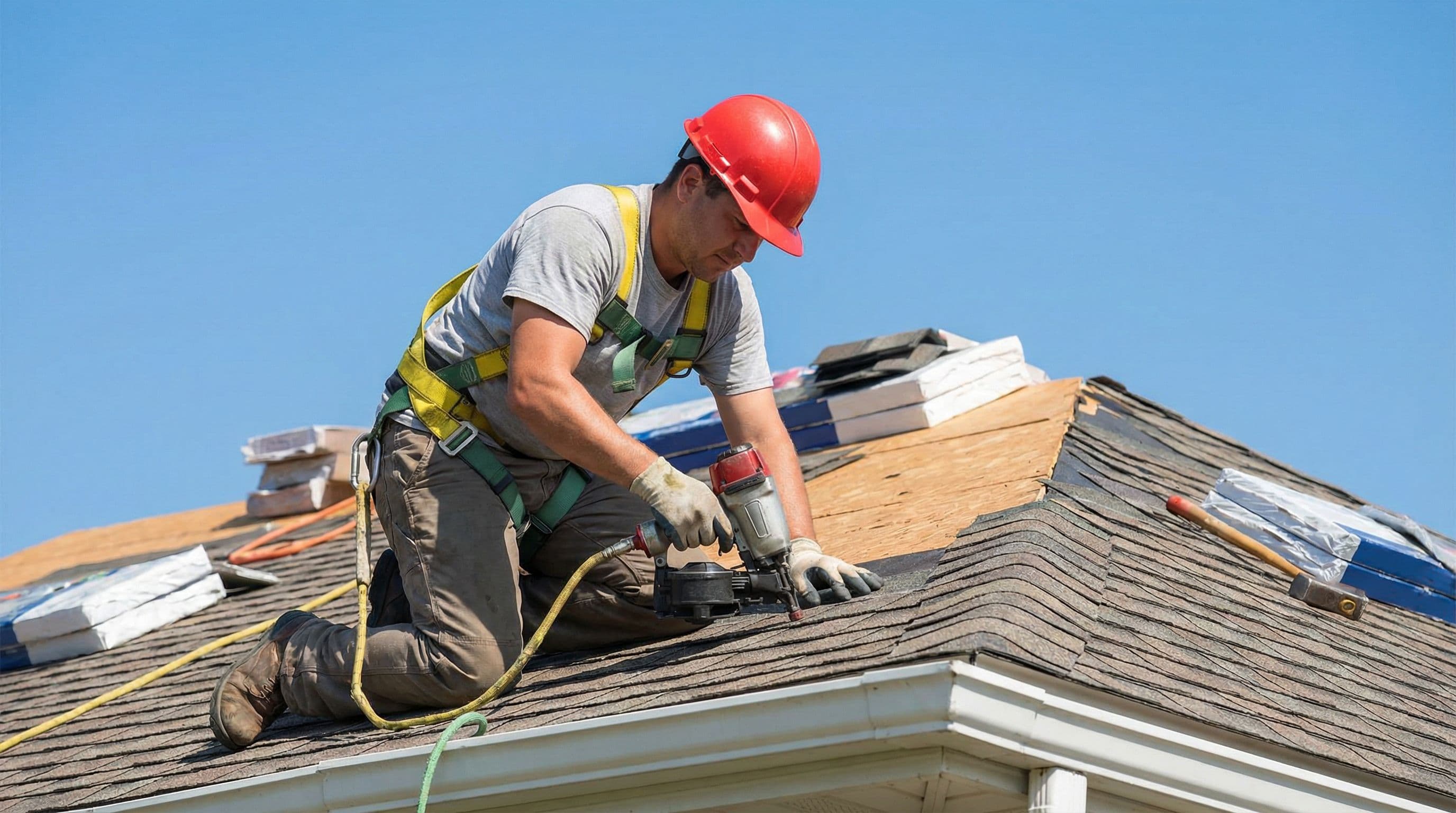
Roofing losses rarely stay confined to the roof surface. A dropped bundle can damage siding, windows, vehicles, or landscaping below. A sudden opening during a tear-off can let water into insulation, ceilings, inventory, or tenant spaces before temporary dry-in is complete. Crew movement adds another layer of risk because ladders, debris chutes, compressors, nail guns, and material staging all create injury and property-damage exposures around the job site.
That is why roofing insurance starts with a realistic look at liability claims, not a generic small-business package. The Insurance Information Institute explains that liability insurance is needed because lawsuits and defense costs can threaten a small business’s assets, so you want limits that match the size of homes, commercial roofs, and contracts you take on. The same source notes that a business can make a mistake that injures someone or damages property, which is exactly how many roofing claims begin: a misjudged tarp plan, a torching error, overspray, falling debris, or damage caused while moving materials across a customer’s property.
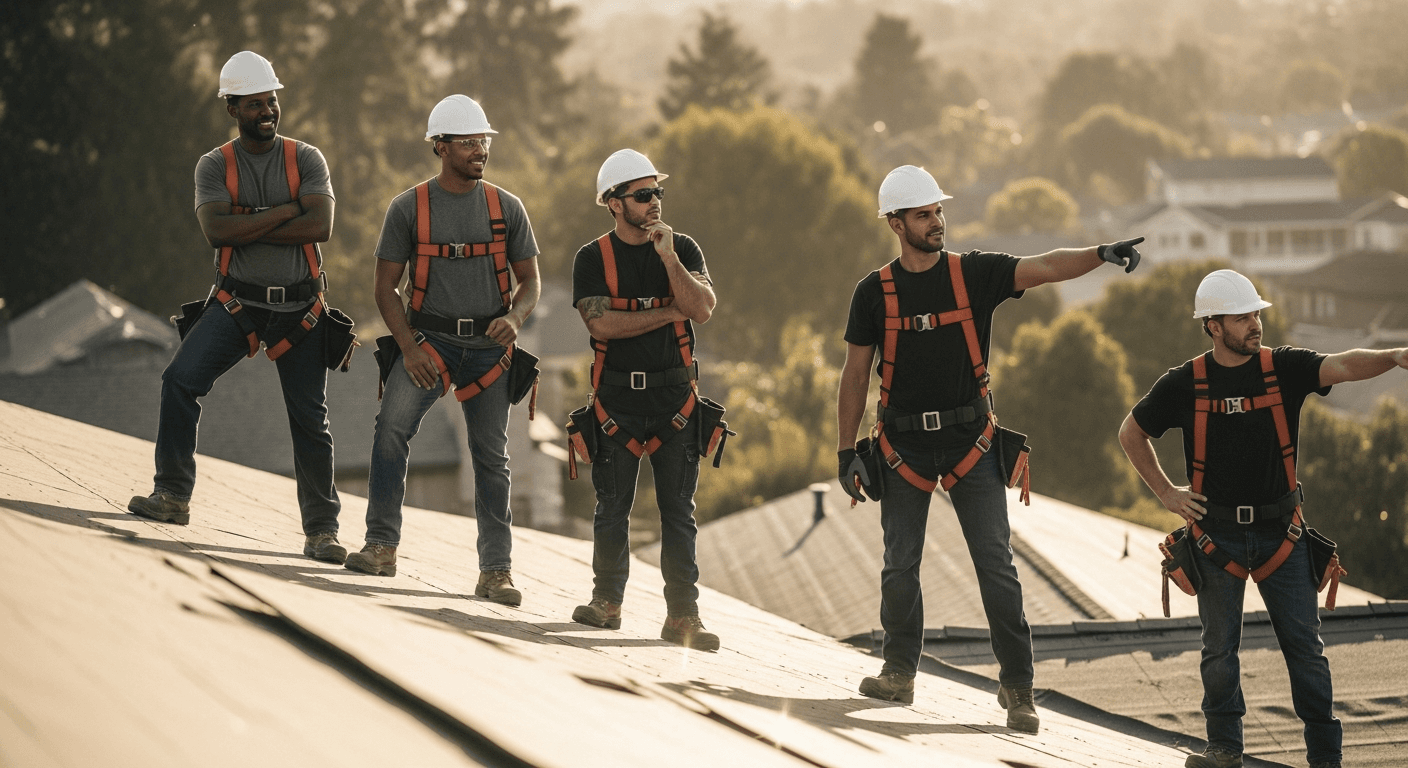
OSHA says falls are among the most common causes of serious work related injuries and deaths, and roofing puts your crew at the edge, on slopes, and around openings almost every day. OSHA also requires fall protection in construction at six feet, so your insurance review should line up with your actual fall-protection practices, crew training, and the kinds of roofs you accept. Before you shop, list your typical roof types, average crew size, subcontractor use, and whether you perform repairs, full replacements, or commercial work, because those details change what an underwriter needs to see.
The core coverage stack roofers usually need
For most roofing operations, the starting point is general liability insurance. General liability addresses third-party claims tied to bodily injury, property damage, and certain personal and advertising injury allegations. If a homeowner says your crew cracked skylights during material loading, or a property manager alleges interior water damage after a temporary covering failed, this is the policy you want reviewed first. If you need a baseline on how liability coverage works before comparing options, start with general liability insurance.
The Insurance Information Institute says that, for small businesses, the most efficient and least expensive way to purchase liability insurance is usually as part of the Businessowners Policy (BOP). That can make sense for a smaller roofer with an office, storage space, or other business property to insure, but you still need to confirm the form fits roofing operations rather than assuming every packaged policy is broad enough for your work. The same source says a liability insurer can help pay covered damages the business is legally obligated to pay for bodily injury, property damage, or personal and advertising injury, up to policy limits and subject to the deductible, so your quote review should focus on exclusions, completed-operations treatment, and whether the policy matches the jobs you actually perform.
If you use employees for tear-offs, shingle loading, flashing work, cleanup, or service calls, review your labor-related coverage requirements early, not after a contract requires a certificate. That keeps your quote process centered on the jobs you run, the crews you use, and the documentation a GC or property manager may request before work starts.
How workers compensation fits real roofing operations
Roofing payroll moves through more than one kind of exposure in a normal week. A crew member may spend one day on a steep-slope replacement, the next day driving to a repair call, and the next unloading materials at your yard or supplier. That matters because workers compensation follows the employee while working, not just while standing on the roof. III states that injuries employees sustain on the workplace premises or anywhere else while the employee is acting in the course and scope of employment are covered, so your policy review should account for travel between jobs, loading, unloading, cleanup, and ground work as part of the operation.
Vehicle use deserves special attention. III identifies traffic accidents as the leading cause of workers comp death claims, which is a practical warning for roofers whose crews spend long days in pickups, flatbeds, vans, or dump trailers moving between estimates, supply houses, and active jobs. If your team drives before sunrise, returns after storms, or hauls heavy loads across town, ask how employee driving activity is being considered in your overall insurance plan, because the loss exposure is not limited to falls.
State rules also matter. III notes that no two states have exactly the same laws and regulations, so you should verify employee classifications, owner election issues, subcontractor certificate requirements, and waiver practices based on where you operate. This is especially important if you use mixed crews, seasonal labor, or subcontractors whose status is not documented cleanly. Before you bind coverage, gather payroll estimates, job descriptions, and current certificates from every subcontractor you rely on, then ask for a quote review that tests whether your workers compensation setup matches how labor is actually deployed.
What changes the right limits and policy structure for a roofer
The right insurance setup for a roofer depends less on broad labels and more on operational detail. A company doing small residential repairs has a different claim profile than one handling full tear-offs, multi-story commercial roofs, or projects where interior operations continue below active work. The more your jobs involve open roofs, hot work, crane lifts, tenant occupancy, or subcontracted labor, the more carefully you need to review liability limits, additional insured requests, and completed-operations exposure.
Contract language often drives the buying decision. General contractors, property managers, and commercial owners may require specific liability limits, primary and noncontributory wording, waiver language, or proof that subcontractors carry their own coverage. If you sign those terms without checking your policies first, you can end up promising more than your insurance actually supports. That is why quote comparison for roofers should include the certificate requirements you see most often, not just the premium.
Your property setup matters too. If you lease a yard, store shingles, membranes, or copper, or keep tools and equipment in a shop or warehouse, a packaged property-and-liability approach may be worth reviewing. III says the usual low-cost way for small businesses to buy liability coverage is through a Businessowners Policy, but for a roofer the key question is fit, not just convenience. Ask whether the policy structure reflects your office, storage, and customer-facing operations, and whether any roofing-specific limitations affect the work you sell.
A useful quote request includes your revenue split by job type, payroll by role, subcontractor usage, vehicle count, loss history, and the largest contract requirements you expect to sign this year. That gives you a cleaner answer than a bare application with only your business name and estimated sales.
How to compare roofing insurance quotes without buying the wrong policy
A roofing quote is only useful if it matches the way your crews actually perform work. Start by checking the class of business, the job descriptions, and whether the application accurately states residential, commercial, repair, replacement, or mixed operations. If the submission understates heights, hot work, subcontractor use, or the percentage of tear-offs you perform, the quote may look easier to buy than it is to rely on during a claim.
Next, compare the liability form in practical terms. Review what the policy says about bodily injury and property damage claims, then ask how completed operations are handled for leaks or damage discovered after the crew leaves. Confirm whether certificates can be issued the way your contracts require, and whether there are restrictions tied to torch work, work on occupied buildings, or subcontracted labor. A lower premium does not help if the policy leaves out the exposures that create your largest claims.
For workers compensation, compare payroll assumptions, employee roles, and how owners are treated. Roofing businesses change crew size with the season, after storms, or when larger projects hit the schedule. If your estimate is too low, the audit can be painful. If your labor mix is unclear, classification problems can follow. Use your current payroll records, projected hiring plan, and subcontractor certificates to pressure-test the quote before you bind.
Finally, compare service around certificates and endorsements, because roofers may need proof of coverage fast to start work. Ask what information is needed to issue certificates, how contract requests are reviewed, and what happens when a GC or property manager asks for wording changes. The buying approach that works is the one that leaves fewer surprises after you win the job.
Common roofing insurance mistakes to avoid
One common mistake is buying only enough insurance to satisfy a basic bid requirement. Roofing claims can involve defense costs, property damage below the roofline, and disputes over who caused a leak or interior loss. III says liability insurance can help pay the cost of your defense and protect your assets, so your limit decision should reflect the size of the properties you work on and the contracts you sign, not just the minimum certificate request.
Another mistake is treating workers compensation as a roof-only issue. Roofing injuries happen during setup, cleanup, ladder movement, material handling, and driving between jobs. If you estimate payroll loosely, fail to document subcontractors, or blur the line between employees and independent crews, you create problems that surface at audit time or after an injury. Clean records matter as much as the policy itself.
Roofers also get into trouble by assuming a package policy automatically covers every part of the operation. A BOP can be an efficient way for some small businesses to buy liability coverage, but you still need to review whether the property side, liability terms, and endorsements fit your office, storage, and job-site reality. Convenience is not the same as suitability.
The last mistake is waiting until a contract lands on your desk to think about insurance. By then, you may be trying to fix limits, certificates, or labor documentation under a deadline. A better move is to review your current policies before your busy season, gather sample contracts, update payroll and subcontractor records, and request quotes built around the work you actually plan to take.
Frequently Asked Questions
General liability and workers compensation come first, because roofing claims tend to involve third-party property damage and job-related injuries. OSHA says falls are among the most common causes of serious work related injuries and deaths, so review how labor-related coverage fits daily operations before anything else.
No single policy is enough once you have employees. Most roofing companies review liability alongside labor-related coverage, because claims can involve both third-party property damage and the way your crew is classified, documented, and deployed.
A roofer can sometimes buy liability coverage through a BOP, especially if the business also needs office or property coverage. III says the most efficient and least expensive way for small businesses to purchase liability insurance is usually as part of the Businessowners Policy, but fit still matters.
For roofers, workers compensation can apply away from the roof if the employee is still working. III says injuries on the premises or anywhere else while the employee is acting in the course and scope of employment are covered, which is relevant for loading, unloading, and travel tied to work.
Quotes vary because underwriters look closely at the kind of roofs you work on, crew setup, subcontractor use, driving, and contract requirements. III notes that no two states have exactly the same laws and regulations, so location and labor rules also affect how coverage is structured.
Sources
- 1.iii.org(Liability insurance is needed because lawsuits and defense costs can threaten a small business’s assets.; A business can make a mistake that injures someone or damages property.; For small businesses, the most efficient and least expensive way to purchase liability insurance is usually as part of the Businessowners Policy.; A liability insurer pays covered damages the business is legally obligated to pay for bodily injury, property damage, or personal and advertising injury, up to policy limits and subject to the deductible.)
- 2.osha.gov(Falls are among the most common causes of serious work related injuries and deaths.; OSHA requires fall protection in construction at six feet.)
- 3.iii.org(Workers compensation serves two purposes.; Injuries on the premises or anywhere else while the employee is acting in the course and scope of employment are covered.; Traffic accidents are the leading cause of workers comp death claims.; No two states have exactly the same laws and regulations.)
Request a Quote Comparison
Enter your ZIP code to compare insurance rates from top carriers.
Updated July 17, 2026