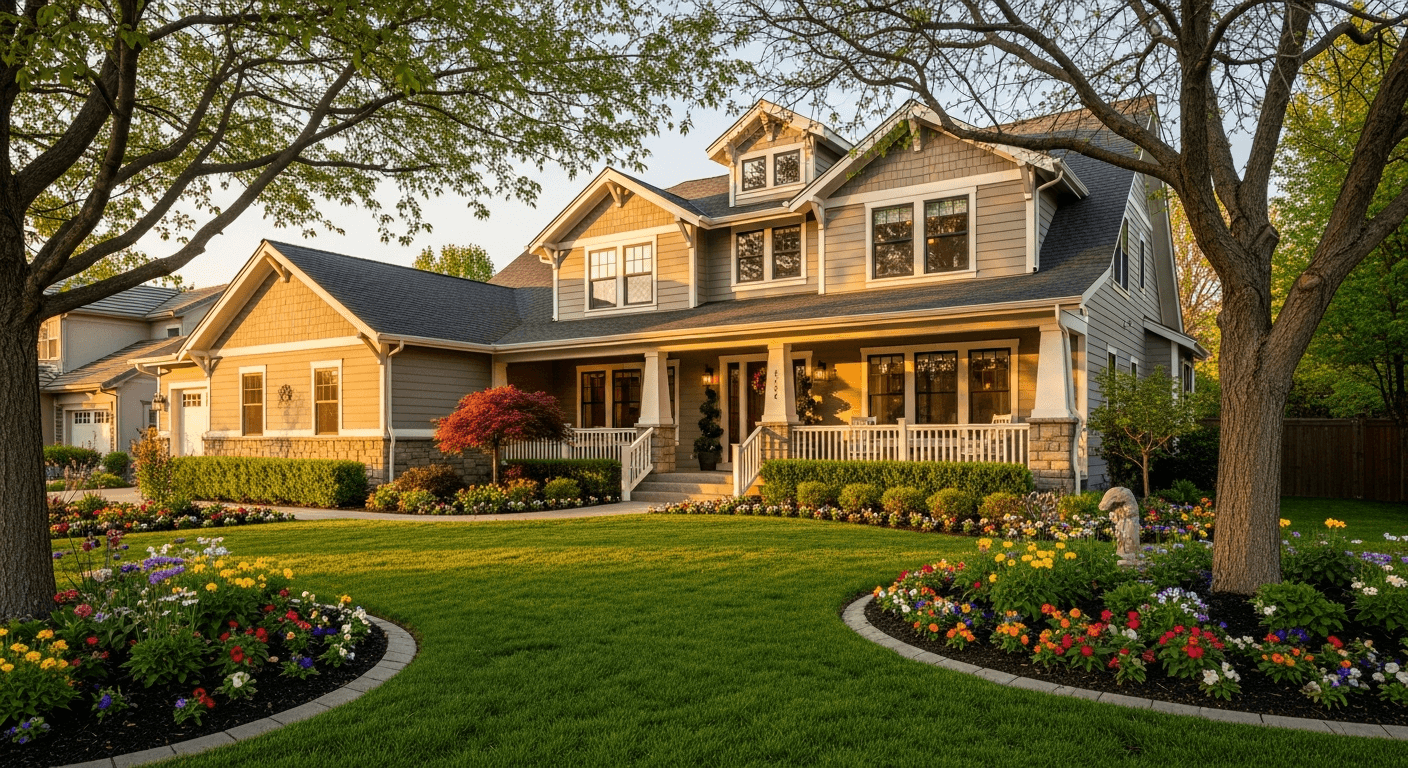

Average Homeowners Insurance Costs
The average cost of homeowners insurance in the United States is about $165 per month, or about $1,980 per year, in current industry cost data. However, this national average masks enormous variation between states, regions, and individual properties. Your actual premium could run as low as about $70 per month in low-risk areas or exceed about $500 per month in states prone to hurricanes, tornadoes, or wildfires.
Homeowners insurance premiums have been rising steadily in recent years, driven by increasing construction costs, more frequent severe weather events, and higher reinsurance costs for carriers. Many homeowners have seen premium increases of 10 to 25 percent annually, making it more important than ever to shop around and compare rates from multiple carriers.
The wide variation in homeowners insurance pricing means that comparing quotes is essential. Two carriers can offer virtually identical coverage for the same home and charge premiums that differ by 30 to 50 percent or more. At CPK Insurance, homeowners can compare quotes through our platform. The few minutes it takes to get multiple quotes can translate into significant long-term savings without sacrificing the coverage you need to protect your most valuable asset.
Average Homeowners Insurance Cost
$110 - $250
per month
Nationally, homeowners insurance coverage typically runs $110 - $250 per month.
Prices shown are general estimates, not guaranteed rates or quotes. Your actual premium will depend on the insurer, coverage selected, personal details, location, claims history, and other underwriting factors. Learn about our pricing methodology.
Costs by State
Where you live is one of the biggest determinants of your homeowners insurance premium. States with high exposure to natural disasters consistently have the most expensive homeowners insurance, while states with mild weather and lower construction costs offer lower-cost coverage options.
The most expensive states for homeowners insurance include Oklahoma, Texas, Kansas, Nebraska, and Florida. In Florida, for example, typical premiums run about $115 to $518 per month depending on the home and its location. Oklahoma and Kansas face frequent tornado activity, Texas contends with hail, hurricanes, and tornadoes, and Florida's hurricane exposure and litigious legal environment drive costs upward. Louisiana and Colorado are also among the pricier states due to hurricane risk and hailstorm frequency respectively.
The least expensive states include Hawaii, Vermont, New Hampshire, Utah, and Oregon. In Oregon, for example, typical premiums run about $87 to $390 per month. These states benefit from relatively mild weather patterns, lower litigation costs, and in some cases, lower construction costs. States in the Pacific Northwest and northern New England generally offer favorable rates because they avoid the severe convective storms and hurricanes that plague other regions.
Keep in mind that even within a state, premiums can vary significantly based on your specific location. A coastal home in Florida will cost far more to insure than an inland property in the same state. Similarly, homes in wildfire-prone areas of California or Colorado face higher premiums than homes in urban or suburban areas of those states. Comparing personalized quotes for your specific area through CPK Insurance can show you how your location affects your rates.
| State | Typical range | Vs national |
|---|---|---|
| Alabama | $110 - $330 per month | 22% above national average |
| Alaska | $120 - $290 per month | 14% above national average |
| Arizona | $110 - $250 per month | near national average |
| Arkansas | $120 - $300 per month | 17% above national average |
| California | $120 - $400 per month | 44% above national average |
| Colorado | $130 - $340 per month | 31% above national average |
| Connecticut | $110 - $260 per month | 3% above national average |
| Delaware | $80 - $220 per month | 17% below national average |
| District of Columbia | $85 - $250 per month | 7% below national average |
| Florida | $270 - $675 per month | 163% above national average |
| Georgia | $120 - $290 per month | 14% above national average |
| Hawaii | $110 - $310 per month | 17% above national average |
| Idaho | $75 - $180 per month | 29% below national average |
| Illinois | $95 - $230 per month | 10% below national average |
| Indiana | $85 - $220 per month | 15% below national average |
| Iowa | $110 - $240 per month | 3% below national average |
| Kansas | $120 - $300 per month | 17% above national average |
| Kentucky | $110 - $270 per month | 6% above national average |
| Louisiana | $210 - $550 per month | 111% above national average |
| Maine | $70 - $160 per month | 36% below national average |
| Maryland | $95 - $240 per month | 7% below national average |
| Massachusetts | $95 - $250 per month | 4% below national average |
| Michigan | $100 - $240 per month | 6% below national average |
| Minnesota | $110 - $260 per month | 3% above national average |
| Mississippi | $140 - $340 per month | 33% above national average |
| Missouri | $110 - $290 per month | 11% above national average |
| Montana | $95 - $230 per month | 10% below national average |
| Nebraska | $130 - $320 per month | 25% above national average |
| Nevada | $85 - $220 per month | 15% below national average |
| New Hampshire | $75 - $190 per month | 26% below national average |
| New Jersey | $90 - $240 per month | 8% below national average |
| New Mexico | $95 - $240 per month | 7% below national average |
| New York | $100 - $300 per month | 11% above national average |
| North Carolina | $95 - $250 per month | 4% below national average |
| North Dakota | $110 - $260 per month | 3% above national average |
| Ohio | $80 - $180 per month | 28% below national average |
| Oklahoma | $160 - $410 per month | 58% above national average |
| Oregon | $75 - $200 per month | 24% below national average |
| Pennsylvania | $75 - $190 per month | 26% below national average |
| Rhode Island | $120 - $280 per month | 11% above national average |
| South Carolina | $130 - $380 per month | 42% above national average |
| South Dakota | $100 - $240 per month | 6% below national average |
| Tennessee | $110 - $270 per month | 6% above national average |
| Texas | $170 - $460 per month | 75% above national average |
| Utah | $75 - $190 per month | 26% below national average |
| Vermont | $70 - $190 per month | 28% below national average |
| Virginia | $75 - $220 per month | 18% below national average |
| Washington | $75 - $200 per month | 24% below national average |
| West Virginia | $75 - $180 per month | 29% below national average |
| Wisconsin | $70 - $190 per month | 28% below national average |
| Wyoming | $90 - $220 per month | 14% below national average |
Show all 51 statesShow fewer states
Which states tend to have the cheapest homeowners insurance?
| State | Typical range | Vs national |
|---|---|---|
| Maine | $70 - $160 per month | 36% below national average |
| Vermont | $70 - $190 per month | 28% below national average |
| Wisconsin | $70 - $190 per month | 28% below national average |
| Idaho | $75 - $180 per month | 29% below national average |
| West Virginia | $75 - $180 per month | 29% below national average |
Which states tend to be the most expensive for homeowners insurance?
| State | Typical range | Vs national |
|---|---|---|
| Florida | $270 - $675 per month | 163% above national average |
| Louisiana | $210 - $550 per month | 111% above national average |
| Texas | $170 - $460 per month | 75% above national average |
| Oklahoma | $160 - $410 per month | 58% above national average |
| California | $120 - $400 per month | 44% above national average |
In our compiled ranges, Maine tends to see the lowest homeowners insurance premiums, while Florida generally runs highest. Actual pricing varies with your personal profile, so a quote comparison is the only way to know where you land.
Prices shown are general estimates, not guaranteed rates or quotes. Your actual premium will depend on the insurer, coverage selected, personal details, location, claims history, and other underwriting factors. Learn about our pricing methodology.
Factors That Affect Your Premium
Beyond location, numerous factors influence your homeowners insurance premium. Understanding these factors gives you the ability to make strategic decisions that can lower your costs.
Your home's replacement cost is the primary driver of your dwelling coverage premium. Larger homes with high-end finishes, custom features, and expensive materials cost more to rebuild and therefore more to insure. A 3,000-square-foot home with granite countertops and hardwood floors will carry a higher premium than a 1,500-square-foot home with standard finishes, even in the same neighborhood.
The age and condition of your home matters significantly. Older homes may have outdated electrical, plumbing, and roofing systems that increase the risk of claims. Many carriers offer discounts or more favorable rates for homes with recently updated roofs, electrical panels, plumbing, and HVAC systems. The condition of your roof is particularly important, as roof claims represent a large percentage of homeowners insurance losses. A roof that is more than 15 to 20 years old can significantly increase your premium or even make it difficult to find coverage.
Your claims history over the past three to seven years affects your premium. Even one or two claims can raise your rates, and some carriers will decline coverage for homes with multiple recent claims. Your credit score is another significant factor in most states, with better credit translating to lower premiums. The proximity of your home to a fire station and fire hydrant can affect rates, as can the presence of certain dog breeds, trampolines, or swimming pools. Your deductible choice directly impacts your premium, with higher deductibles yielding lower annual costs.
Coverage Level and Premium Relationship
The coverage limits you choose have a direct impact on your homeowners insurance premium. Higher limits provide more protection but cost more, and finding the right balance requires understanding how each coverage type contributes to your total premium.
Dwelling coverage, which protects the structure of your home, is the largest component of your premium. Because the carrier's maximum exposure rises with the limit, your premium scales with the dwelling coverage you choose. It is essential to carry enough dwelling coverage to rebuild your home, as being underinsured can leave you with a devastating shortfall after a total loss.
Personal property coverage is typically set as a percentage of your dwelling coverage but can be adjusted. If you own high-value items like jewelry, art, or collectibles, you may need to add scheduled personal property coverage, which will increase your premium. Upgrading from actual cash value to replacement cost coverage for your personal property adds roughly 10 to 15 percent to that portion of your premium but is well worth the investment.
Liability coverage is relatively inexpensive to increase. Raising your liability limits usually adds only a modest amount to your premium. An umbrella policy adds additional liability protection and its cost depends on your limits, assets, and claims history. Comparing quotes at different limits and deductibles through CPK Insurance can show you how those choices affect your total premium.
How to Save on Homeowners Insurance
Saving on homeowners insurance starts with shopping around. Because rates vary so dramatically between carriers, comparing quotes from at least three to five companies is the single most effective way to lower your costs. CPK Insurance streamlines this process by helping you compare options from participating providers based on your specific home and coverage needs.
Bundling your homeowners and auto insurance with the same carrier is one of the easiest ways to save, typically reducing your combined premiums by 5 to 15 percent. Ask about all available discounts, including new home discounts, claims-free discounts, security system discounts, and loyalty discounts for long-term policyholders. Some carriers offer discounts for smart home devices like water leak sensors, smart smoke detectors, and monitored alarm systems.
Raising your deductible from $1,000 to $2,500 can reduce your premium by 10 to 20 percent or more. However, only raise your deductible to an amount you can comfortably afford out of pocket. Maintaining your home, particularly your roof, electrical system, and plumbing, signals to insurers that you are a lower-risk policyholder and can help keep your rates down.
Improve your credit score over time, as this can have a meaningful impact on your premium in most states. Avoid filing small claims that you can afford to pay out of pocket, as even minor claims can increase your rates at renewal. Consider wind or hail deductibles in storm-prone states, which are expressed as a percentage of your dwelling coverage and can significantly lower your base premium. Finally, review your policy annually to ensure you are not paying for coverage you no longer need or carrying limits that no longer match your home's current replacement cost.
Request a Quote Comparison
Enter your ZIP code to compare insurance rates from top carriers.
Updated July 17, 2026