Updated July 16, 2026

What Business Owners Policy Insurance Covers
A Business Owners Policy (BOP) is a bundled insurance package designed specifically for small to mid-size businesses. It combines the three most essential business coverages, general liability, commercial property, and business interruption, into a single, cost-effective policy.
The general liability component provides the same protection as a standalone general liability policy: coverage for third-party bodily injury, property damage, and personal and advertising injury claims. If a customer is injured at your business, if your operations damage someone's property, or if you face an advertising-related lawsuit, the liability coverage in your BOP responds.
Commercial property coverage can help protect your business's physical assets: your building (if you own it), business equipment, furniture, fixtures, inventory, computers, and supplies. It also covers improvements you've made to leased space (tenant improvements and betterments). Protection typically extends to fire, windstorm, hail, theft, vandalism, and other named perils, though flood and earthquake require separate endorsements.
Business interruption coverage is one of the most valuable and overlooked components of a BOP. When a covered event (like a fire or severe storm) forces your business to close temporarily, business interruption pays for your ongoing expenses and lost income during the shutdown period. This includes rent, payroll for key employees, loan payments, and the revenue you would have earned if the incident hadn't occurred.
Most BOPs can be extensively customized with endorsements to add coverage for specific risks. Common endorsements include cyber liability, employment practices liability, equipment breakdown, accounts receivable, valuable papers and records, employee dishonesty, outdoor signage, and spoilage coverage for perishable goods.
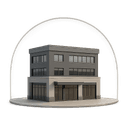
Commercial Property
Can help repair or replace your building, equipment, inventory, and furnishings after covered events like fire, wind, or theft.

General Liability
Can help cover customer injuries, damage to property owned by others, and related legal costs your business becomes responsible for.
Business Income
May replace lost income and help pay rent, payroll, and other continuing expenses while covered damage forces a temporary shutdown.
Equipment Breakdown
Typically covers repair or replacement when equipment like air conditioning, refrigeration, or computers fails from a sudden mechanical or electrical breakdown.
Hired & Non-Owned Auto
May respond when vehicles your business rents or employees' personal cars are used for work and cause an accident.
How Much Does Business Owners Policy Insurance Cost?
Average Cost
$50 - $160
per month
- Annual revenue and industry class
- Building and contents values
- Square footage and building age
- Catastrophe exposure at your address
- Liability limits and property deductibles
- Claims history
Contact CPK Insurance for a personalized quote.
A Business Owners Policy is one of the best values in commercial insurance, and cost depends on your industry, property values, revenue, employee count, location, endorsements, and deductible choice. This represents a 15-25% discount compared to purchasing general liability and commercial property insurance as separate policies.
Your industry classification is the primary pricing factor. Low-risk businesses like consultants, accountants, and small office-based businesses typically pay less than retail stores, restaurants, and service businesses with more foot traffic and physical assets. Businesses with higher property values or greater liability exposure may pay more.
Property values directly impact the property component of your premium. The value of your building, equipment, inventory, and improvements determines how much the carrier would need to pay in a total loss. Higher property values mean higher premiums.
Revenue and employee count affect the liability component, as they indicate the scale of your operations and exposure to third-party claims. Your location matters for both property (weather risks, fire department proximity, building construction) and liability (legal environment, medical costs).
Adding endorsements increases your premium incrementally. Cyber liability endorsements, employment practices liability, and equipment breakdown all add cost, though these additions are still more cost-effective than standalone policies for each coverage.
Your deductible choice affects your premium. Higher deductibles reduce your annual cost but increase your out-of-pocket expense per claim.
| BOP Component | What's Included | Typical Limits |
|---|---|---|
| General Liability | Third-party injury, property damage, advertising injury | $1M/$2M |
| Commercial Property | Building, equipment, inventory, fixtures | Replacement cost |
| Business Interruption | Lost income + ongoing expenses during shutdown | 12 months coverage |
| Cyber (Endorsement) | Data breach response and liability | $50K to $100K |
| EPLI (Endorsement) | Employment discrimination, harassment claims | $50K to $250K |
| Equipment Breakdown | Mechanical/electrical equipment failure | Varies by equipment value |
General Liability
- What's Included
- Third-party injury, property damage, advertising injury
- Typical Limits
- $1M/$2M
Commercial Property
- What's Included
- Building, equipment, inventory, fixtures
- Typical Limits
- Replacement cost
Business Interruption
- What's Included
- Lost income + ongoing expenses during shutdown
- Typical Limits
- 12 months coverage
Cyber (Endorsement)
- What's Included
- Data breach response and liability
- Typical Limits
- $50K to $100K
EPLI (Endorsement)
- What's Included
- Employment discrimination, harassment claims
- Typical Limits
- $50K to $250K
Equipment Breakdown
- What's Included
- Mechanical/electrical equipment failure
- Typical Limits
- Varies by equipment value
How Business Owners Policy Insurance Costs Vary by State
State rules, local claim patterns, and market competition all feed into pricing, so the same coverage can quote differently across state lines. Select a state for coverage details and carrier options in that market.
| State | Typical range | Vs national |
|---|---|---|
| Alabama | $45 - $170 per month | 2% above national average |
| Alaska | $65 - $220 per month | 36% above national average |
| Arizona | $45 - $170 per month | 2% above national average |
| Arkansas | $40 - $170 per month | near national average |
| California | $60 - $240 per month | 43% above national average |
| Colorado | $50 - $170 per month | 5% above national average |
| Connecticut | $55 - $210 per month | 26% above national average |
| Delaware | $55 - $180 per month | 12% above national average |
| District of Columbia | $50 - $210 per month | 24% above national average |
| Florida | $70 - $260 per month | 57% above national average |
| Georgia | $50 - $170 per month | 5% above national average |
| Hawaii | $60 - $230 per month | 38% above national average |
| Idaho | $50 - $150 per month | 5% below national average |
| Illinois | $45 - $160 per month | 2% below national average |
| Indiana | $45 - $150 per month | 7% below national average |
| Iowa | $45 - $140 per month | 12% below national average |
| Kansas | $45 - $160 per month | 2% below national average |
| Kentucky | $50 - $160 per month | near national average |
| Louisiana | $85 - $260 per month | 64% above national average |
| Maine | $45 - $150 per month | 7% below national average |
| Maryland | $45 - $180 per month | 7% above national average |
| Massachusetts | $50 - $190 per month | 14% above national average |
| Michigan | $50 - $170 per month | 5% above national average |
| Minnesota | $45 - $160 per month | 2% below national average |
| Mississippi | $45 - $180 per month | 7% above national average |
| Missouri | $45 - $180 per month | 7% above national average |
| Montana | $55 - $160 per month | 2% above national average |
| Nebraska | $45 - $180 per month | 7% above national average |
| Nevada | $45 - $180 per month | 7% above national average |
| New Hampshire | $45 - $180 per month | 7% above national average |
| New Jersey | $55 - $200 per month | 21% above national average |
| New Mexico | $45 - $160 per month | 2% below national average |
| New York | $60 - $300 per month | 71% above national average |
| North Carolina | $45 - $150 per month | 7% below national average |
| North Dakota | $40 - $140 per month | 14% below national average |
| Ohio | $40 - $160 per month | 5% below national average |
| Oklahoma | $45 - $160 per month | 2% below national average |
| Oregon | $45 - $170 per month | 2% above national average |
| Pennsylvania | $50 - $190 per month | 14% above national average |
| Rhode Island | $50 - $170 per month | 5% above national average |
| South Carolina | $50 - $190 per month | 14% above national average |
| South Dakota | $45 - $140 per month | 12% below national average |
| Tennessee | $45 - $160 per month | 2% below national average |
| Texas | $55 - $210 per month | 26% above national average |
| Utah | $45 - $130 per month | 17% below national average |
| Vermont | $45 - $190 per month | 12% above national average |
| Virginia | $40 - $170 per month | near national average |
| Washington | $50 - $190 per month | 14% above national average |
| West Virginia | $45 - $150 per month | 7% below national average |
| Wisconsin | $40 - $150 per month | 10% below national average |
| Wyoming | $45 - $140 per month | 12% below national average |
Show all 51 statesShow fewer states
Which states tend to have the cheapest business owners policy insurance?
| State | Typical range | Vs national |
|---|---|---|
| North Dakota | $40 - $140 per month | 14% below national average |
| Wisconsin | $40 - $150 per month | 10% below national average |
| Ohio | $40 - $160 per month | 5% below national average |
| Arkansas | $40 - $170 per month | near national average |
| Virginia | $40 - $170 per month | near national average |
Which states tend to be the most expensive for business owners policy insurance?
| State | Typical range | Vs national |
|---|---|---|
| New York | $60 - $300 per month | 71% above national average |
| Louisiana | $85 - $260 per month | 64% above national average |
| Florida | $70 - $260 per month | 57% above national average |
| California | $60 - $240 per month | 43% above national average |
| Hawaii | $60 - $230 per month | 38% above national average |
In our compiled ranges, North Dakota tends to see the lowest business owners policy insurance premiums, while New York generally runs highest. Actual pricing varies with your business profile, so a quote comparison is the only way to know where you land.
Prices shown are general estimates, not guaranteed rates or quotes. Your actual premium will depend on the insurer, coverage selected, business details, location, claims history, and other underwriting factors. Learn about our pricing methodology.
Request a Quote Comparison
Enter your ZIP code to compare business owners policy insurance rates from top carriers.
Business insurance starting at $25/mo
Who Needs Business Owners Policy Insurance?
A BOP is the ideal insurance foundation for most small to mid-size businesses with physical locations, equipment, or inventory. If you operate from a storefront, office, studio, or any commercial space, a BOP can be a good option depending on your operations, instead of purchasing individual policies.
Retail businesses benefit enormously from the BOP structure. Stores, boutiques, and shops need both liability coverage for customer injuries and property coverage for their inventory, fixtures, and displays. Business interruption coverage is critical if a fire or storm forces temporary closure.
Service businesses with physical locations, such as salons, fitness studios, medical offices, repair shops, restaurants, and professional offices, need the combined liability and property coverage a BOP provides. The business interruption component is especially valuable for businesses with high fixed costs (rent, equipment leases, staff payroll) that continue even when the business can't operate.
Home-based businesses may qualify for simplified BOPs that provide essential liability and property coverage at very low cost. This is far superior to relying on homeowners insurance, which specifically excludes most business-related claims.
Online and e-commerce businesses also benefit from BOPs, particularly when they maintain inventory, equipment, or a home office. The general liability coverage can help protect against covered product liability claims, and cyber endorsements address digital risks.
Some businesses typically don't qualify for BOPs and need standalone policies instead. These include large businesses exceeding carrier size limits, high-risk contractors, manufacturers with complex operations, and businesses requiring specialized coverage forms.
How to Buy Business Owners Policy Insurance
Buying a BOP is one of the simplest commercial insurance purchases. Start by documenting your business basics: legal name, entity type, industry, years in business, annual revenue, number of employees, and your physical location details.
For the property component, estimate the replacement cost of your business assets: building value (if owned), equipment, furniture, fixtures, computers, inventory, and any improvements to leased space. Don't confuse replacement cost with market value, replacement cost is what it would cost to replace or rebuild, which is the basis for property coverage.
Determine your liability needs based on your industry and any contractual requirements. Most BOPs start at $1 million per occurrence/$2 million aggregate in general liability, which is sufficient for most small businesses. Higher limits are available.
Decide which endorsements you need. Review your operations for risks that the base BOP doesn't cover. If you handle customer data, add cyber liability. If you have employees, consider employment practices liability. If you serve food or perishable goods, add spoilage coverage.
Get a quote with CPK Insurance and connect with a licensed insurance professional who can help you compare BOP options from participating providers. BOP forms vary significantly between carriers, some offer broader coverage, better business interruption terms, or more flexible endorsement options.
Most BOPs can be quoted and bound within 24-48 hours for standard small business risks.
How to Save on Business Owners Policy Insurance
The BOP itself is already a savings strategy. Bundling general liability and commercial property into a single policy saves 15-25% compared to separate policies. But there are additional ways to compare options and check for eligible discounts.
Accurate property valuation prevents overpaying. If your building is insured above its actual replacement cost, you're paying premium on unnecessary coverage. Work with your insurance professional to ensure valuations are current and accurate.
Choose an appropriate deductible. Increasing your deductible can reduce your premium, but it also means higher out-of-pocket costs per claim. Choose based on your cash reserves and risk tolerance.
Maintain your property to prevent claims. Well-maintained buildings with updated electrical, plumbing, and HVAC systems present lower risks and may qualify for lower premiums. Security systems, fire alarms, sprinklers, and deadbolt locks can earn additional discounts.
Bundle your BOP with workers compensation, commercial auto, and umbrella coverage through the same carrier for multi-policy discounts.
Maintain a clean claims history. Businesses with no recent claims may qualify for lower premiums. Implement loss prevention measures such as proper lighting, slip-resistant mats, regular maintenance, and clear safety procedures to keep claims at zero.
Shop your BOP at every renewal. Insurance carriers frequently adjust their appetite and pricing for different business types. The right carrier for your business this year may not be the right one next year.
FAQ
Frequently Asked Questions
A BOP bundles general liability insurance, commercial property insurance, and business interruption coverage into a single policy at a discounted rate. Most BOPs can be customized with endorsements for cyber liability, employment practices liability, professional liability, equipment breakdown, and more.
Most small businesses pay between $500 and $2,000 annually for a BOP, which is 15-25% less than purchasing general liability and commercial property insurance separately. Costs depend on your industry, location, property value, revenue, and coverage limits.
General liability is a single coverage that protects against third-party bodily injury and property damage claims. A BOP includes general liability PLUS commercial property insurance (covering your building, equipment, and inventory) and business interruption coverage. A BOP provides much broader protection.
BOPs are designed for small to mid-size businesses. Most carriers limit eligibility to businesses with annual revenue under $5-$10 million, fewer than 100 employees, and premises under 25,000-50,000 square feet. High-risk industries like contractors may not qualify and need separate policies.
No. A BOP does not include workers compensation insurance, which covers employee work-related injuries. You need a separate workers comp policy in addition to your BOP. However, you can often bundle both through the same carrier for additional savings.
Yes. Most modern BOPs offer cyber liability as an endorsement for an additional premium. However, BOP cyber endorsements typically provide lower limits ($50,000-$100,000) than standalone cyber policies. If your business handles significant customer data, a standalone cyber policy is recommended.
Business interruption coverage can help pay for lost income and ongoing expenses (rent, payroll, utilities) when a covered event, fire, storm, theft, forces your business to close temporarily. It bridges the financial gap while your property is being repaired or replaced.
For most small businesses, yes. A BOP is simpler to manage (one policy, one renewal), costs less than separate policies, and typically includes broader coverage terms. However, larger businesses or those with complex risks may need standalone policies with higher limits and more customization.
Updated July 16, 2026