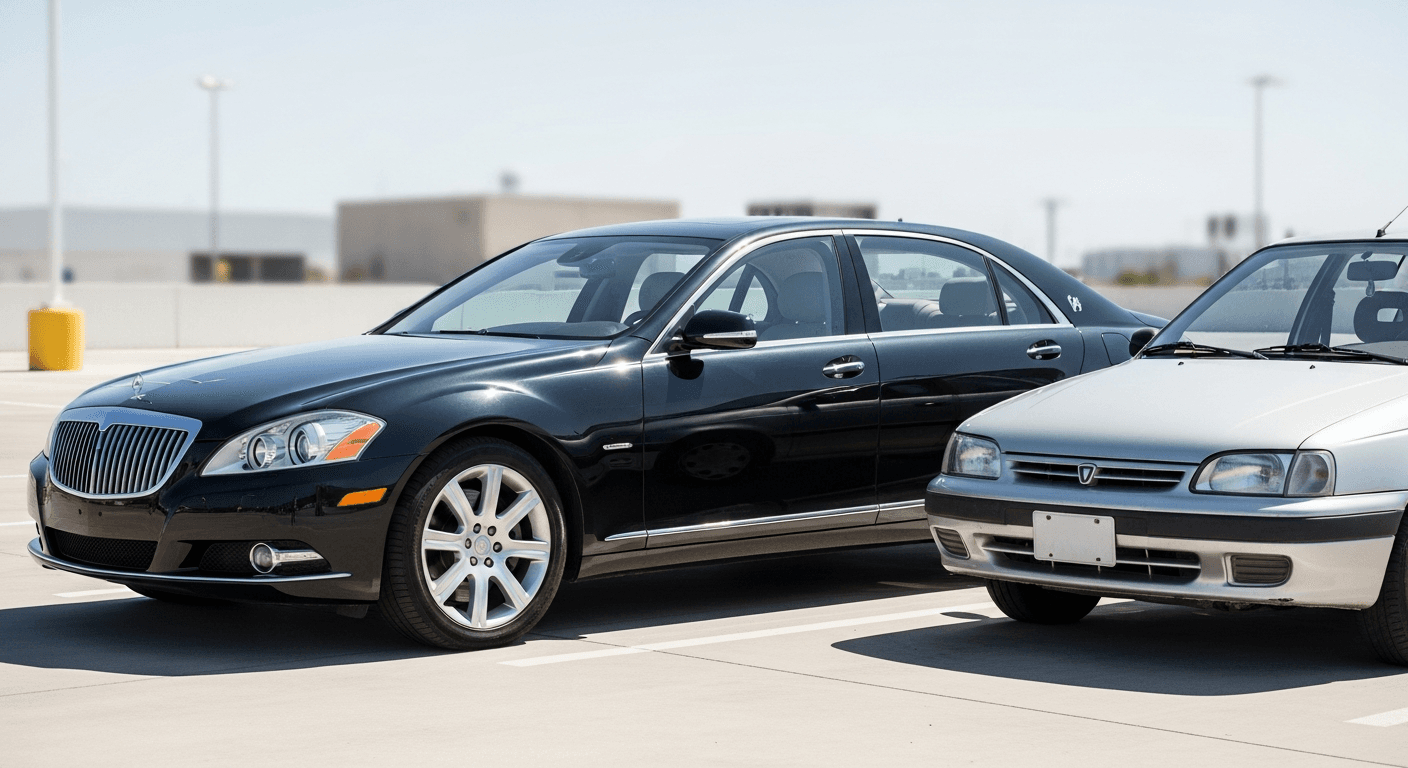

Key Differences Between Full Coverage and Liability-Only
The terms full coverage and liability-only refer to the two most common levels of car insurance protection. Understanding the difference is essential for choosing the right policy for your vehicle, financial situation, and risk tolerance.
Liability-only insurance is the minimum coverage required by most states. It pays for damage you cause to other people and their property when you are at fault in an accident. Liability coverage has two components: bodily injury liability, which covers the other party's medical bills, lost wages, and pain and suffering, and property damage liability, which covers repairs to the other person's vehicle and other damaged property. Crucially, liability-only insurance does not pay for damage to your own vehicle or your own medical expenses.
Full coverage is not a specific policy type but rather a common term for a policy that includes liability coverage plus collision and comprehensive coverage. Collision coverage can help pay to repair or replace your vehicle if it is damaged in an accident with another vehicle or object, regardless of who is at fault. Comprehensive coverage can help pay for damage to your vehicle from non-collision events such as theft, vandalism, hail, flooding, fire, falling objects, and animal strikes. Together, collision and comprehensive can help protect your vehicle from many common types of damage.
Uninsured and underinsured motorist coverage, which protects you if you are hit by a driver who lacks sufficient insurance, is often added alongside full coverage; it is mandatory in some states and a separate election in others. Get a quote with CPK Insurance and connect with a licensed insurance professional who can help you compare options and see the exact cost difference for your specific vehicle and situation.
Coverage and Protection Comparison
The protection gap between full coverage and liability-only insurance is substantial, and understanding exactly what each covers helps you assess your true financial exposure under each option.
With liability-only insurance, if you cause an accident, your policy can help pay for the other driver's injuries and vehicle damage, but you receive nothing for your own vehicle. If you are hit by another driver, you would need to pursue a claim against their insurance, and if they are uninsured or underinsured, you could be left with significant out-of-pocket costs. If a tree falls on your parked car, a hailstorm dents your vehicle, or your car is stolen, you have no coverage at all.
With full coverage, your vehicle is protected in many common scenarios. Collision coverage handles accident damage whether you are at fault or not. If you hit a guardrail, rear-end another vehicle, or are involved in a multi-car pileup, collision coverage applies to your vehicle repairs minus your deductible. Comprehensive coverage handles everything else: hail damage, theft, vandalism, a deer jumping in front of your car, a flood that inundates your parked vehicle, or a fallen tree branch.
The difference becomes most apparent in scenarios where you are at fault or where no other driver is involved. Run into a ditch during a snowstorm with liability-only coverage, and you pay for all repairs yourself. The same accident with full coverage costs you only your deductible. Over the lifetime of a vehicle, the financial protection provided by collision and comprehensive coverage can easily save you thousands of dollars compared to paying for unexpected damages out of pocket.
Cost Comparison
Full coverage car insurance typically costs 50 to 100 percent more than liability-only coverage, though the exact difference depends on your vehicle, driving record, location, and chosen deductibles.
What you actually pay depends on the vehicle, your driving record, your location, and the limits and deductibles you select. The added cost buys protection for your own vehicle against accidents, theft, weather, and vandalism, exposures that a liability-only policy leaves entirely with you.
Your deductible choice also moves the price of full coverage. Raising your collision and comprehensive deductible, for example from $500 to $1,000, reduces the premium in exchange for a larger out-of-pocket share if you file a claim.
The cost-effectiveness of full coverage depends largely on your vehicle's value. For a newer car, paying extra each year for full coverage that could pay out up to your vehicle's value in a total loss is a clear bargain. For an older car with lower market value, the extra premium starts to look less attractive, though you should still consider whether you could afford to replace the vehicle out of pocket if it were totaled or stolen. Through CPK Insurance you can compare quotes from participating providers for both coverage levels so you can make an informed decision based on your specific vehicle and budget.
Average Car Insurance Cost
$110 - $230
per month
Nationally, car insurance coverage typically runs $110 - $230 per month.
Prices shown are general estimates, not guaranteed rates or quotes. Your actual premium will depend on the insurer, coverage selected, personal details, location, claims history, and other underwriting factors. Learn about our pricing methodology.
How Much Does Car Insurance Cost by State?
Where you live moves the number. State rules, local claim patterns, and market competition all feed into pricing, so the same coverage can quote differently across state lines. The table below shows typical monthly ranges for every state plus the District of Columbia, along with how each market tends to compare with the national average. Select a state to see coverage details, requirements, and carrier options for that market.
| State | Typical range | Vs national |
|---|---|---|
| Alabama | $75 - $220 per month | 13% below national average |
| Alaska | $110 - $240 per month | 3% above national average |
| Arizona | $110 - $250 per month | 6% above national average |
| Arkansas | $75 - $200 per month | 19% below national average |
| California | $110 - $300 per month | 21% above national average |
| Colorado | $110 - $250 per month | 6% above national average |
| Connecticut | $120 - $290 per month | 21% above national average |
| Delaware | $100 - $250 per month | 3% above national average |
| District of Columbia | $110 - $310 per month | 24% above national average |
| Florida | $160 - $380 per month | 59% above national average |
| Georgia | $110 - $250 per month | 6% above national average |
| Hawaii | $100 - $250 per month | 3% above national average |
| Idaho | $60 - $160 per month | 35% below national average |
| Illinois | $85 - $210 per month | 13% below national average |
| Indiana | $75 - $170 per month | 28% below national average |
| Iowa | $70 - $150 per month | 35% below national average |
| Kansas | $75 - $190 per month | 22% below national average |
| Kentucky | $85 - $230 per month | 7% below national average |
| Louisiana | $170 - $360 per month | 56% above national average |
| Maine | $60 - $150 per month | 38% below national average |
| Maryland | $110 - $270 per month | 12% above national average |
| Massachusetts | $110 - $260 per month | 9% above national average |
| Michigan | $150 - $360 per month | 50% above national average |
| Minnesota | $90 - $200 per month | 15% below national average |
| Mississippi | $110 - $250 per month | 6% above national average |
| Missouri | $75 - $200 per month | 19% below national average |
| Montana | $80 - $190 per month | 21% below national average |
| Nebraska | $75 - $200 per month | 19% below national average |
| Nevada | $130 - $310 per month | 29% above national average |
| New Hampshire | $70 - $170 per month | 29% below national average |
| New Jersey | $120 - $300 per month | 24% above national average |
| New Mexico | $90 - $220 per month | 9% below national average |
| New York | $130 - $350 per month | 41% above national average |
| North Carolina | $70 - $180 per month | 26% below national average |
| North Dakota | $70 - $170 per month | 29% below national average |
| Ohio | $70 - $160 per month | 32% below national average |
| Oklahoma | $110 - $270 per month | 12% above national average |
| Oregon | $80 - $210 per month | 15% below national average |
| Pennsylvania | $95 - $240 per month | 1% below national average |
| Rhode Island | $120 - $280 per month | 18% above national average |
| South Carolina | $110 - $270 per month | 12% above national average |
| South Dakota | $70 - $160 per month | 32% below national average |
| Tennessee | $80 - $200 per month | 18% below national average |
| Texas | $100 - $250 per month | 3% above national average |
| Utah | $85 - $200 per month | 16% below national average |
| Vermont | $65 - $180 per month | 28% below national average |
| Virginia | $75 - $200 per month | 19% below national average |
| Washington | $100 - $220 per month | 6% below national average |
| West Virginia | $80 - $200 per month | 18% below national average |
| Wisconsin | $65 - $160 per month | 34% below national average |
| Wyoming | $65 - $150 per month | 37% below national average |
Show all 51 statesShow fewer states
Which states tend to have the cheapest car insurance?
| State | Typical range | Vs national |
|---|---|---|
| Maine | $60 - $150 per month | 38% below national average |
| Idaho | $60 - $160 per month | 35% below national average |
| Wyoming | $65 - $150 per month | 37% below national average |
| Wisconsin | $65 - $160 per month | 34% below national average |
| Vermont | $65 - $180 per month | 28% below national average |
Which states tend to be the most expensive for car insurance?
| State | Typical range | Vs national |
|---|---|---|
| Florida | $160 - $380 per month | 59% above national average |
| Louisiana | $170 - $360 per month | 56% above national average |
| Michigan | $150 - $360 per month | 50% above national average |
| New York | $130 - $350 per month | 41% above national average |
| Nevada | $130 - $310 per month | 29% above national average |
In our compiled ranges, Maine tends to see the lowest car insurance premiums, while Florida generally runs highest. Actual pricing varies with your personal profile, so a quote comparison is the only way to know where you land.
Prices shown are general estimates, not guaranteed rates or quotes. Your actual premium will depend on the insurer, coverage selected, personal details, location, claims history, and other underwriting factors. Learn about our pricing methodology.
When to Choose Each Option
The decision between full coverage and liability-only insurance should be based on your vehicle's value, your financial situation, and your risk tolerance rather than simply choosing the lower-cost option available.
Full coverage is the right choice if your vehicle is financed or leased, as your lender will require it as a condition of the loan. It is also recommended if your car is worth more than $10,000, if you could not afford to repair or replace your vehicle out of pocket, if you live in an area prone to hail, theft, or severe weather, or if you have a long commute that increases your exposure to accidents.
Liability-only insurance may be appropriate if your vehicle's market value is low, typically under $5,000, and you have sufficient savings to repair or replace it without insurance proceeds. It also makes sense if the annual cost of collision and comprehensive coverage exceeds 10 percent of your vehicle's value, or if you have a secondary vehicle you could rely on if your primary car is out of commission.
There is also a middle ground worth considering. Some drivers opt for liability plus comprehensive coverage, dropping only collision. This approach protects against theft, weather damage, and other non-collision losses while saving money by not covering accident damage. This can be a smart option for older vehicles that you want to protect against catastrophic losses like theft or hail storms but where paying for accident repairs out of pocket is manageable.
Regardless of which option you choose, make sure your liability limits are adequate. State minimums are often dangerously low, and a serious accident can easily exceed minimum coverage. Many licensed insurance professionals suggest carrying at least $100,000 per person and $300,000 per accident in bodily injury liability, regardless of whether you carry full coverage or liability only.
Request a Quote Comparison
Enter your ZIP code to compare insurance rates from top carriers.
Updated July 17, 2026