







































Updated July 5, 2026

Dealer Open Lot Insurance in Birmingham
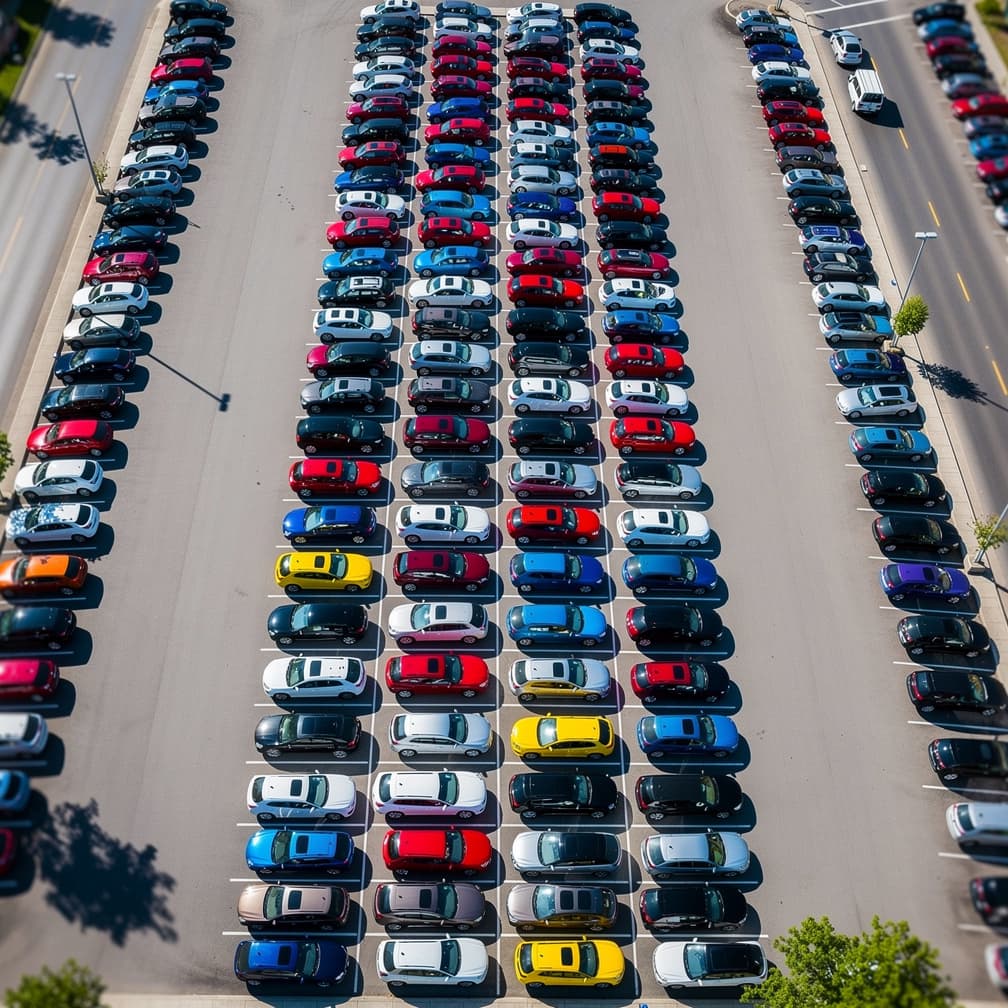
Are you asking whether dealer open lot insurance in Birmingham needs a more detailed inventory and location schedule than a smaller Alabama market? Yes, it usually does. Here, the issue is not the policy form by itself, but how clearly your file shows where units sit, how often they move, and what surrounding activity can increase loss frequency.
Jefferson County has 16,936 business establishments, so many dealers operate near dense retail strips, service businesses, and customer traffic rather than on isolated parcels. That matters because underwriters tend to look harder at frontage, access points, fencing, lighting, overnight parking patterns, and any overflow storage that is not obvious from your main sales lot. If your inventory rotates between a primary lot, a recon address, and a temporary holding area, your quote request should show each location in plain operational terms. A local buyer usually gets a cleaner review by submitting a current inventory list, address schedule, photos of lot layout, and a short explanation of where keys are kept after hours. That gives the underwriter fewer reasons to pause or exclude a location you actually use.
Dealer Open Lot Insurance Risk Factors in Birmingham
Birmingham's top risk factors include Tornado damage, Hail damage, Severe storm damage, and Wind damage.
Alabama has a high climate risk rating. Top hazards: Tornado (Very High), Hurricane (High), Flooding (High), Severe Storm (High). The state's expected annual loss from natural hazards is $1.4B, which influences dealer open lot insurance premiums and may affect coverage availability in high-risk areas.
What Dealer Open Lot Insurance Covers
The real question is not whether this policy exists for your dealership. It is where your inventory exposure shifts from one address to the next. A dealership with a single paved lot, controlled keys, and limited after-hours access presents a different risk than an operation that keeps overflow units at a secondary yard, sends vehicles to outside detail shops, or rotates inventory between rooftops. Your review should map those real handling patterns before you compare forms.
Start with location-specific exposure. Ask whether the policy is being quoted for every place where sale inventory is kept, even if a site is used only for overflow, temporary storage, or reconditioning. If units move between addresses, confirm how that movement is treated and whether there are conditions tied to who is driving, towing, or transporting the vehicles. A gap often appears when a dealer assumes a vehicle is still protected simply because it remains owned for sale.
Then review operational custody. If keys are stored in multiple places, if vehicles are left unlocked during merchandising, or if vendors handle pickup and delivery, those facts can affect how a claim is investigated. The same is true for test-drive procedures, overnight parking patterns, and whether high-value units are separated from the rest of the lot. Weather and theft concerns can shape the practical value of a policy, so ask for plain-language explanations of exclusions, sublimits, valuation method, and any protective safeguards the carrier expects you to maintain. If a quote does not clearly address offsite storage, temporary movement, and vendor handling, ask for revisions before you bind.
Coverage Included

Weather Damage
Covers hail, wind, flood, and storm damage to lot inventory.
Theft Protection
Covers vehicles stolen from your lot.
Fire Damage
Covers fire and explosion damage to inventory vehicles.

Vandalism
Covers intentional damage to vehicles on your lot.
Test Drive Coverage
Covers vehicles during customer and employee test drives.

Transit Coverage
Covers vehicles being moved between lot locations.
Industries & Insurance Needs in Birmingham
Commercial density is the local difference. Jefferson County has a business mix that includes retail trade at 15%, professional, scientific, and technical services at 11.8%, and health care and social assistance at 11.2%. So a dealer lot here often sits in a busier commercial setting, with more daily vehicle movement, shared access drives, neighboring parking demand, and customer traffic than a rural inventory yard.
For dealer open lot coverage, that changes what you should document. A carrier may want a clearer picture of where sale units are parked, whether customer parking mixes with inventory, how vehicles are separated from service or employee areas, and whether overflow units sit at a second address. If your lot is near other active businesses, ask your agent to present the site map and operating routine, not just the unit count. That helps the underwriter evaluate the actual exposure instead of assuming a simple single-lot operation.
What Makes Birmingham Different
Density is what changes the calculus here. In a market tied to a large county business base, a dealer's exposure is often shaped less by the number of units alone and more by how those units sit inside an active commercial corridor. That is the practical difference between a straightforward schedule and one that needs explanation.
Jefferson County's business mix leans heavily toward retail and other customer-facing uses, which means your lot may share traffic patterns, entrances, sight lines, and parking pressure with nearby businesses. For a dealer, that can affect how an underwriter views vehicle placement, test-drive routing, after-hours controls, and any off-site storage that supports sales operations. The useful move is to treat your submission like an operations file, not a basic application. Show where inventory is displayed, where overflow units go, who moves vehicles between addresses, and how the lot is secured when staff leaves. That level of detail is often what separates a smooth quote from a round of follow-up questions.
Our Recommendation for Birmingham
Start with the addresses and the movement pattern. If you keep sale units at more than one location, list every address, describe what happens at each one, and note whether vehicles are stored, reconditioned, photographed, or shown there. A short written workflow often helps more than a longer narrative.
Next, document the lot the way an underwriter would inspect it. Include recent photos showing entrances, fencing, lighting, spacing between rows, and where high-value units are parked overnight. If customer parking, service traffic, or neighboring business activity affects how vehicles enter and exit, say so directly.
Finally, match the submission to the local buyer profile. Birmingham's median household income is $44,376, so many dealers here compete by carrying a mix of price points and faster-turn inventory. If your stock changes quickly, ask for a quoting approach that can keep pace with frequent inventory updates and temporary overflow, rather than assuming a static lot all month. That is usually the cleaner way to avoid gaps between how you operate and how the risk is described.
Get Dealer Open Lot Insurance in Birmingham
Enter your ZIP code to compare dealer open lot insurance rates from carriers in Birmingham, AL.
Business insurance starting at $25/mo
FAQ
Frequently Asked Questions
Birmingham area submissions often need more location detail because the county's commercial setting can mean denser surroundings, shared access points, and more than one storage address to explain clearly.
Birmingham dealers should usually list any overflow storage address that holds sale units. If vehicles move between your main lot and a secondary site, describe both locations and what happens at each one before binding coverage.
Jefferson County business density can affect underwriting because nearby retail and service activity may change traffic flow, parking patterns, and after-hours exposure. That is why a site map, photos, and a clear address schedule can matter.
Birmingham independent dealers usually help the process by sending a current inventory list, every lot or storage address, recent lot photos, and a short note on who moves vehicles for recon, transport, or test drives.
Birmingham customer demand can shape how you present the risk. With a median household income of $44,376, many dealers carry mixed price points and faster-turn units, so frequent inventory changes should be explained up front.
Start with a current inventory list, every storage address, and a clear description of how vehicles move offsite. Alabama underwriters quote more accurately when those details are in front of them. Clear forms and complete disclosures are worth reviewing before you bind, especially if inventory moves between lots or vendors.
Every address where sale inventory is stored should be reviewed during quoting, including overflow yards, temporary storage, and reconditioning locations. A missing address can create avoidable disputes about whether a vehicle was where the policy expected it to be.
Alabama dealers should not assume an existing policy automatically fits a new overflow location. If your storage pattern changes, ask for the address, security details, and inventory values to be reviewed before a loss tests whether the policy was built for that exposure.
Sources
- 1.U.S. Census Bureau, County Business Patterns, Jefferson County(Jefferson County has 16,936 business establishments.; Jefferson County's business mix includes retail trade at 15%, professional, scientific, and technical services at 11.8%, and health care and social assistance at 11.2%.)
- 2.U.S. Census Bureau, ACS 5-Year Estimates, table B19013(Birmingham's median household income is $44,376.)
Updated July 5, 2026





