







































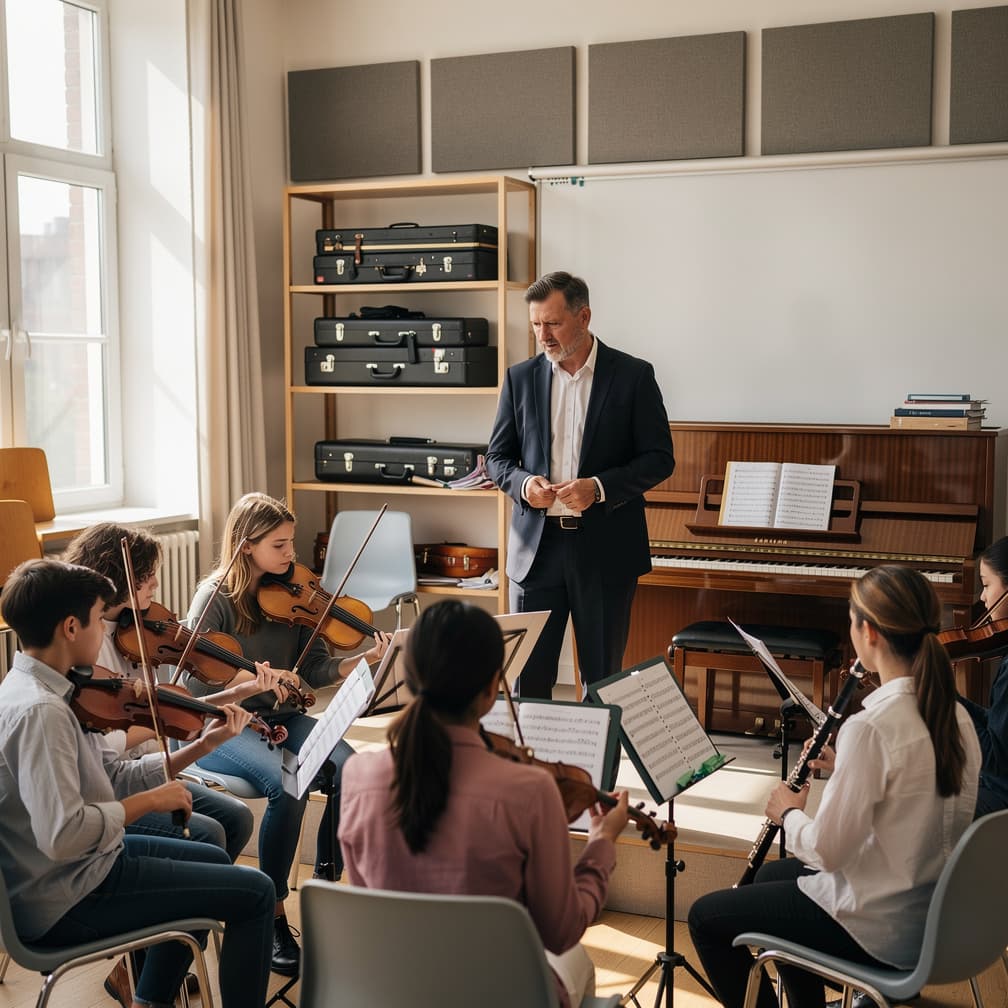

Fire in a practice room does not stop at the drywall. Smoke settles into felt, pads, and speaker cones, and the gear that survives the flames can still be worthless the next morning. Then the calendar empties, because a school with no rooms teaches nobody, and tuition stops while the space gets rebuilt. That distance between the physical loss and the lost lessons is the part of music school insurance in Mobile owners tend to discover late. If Mobile County holds only a handful of studios to borrow space from, a closed room can mean a closed month. Ask what a quote says about income while you are shut, not only about the pianos. Ask it early, when the answer still changes what you buy rather than what you regret.
What Makes Mobile Different
Vague insurance clauses are worse than strict ones, and the smallest counterparties write the vaguest. A community room in Mobile County might ask only for adequate coverage, which means nothing at all until someone disputes it after an injury. Push for the specific: what limit, whose name, which endorsement, how much notice. Get the answer in writing from whoever signs the agreement, not from the volunteer holding the keys. If a hall in Mobile cannot tell you what it needs, propose the wording yourself and have it acknowledged in the document. Then the file shows a standard you met rather than a standard nobody set. Ambiguity feels friendly right up until a parent files a claim and two parties read the same sentence differently. Ten minutes of pinning it down beats a year of arguing about what adequate meant.
Local Risk Factors in Mobile
Tornado damage is rarely tidy. One wall goes, the rest of the building looks fine, and the practice rooms fill with insulation and glass while the pianos stand there apparently untouched. They are not untouched. Grit works into an action, and a technician decides whether the instrument is worth restoring at all. Commercial Property may respond to the structure and the contents, subject to the wording, though a schedule that insures instruments at actual cash value rather than replacement cost hands you a depreciated figure for a forty-year-old upright. A school in Mobile should check which basis its schedule uses. Severe storm claims across Alabama arrive in clusters, so the adjuster you get is the adjuster everyone else is waiting for.
What Coverage Does a Music School in Mobile Need?
General Liability
Landlords and recital venues ask for this one by name, usually with a limit written into the agreement and a request to be listed on it. The line points at third-party injury and third-party property damage: a parent who falls in the lobby, a guest hurt at a concert. It generally says little about a student's instrument left in your care, which is a separate question worth asking.
Example: A grandmother steps back to photograph a recital, catches a floor cable, and fractures a wrist. The school gets the demand letter and the medical bills, and General Liability is generally the line that takes that claim.
Commercial Property
Pianos, amps, the sound desk, the shelf of loaners, and the improvements you built into a rented room: that is what this line is written around. It can help cover fire, theft, vandalism, and sudden water escape, subject to limits and deductibles. Flood and gradual seepage typically sit outside the form, and property belonging to students may carry a sublimit of its own.
Example: A supply line above the recital room lets go overnight and the upright underneath swells shut. With the loss documented and the deductible met, Commercial Property may answer for the instrument and the drying work.
Professional Liability
Slips and falls are not what this line is about. It is intended for allegations that the teaching itself caused harm: technique a parent blames for a strained hand, audition preparation that went badly, guidance a family says it relied on. Those claims arrive slowly, often long after the lesson, and the wording usually turns on when the claim was made rather than when the lesson happened.
Example: A parent claims months of instruction on the wrong hand position injured a child, and demands tuition back plus therapy costs. Professional Liability is the line intended to meet that argument, subject to its terms.
Business Owners Policy
Buying the property and the liability apart works perfectly well. A Business Owners Policy folds them into one form instead, and it often prices better for a single-location school in Mobile. The trade is shape: packaged forms follow a standard, so high-value instruments, students' property, and the income side of a long closure can fall outside or sit under sublimits.
Example: A kitchen fire two doors down fills the school with smoke and closes it for six weeks. A Business Owners Policy may help cover the cleanup and, depending on the trigger, some of the tuition that never arrived.
How Much Does Music School Insurance Cost in Mobile?
Music School Insurance is a bundle of separate policies, priced separately. The ranges below are typical figures for Mobile for each line; a quote prices each one against your own operations.
| Coverage | Typical range | What moves your price |
|---|---|---|
| General Liability Insurance | $65 - $180 per month | Industry and risk classification, annual revenue, number of employees |
| Commercial Property Insurance | $80 - $270 per month | Building value and construction type, roof age and condition, fire protection class |
| Professional Liability Insurance | $60 - $180 per month | The services you actually perform, annual revenue or billed fees, limit and retention selected |
| Business Owners Policy Insurance | $95 - $290 per month | Annual revenue and industry class, building and contents values, square footage and building age |
Prices shown are general estimates, not guaranteed rates or quotes. Your actual premium will depend on the insurer, coverage selected, business details, location, claims history, and other underwriting factors. Learn about our pricing methodology.
What Are the Insurance Requirements for a Music School in Mobile?
Workers' comp is generally required once you have 5 or more employees. Alabama generally requires employers to carry workers' compensation at that point. Common exemptions include sole proprietors, partners, and farm laborers. Confirm current thresholds with your state's workers' compensation agency before you hire.
Flood damage is typically excluded from standard policies. Standard commercial property and builders-risk-type policies typically exclude flood. Given Mobile's coastal flood exposure, a separate flood policy is worth pricing; FEMA's National Flood Insurance Program is the usual starting point.
Where to verify licensing and coverage rules. The Alabama Department of Insurance publishes consumer guidance and current insurance requirements for Alabama businesses. When a contract or lease demands specific wording, the Alabama Department of Insurance's guidance is the authoritative place to check.
Get Your Music School Quote in Mobile
Compare rates from multiple carriers. Free quotes, no obligation.
Operating in Mobile
- Practice rooms get sublet to outside bands on quiet evenings, and that side income changes the risk you declared without changing anything visible in the building. Say it out loud on the application while it is still a small thing.
- Humidity ruins wood slowly and silently. A school in Mobile that lives with a slow leak for a season turns what might have been an insurable event into a maintenance dispute nobody wins.
- A school in Mobile County running one location has nowhere to teach while repairs drag on, so the calendar takes the damage even when the paperwork behaves. Ask about temporary space before you need it, not after.
- Enrollment records and tuition receipts are the only evidence of what a shutdown actually cost, and they are the last thing an owner thinks to back up. Keep a copy somewhere that is not inside the building.
How to Buy: Advice for Mobile Owners
Two policies can carry the same limit and mean different things, which is why comparing premiums first is the expensive way round. Read what each one excludes. Water is the interesting exclusion for a school: a sudden burst and a slow seep get treated very differently, and instruments punish the slow version hardest. Commercial Property is where that language lives. General Liability keeps its own list, and the property of others in your care is often on it. Ask both questions out loud rather than assuming an answer that suits you. Check the Alabama Department of Insurance's guidance before deciding which exclusions you can live with. Then set the quotes from participating carriers side by side on CPK, matched on limits and deductibles, and choose for a school in Mobile on what the forms say.
FAQ
Music School Insurance in Mobile: FAQ
The hall wants its own name attached to your policy so a claim arising out of your event reaches your coverage and not only theirs. That comes from an endorsement on the policy, not from the certificate, though the certificate is what gets emailed around. If a hall in Mobile names an endorsement in its agreement, ask for a copy of the actual endorsement. Wording varies, and yours may be narrower than the version they asked for.
Ask before you assume. Coverage often follows the described operations rather than one address, but off-site teaching can shift the exposure enough that it needs declaring. Say plainly on the application whether anyone teaches in homes, at schools, or in a community hall, and expect participating carriers in Alabama to treat that answer differently. An undeclared activity is what turns a simple claim into an argument you never budgeted for.
Standard commercial property forms typically exclude flood, and that gap does not close by buying a bigger limit. Rising water is written separately, often through the National Flood Program or a private equivalent, and it carries its own waiting period. A pipe bursting inside your wall is a different event and usually sits inside the property form. Ask which one the language in front of you actually describes.
Landlords, recital venues, instrument suppliers on a rental agreement, and any organization that books your teachers for an event. Each may want different wording and its own name on the document. If a hall in Mobile asks for a certificate, treat it as a booking condition rather than admin: the date is not yours until their check clears. Reissue the paper whenever anything on the policy moves.
The per-occurrence figure is what one incident can reach. The aggregate is what the whole policy year can reach across every incident added together. A school with a parent falling in the lobby one term and a student hurt at a recital the next is drawing from the same annual pot twice. That matters when a lease names only the per-occurrence number, since satisfying the lease says nothing about what remains after a bad year.
Say who they are either way. Whether an instructor is on staff or engaged for a term changes how a claim gets argued, and the agreement you sign with them decides who answers first when a student is hurt during their lesson. Write down who supervises, who sets the method, who controls the room. Underwriters ask, and the answer is far easier to give once than to reconstruct after an incident.
Sources
- 1.Alabama Department of Insurance(Alabama Department of Insurance publishes consumer guidance for insurance buyers.)
- 2.FEMA / FloodSmart(Flood coverage is typically purchased separately; FEMA administers the National Flood Insurance Program.)


