







































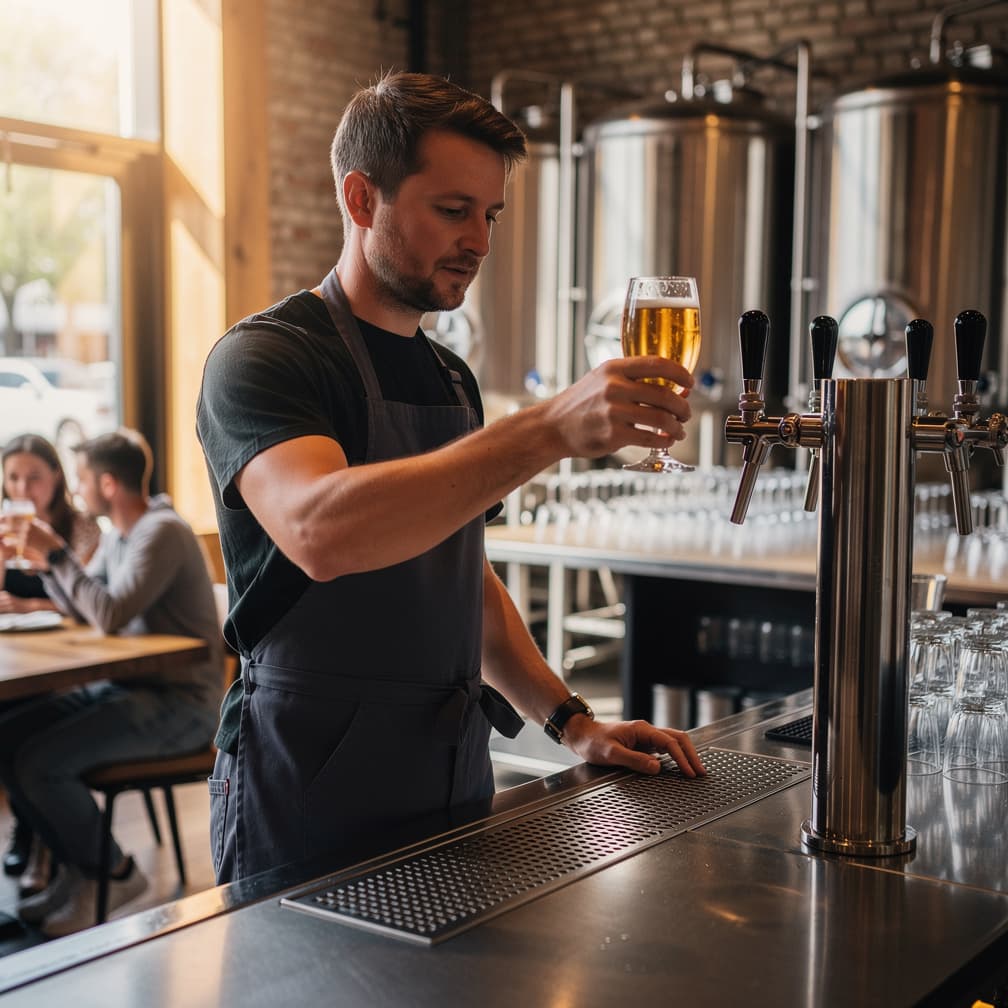

About 13 breweries operate in Anchorage Municipality, and that count matters for one practical reason: the technicians who service glycol systems and the adjusters who value spoiled beer follow the volume, and thin markets get them last. A cooler failure can sit for days before anyone with the right part arrives, and beer does not wait for a schedule. That gap between the loss and the fix is the piece of brewery insurance in Anchorage owners underprice, because business interruption terms decide whether those days cost you anything at all. Ask how a carrier handles spoilage after equipment failure, and what evidence of temperature control it expects from you. Then ask what happens if the repair takes two weeks instead of two days.
What Makes Anchorage Different
With about 8,800 businesses in Anchorage Municipality, the vendor list for a broken glycol chiller is genuinely short. A short list means the repair happens on the technician's schedule, and your tanks simply wait for it. Every day closed is a day the taproom earns nothing, because no second location is absorbing the demand. That is an income loss rather than a property loss, and the two get treated separately on a policy. Owners buy the property limit carefully and take the interruption terms as printed, which reverses the real risk. Ask what waiting period applies before the income side starts, and whether it is measured in days. Ask whether a partial shutdown counts, since a taproom can serve while production stands completely still. Those two answers are worth more here than a small difference in the monthly figure.
Local Risk Factors in Anchorage
Wildfire reaches a brewery through smoke long before flame, and smoke is the part that ruins beer. Taproom air, open fermenters, grain, and packaging all pick up taint, and product that smells wrong is a total loss even when the building is untouched. Commercial Property may respond to smoke damage from a fire, and the treatment of stock and of contamination varies enough between forms to be worth reading line by line. Ask what evidence of smoke damage a carrier expects, since a sensory panel is not a receipt. An Anchorage brewery in an Alaska fire season wants that answer before the air quality drops.
What Coverage Does a Brewery in Anchorage Need?
General Liability
Landlords, festival organizers, and retail accounts ask for this one by name before they let you in the door. It can help cover bodily injury and property damage claims brought by third parties: the guest who slips near the taps, the neighbor's unit soaked when a hose lets go. Claims arising out of serving alcohol are commonly excluded and sit with Liquor Liability instead.
Example: A guest carrying a flight steps on a wet patch by the restroom door and fractures a wrist. The wrist, the ambulance ride, and the demand letter that lands a month later are what this line is meant to answer.
Commercial Property
The building, the brewhouse, the tanks, the walk-in, the taps, and the packaging stacked in the corner are what this coverage is written around. It typically responds to fire, storm, theft, and vandalism, while flood and mechanical breakdown are commonly left out. A lender behind financed equipment often requires it, and the limit only works when your values are current.
Example: A fire in the packaging area takes the canning line and half the roof, and the taproom goes dark while the rebuild waits on a fabricator. The repair sits inside what this property line addresses, but the lost weeks are a separate business income question, not part of that limit.
Liquor Liability
A guest keeps drinking past the point where somebody should have stopped, drives home, and injures a stranger. That claim commonly falls outside General Liability, and this is the line intended to pick it up. Terms vary widely: some forms condition coverage on documented server training, and some stop at your address rather than following you to a festival.
Example: A bartender keeps pouring for a regular who then backs into another car in the lot on the way out. The injury claim that names your brewery is the scenario this coverage exists for, subject to the form's conditions.
Workers Compensation
Where the liability lines answer to guests and neighbors, this one answers to your own crew. Burns at the kettle, backs strained moving kegs, and cuts from broken glass are the injuries a brewery reliably produces, and medical costs and lost wages are generally what it addresses. Requirements vary by state, so confirm what applies where you operate.
Example: A cellar worker slips while dragging a hose across a wet floor, tears a shoulder, and misses six weeks of shifts. Treatment and a share of those lost wages typically run through this coverage rather than out of your own account.
Tools & Equipment (Inland Marine)
Property coverage generally stops at the building line, which becomes a problem the moment your gear leaves it. This line follows the mobile canning setup, the festival jockey box, the tools, and a vessel in transit to a fabricator. Equipment bolted down and never moved usually belongs on the property schedule instead.
Example: Your jockey box, taps, and portable chiller disappear from a trailer overnight after a festival in Anchorage. Gear that travels is what this line is meant to follow, where a policy written only for the building would not reach.
How Much Does Brewery Insurance Cost in Anchorage?
Brewery Insurance is a bundle of separate policies, priced separately. The ranges below are typical figures for Anchorage for each line, except workers compensation, which is rated per $100 of payroll; a quote prices each one against your own operations.
| Coverage | Typical range | What moves your price |
|---|---|---|
| General Liability Insurance | $130 - $410 per month | Industry and risk classification, annual revenue, number of employees |
| Commercial Property Insurance | $290 - $1,025 per month | Building value and construction type, roof age and condition, fire protection class |
| Liquor Liability Insurance | $110 - $450 per month | Share of sales that comes from alcohol, type of venue and how late you serve, server training and service procedures |
| Workers Compensation Insurance | $0.75 - $2.74 per $100 of payroll | Employee classification codes, total annual payroll, experience modification rate |
| Inland Marine Insurance | $40 - $160 per month | Total insured value of the scheduled property, type and age of the equipment, where it is stored and how far it travels |
Prices shown are general estimates, not guaranteed rates or quotes. Your actual premium will depend on the insurer, coverage selected, business details, location, claims history, and other underwriting factors. Learn about our pricing methodology.
What Are the Insurance Requirements for a Brewery in Anchorage?
Workers' comp is generally required once you have your first employee. Alaska generally requires employers to carry workers' compensation at that point. Common exemptions include sole proprietors, working members of LLCs, and unpaid volunteers. Confirm current thresholds with your state's workers' compensation agency before you hire.
Where to verify licensing and coverage rules. The Alaska Division of Insurance publishes consumer guidance and current insurance requirements for Alaska businesses. When a contract or lease demands specific wording, the Alaska Division of Insurance's guidance is the authoritative place to check.
Get Your Brewery Quote in Anchorage
Compare rates from multiple carriers. Free quotes, no obligation.
Operating in Anchorage
- Broken glass on a taproom floor is routine, and the injury it causes is a general liability claim rather than a cleaning problem. Written closing procedures are what a carrier asks about after the second one.
- A tap takeover puts your beer in someone else's bar, poured by someone else's staff, under someone else's house rules. Whether your liquor coverage reaches that night depends on wording, and carriers in Alaska handle it differently.
- Growler and can sales move your product past the door and out of your sight, and a contamination complaint can arrive weeks later from a customer you never met. Batch records are what make that defensible.
- A cooler fails at two in the morning and nobody knows until first shift opens the door. A remote temperature alarm turns a total loss into a service call, and carriers notice when an Anchorage brewery has one.
How to Buy: Advice for Anchorage Owners
Your entity name is the detail that quietly breaks certificates. Breweries often hold the building in one company, the license in another, and the equipment lease in a third, and a policy naming the wrong one is worthless to the party asking for proof. Sort that out before quoting: which entity signs the Anchorage lease, which holds the license, which employs the staff behind Workers Compensation. Then decide who needs to appear as additional insured, and get the endorsement wording in writing rather than over a phone call. General Liability certificates cross a lot of desks, and each one gets checked by somebody whose job is finding the error. The Alaska Division of Insurance publishes consumer guidance on business coverage for owners sorting out that structure. Participating carriers can quote the same structure differently, so compare on how your entities get handled.
FAQ
Brewery Insurance in Anchorage: FAQ
Barrel output, taproom square footage, seat count, serving hours, whether food is served, payroll split by job, equipment values, and loss history. Many ask about events, music, and private buyouts, because a room that gathers a crowd rates differently than one that does not. Have the numbers ready before you start, since a brewery in Anchorage that guesses gets priced as though the worst version is true.
Not automatically. Many liability forms are written for a fixed location, and pouring at a tent in Anchorage or anywhere else can require an off-premises endorsement. The organizer will likely want a certificate naming them, which is a separate step from actually having the coverage. Ask both questions in one call: does the form reach the event, and can the certificate carry the wording the organizer demands?
It is the slice of every loss you pay before the policy does anything at all. A brewery's routine claims are small and frequent: a failed pump, a dead compressor, a broken window. A high deductible trims the monthly figure and can erase that saving across a year of them. Set it at a number you could write a check for during your slowest stretch.
Property in transit or sitting in someone else's shop lives in a different place than property bolted to your floor. Inland Marine is generally the form built for equipment that moves, and coverage while a vessel sits at a repair shop depends on the wording and sometimes on the shop's own policy. Ask who carries the risk during transport and while it is out, before the trailer leaves.
Premiums move on things beyond your loss history. Replacement costs for stainless and refrigeration have climbed, so the values behind your property limit rise even when nothing broke. Payroll grew, or the class split shifted. Carriers in Alaska also refile rates, and a whole market can move at once. Ask which factor drove the change and what the carrier would need to see to price it differently.
Before, and earlier than most owners plan for. The lease asks for proof, an occupancy permit often does, and your build-out contractor's certificate matters to you as much as yours matters to the landlord. A delay in Anchorage costs rent while the beer ages in the tanks, and none of that is an insurance loss. Quoting a month ahead leaves room for a request that cannot be rushed.
Sources
- 1.U.S. Census Bureau, County Business Patterns (2022), Anchorage Municipality(Anchorage Municipality has about 8,800 business establishments.)
- 2.U.S. Census Bureau, County Business Patterns (2023), Anchorage Municipality(Anchorage Municipality has about 13 businesses in this trade's category (NAICS group 312120).)
- 3.Alaska Division of Insurance(Alaska Division of Insurance publishes consumer guidance for insurance buyers.)


