







































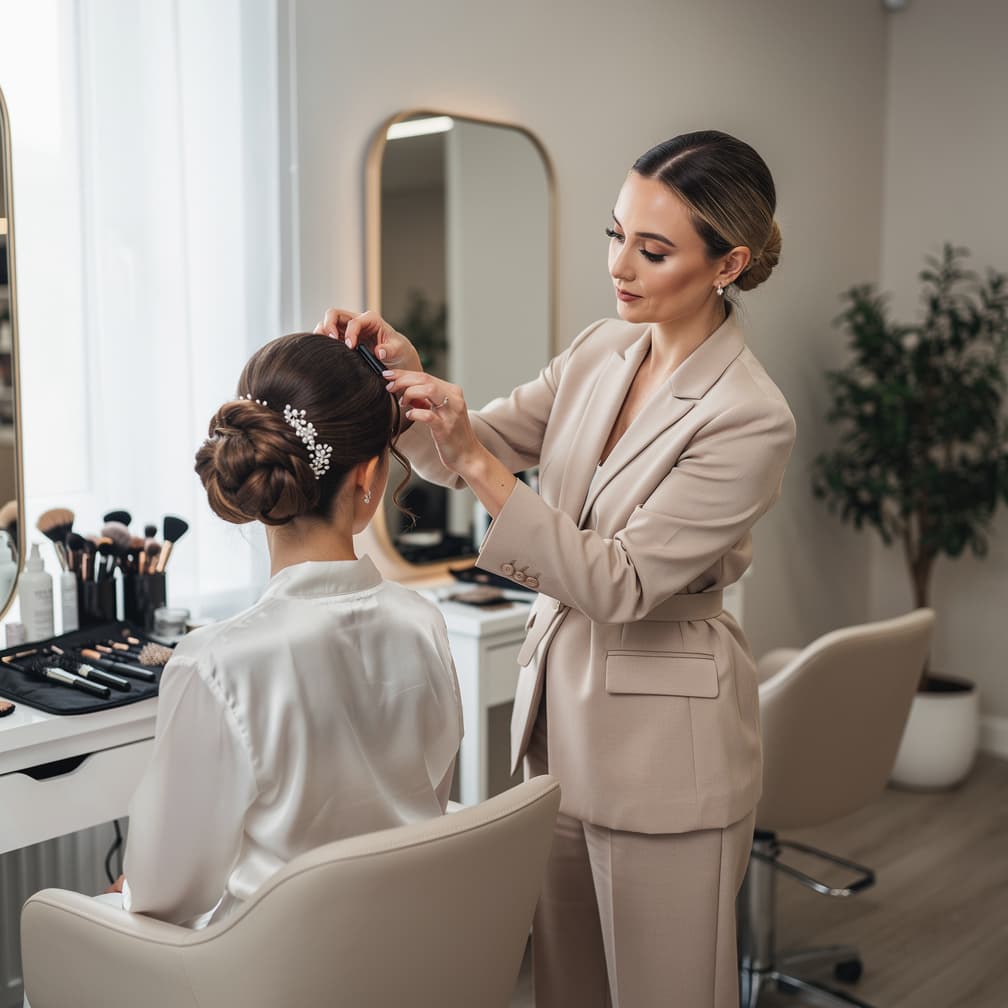

Working as a bridal stylist in Anchorage means your business address is wherever the wedding is that day. That single fact drives most of the decisions on this page, because the risk travels with you. A hotel suite, a private home, a barn with one working outlet: each has different floors, different lighting, and a different owner who wants to be named on your policy. Bridal stylist insurance in Anchorage is generally built as a package for people whose worksite changes with every booking. A Business Owners Policy bundles the common pieces, though what it includes varies more between carriers than most buyers expect. Reading the actual form beats reading the brochure every time. Below, each coverage gets a card explaining what it is meant to do for this trade specifically.
What Makes Anchorage Different
Contracts written for a small venue can be shorter and stranger than the ones a chain uses. A one-page rental agreement in Anchorage might name a limit with no explanation of what triggers it. Vague wording is not friendly wording, because vague wording gets read against you after a loss. You are the one who has to ask what the clause means before you sign it. Owners of small venues often wrote the form themselves, and they can rewrite a line if asked. That flexibility is the one advantage of a thin market, and almost nobody ever uses it. Ask to strike an indemnity clause that makes you responsible for the venue's own mistakes. Carriers in Alaska rarely agree to insure a promise that broad, so the clause outruns your policy.
Local Risk Factors in Anchorage
An evacuation order gives you an hour to decide what leaves with you, and a bridal kit is heavy. Stylists load a client's gown before their own cases, which is generous and expensive. Property you own can be insured; property you were holding for someone else is a different question with a different answer. Inland Marine may respond to your gear away from a fixed address, and property of others is often a separate wording you have to request by name. Ask about that wording before fire season reaches Anchorage Municipality, and ask again whenever your kit in Anchorage changes.
What Coverage Does a Bridal Stylist in Anchorage Need?
General Liability
Venues, hotels, and planners ask for this one by name before they let a vendor upstairs. It can respond when a guest trips over your cord, when a bridesmaid slips near your station, or when you damage a room you were working in. Complaints about how you styled someone's hair generally sit outside it.
Example: A bridesmaid catches a heel on a taped-down cord and lands hard on a hotel floor. The medical bill and the venue's demand letter arrive together, and this line may pick them up.
Professional Liability
Damage to a lamp is not what this line is about. Allegations about your technique are: color that lifted wrong, adhesive that failed, a finish the client says ruined the photographs. It is generally meant to reach defense costs as well as a settlement, and defense is often the larger number. Intentional acts sit outside it.
Example: The trial went fine, the wedding day toner went brassy, and a letter arrives a month later citing the photos. Defense costs on a claim like that could start long before fault is decided.
Business Owners Policy
Where a standalone liability policy answers only to other people, this package pairs a liability section with property at an address you name. It suits a stylist who holds a suite, a studio, or a chair somewhere. What the property side includes varies between carriers, and gear that travels often sits somewhere else entirely.
Example: A pipe bursts above the studio where your backup stock is shelved, and the shelves come down with the water. Property at the address the policy names may respond, while the cases in your car may not.
Tools & Equipment (Inland Marine)
Irons, dryers, brushes, an airbrush compressor, lighting, and the rolling cases they live in. This line is generally built for property that moves, which is what a bridal kit does for a living. It could respond to theft, fire, or damage in transit. Wear and tear and slow deterioration are typically excluded.
Example: The kit is stolen out of a car in Anchorage between a trial and a wedding, and the next booking is four days out. Replacing it quickly is what this coverage is intended to make possible.
How Much Does Bridal Stylist Insurance Cost in Anchorage?
Bridal Stylist Insurance is a bundle of separate policies, priced separately. The ranges below are typical figures for Anchorage for each line; a quote prices each one against your own operations.
| Coverage | Typical range | What moves your price |
|---|---|---|
| General Liability Insurance | $45 - $140 per month | Industry and risk classification, annual revenue, number of employees |
| Professional Liability Insurance | $35 - $120 per month | The services you actually perform, annual revenue or billed fees, limit and retention selected |
| Business Owners Policy Insurance | $75 - $230 per month | Annual revenue and industry class, building and contents values, square footage and building age |
| Inland Marine Insurance | $15 - $60 per month | Total insured value of the scheduled property, type and age of the equipment, where it is stored and how far it travels |
Prices shown are general estimates, not guaranteed rates or quotes. Your actual premium will depend on the insurer, coverage selected, business details, location, claims history, and other underwriting factors. Learn about our pricing methodology.
What Are the Insurance Requirements for a Bridal Stylist in Anchorage?
Workers' comp is generally required once you have your first employee. Alaska generally requires employers to carry workers' compensation at that point. Common exemptions include sole proprietors, working members of LLCs, and unpaid volunteers. Confirm current thresholds with your state's workers' compensation agency before you hire.
Where to verify licensing and coverage rules. The Alaska Division of Insurance publishes consumer guidance and current insurance requirements for Alaska businesses. When a contract or lease demands specific wording, the Alaska Division of Insurance's guidance is the authoritative place to check.
Get Your Bridal Stylist Quote in Anchorage
Compare rates from multiple carriers. Free quotes, no obligation.
Operating in Anchorage
- Your kit lives in a car for most of the year, parked at venues across Anchorage Municipality you have never seen. Theft from a vehicle is the loss stylists report most often and insure least often.
- Outlets are scarce at older properties, so extension cords cross the floor of every room you work in Anchorage. Those cords are your liability the moment someone in heels finds one.
- Weddings do not reschedule for your paperwork. If a planner in Anchorage asks for a certificate two days out and your carrier routes the request through an office, the date can go to whoever answers faster.
- Trials happen weeks before the wedding, and a chemical reaction that shows up then is a warning you can still act on. The same reaction on the morning itself is a claim with forty witnesses.
How to Buy: Advice for Anchorage Owners
Inventory your kit before you request a quote, because the number you give sets the limit you get. Walk the case: irons, dryers, brushes, airbrush compressor, lighting, and the rolling cases themselves. Stylists undercount by a wide margin, since the kit was assembled a piece at a time over years. Inland Marine is generally the line that follows that gear off premises, which is where it lives. A Business Owners Policy can bundle liability with property, though what the property side includes varies between carriers. Read the schedule, not the summary. Ask whether a stolen kit is settled at what replacement costs today or at what you paid years ago. That difference is worth more than a few dollars of premium either way. Check the Alaska Division of Insurance's guidance before deciding how much of the kit to schedule. Comparing quotes from participating carriers who write in Anchorage is the last step, once you know the number you are insuring.
FAQ
Bridal Stylist Insurance in Anchorage: FAQ
A chemical burn is a bodily injury allegation and a technique allegation at once, which is why it lands awkwardly between coverages. Some forms treat it under a liability section; others exclude chemical services unless you ask for them to be added. Read the exclusions page before you buy, and put the question to the carrier directly. The answer varies enough between forms that assuming is expensive.
Liability lines are about other people, not about your own property. Inland Marine is generally the line built to follow equipment that travels, which describes a bridal kit exactly. It may respond when a case is stolen from a car or crushed in transit. Wear and tear is typically excluded, since a policy is not a maintenance plan for irons you have used for six years.
Adding a venue as an additional insured extends part of your liability coverage to them for claims arising out of your work. They want it because it puts your policy in front of theirs. It does not reach their own negligence, and it is a real endorsement rather than a line typed into a certificate's description box. Ask for it by name when an Anchorage contract calls for it.
Nobody hands you a vendor packet in a living room, and the risk does not shrink because nobody asked. A hot tool on an antique dresser, a case knocked into a mirror, a guest who trips over your cord: those are the same losses a hotel worries about. General Liability can respond to damage you cause in someone else's space. The absence of a request is not an absence of exposure.
Turnaround is a carrier question rather than a rule, and it is worth asking before you need it. Some carriers let you issue a certificate yourself online; others route the request through an office. Adding a new additional insured usually takes longer than issuing a plain certificate. If a venue in Anchorage needs the packet before a deposit clears, that difference decides whether you keep the date.
Liability coverage responds to injury and property damage, not to a date that moved. A postponement is a contract question, and your deposit terms are what decide it. That is why the cancellation language in your own client agreement matters more than any policy wording when weather hits. Write those terms before the season, not during the week you need them.
Sources
- 1.Alaska Division of Insurance(Alaska Division of Insurance publishes consumer guidance for insurance buyers.)


