







































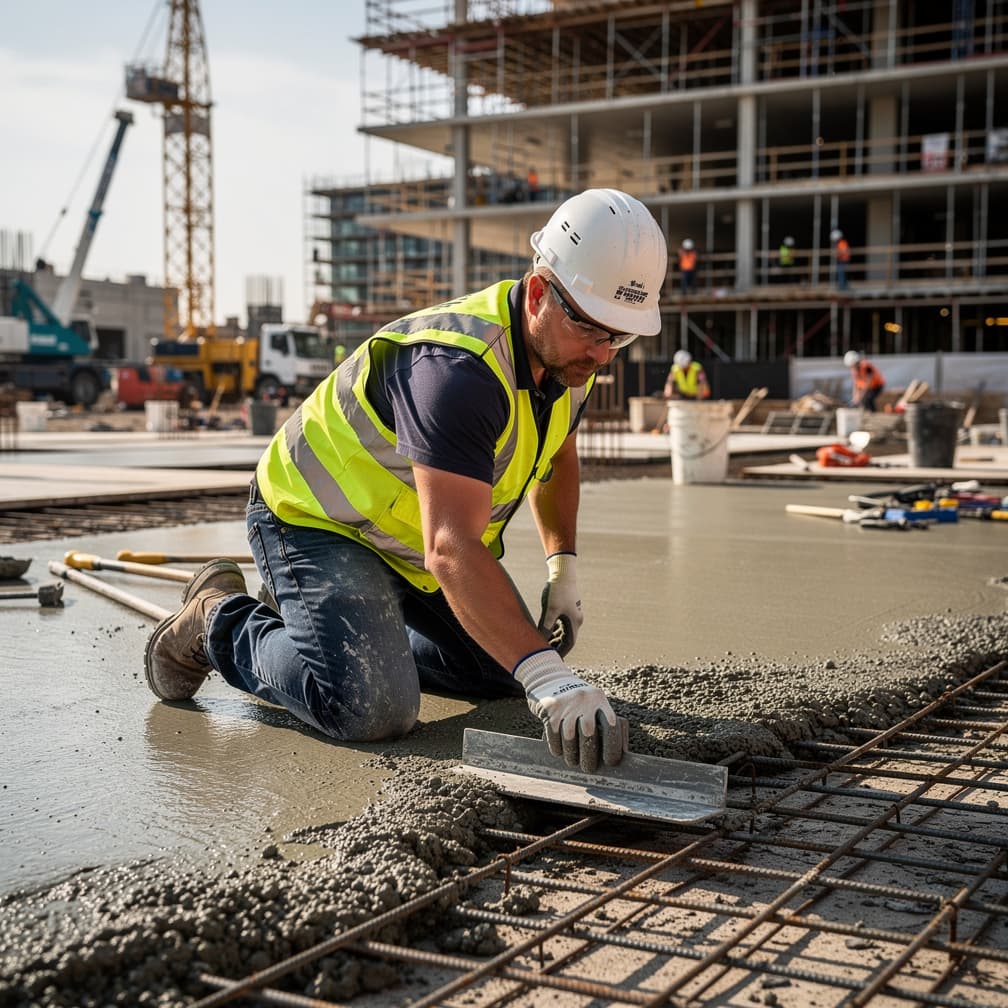

General Liability for concrete work commonly starts from $35 a month at the low end of the published range, and payroll is what moves it from there. Concrete contractor insurance in Anchorage gets priced off how many hands are finishing, how many miles your trucks cover, and whether last year included a claim. A quote that skips those inputs is a guess wearing a number. The slab you poured last spring can still produce a dispute this year, and completed work exposure is one reason two crews of the same size see different prices. Deductibles and limits shift the total as much as anything local does. Read the ranges below, then compare quotes from participating carriers in Alaska before assuming the lowest submission bought the same coverage as the next one.
What Makes Anchorage Different
Small jobs come with small contracts, and small contracts hide the same obligations in fewer words. A single line about insurance can still bind you to limits you have never carried before. Nobody reads it aloud at the kitchen table, though the clause survives the handshake anyway. When a slab cracks later, that clause is the first document a lawyer asks to see. Verbal change orders make it worse, since the written scope no longer matches the poured work. Write the scope down even for a driveway, because coverage disputes start with what you promised. A one-page scope and a current certificate settle most arguments before they become claims in Anchorage. Ask participating carriers in Alaska how completed work is treated before you sign the next one.
Local Risk Factors in Anchorage
Before fire season, look at where your equipment sleeps, because a trailer parked at a remote pad is the asset you cannot retrieve on an evacuation order. Photograph the schedule, the serial numbers, and the storage yard, then keep that file somewhere other than the truck. Fire damage to scheduled tools and mobile property may be handled one way, subject to the form, while your own unfinished slab is a different question entirely. General Liability sits on the third-party side, which is where a claim can arrive if your work or your material contributes to somebody else's loss. Confirm the details with the Alaska Division of Insurance before deciding how much to schedule in Alaska.
What Coverage Does a Concrete Contractor in Anchorage Need?
General Liability
Builders and property owners ask for this one by name before a truck reaches the pad. It is the line that might answer when a visitor slips on a curing slab, or when moving forms and equipment take out a fence, an irrigation line, or the curbing beside your work. Redoing your own cracked slab typically sits outside it.
Example: A homeowner walks out to admire a fresh driveway, steps onto the edge before it cures, and lands hard; General Liability can help cover the injury claim and the defense that follows it.
Workers Compensation
Finishing, cutting, and lifting are where a concrete crew gets hurt, and this line is rated for exactly that, priced per $100 of payroll. Medical care and lost wages for an injured employee are what it is meant to address. Owners and subcontractors get treated differently, and thresholds vary from state to state.
Example: A finisher lifts a form panel wrong during a slab pour and cannot work for a month; Workers Compensation is generally intended to take the medical bills and part of the missing wages.
Commercial Auto
Personal policies commonly exclude business use, which can leave the truck hauling mix, forms, and a loaded trailer unprotected at the worst possible moment. This line gets rated on the vehicles, the towing, the mileage, and the drivers, and it may respond when your truck injures someone or damages property on the road.
Example: A trailer of forms comes loose on the drive between two pours in Anchorage and clips the car behind it; Commercial Auto is where those injury and repair demands would land.
Tools & Equipment (Inland Marine)
Tools and mobile equipment spend more hours in transit or parked at a jobsite than under anyone's eye. Scheduled values then decide what a theft or a loss is worth: the mixer, the trowel machine, the saws, the vibrators. Rented equipment is often handled separately, and anything left off the schedule usually stays off the payment.
Example: A trailer is emptied overnight at an open jobsite and the saws and trowel machine are gone by first light; scheduled equipment coverage could make the replacement a matter of days rather than months.
Commercial Umbrella
When a subcontract names a limit higher than your underlying policy carries, this is usually the cheaper way to reach the number. It sits above General Liability or the auto limit and follows those terms, so an exclusion underneath stays an exclusion. It is built for the rare large claim rather than the routine one.
Example: A multi-vehicle accident on the way to a pour produces injury demands well past the underlying auto limit; an umbrella layer might pick up what sits above it, subject to the terms.
How Much Does Concrete Contractor Insurance Cost in Anchorage?
Concrete Contractor Insurance is a bundle of separate policies, priced separately. The ranges below are typical figures for Anchorage for each line, except workers compensation, which is rated per $100 of payroll; a quote prices each one against your own operations.
| Coverage | Typical range | What moves your price |
|---|---|---|
| General Liability Insurance | $240 - $725 per month | Industry and risk classification, annual revenue, number of employees |
| Workers Compensation Insurance | $0.75 - $2.74 per $100 of payroll | Employee classification codes, total annual payroll, experience modification rate |
| Commercial Auto Insurance | $270 - $825 per month | Fleet size and vehicle types, driver records and experience, coverage limits and deductibles |
| Inland Marine Insurance | $60 - $220 per month | Total insured value of the scheduled property, type and age of the equipment, where it is stored and how far it travels |
| Commercial Umbrella Insurance | $110 - $360 per month | Umbrella limit requested, limits carried on the underlying policies, loss history on those underlying policies |
Prices shown are general estimates, not guaranteed rates or quotes. Your actual premium will depend on the insurer, coverage selected, business details, location, claims history, and other underwriting factors. Learn about our pricing methodology.
What Are the Insurance Requirements for a Concrete Contractor in Anchorage?
Workers' comp is generally required once you have your first employee. Alaska generally requires employers to carry workers' compensation at that point. Common exemptions include sole proprietors, working members of LLCs, and unpaid volunteers. Confirm current thresholds with your state's workers' compensation agency before you hire.
State auto liability minimums apply to business vehicles. Alaska's minimum auto liability limits are $50,000/$100,000/$25,000 (bodily injury per person / per accident / property damage). Contracts and lenders often require more than the state floor.
Where to verify licensing and coverage rules. The Alaska Division of Insurance publishes consumer guidance and current insurance requirements for Alaska businesses. When a contract or lease demands specific wording, the Alaska Division of Insurance's guidance is the authoritative place to check.
Get Your Concrete Contractor Quote in Anchorage
Compare rates from multiple carriers. Free quotes, no obligation.
Operating in Anchorage
- Cold snaps and heat waves both push pours into conditions the schedule picked rather than the crew, and the cure defects argued about months later started on exactly those days.
- The trailer hitch is the quiet exposure on a concrete job: one loose chain at highway speed turns your equipment loss into somebody else's injury claim in a heartbeat.
- Subcontracted finishers who cannot produce their own certificate can land on your payroll at audit, so collect that paper before anyone touches a screed rather than after the term closes.
- A driveway you poured in Anchorage years ago can still produce a phone call, and the job file, rather than anyone's memory, is what answers the questions that follow.
How to Buy: Advice for Anchorage Owners
Ask what a form says about your own work before you ask what it costs, since concrete disputes tend to start there. A slab that cracks, dusts, or settles is usually treated as workmanship, and General Liability is rarely meant to rebuild it. What the failed slab damages next, the fence, the irrigation, the finished floor inside, is the part that can become a property damage claim. That distinction decides whether a demand letter is a policy problem or a bank problem. A Commercial Umbrella inherits the same exclusion, so height above the underlying limit repairs nothing. The Alaska Division of Insurance publishes consumer guidance on what commercial liability forms exclude. Take the answers back to participating carriers in Anchorage and compare them on that exclusion rather than on price.
FAQ
Concrete Contractor Insurance in Anchorage: FAQ
Flooding sits outside most standard property forms and gets priced as its own decision, often through the National Flood Insurance Program. Equipment scheduled on Inland Marine may be treated differently depending on the form and where the water came from, which is worth asking about directly. A washed-out subgrade or a ruined pour is usually a schedule problem rather than an insured loss.
Ask whoever issued the policy for a certificate naming the holder the contract specifies, carrying the endorsements the exhibit demands. Turnaround belongs to the carrier, so start the request before your schedule depends on it. Wrong holder names and missing wording are the usual reasons paper bounces back. Nothing about a job in Anchorage moves faster because the certificate was requested late.
Yes, in two directions. Their payroll can land in your Workers Compensation audit if you cannot produce their certificate, and their mistakes can arrive as a claim against you, because the owner hired you rather than them. Collect the certificate before they start, ask to be named as an additional insured on it, and keep the copy with the job file. A crack argument years later begins in that folder.
Payroll leads, because the hands finishing, cutting, and lifting carry the injuries. Then come the vehicles and how far they haul, the value of the equipment riding on the trailer, the limits your contracts demand, the deductible you pick, and your claims history. Work type matters as well, since a highway pour and a backyard patio are different exposures. Two contractors in Anchorage can quote differently on payroll alone.
General contractors, property owners, property managers, and permit desks all can, and each may want different wording on the page. A builder in Anchorage can require additional insured status and a waiver of subrogation before your truck reaches the pad. Homeowners rarely ask, which makes it easy to let a policy drift out of date between commercial jobs. The certificate is proof; the limits behind it are what a claim tests.
Usually not. Redoing your own defective work is treated as workmanship in most liability forms, which makes it a warranty question rather than a coverage one. What changes the answer is what the failed slab damaged next: a garage floor, a fence, irrigation lines, or a parked vehicle. That resulting property damage is where General Liability may come into play, subject to the form and its exclusions.
Sources
- 1.Alaska Division of Insurance(Alaska Division of Insurance publishes consumer guidance for insurance buyers.)


