







































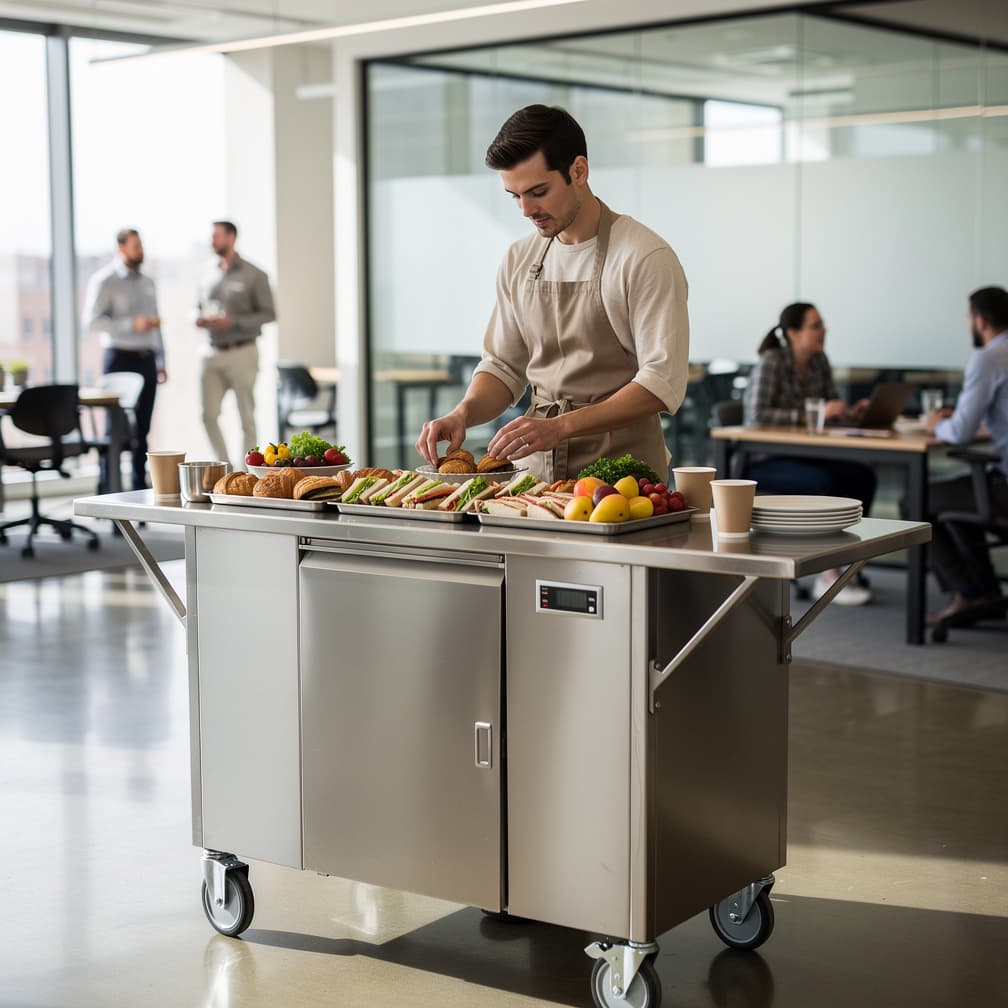

Hot oil and a public sidewalk make a bad pair on the day something goes wrong. A customer waiting at your service window catches a splash, or slips on a slick patch of pavement, and the demand letter shows up long after the lunch rush ended. Food cart insurance in Fairbanks exists for that gap: the injured stranger, the canopy that blows into a parked car, the cart missing from a lot overnight. Carts work in public, so the people who get hurt around one are almost never on your payroll. That single fact drives which limits are worth buying and which are wasted. What follows lays out what carts commonly carry, how the published ranges in Alaska tend to move, and where the honest gaps sit, so you can compare quotes with your eyes open.
What Makes Fairbanks Different
Certificates travel further than owners expect in a small market. The same document you hand a church festival gets forwarded to a school district, a fairground, and a property owner who all read it differently. One of them will want their name added, and the request tends to arrive the night before the event. A cart that keeps the endorsement standing rather than adding it per booking stops living on that clock. Ask an insurer in Fairbanks what changing a named party actually takes, in days, before you need it to take none. Rules on required limits vary widely, and the Alaska Division of Insurance publishes consumer guidance on what a certificate does and does not prove. Bring the toughest booking form you have ever been handed into the quote. Sizing the policy to that one form beats sizing it twice in Alaska.
Local Risk Factors in Fairbanks
Wildfire changes a cart's year through smoke long before flame gets anywhere close. Air quality alerts cancel outdoor markets, festivals pull permits, and a cart with no walls has nowhere to sell. Those are lost shifts, and a property policy answers to damaged property rather than to a cancelled calendar. Smoke also settles into a cart: fabric canopies, filters, and food contact surfaces that have to be cleaned before you serve again, and that cleanup can qualify as damage depending on the form's wording. Commercial Property may respond to smoke damage in some cases, though the threshold is usually a good deal more than a smell. If a season turns bad in Fairbanks North Star Borough, document the cart's condition before and after, because that comparison is the whole claim in Alaska.
What Coverage Does a Food Cart in Fairbanks Need?
General Liability
Venues, landlords, and permit offices ask for this one by name, and it answers to strangers rather than to anything you own. A burn at the window, a slip beside the queue, a canopy into somebody's parked car: General Liability can help cover the injury claim and the defense that follows, subject to your limits. Damage to the cart itself sits somewhere else entirely.
Example: A customer reaches across for a drink, catches the edge of the griddle shelf, and burns a forearm badly enough for stitches; the medical bill and the demand letter behind it may fall to General Liability.
Commercial Property
Flood is out, gradual wear is out, and mechanical breakdown usually is too, which leaves the losses that actually close a cart: theft from a storage lot, storm damage to a canopy or hood, vandalism overnight. Commercial Property is generally written around the cart, the griddle, the generator, and the inventory, and it typically expects those items scheduled at honest values.
Example: The cart is gone from the yard by morning, chain cut, cooler and gear with it; where the build was documented and the equipment scheduled, Commercial Property is the line that would be asked to answer.
Commercial Auto
Everything else on this page stops at the curb; this one starts there. Once a cart travels behind a vehicle, or supplies ride in one, the trip counts as business use, and personal auto forms commonly exclude exactly that. Commercial Auto is generally the line for the vehicle, the trailer, and the cart in transit. Parked and serving is a separate question.
Example: Wet road, a short stop, and the driver behind you does not stop at all; the cart is folded and the day's stock with it, a loss that generally belongs to Commercial Auto rather than to any property form in Fairbanks.
Business Owners Policy
One contract instead of two. A Business Owners Policy bundles the liability side and the property side, which for a single cart with a clean equipment list is often simpler to buy and simpler to prove to a venue that wants paperwork. The tow vehicle is not included, and flood stays outside it.
Example: A gust puts your canopy through a parked windshield and rips the frame in the same second; both halves of that afternoon, the stranger's glass and your own equipment, may be handled under one Business Owners Policy.
How Much Does Food Cart Insurance Cost in Fairbanks?
Food Cart Insurance is a bundle of separate policies, priced separately. The ranges below are typical figures for Fairbanks for each line; a quote prices each one against your own operations.
| Coverage | Typical range | What moves your price |
|---|---|---|
| General Liability Insurance | $60 - $210 per month | Industry and risk classification, annual revenue, number of employees |
| Commercial Property Insurance | $60 - $250 per month | Building value and construction type, roof age and condition, fire protection class |
| Commercial Auto Insurance | $180 - $525 per month | Fleet size and vehicle types, driver records and experience, coverage limits and deductibles |
| Business Owners Policy Insurance | $110 - $340 per month | Annual revenue and industry class, building and contents values, square footage and building age |
Prices shown are general estimates, not guaranteed rates or quotes. Your actual premium will depend on the insurer, coverage selected, business details, location, claims history, and other underwriting factors. Learn about our pricing methodology.
What Are the Insurance Requirements for a Food Cart in Fairbanks?
Workers' comp is generally required once you have your first employee. Alaska generally requires employers to carry workers' compensation at that point. Common exemptions include sole proprietors, working members of LLCs, and unpaid volunteers. Confirm current thresholds with your state's workers' compensation agency before you hire.
State auto liability minimums apply to business vehicles. Alaska's minimum auto liability limits are $50,000/$100,000/$25,000 (bodily injury per person / per accident / property damage). Contracts and lenders often require more than the state floor.
Where to verify licensing and coverage rules. The Alaska Division of Insurance publishes consumer guidance and current insurance requirements for Alaska businesses. When a contract or lease demands specific wording, the Alaska Division of Insurance's guidance is the authoritative place to check.
Get Your Food Cart Quote in Fairbanks
Compare rates from multiple carriers. Free quotes, no obligation.
Operating in Fairbanks
- Two carts under one owner is two equipment schedules. An insurer prices the pair off what you listed, never off what is actually parked in the yard.
- A property manager in Fairbanks can hold your setup slot until a current certificate names their entity correctly, so a lapsed policy costs you weekends rather than paperwork time.
- Propane tanks get swapped, moved, and set down near a hot surface during a rush. The exposure is not really the tank, it is the stranger standing three feet from it.
- Cash boxes and phones disappear during teardown more often than whole carts do, and those small theft losses tend to land under a deductible you chose in a calmer month.
How to Buy: Advice for Fairbanks Owners
Renewal is the moment to fix what you accepted last year under pressure. Pull the equipment schedule and ask whether it still describes the cart you own, because a new griddle, a rebuilt canopy, or a second cooler will not appear on it by itself. Check whether the limit still clears the toughest booking form you were handed in Fairbanks all season. A Business Owners Policy tends to make that review shorter, since the property and liability sides sit in one document instead of two. Commercial Property alone works too, provided somebody actually reads it. Do the review a month early rather than the week of, then compare what participating carriers quote through CPK in Alaska against the policy you already hold.
FAQ
Food Cart Insurance in Fairbanks: FAQ
It means the venue gets added to your policy, so a claim against them arising out of your work may be handled under your coverage rather than theirs. Being listed on a certificate is not the same thing; the change has to happen on the policy itself, usually by endorsement. Ask whether yours can stand for a season instead of being added per booking, and ask what it costs before agreeing to it.
Generally no. A washed-out shift is lost revenue rather than physical damage, and a standard property form answers to damaged property. If the storm actually breaks something, a bent canopy frame or water into a control box, that is a separate question with a separate answer. Ask plainly what a policy does when the cart is fine and the week is gone, and expect the answer to be narrow.
Have the cart's replacement value, an itemized equipment list including the generator and any propane setup, your annual revenue, where the cart is stored overnight, and the details of any vehicle used to tow it. If a contract sets a limit, bring that page too. Missing pieces do not stop a quote, they just make it change later. Written answers beat remembered ones every time you compare options in Fairbanks.
A Business Owners Policy generally packages liability and property into one contract, which for a single cart with a clear equipment list is often simpler to buy and simpler to prove. Separate General Liability can fit better when the cart itself is modest and nearly all of the exposure is other people. Price both shapes at identical limits rather than debating the theory. The equipment schedule is usually where they part ways.
Per occurrence is the ceiling on any one claim. The aggregate is what every claim in a policy year can add up to before the policy is used up. Booking forms name the per-occurrence figure and almost never mention the aggregate, so a cart that takes two injury claims in one busy season can find the second one meeting a number that is already partly gone. Ask for both figures and line them up across quotes.
Spoilage is its own conversation and it is frequently not part of a basic property form. Some policies offer it as an add-on tied to specific causes, such as equipment breakdown, and some exclude a generator simply running out of fuel. Read the cause of loss wording rather than the coverage name. If a cooler full of product is a real number for you, ask for the endorsement by name at quoting.
Sources
- 1.Alaska Division of Insurance(Alaska Division of Insurance publishes consumer guidance for insurance buyers.)


