







































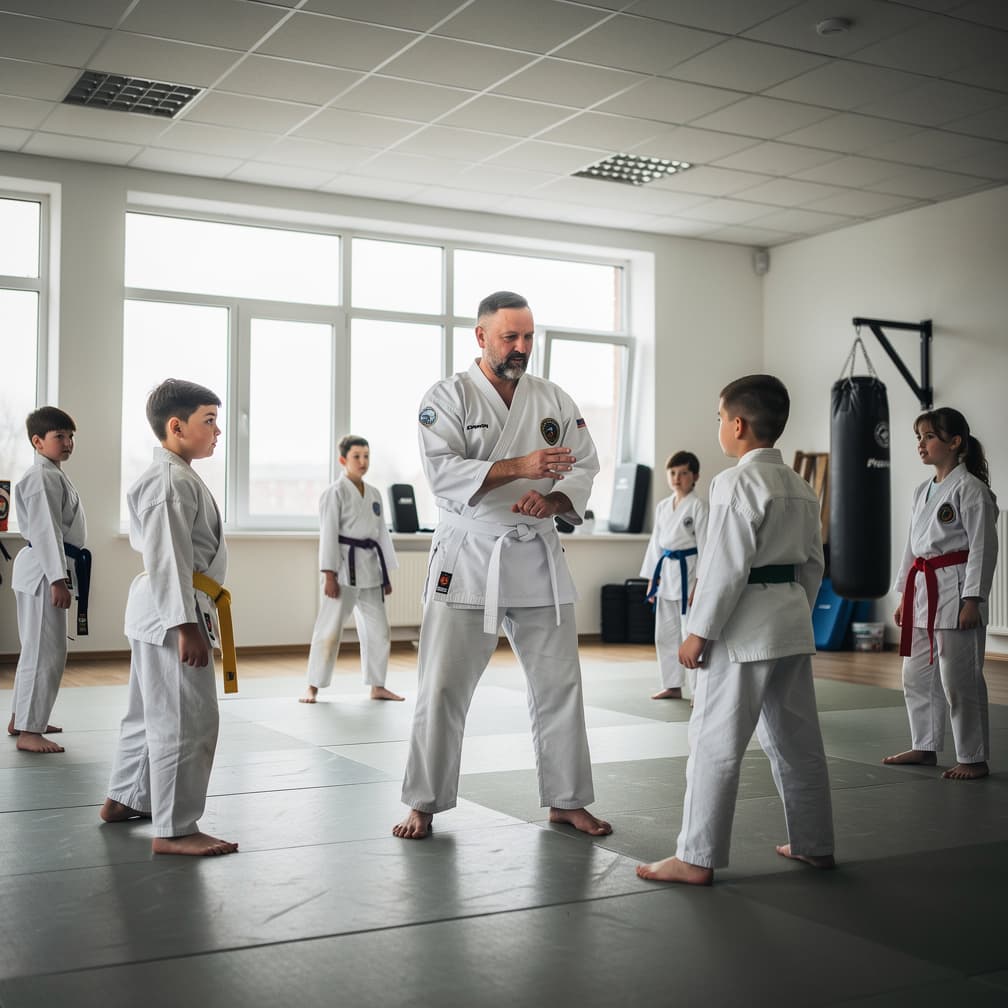

As a martial arts studio in Juneau, you may be the only school within a long drive, which changes who you answer to more than it changes what you buy. Martial arts studio insurance in Juneau still has to satisfy a landlord, a parks department renting you a gym, or the county fair that lets your demo team perform. Those requests arrive with wording attached and very little notice. The exposures do not change with the map: knees and noses on the mats, a slip in the entry, a bag stand that tips onto a child. What changes is recovery, because fewer contractors are around to rebuild a floor and fewer instructors are around to cover classes while you heal. Price the downtime, not only the damage.
What Makes Juneau Different
Fewer students in the room does not automatically mean a smaller premium for a Juneau studio. Rating leans on payroll, on the mat area you occupy, and on whether live contact runs weekly. A school with thirty students and full sparring can rate above one with a hundred doing forms. That surprises owners who assume headcount is the number underwriters care about most. The other quiet driver is how you pay instructors, because contractors and employees sit in different columns. A payroll audit later can reclassify people and hand you a bill you never budgeted for. Getting that right at the quote costs nothing; getting it wrong at the audit costs the difference. Ask how the carrier defines an instructor before you assume your headcount answers the question in Juneau.
Local Risk Factors in Juneau
Wildfire rarely has to reach a studio to close it, because smoke does the work first. Fine particulate settles into foam mats, into pads, and into a sound system's vents, and a room that smells like a fire is a room parents will not send children into. A Juneau school can stand structurally untouched and still lose weeks of tuition. Smoke damage gets treated very differently from flame damage across forms, and a smoke exclusion or a strict definition of direct physical loss can decide the entire claim. Ask how your form defines damage in Alaska before a smoke season, because that definition is the whole conversation once the air clears.
What Coverage Does a Martial Arts Studio in Juneau Need?
General Liability
Landlords, host gyms, and event organizers ask about this line by name before they hand over keys or floor time. It generally sits behind third-party injury and property damage claims tied to your studio: a student hurt during a live round, a parent who slips near the entry, a bag stand that tips onto a child. Damage to your own mats and mirrors is a property question instead.
Example: A parent walks in from a wet lot, goes down on the entry tile, and breaks a wrist while class runs behind her; general liability limits are typically what the resulting claim gets paid from.
Professional Liability
Where General Liability answers for the fall in the lobby, this line answers for the coaching itself. Allegations that an instructor paired a beginner against an advanced student, pushed a technique past someone's level, or supervised a round badly all land here. It typically responds to claims about instruction, advice, and supervision rather than to a slip on your floor.
Example: A student is told to spar up a level, tears a knee, and the family's demand letter blames the coach's judgment rather than the mats; professional liability is generally the line that answers.
Commercial Property
Wear and tear on mats is excluded, and so is rising water from outside the building, which is worth knowing before you assume the room is handled. What this line generally covers instead is sudden loss to what you own: mats, mirrors, hanging bags, racks, pads, the sound system, and whatever tenant improvements your Juneau lease calls yours.
Example: A rooftop unit lets go over a weekend and drips onto forty mat panels; commercial property may pick up the replacement, subject to the deductible you chose at binding.
Workers Compensation
An instructor tears an achilles demonstrating a throw and a cleaner slips on a wet floor at closing. Both are employees hurt at work, and this is the line built around that moment. It is rated on payroll, so how you classify coaches matters as much as how many of them you have. Student injuries are a liability question, not this one.
Example: A coach lands badly during a demonstration in Juneau and needs surgery plus three months off the mats; workers compensation can typically take on the medical bills and part of the lost wages.
How Much Does Martial Arts Studio Insurance Cost in Juneau?
Martial Arts Studio Insurance is a bundle of separate policies, priced separately. The ranges below are typical figures for Juneau for each line, except workers compensation, which is rated per $100 of payroll; a quote prices each one against your own operations.
| Coverage | Typical range | What moves your price |
|---|---|---|
| General Liability Insurance | $170 - $550 per month | Industry and risk classification, annual revenue, number of employees |
| Professional Liability Insurance | $70 - $230 per month | The services you actually perform, annual revenue or billed fees, limit and retention selected |
| Commercial Property Insurance | $80 - $280 per month | Building value and construction type, roof age and condition, fire protection class |
| Workers Compensation Insurance | $0.75 - $2.74 per $100 of payroll | Employee classification codes, total annual payroll, experience modification rate |
Prices shown are general estimates, not guaranteed rates or quotes. Your actual premium will depend on the insurer, coverage selected, business details, location, claims history, and other underwriting factors. Learn about our pricing methodology.
What Are the Insurance Requirements for a Martial Arts Studio in Juneau?
Workers' comp is generally required once you have your first employee. Alaska generally requires employers to carry workers' compensation at that point. Common exemptions include sole proprietors, working members of LLCs, and unpaid volunteers. Confirm current thresholds with your state's workers' compensation agency before you hire.
Where to verify licensing and coverage rules. The Alaska Division of Insurance publishes consumer guidance and current insurance requirements for Alaska businesses. When a contract or lease demands specific wording, the Alaska Division of Insurance's guidance is the authoritative place to check.
Get Your Martial Arts Studio Quote in Juneau
Compare rates from multiple carriers. Free quotes, no obligation.
Operating in Juneau
- Sound systems, card readers, and cameras run off the same circuit, and a surge can take the whole front desk with no visible damage to anything at all.
- A property manager in Juneau can hold a lease renewal until your current certificate is on file, so a missed payment can cost you the room long before it costs you a claim.
- Mats absorb water and rarely recover, which turns a slow leak above the training floor into a full replacement rather than a repair.
- Front desks hold cash, cards, and a sound system, and a break-in usually takes the sound system first because it is the easiest thing to carry out.
How to Buy: Advice for Juneau Owners
Start with the lease exhibit, because it names the limits and the additional insured wording your policy has to match. Bring it, your payroll figures, your class schedule, and an equipment list to every quote conversation. General Liability is the line the landlord is asking about; Commercial Property is the one standing behind the mats, mirrors, and sound gear you brought in. If instructors are on the books, Workers Compensation belongs in that same conversation rather than the next one. Requirements differ by state, and the Alaska Division of Insurance publishes the current requirements for commercial coverage. Then price all three lines together, on identical limits, for the same Juneau address. CPK lets you compare quotes from participating carriers side by side, which only works when the inputs match.
FAQ
Martial Arts Studio Insurance in Juneau: FAQ
Per-occurrence is the most that can be paid for one incident, such as a single injury out of an evening class. The aggregate is the ceiling across the whole policy term. A studio with one serious claim tests the first number; a studio with a run of small injuries tests the second. A contract naming only one of them has quietly left the other up to you.
Wear and tear is generally excluded, and mats are exactly where owners meet that exclusion. Property forms are usually written for sudden events: fire, theft, storm damage, vandalism, a burst line above the floor. A surface degrading over four years reads as maintenance instead. Photograph and date your equipment, replace on a schedule, and budget for aging separately from insuring against accidents.
Rarely with a lawsuit. It starts with an incident: a student holds a knee, a parent slips near the entry, a bag stand tips over. Somebody at the desk decides whether to document it. Months later a demand letter arrives, and that file is what your defense has to work with. Any studio in Alaska lives on the quality of that file long after the round is forgotten.
A packaged policy that bundles property and liability can fit a studio, though the fit depends on what the package leaves out. Studios run an activity most retail tenants do not: intentional contact between people. Read how the form treats participant injury, athletic activity, and instruction. If the package handles the room but sidesteps the mats, it is the wrong package whatever it costs.
A lapse makes every certificate on file wrong, even for a single day. A landlord in Juneau checking dates can flag it before you notice the invoice, and a host can cancel a booking over it. Reinstatement is not automatic, and a gap in dates is exactly what an adjuster looks for later. Put the renewal on a calendar somebody other than you can also see.
Communicable-condition claims get handled unevenly, and many liability forms limit or exclude them outright. Read the wording rather than assuming, because a grappling room is precisely where that question gets asked. Cleaning logs, a mat protocol, and a clear rule on skin checks matter more here than any limit you buy. Ask the underwriter directly how the form treats it before you bind.
Sources
- 1.Alaska Division of Insurance(Alaska Division of Insurance publishes consumer guidance for insurance buyers.)


