







































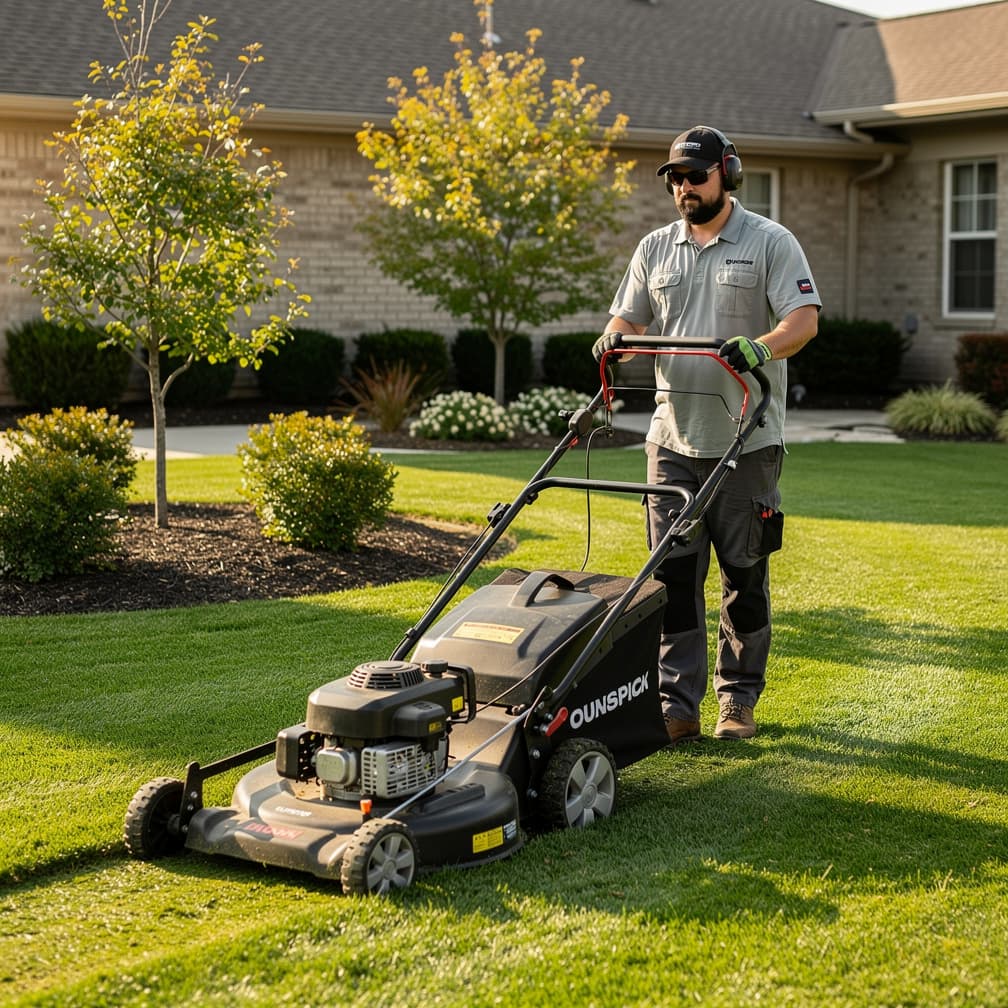

As a lawn care contractor in Buckeye, you own the damage your machines do whether or not anyone was careless. A rock the trimmer never saw becomes a claim with your name on it, and the client expects repair rather than explanation. Lawn care contractor insurance in Buckeye exists mostly to keep those repairs from eating the week's revenue. The other half of the job is your people, since blades, lifting, heat, and repetition make injuries a real line item, and payroll is what the pricing hangs on. Know your payroll before you ask anyone for a number. Weigh identical limits across participating carriers, and read what each policy says about gear kept away from your shop.
What Makes Buckeye Different
Additional insured wording is the point where a mowing contract stops being about grass. A management company in Buckeye can require that its entity, and often its lender, appear on your policy. That single clause changes your document, sometimes your premium, and always your renewal paperwork. Multiply it across every property on a metro route and administration becomes a real part of the job. A second client in Buckeye can demand wording that contradicts the first, and one policy must hold both. Waiver of subrogation shows up next, and it is not something anyone can add after a claim. Read the insurance exhibit before the price page, because the exhibit is what you are truly agreeing to. Bring those clauses to the quote and the quotes stop being guesswork.
Local Risk Factors in Buckeye
Before the hottest stretch, price the cost of stopping. Heat pauses eat billable hours while payroll keeps running, and the temptation is to push crews through, which is where injuries and turnover both begin. Water, shade, and a schedule with slack cost less than a claim, and they are also what a carrier wants to hear described. A workers' compensation program generally reflects payroll and loss history, so an injury this summer helps price next summer. Ask how your record in Buckeye affects the number, and whether anything in Arizona changes that calculation.
What Coverage Does a Lawn Care Contractor in Buckeye Need?
General Liability
Property managers and homeowners association boards ask for this one by name before a crew sets foot on site. It generally answers when your machines damage somebody else's property, or when a person is hurt near your work area, subject to your limits. It does nothing for your own stolen mowers, and damage to the item you were hired to work on is usually treated separately.
Example: A trimmer throws a stone through a storefront window while a crew edges the walkway; General Liability may answer for the glass and for the demand that follows it.
Commercial Auto
Personal auto policies commonly exclude the truck that tows your trailer, and closing that gap is the whole point of this line. It typically covers vehicles you own, with the trailer listed, for accidents on the way to and between properties. Drivers move the price more than trucks do, and machines riding in the bed are a separate question.
Example: A loaded trailer clips a parked sedan as your driver backs into a client driveway before sunrise; the repair claim is one Commercial Auto could take on.
Workers Compensation
Blades, ramps, lifting, and long service days in heat put your crew in the path of injury, and this line exists for that. It is generally rated per $100 of payroll and intended to handle medical costs and lost wages for employees hurt on the job. Rules for owners and subcontractors vary, and unreported labor tends to surface at audit.
Example: A crew member tears a shoulder muscling a walk-behind up a ramp at the last stop of a hot day; Workers Compensation is meant to pick up medical bills and lost time.
Commercial Property
Sheds, fenced yards, trailers, and the mowers parked inside them are the property at issue for a lawn care outfit. The form generally responds to sudden damage from named perils at the location you list, and machines usually have to be scheduled to count at all. Flood typically sits outside it, and wear on an aging mower is maintenance rather than a peril.
Example: Somebody cuts the lock on your storage bay overnight and two zero-turns are gone before the first stop in Buckeye; scheduled equipment might be replaced under this form.
How Much Does Lawn Care Contractor Insurance Cost in Buckeye?
Lawn Care Contractor Insurance is a bundle of separate policies, priced separately. The ranges below are typical figures for Buckeye for each line, except workers compensation, which is rated per $100 of payroll; a quote prices each one against your own operations.
| Coverage | Typical range | What moves your price |
|---|---|---|
| General Liability Insurance | $75 - $240 per month | Industry and risk classification, annual revenue, number of employees |
| Commercial Auto Insurance | $210 - $650 per month | Fleet size and vehicle types, driver records and experience, coverage limits and deductibles |
| Workers Compensation Insurance | $0.75 - $2.74 per $100 of payroll | Employee classification codes, total annual payroll, experience modification rate |
| Commercial Property Insurance | $75 - $270 per month | Building value and construction type, roof age and condition, fire protection class |
Prices shown are general estimates, not guaranteed rates or quotes. Your actual premium will depend on the insurer, coverage selected, business details, location, claims history, and other underwriting factors. Learn about our pricing methodology.
What Are the Insurance Requirements for a Lawn Care Contractor in Buckeye?
Workers' comp is generally required once you have your first employee. Arizona generally requires employers to carry workers' compensation at that point. Common exemptions include sole proprietors, partners, and working members of LLCs. Confirm current thresholds with your state's workers' compensation agency before you hire.
State auto liability minimums apply to business vehicles. Arizona's minimum auto liability limits are $25,000/$50,000/$15,000 (bodily injury per person / per accident / property damage). Contracts and lenders often require more than the state floor.
Flood damage is typically excluded from standard policies. Standard commercial property and builders-risk-type policies typically exclude flood damage. Flood exposure varies address by address, so check your premises in FEMA's Flood Map Service Center before deciding; if you sit in a mapped flood zone, a separate policy through the National Flood Insurance Program is the usual starting point.
Where to verify licensing and coverage rules. The Arizona Department of Insurance and Financial Institutions publishes consumer guidance and current insurance requirements for Arizona businesses. When a contract or lease demands specific wording, the Arizona Department of Insurance and Financial Institutions's guidance is the authoritative place to check.
Get Your Lawn Care Contractor Quote in Buckeye
Compare rates from multiple carriers. Free quotes, no obligation.
Operating in Buckeye
- Crews that hit eight or fifteen stops a day spend more hours on the road than behind a mower, and that split is what a carrier prices in Buckeye.
- Municipal and school work in Arizona tends to arrive with paperwork drafted for far larger vendors, and the terms get handed to you rather than negotiated with you.
- Gate codes and lockboxes decide your morning, and a client in Buckeye can suspend access the day a certificate expires, which turns a paperwork lapse into a route nobody can physically start.
- Mowers and trimmers left on an open trailer for the length of one lunch break are the most ordinary theft in this trade, and a claim that begins with an unlocked ramp gets questions attached.
How to Buy: Advice for Buckeye Owners
Look at your own claims before a carrier does. Loss runs follow you for years, and two small property claims in one season can price you worse than a single large one. Knowing what sits on that record lets you explain it instead of having it explained to you. Decide honestly which minor damage you intend to absorb out of pocket next season, because that choice is what a deductible really buys. General Liability is where the frequent, small lawn care claims land: the fence, the window, the trip over a hose. Commercial Property answers a different question, which is your own machines. Check the Arizona Department of Insurance and Financial Institutions's guidance before deciding how much risk to keep. Then ask participating carriers in Buckeye to price two deductible levels so the trade-off is visible.
FAQ
Lawn Care Contractor Insurance in Buckeye: FAQ
Rarely in the way owners hope. Their policy exists for their exposure, and their contract usually pushes yours to sit in front of it through primary and noncontributory wording. That is the entire reason a manager in Buckeye demanded a certificate. Assume the loss starts with you, then read the contract for who pays first, because a claim is a poor place to learn the order.
Generally yes, and telling a carrier before the truck rolls matters more than the paperwork itself. An unlisted vehicle discovered at claim time is an argument nobody wants to have. The same goes for a helper who starts driving, since drivers move the price more than trucks do. A new mower on the equipment schedule follows the same rule: unlisted is uninsured.
No, and the distinction bites in this trade. A mower that quits from wear and tear generally sits outside a property form, which is built around sudden damage rather than machines aging out. Theft is a separate peril with its own conditions and its own proof. Ask which perils are named, what maintenance gets expected of you, and whether a breakdown that stalls your route counts at all.
Payroll, vehicles, equipment values, and claims history do most of the work. A solo operator with one mower prices very differently than a four-crew outfit hauling trailers all day. Workers Compensation is rated on payroll, so headcount moves that line the day hours start. Limits and deductibles push the total in either direction. The published ranges by coverage sit in the cost table below, and a quote for your Buckeye route lands somewhere against them once the payroll figure is real.
Damage your machines do to someone else's property is the classic General Liability scenario, and the line is generally meant to answer for the repair and any claim behind it. One exception matters: damage to the thing you were hired to work on gets treated differently than damage to a bystander's window. Ask a carrier in Buckeye to point at where that line sits in the form.
Not automatically, and this is where owners get hurt. Equipment away from your yard is handled differently than equipment sitting at your location, and some forms want machines listed by serial number and value. Ask whether the schedule follows the trailer, whether a stolen trailer itself counts, and whether a payout is replacement cost or a depreciated amount.
Sources
- 1.Arizona Department of Insurance and Financial Institutions(Arizona Department of Insurance and Financial Institutions publishes consumer guidance for insurance buyers.)
- 2.FEMA / FloodSmart(Flood coverage is typically purchased separately; FEMA administers the National Flood Insurance Program.)


