







































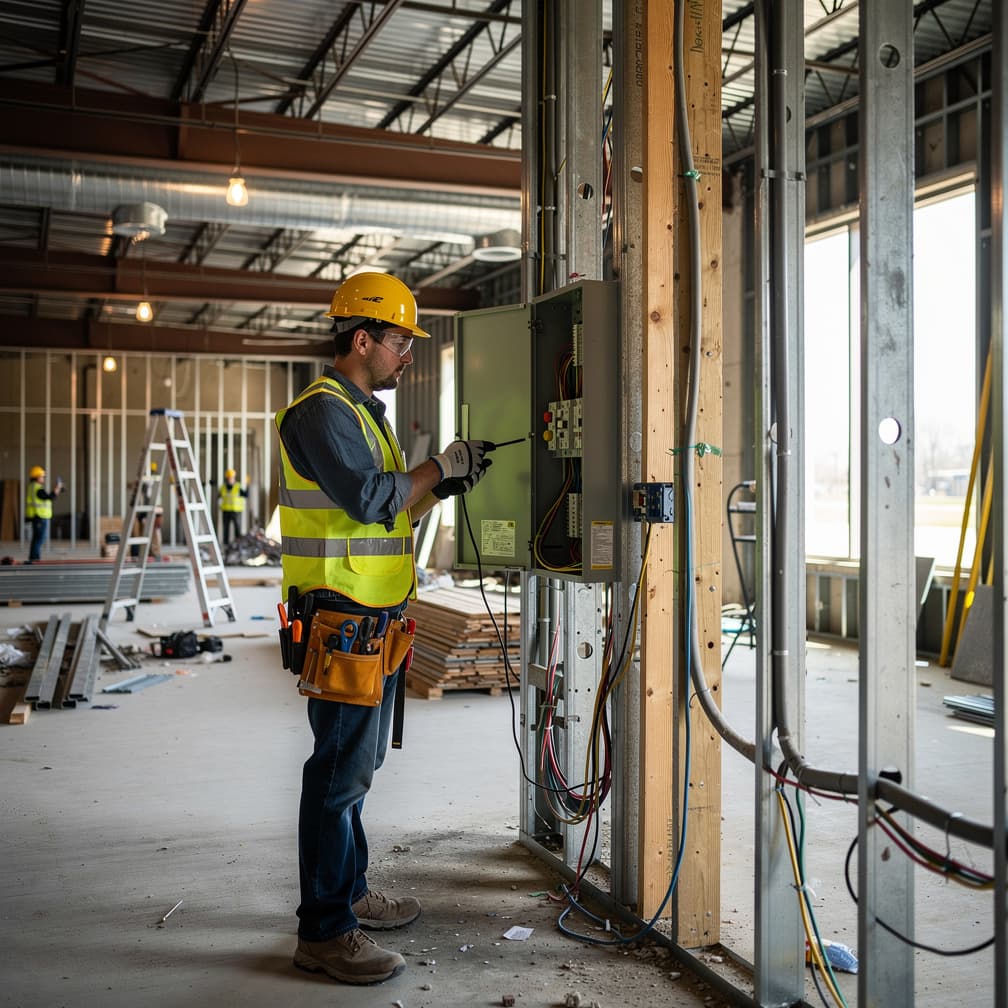

As an electrical contractor in Chandler, most of your working day happens inside a building someone else owns and someone else insures. Their policy has no interest in your mistake, and their adjuster's job is to find you. That is the whole reason electrical contractor insurance in Chandler is written around third-party damage instead of around your own shop. Look closely at what the form says about the work itself: repairing your own faulty installation is usually excluded, while the fire that installation caused usually is not. That one boundary explains more denials in this trade than anything else. It also explains why callback work is a process problem, and why the policy is there for the losses process cannot catch. Compare participating carriers on how they word that boundary, since Arizona filings differ.
What Makes Chandler Different
Dense markets raise your premium through the back door, by raising what your contracts require of you. A limit that was fine for residential service costs more when a subcontract demands several times that. The umbrella sitting above it prices off the underlying lines, so one requirement lifts three numbers at once. Vehicle exposure moves too, because city driving means more stops, more traffic, and more parking-lot contact. None of that is about Chandler rates; it is about the work a dense market hands you. Bigger buildings mean bigger property behind your wiring, which raises the size of a plausible loss. Underwriters read that from your job descriptions, so describe the work accurately rather than modestly. An honest application in Arizona is what gets you priced as the shop you actually are.
Local Risk Factors in Chandler
Extreme heat turns an attic into a place where people get hurt. Running wire above a ceiling in Chandler during the worst stretch of summer is heat-exhaustion territory, and a helper who goes down up there is a serious injury rather than a bad afternoon. Workers Compensation is the line that answers for that, and its cost tracks your payroll and your claims history rather than the forecast. Heat stresses the work too: conductors run hotter, marginal connections fail, and service calls spike on the days nobody can afford to lose. Schedule the attic for the coolest hours available, because prevention is the only part of this you actually control in Arizona.
What Coverage Does an Electrical Contractor in Chandler Need?
General Liability
Every general contractor, building owner, and landlord who asks for a certificate is asking about this line. General Liability is meant for third-party harm: the tenant hurt beside your ladder, the floor ruined by a drilled line, the fire blamed on your wiring. Redoing the faulty installation itself is typically excluded, and that boundary decides most disputes.
Example: A recessed can goes in over a joist bay holding a supply line, the screw finds the pipe, and a ceiling comes down two hours later. The homeowner's repair bill is the kind of third-party damage this line may be called on to answer.
Workers Compensation
Your own people are the subject here: the apprentice off a ladder, the journeyman with an arc-flash burn, the helper who wrecks a back pulling wire through a long run. Medical costs and lost wages for employees are what this line is built around, while harm to customers and bystanders belongs elsewhere. Whether you owe it turns on your state and your headcount, and the Arizona Department of Insurance and Financial Institutions publishes the current requirements.
Example: A helper reaching into a live panel takes a flash burn across both hands and misses six weeks of work. Treatment and a share of the wages he cannot earn are generally what this line is meant to take on.
Commercial Auto
A personal auto policy can exclude the very trip you make in a work truck, and Commercial Auto is written to close that gap. Service vans, work trucks, and trailers used in the business belong here, along with hired and non-owned use when a helper drives their own car to the supply house. What sits inside the van is a different line.
Example: A loaded van runs a red light on the way to a callback and clips a sedan. Repairs, the other driver's injuries, and the defense that follows are where this coverage is expected to step in, up to the limit you bought.
Tools & Equipment (Inland Marine)
Benders, testers, meters, and a pulling machine spend their lives in a van, and a property policy written for a building typically stops at the building. This line follows the tools and material that move between jobsites instead. Forms differ on theft from an unattended vehicle and on property left in the open, and gradual wear is generally excluded, so read the caps before you trust the total.
Example: A locked van in Chandler gets popped overnight and the pulling machine, the knockout set, and a thermal camera are gone by morning. Replacement of scheduled items is usually what this form is intended to handle, after the deductible.
Commercial Umbrella
Contracts on bigger jobs frequently demand a limit above what your primary policies carry, and this is how most shops reach it without rebuilding everything underneath. It sits over General Liability and the vehicle line, attaching only when those underlying limits satisfy its own requirements. Leave a gap beneath it and it may not respond at all.
Example: A wreck involving a work van seriously injures two people, and the claim runs past the primary vehicle limit before the file is a month old. The excess layer is where that overrun could land.
How Much Does Electrical Contractor Insurance Cost in Chandler?
Electrical Contractor Insurance is a bundle of separate policies, priced separately. The ranges below are typical figures for Chandler for each line, except workers compensation, which is rated per $100 of payroll; a quote prices each one against your own operations.
| Coverage | Typical range | What moves your price |
|---|---|---|
| General Liability Insurance | $130 - $440 per month | Industry and risk classification, annual revenue, number of employees |
| Workers Compensation Insurance | $0.75 - $2.74 per $100 of payroll | Employee classification codes, total annual payroll, experience modification rate |
| Commercial Auto Insurance | $280 - $750 per month | Fleet size and vehicle types, driver records and experience, coverage limits and deductibles |
| Inland Marine Insurance | $30 - $130 per month | Total insured value of the scheduled property, type and age of the equipment, where it is stored and how far it travels |
| Commercial Umbrella Insurance | $85 - $280 per month | Umbrella limit requested, limits carried on the underlying policies, loss history on those underlying policies |
Prices shown are general estimates, not guaranteed rates or quotes. Your actual premium will depend on the insurer, coverage selected, business details, location, claims history, and other underwriting factors. Learn about our pricing methodology.
What Are the Insurance Requirements for an Electrical Contractor in Chandler?
Workers' comp is generally required once you have your first employee. Arizona generally requires employers to carry workers' compensation at that point. Common exemptions include sole proprietors, partners, and working members of LLCs. Confirm current thresholds with your state's workers' compensation agency before you hire.
State auto liability minimums apply to business vehicles. Arizona's minimum auto liability limits are $25,000/$50,000/$15,000 (bodily injury per person / per accident / property damage). Contracts and lenders often require more than the state floor.
Where to verify licensing and coverage rules. The Arizona Department of Insurance and Financial Institutions publishes consumer guidance and current insurance requirements for Arizona businesses. When a contract or lease demands specific wording, the Arizona Department of Insurance and Financial Institutions's guidance is the authoritative place to check.
Get Your Electrical Contractor Quote in Chandler
Compare rates from multiple carriers. Free quotes, no obligation.
Operating in Chandler
- A homeowner in Chandler can refuse the last draw until a scorched outlet gets explained, and that argument starts long before any carrier hears the word claim.
- Trim-out gets rushed because the general wants a certificate of occupancy, and rushed trim-out on a Chandler job is where the callback claims are born.
- Extension cords across a hallway are the most boring injury exposure you own, and they are the reason a tenant's twisted ankle can reach a liability limit somebody else insisted on.
- Your van is a rolling tool crib, and the largest single loss an electrical shop faces is walking out to find it empty at a jobsite in Maricopa County.
How to Buy: Advice for Chandler Owners
If you rent a shop or a yard in Chandler, read the lease clause before you read a quote. Landlords routinely require liability limits, additional-insured status, and a waiver of subrogation, and they enforce it because their lender makes them. Your General Liability policy has to satisfy that clause and your job contracts at once, so buy to whichever is stricter. The stored inventory question comes next: wire, fittings, and gear sitting in a leased space belong to you, and Inland Marine may be written to follow property away from a vehicle. Ask specifically whether stock at a fixed location is included or left out. The Arizona Department of Insurance and Financial Institutions publishes consumer guidance on landlord insurance requirements. Take the lease exhibit and the contract exhibit to participating carriers together, and compare which one writes both without an argument.
FAQ
Electrical Contractor Insurance in Chandler: FAQ
There is no universal number, and any answer that sounds universal is wrong, in Chandler or anywhere else. The pattern is consistent, though: the bigger the building and the bigger the general, the higher the demand, and larger jobs often want an umbrella above the primary limit. Pull two years of contracts, find the highest limit anyone asked for, and treat that as your floor rather than your ceiling.
Slowly, and mostly through argument. The claim tends to open against the last contractor who touched the equipment, regardless of what that equipment was doing beforehand. Proving a bus was already failing is expensive work, and General Liability is built partly to fund that defense. Ask whether defense costs sit inside your limit or outside it, because that one answer changes how much money is actually there.
Per-occurrence is the ceiling for a single incident. The aggregate is the ceiling for the whole policy year, however many incidents there are. An electrician with three separate water-damage claims from drilled lines in one year can exhaust an aggregate while every individual claim sat well under the occurrence number. Your certificate shows both figures, and the second one is the one that quietly runs out.
Standard property and equipment forms typically exclude flood, and that exclusion holds whether the water reaches a leased shop or a job trailer full of fittings. Flood coverage gets bought separately, through its own program, and a shop full of wire is no exception. Water from a line you drilled is a different animal and usually sits with liability instead. Ask a participating carrier in Arizona which of your losses is water and which is flood.
Longer than most electricians expect. Completed-operations claims arrive months or years after trim-out, when a fixture fails or a wall gets opened. That is why contracts often demand completed-operations coverage, and why letting a policy lapse between jobs carries risk: what matters is frequently the coverage in force when the claim is made. Ask a carrier in Arizona how their form treats work finished under a previous policy.
No. A certificate is a summary printed on a particular day, and it proves what existed at that moment. It grants no rights by itself, and it does nothing to stop a policy from cancelling or changing afterward. That is why owners ask for updated copies, and why endorsements rather than certificates are what actually change a policy. If a job in Chandler runs past a renewal, send a fresh copy unasked.
Sources
- 1.Arizona Department of Insurance and Financial Institutions(Arizona Department of Insurance and Financial Institutions publishes consumer guidance for insurance buyers.)


