







































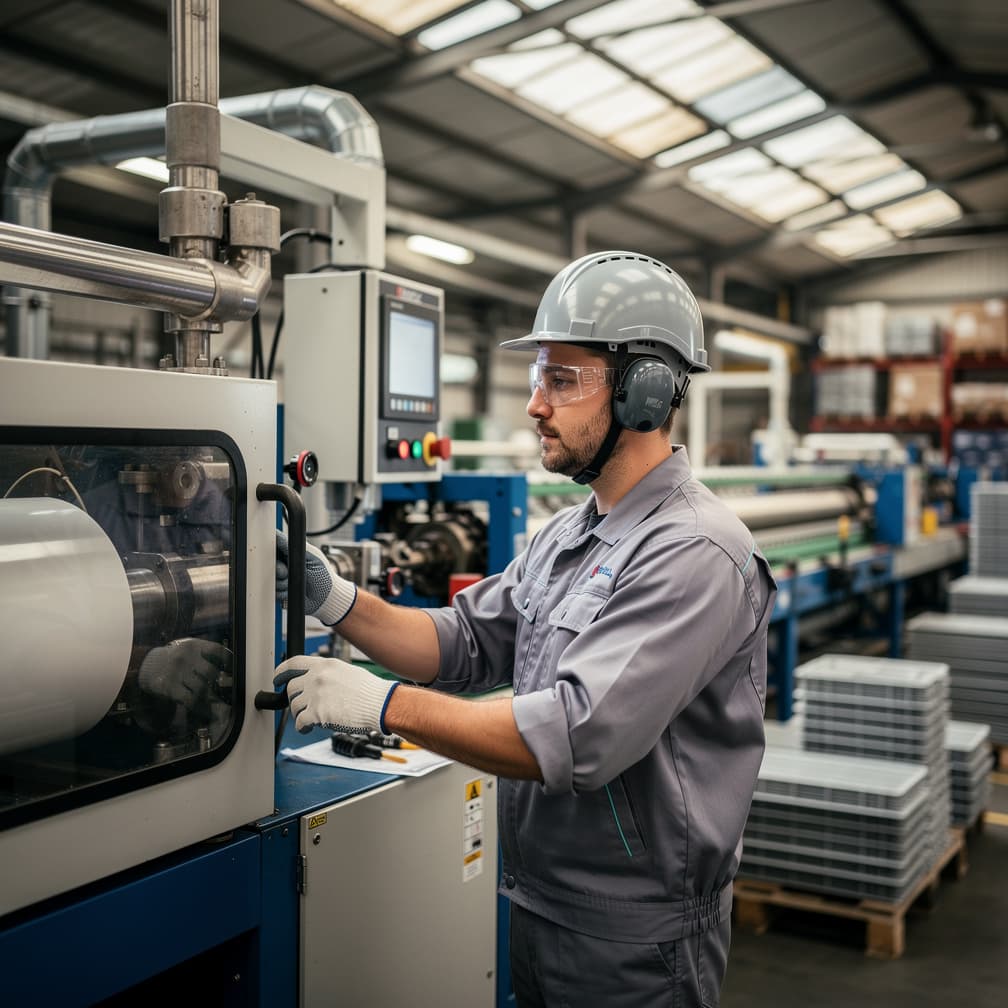

General Liability for a plastics plant typically runs from $35 to $130 a month, and the spread inside that band is not random. Payroll, the machines on your floor, your loss history, and the contracts you have signed all push a quote up or down. A shop running three extruders next to a warehouse of resin reads differently to an underwriter than a single-press fabrication bay. So plastics manufacturer insurance in Glendale is worth quoting more than once: the same submission can price differently at participating carriers in Arizona. Send identical payroll figures and the same equipment list to each one. Ask what a quote assumes about your worst plausible loss, then read the exclusions before you read the price. The lowest number on the page is usually the one that assumed the least.
What Makes Glendale Different
About 108,000 businesses operate in Maricopa County, and a molded part can pass through several of them before it fails. That chain matters, because a defect claim rarely names one company; it names everyone who touched the assembly. You can be pulled into a suit over a part you made exactly to a print somebody else drew. Defense costs start the day you are named, long before anyone decides whether you did anything wrong. Ask whether defense sits inside your limit or outside it, because in a multi-party fight that answer moves real money. A limit that erodes with every lawyer's invoice is a smaller limit than the number printed on the page. Ask also how your program handles a claim that names you alongside a customer and a supplier at once. Settle it in Glendale before a lawsuit forces the answer out of a claims adjuster.
Local Risk Factors in Glendale
Extreme heat attacks a plastics plant at the cooling system first. Chillers sized for an average summer fall behind during the worst week, mold temperatures drift, and parts go out of tolerance before anyone connects a scrap rate to the weather. That is a quality loss rather than an insured one, and it is worth saying plainly: no policy answers a chiller that merely struggled. Coverage enters at the failure, when a compressor gives out under load, and equipment breakdown wording is generally what speaks to that rather than a standard property form. Ask a participating carrier in Arizona whether your quote includes it. Then ask what it does about material spoiled in a barrel while your plant in Glendale waits on a part.
What Coverage Does a Plastics Manufacturer in Glendale Need?
General Liability
Customers and landlords name this line in their contracts, and it is the one meant for harm your operation does to other people and their property: a visitor hurt on your floor, a neighbor's building damaged, a molded part that fails inside somebody else's assembly. It generally has nothing to say about your own machines, your own scrap, or an employee's injury.
Example: A contractor rewiring a panel trips over a hose left across an aisle and breaks a wrist. The medical bills and the demand letter that follows are the kind of claim this line is meant to answer.
Commercial Property
Flood usually sits outside this form, and so does a machine that destroys itself from the inside, which is worth knowing before you assume both are handled. What it is built around is fire, storm, theft, and vandalism reaching your building, your presses, your tooling, and the resin and finished goods stacked inside. Insure it at replacement cost, since a mold on a rack is capital rather than inventory.
Example: A fire starts in a warehouse aisle and takes racked cartons of finished parts along with a month of resin. Rebuilding that stock is the loss commercial property is generally intended to pick up.
Workers Compensation
Hands, backs, and lungs are what this line is about. An operator caught in a press, a material handler who wrenches a shoulder lifting a gaylord, someone who breathed fumes during a purge: their medical care and lost wages are what it typically responds to. Rules on who must carry it vary by state, and customers often demand proof of it regardless.
Example: A press operator's glove catches during a mold change and he loses part of a finger. Treatment, surgery, and the weeks he cannot work are costs this coverage may take on.
Commercial Umbrella
Primary limits are finite, and a product suit naming three defendants can spend them before anyone reaches a verdict. This layer engages only once the underlying limit is exhausted, and it typically inherits the same exclusions the primary carries. When a large customer writes a limit into its contract that sits above what a plant carries, this is often how you get there.
Example: Two defect claims in one year drain the aggregate on the primary policy, and then a third customer files. An extra layer of limit is what might still be standing at that point.
How Much Does Plastics Manufacturer Insurance Cost in Glendale?
Plastics Manufacturer Insurance is a bundle of separate policies, priced separately. The ranges below are typical figures for Glendale for each line, except workers compensation, which is rated per $100 of payroll; a quote prices each one against your own operations.
| Coverage | Typical range | What moves your price |
|---|---|---|
| General Liability Insurance | $240 - $750 per month | Industry and risk classification, annual revenue, number of employees |
| Commercial Property Insurance | $360 - $1,275 per month | Building value and construction type, roof age and condition, fire protection class |
| Workers Compensation Insurance | $0.75 - $2.74 per $100 of payroll | Employee classification codes, total annual payroll, experience modification rate |
| Commercial Umbrella Insurance | $150 - $500 per month | Umbrella limit requested, limits carried on the underlying policies, loss history on those underlying policies |
Prices shown are general estimates, not guaranteed rates or quotes. Your actual premium will depend on the insurer, coverage selected, business details, location, claims history, and other underwriting factors. Learn about our pricing methodology.
What Are the Insurance Requirements for a Plastics Manufacturer in Glendale?
Workers' comp is generally required once you have your first employee. Arizona generally requires employers to carry workers' compensation at that point. Common exemptions include sole proprietors, partners, and working members of LLCs. Confirm current thresholds with your state's workers' compensation agency before you hire.
Flood damage is typically excluded from standard policies. Standard commercial property and builders-risk-type policies typically exclude flood damage. Flood exposure varies address by address, so check your premises in FEMA's Flood Map Service Center before deciding; if you sit in a mapped flood zone, a separate policy through the National Flood Insurance Program is the usual starting point.
Where to verify licensing and coverage rules. The Arizona Department of Insurance and Financial Institutions publishes consumer guidance and current insurance requirements for Arizona businesses. When a contract or lease demands specific wording, the Arizona Department of Insurance and Financial Institutions's guidance is the authoritative place to check.
Get Your Plastics Manufacturer Quote in Glendale
Compare rates from multiple carriers. Free quotes, no obligation.
Operating in Glendale
- Regrind piles creep. Nobody decides to store combustible material next to a heat source; it happens one bin at a time across a quarter, and it turns up in an underwriter's photographs rather than in your memory.
- A payroll estimate given at binding gets audited later. Guess low and the correction arrives as a bill in a month you never planned for, which is why the class-code split is worth an hour of real attention up front.
- One bad lot can travel through three companies before anyone notices. By the time a quality engineer calls, your parts sit inside an assembly you have never seen, and the fault argument starts without you anywhere near it.
- Temps run presses in most plants at some point, and the staffing agreement decides whose policy responds to a hand injury. Reading it after the injury is how two carriers in Arizona end up arguing while an operator waits.
How to Buy: Advice for Glendale Owners
Read every quote for what happens to a bad lot, because that is the claim this trade actually files. Damage your parts do to a customer's finished assembly and the cost of replacing your own defective parts get handled differently, and General Liability is usually built around the first rather than the second. Recall expense is a separate conversation again. Ask what your program does when a customer demands rework on ten thousand pieces. Then ask the same question about a customer whose line stopped because of your parts. Commercial Umbrella matters here, since product suits name several parties and primary limits go quickly. Traceability is your leverage: lot numbers, inspection records, and a documented process shorten every argument. Check the Arizona Department of Insurance and Financial Institutions's guidance before deciding what to carry in Arizona. Bring the quality file when you compare participating carriers in Glendale, since it is part of the underwriting picture.
FAQ
Plastics Manufacturer Insurance in Glendale: FAQ
A customer on a tour, a contractor on the roof, or a driver hunting a signature is a third party, and General Liability is generally the line meant for their injuries. Your own operators sit with Workers Compensation instead. That split matters at claim time, so describe your real visitor traffic when you buy rather than quietly minimizing it.
It depends on who was exposed and what the form says. Pollution exclusions are broad and can reach ordinary production fumes and spills, so ask a carrier which chemical scenarios it will answer and which ones it excludes. An operator who breathed something is a different question again. Get the answer about a spill into a floor drain in writing.
Keep a list of every party holding one and refresh it the week your policy renews, because a new policy number quietly invalidates every certificate already filed. Make sure the entity name on the policy matches your invoices exactly, since compliance portals reject mismatches without explaining themselves. If a buyer in Glendale wants proof, you want that document available the same day.
Run the arithmetic across a renewal cycle rather than on the day of the loss. Frequency is what underwriters punish, so a string of nuisance claims can cost more over three renewals than the losses themselves did. Set an internal threshold in advance, write it down, and stop deciding case by case while you are still angry about the damage.
Buyers rarely release a purchase order until proof of coverage sits on file, and the exhibit attached to that contract names the limits it wants. Nobody asks whether you agree with the number. Read the exhibit before you sign, because signing commits you to buy whatever it names. Participating carriers in Arizona price that same spec differently, so quote it first.
Payroll, the values sitting on your floor, your loss runs, and the limits your contracts demand. Two plants with identical sales can price far apart because one runs three shifts and the other runs one, or because one filed four small claims last year. Frequency reads to an underwriter as a process problem, so the number of claims often matters more than their size.
Sources
- 1.U.S. Census Bureau, County Business Patterns (2022), Maricopa County(Maricopa County has about 108,000 business establishments.)
- 2.Arizona Department of Insurance and Financial Institutions(Arizona Department of Insurance and Financial Institutions publishes consumer guidance for insurance buyers.)
- 3.FEMA / FloodSmart(Flood coverage is typically purchased separately; FEMA administers the National Flood Insurance Program.)


