







































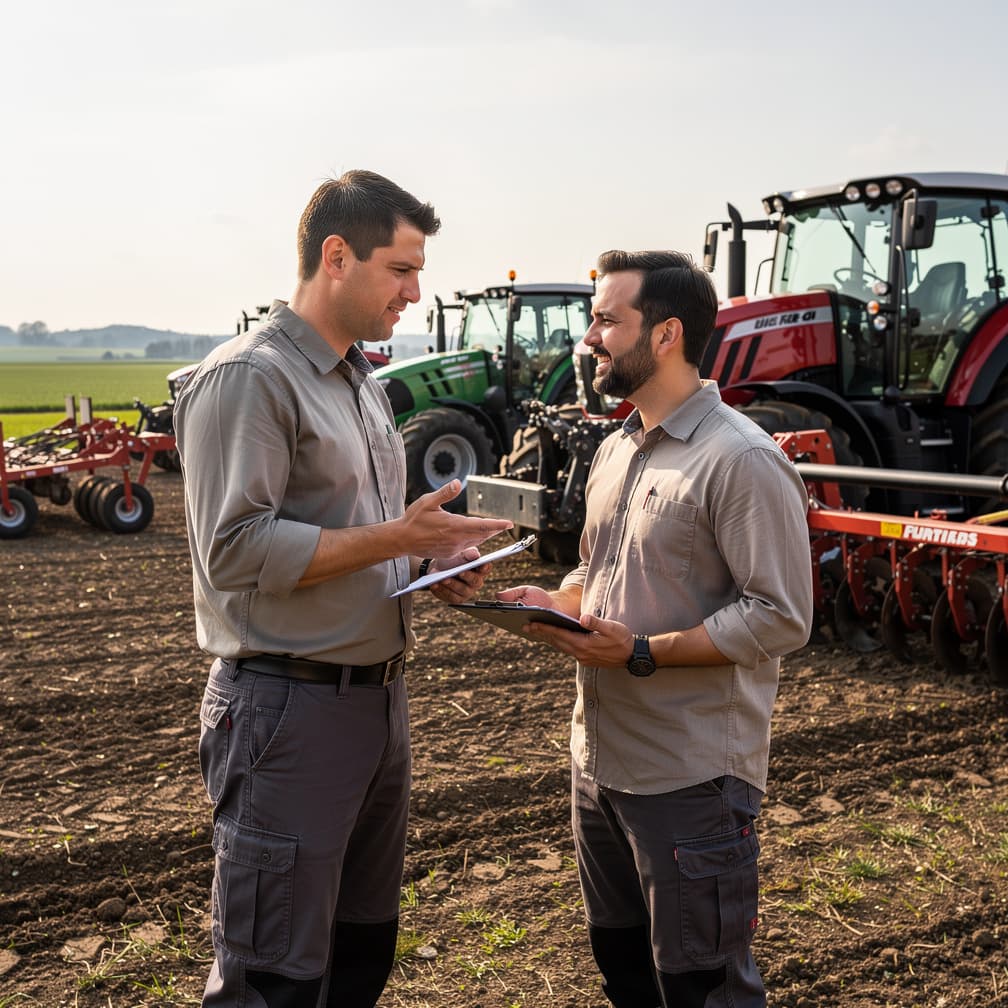

Theft on a fenced lot rarely takes the tractor. It takes the loader bucket, the mower deck, and every battery within reach. Agricultural equipment dealer insurance in Mesa has to treat that yard the way it treats the showroom floor. Busy markets push more foot traffic through the gate, more demo runs, and more outside haulers backing up to your service entrance. Maricopa County has about 108,000 businesses, so adjusters and heavy repair vendors are split across a long queue when one storm week hits everybody at once. Your service bay keeps generating its own trouble in the meantime, from a dropped hydraulic line to a customer wandering past a lift. The real decisions here are limits, deductibles, and whose name ends up on your paperwork.
What Makes Mesa Different
Storm weeks stop the lot before they damage anything, and stalled sales are the first cost. Nobody test drives a tractor through mud, and demos that do not happen are orders that do not close. Your inventory sits outdoors by definition, so weather reaches the property side in a way most retailers never face. A row of units takes wind and water directly, and the damage is often cosmetic enough to argue over and costly enough to matter. Standard property forms typically answer for some weather perils and exclude flood entirely, which is the gap owners miss. Delivery schedules compress after bad weather, and compressed schedules are when loading mistakes happen. A dealership in Mesa should ask how a policy treats units in the open versus units under roof. That one question in Arizona changes more quotes than the price conversation does.
Local Risk Factors in Mesa
Extreme heat is a labor problem before it is a property one, since the people most exposed at a dealership are the techs in a metal service bay and the yard hands moving iron in the sun. Heat stress builds through a long afternoon, and a dizzy worker around a lift or a running machine is a serious injury waiting to happen in Mesa. Workers Compensation is generally the line that answers for a heat-related injury to an employee, subject to the usual terms. Property and equipment feel it too, since batteries, hydraulics, and electronics strain in high heat, though damage that reads as wear or poor maintenance is commonly excluded. A dealership in Arizona should build shade, water, and pacing into the hottest stretch as loss prevention.
What Coverage Does an Agricultural Equipment Dealer in Mesa Need?
General Liability
When a customer slips at the parts counter or a bystander is struck during a demo, this is the line a claim usually starts on. It can help cover third-party bodily injury and property damage tied to your premises and operations, including damage you do on a buyer's ground during delivery. It generally does not extend to your own inventory or to your employees, which sit under other forms.
Example: A shopper climbs down from a display combine, catches a boot on the ladder, and breaks a wrist on the pavement. The injury claim and the legal costs behind it are the kind of loss this coverage may take on.
Commercial Property
The building, the parts inventory, the shop contents, and the units on your lot are what this line is built around. It may respond to fire, storm, theft, and vandalism damage to that property, whether it sits under roof or out in the yard, depending on how the form treats open-lot storage. Flood is the notable carve-out, typically excluded and arranged separately.
Example: A hailstorm rolls through overnight and dents every hood in the front row. Repair or replacement of the damaged units parked on the lot is the sort of claim this coverage can help absorb.
Tools & Equipment (Inland Marine)
Where a property form tends to stop at the edge of the lot, this line follows the machinery that moves. It might help cover units in transit between your yard, a customer site, and the service area, along with the portable shop tools and diagnostic gear your techs carry off-premises. What it typically does not address is faulty repair work itself, which is a separate exposure.
Example: A skid steer bound for a farm outside Mesa shifts on the trailer when a strap fails, and the loader arm bends against the rail. Damage to that unit in transit is what this coverage is meant to answer.
Workers Compensation
The people most likely to get hurt at a dealership are the techs under the machines and the hands moving iron in the yard. This line is rated against payroll rather than headcount, and it might help cover medical costs and lost wages when an employee is injured on the job. It does not answer for a customer's injury, which belongs to the liability side instead.
Example: A mechanic straining to free a seized transmission wrenches his back and misses three weeks of the busy season. The medical bills and the wage replacement are what this coverage tends to pick up.
How Much Does Agricultural Equipment Dealer Insurance Cost in Mesa?
Agricultural Equipment Dealer Insurance is a bundle of separate policies, priced separately. The ranges below are typical figures for Mesa for each line, except workers compensation, which is rated per $100 of payroll; a quote prices each one against your own operations.
| Coverage | Typical range | What moves your price |
|---|---|---|
| General Liability Insurance | $130 - $490 per month | Industry and risk classification, annual revenue, number of employees |
| Commercial Property Insurance | $290 - $1,050 per month | Building value and construction type, roof age and condition, fire protection class |
| Inland Marine Insurance | $95 - $430 per month | Total insured value of the scheduled property, type and age of the equipment, where it is stored and how far it travels |
| Workers Compensation Insurance | $0.75 - $2.74 per $100 of payroll | Employee classification codes, total annual payroll, experience modification rate |
Prices shown are general estimates, not guaranteed rates or quotes. Your actual premium will depend on the insurer, coverage selected, business details, location, claims history, and other underwriting factors. Learn about our pricing methodology.
What Are the Insurance Requirements for an Agricultural Equipment Dealer in Mesa?
Workers' comp is generally required once you have your first employee. Arizona generally requires employers to carry workers' compensation at that point. Common exemptions include sole proprietors, partners, and working members of LLCs. Confirm current thresholds with your state's workers' compensation agency before you hire.
Flood damage is typically excluded from standard policies. Standard commercial property and builders-risk-type policies typically exclude flood damage. Flood exposure varies address by address, so check your premises in FEMA's Flood Map Service Center before deciding; if you sit in a mapped flood zone, a separate policy through the National Flood Insurance Program is the usual starting point.
Where to verify licensing and coverage rules. The Arizona Department of Insurance and Financial Institutions publishes consumer guidance and current insurance requirements for Arizona businesses. When a contract or lease demands specific wording, the Arizona Department of Insurance and Financial Institutions's guidance is the authoritative place to check.
Get Your Agricultural Equipment Dealer Quote in Mesa
Compare rates from multiple carriers. Free quotes, no obligation.
Operating in Mesa
- Attachments walk before machines do. A loader bucket, a mower deck, or a set of tires can leave a yard in the back of a pickup, and the loss surfaces on a schedule nobody updated.
- Customers climb on equipment unsupervised. A buyer who wants to feel the seat height is up three steps before anyone at the counter looks over, which is where showroom injury claims tend to begin.
- A property manager behind a leased yard in Mesa can hold the keys until a certificate naming the entity is on file, so a lapsed renewal stops occupancy rather than only paperwork.
- Delivery is the highest-risk half hour of the week for a dealership near Mesa. A strap fails or a ramp shifts, and a unit worth more than the truck ends up on the ground.
How to Buy: Advice for Mesa Owners
Theft is the loss most dealerships underestimate, and it rarely looks like a stolen tractor. Attachments, batteries, tires, guidance units, and shop tools walk first because they are portable and easy to move on. Inland Marine is generally the line that thinks about portable property, though what sits unattended in an open Mesa yard overnight may be treated differently than what is locked inside. Ask that question before you assume the lot is included. Commercial Property handles the building and what lives in it, and the boundary between the two forms is exactly where losses fall through. Fencing, lighting, cameras, and a nightly walkthrough are cheap, and an underwriter will price them. Get the boundary answered in writing, then compare quotes from participating carriers in Arizona on the same set of facts.
FAQ
Agricultural Equipment Dealer Insurance in Mesa: FAQ
Commonly, yes. A floor plan agreement often asks for loss payee status on financed inventory and for notice if the policy changes. That is a contract term you agreed to, and it stands on its own regardless of any regulation. Commercial Property is usually the line carrying that endorsement. Get the lender's exact wording, because a close paraphrase can still be rejected.
Often it is treated differently, and the difference sits in which form applies. Portable property that moves between the yard, the bay, and a trailer commonly falls on an Inland Marine schedule, while the building and its contents sit on the property side. Something left unattended in an open yard overnight may be handled differently again. That boundary is where losses fall through, so ask about it plainly rather than assuming the yard is included.
Start with what you have already promised. A lease, a purchase order, or a service agreement typically names a minimum, and the highest number among them is your floor rather than your target. Then think about the claim itself: a fall from a cab step can produce a serious injury and legal costs that run for years. Stepping the limit up usually costs less at the margin than owners expect. Check the Arizona Department of Insurance and Financial Institutions's guidance before deciding.
Valuable papers coverage sits on many property forms, though the sublimit is often modest. For a dealership the exposure is real: deal jackets, service history, and warranty documentation are what prove your work once the machines are gone. Digital backups stored away from the building are the cheap half of the answer. Ask what the sublimit is and whether it can be raised before you accept the default.
The paperwork usually arrives before the sale does. A floor plan lender can require proof on the inventory it financed, and a commercial buyer in Mesa can attach an insurance clause to the purchase order. General Liability is the line those clauses commonly name. Requirements and contract customs vary, so the demand you face is whatever sits in your own agreements. Read them before you shop anything.
Cost tracks four things: payroll in the service bay, the value of iron on the lot, your revenue, and three years of loss history. A dealership running a busy shop prices differently than one that mostly moves units. Protection class and how isolated the yard sits overnight matter too. Nobody can quote you from a description of the trade alone, which is why the submission you send to carriers in Arizona does most of the work.
Sources
- 1.U.S. Census Bureau, County Business Patterns (2022), Maricopa County(Maricopa County has about 108,000 business establishments.)
- 2.Arizona Department of Insurance and Financial Institutions(Arizona Department of Insurance and Financial Institutions publishes consumer guidance for insurance buyers.)
- 3.FEMA / FloodSmart(Flood coverage is typically purchased separately; FEMA administers the National Flood Insurance Program.)


