







































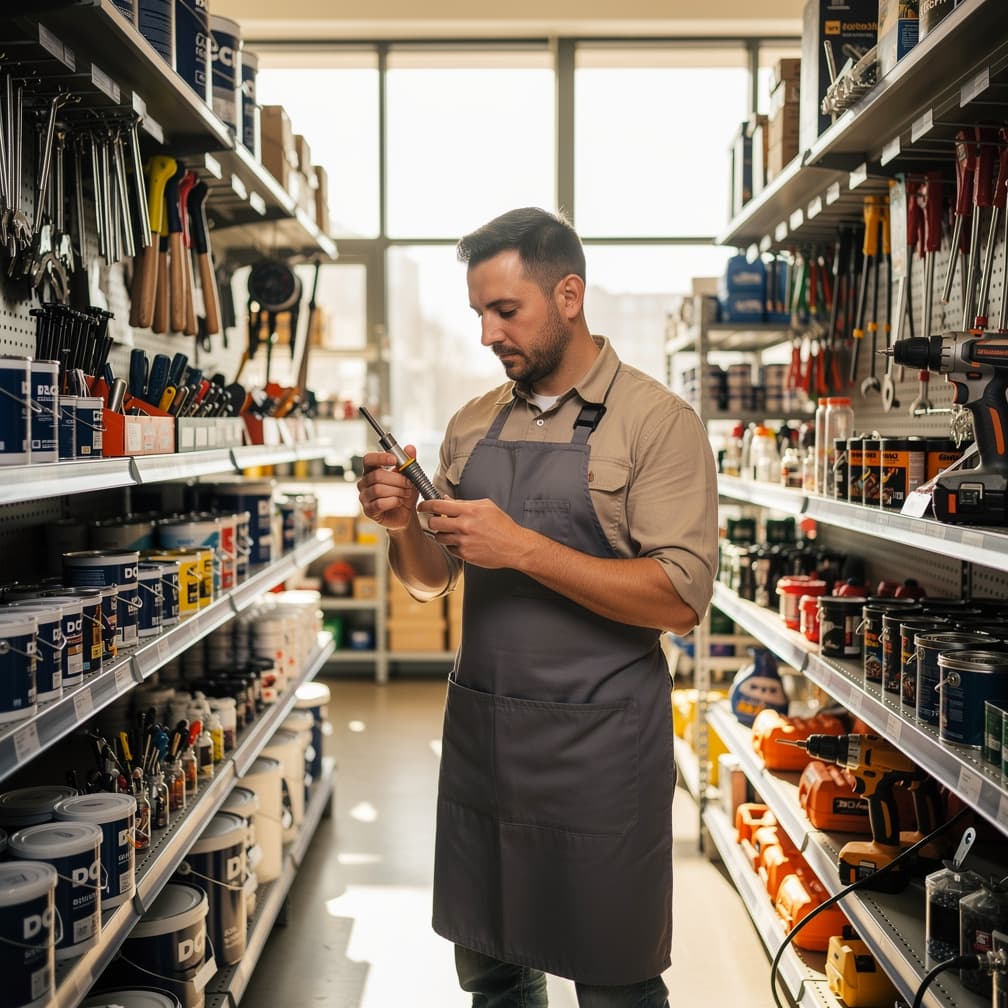

A boxed miter saw slides off a top shelf while a customer reaches for the one below it. That is a bodily injury claim with your name on it, and it is why hardware store insurance in Mesa gets bought before the doors ever open. Aisles, entry mats, and the loading area produce most of the incidents that turn into demand letters. A single fall at checkout can outlive the sale that caused it by two years. Your limits, your deductible, and your claims history decide what that fight costs you. Paint, propane, and a packed stockroom sit behind the counter waiting for a bad wire. The rest of this page walks through what a store in Mesa should ask a carrier about before signing anything.
What Makes Mesa Different
Seasonal swings shape this trade hard, and an insurance decision made in a slow month gets tested in a busy one. Inventory peaks before the weather turns, which means the value at risk peaks at exactly the same moment. A property limit set on an average stock level leaves the peak exposed by design, quietly, every year. Ask whether your policy carries a seasonal increase provision and what it takes to trigger one. The same logic runs through staffing, since seasonal hires add payroll the audit will find later. Storm demand also puts customers and pallets in the same aisle at the same time. Crowding, hurry, and heavy stock are how a fall happens on your busiest day. Time the renewal review to the season ahead of you and price a Mesa store on its peak, then see how Arizona quotes differ.
Local Risk Factors in Mesa
Extreme heat does its damage quietly in this trade. Paint and solvents in a stockroom with no air movement degrade, aerosols turn into a storage problem, and the sealed goods you sell all season sit in the hottest room you own. Rooftop units fail in the worst week, and mechanical breakdown is a separate conversation from fire or storm damage. Commercial Property may respond to some equipment losses depending on the form and any breakdown endorsement you added, though wear and tear is typically excluded no matter how hot it got. Ask each Mesa quote where mechanical failure sits, and put the same question to every Arizona carrier you talk to.
What Coverage Does a Hardware Store in Mesa Need?
General Liability
A customer goes down on a wet entry mat, or a boxed tool comes off a high rack onto a shoulder. General Liability is the line retail landlords and suppliers ask you to carry, and it may take in the injury, the damage you did to somebody else's property, and the defense that follows. Injuries to your own staff and damage to your own building typically sit elsewhere.
Example: A shopper reaches for a gallon of primer, knocks a second one off the shelf, and cuts a hand open on the rim. The medical bills and any claim behind them could fall to this line, subject to the limit you bought.
Commercial Property
Your landlord wants the building looked after and your lender wants the inventory behind the loan accounted for. Commercial Property is built around both, and it may respond to fire, smoke, wind, and the racking and stock inside. Flood and gradual wear are typically outside it, and goods kept outdoors often fall under a smaller sublimit.
Example: A stockroom fire from an overloaded outlet takes the paint stock, the shelving, and the roof above them. Rebuilding and restocking a Mesa store may be handled here, though the limit you chose sets the ceiling.
Commercial Crime
Theft by the people you trust sits outside a standard property form, and that gap is what Commercial Crime is meant to fill. Employee dishonesty, a forged check on a contractor account, counterfeit currency at the register, and money that never reaches the bank all belong to this family. These claims get proved from records, so your reconciliations matter as much as the limit.
Example: A long-serving cashier voids sales and pockets the difference, a little at a time, across eleven months. Once the ledger shows the pattern, the loss might be recoverable here, depending on the wording and the proof you kept.
Workers Compensation
Ladders, pallet jacks, and eighty pound bags are the daily reality of a floor that sells building material. Workers Compensation is rated on payroll by job duty, and it generally handles medical care and lost wages for staff hurt at work. Whether it is compulsory turns on headcount and on your state, so confirm the details with the Arizona Department of Insurance and Financial Institutions.
Example: A stocker pulling a case of tile off the top rack twists, misses the step, and lands badly on the concrete. Care and time away from the floor generally land in this line, and payroll is what the premium was rated on.
How Much Does Hardware Store Insurance Cost in Mesa?
Hardware Store Insurance is a bundle of separate policies, priced separately. The ranges below are typical figures for Mesa for each line, except workers compensation, which is rated per $100 of payroll; a quote prices each one against your own operations.
| Coverage | Typical range | What moves your price |
|---|---|---|
| General Liability Insurance | $75 - $240 per month | Industry and risk classification, annual revenue, number of employees |
| Commercial Property Insurance | $150 - $480 per month | Building value and construction type, roof age and condition, fire protection class |
| Commercial Crime Insurance | $15 - $65 per month | Employees who handle money or inventory, internal controls and separation of duties, funds and securities on hand |
| Workers Compensation Insurance | $0.75 - $2.74 per $100 of payroll | Employee classification codes, total annual payroll, experience modification rate |
Prices shown are general estimates, not guaranteed rates or quotes. Your actual premium will depend on the insurer, coverage selected, business details, location, claims history, and other underwriting factors. Learn about our pricing methodology.
What Are the Insurance Requirements for a Hardware Store in Mesa?
Workers' comp is generally required once you have your first employee. Arizona generally requires employers to carry workers' compensation at that point. Common exemptions include sole proprietors, partners, and working members of LLCs. Confirm current thresholds with your state's workers' compensation agency before you hire.
Flood damage is typically excluded from standard policies. Standard commercial property and builders-risk-type policies typically exclude flood damage. Flood exposure varies address by address, so check your premises in FEMA's Flood Map Service Center before deciding; if you sit in a mapped flood zone, a separate policy through the National Flood Insurance Program is the usual starting point.
Where to verify licensing and coverage rules. The Arizona Department of Insurance and Financial Institutions publishes consumer guidance and current insurance requirements for Arizona businesses. When a contract or lease demands specific wording, the Arizona Department of Insurance and Financial Institutions's guidance is the authoritative place to check.
Get Your Hardware Store Quote in Mesa
Compare rates from multiple carriers. Free quotes, no obligation.
Operating in Mesa
- Staff pull boxed tools off the top rack all day, on ladders, in a hurry. That is your injury exposure in one sentence, and it is why payroll by duty, rather than headcount, is what a Mesa quote gets built on.
- Contractor house accounts are the margin in this trade, and they run on trust and on paper. A buyer can ask for proof of coverage before adding you to an approved supplier list, and a lapse can quietly end the account.
- The till gets counted by whoever is closing, and that is exactly the arrangement that lets a shortage run for months. Dual counts and a second reviewer on voids matter more to a crime claim than the limit you bought.
- Buying groups and suppliers send their own insurance requirements, and each one wants a certificate with slightly different wording. Whoever opens the mail at a Mesa store ends up owning that job, so decide who that is before a shipment stalls.
How to Buy: Advice for Mesa Owners
Limits and deductibles are the two dials you truly control, and owners tend to spin them the wrong way. A high deductible on property is a bet on your own housekeeping, and for a tidy store it is often a fair bet. A low General Liability limit is a different animal, because the fall you are insuring against is rare and does not stay small. Per occurrence and aggregate are not the same number, and the aggregate is what a bad year has to share. Commercial Crime deductibles matter more than the limit for a store bleeding a little at a time. Ask each quote to show the same limits, or the comparison is theatre. Check the Arizona Department of Insurance and Financial Institutions's guidance before deciding where to set them for a Mesa store. Then let participating carriers price identical limits, and study the spread.
FAQ
Hardware Store Insurance in Mesa: FAQ
Naming another party happens through an additional insured endorsement, not by typing them onto a certificate. Carriers use different forms, and some grant that party rights only for claims arising out of your operations. Others require a written contract in force before the loss, so an informal arrangement can leave a hole. Ask for the form number, get a copy, and keep it with the lease.
Business income limits usually carry both a cap and a time period, and the period is what owners overlook. Payments generally run through a restoration period that ends when the property could reasonably be repaired, whether or not you are trading again. A store in Maricopa County waiting on a single available contractor can outlast that clock. Ask how the period gets measured and what extends it before you set the limit.
An employee sliding lumber into a bed can scratch a tailgate, and that is property damage you caused. General Liability is generally the line involved, though wording about property in your care, custody, or control can pull the claim somewhere else. Filing a small one carries its own cost, since claim history follows you between carriers for years. Ask each quote how that wording reads before you need to know.
Expect questions about revenue, payroll by job duty, square footage, year built, roof and wiring age, and your loss runs. Photographs help: the electrical panel, sprinkler tags, the paint room, and the propane cage all argue on your behalf. Anything unusual, like renting equipment or sharpening blades, belongs in the submission rather than in a claim conversation later. Sending one identical file to every carrier is what makes a Mesa comparison real.
It can, and the effect usually outlives the claim. Underwriters read loss runs going back several years, so an open injury file makes every quote more expensive until it closes. That is the argument for a deductible high enough that small nuisances never turn into filings. It is also the argument against shaving a limit, because the claim worth insuring is the one you could not absorb.
You can, and it is a poor trade. What you disclose shapes what a carrier agreed to insure, and an undisclosed exposure is an argument waiting for the worst possible day. Propane, solvent storage, equipment rental, and blade sharpening each change how an underwriter reads your fire and liability picture. Tell them, take the price, and know what you actually bought. A lower premium built on an incomplete description is not a saving.
Sources
- 1.Arizona Department of Insurance and Financial Institutions(Arizona Department of Insurance and Financial Institutions publishes consumer guidance for insurance buyers.)
- 2.FEMA / FloodSmart(Flood coverage is typically purchased separately; FEMA administers the National Flood Insurance Program.)


