







































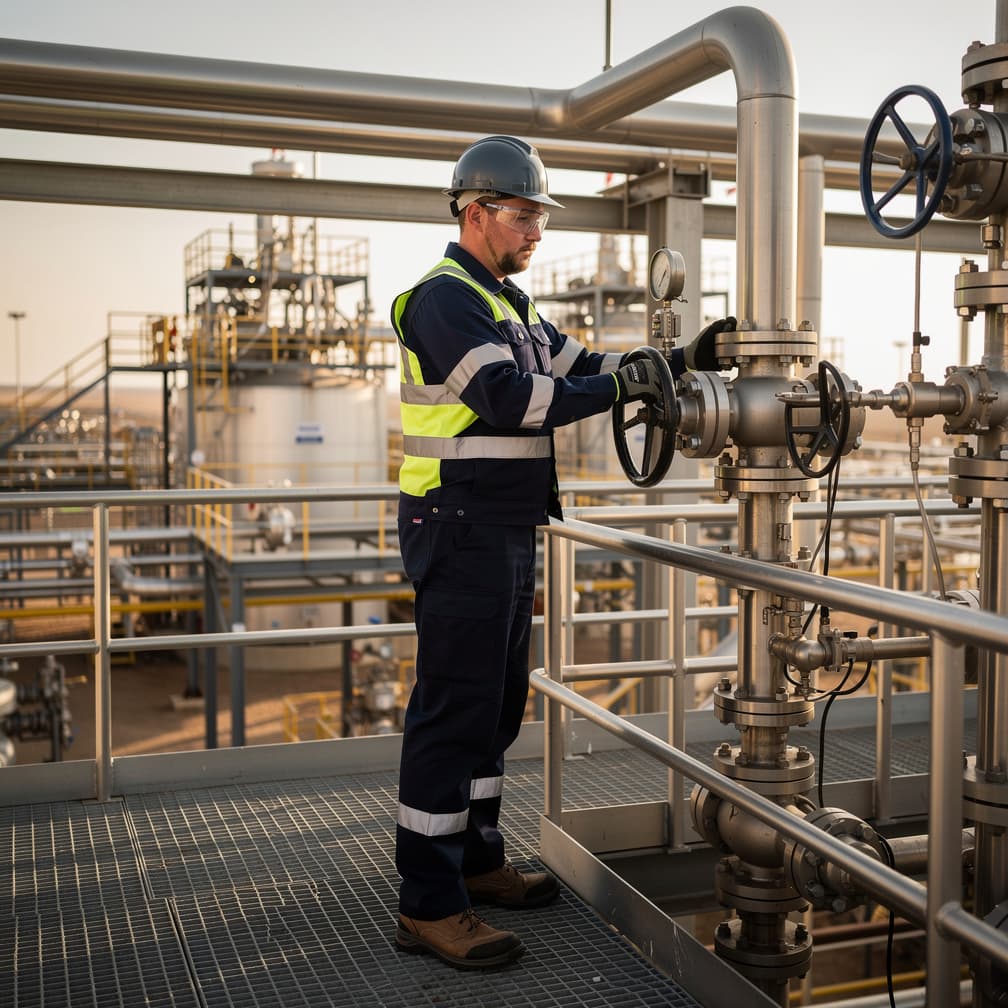

A wrench slips off a valve stack and lands on a third party's boot, and the operator's incident report starts moving before your crew leaves the pad. That is the ordinary shape of a claim in this trade, and it is why oil and gas contractor insurance in Mesa gets bought around contracts rather than around comfort. The master service agreement you signed already fixed the limits, the endorsement wording, and who defends whom. Your quote turns on payroll, the trucks on your list, and the losses sitting behind you. This page lays out which lines the field work actually tests, what a certificate has to say before a gate opens, and how quotes from participating carriers in Arizona split on one identical submission.
What Makes Mesa Different
Deductibles are a cash decision dressed up as a coverage decision, and they come off your side. A low deductible buys a lower pain threshold and a higher bill twelve times a year. A high one is fine right up to the week two things break at once. Limits work the other way: the contract sets the floor, and your exposure sets what is prudent. A dropped part that injures a third party does not know or care what your limit is. Umbrella pricing tends to sit well below what raising primary limits costs, which is why contracts ask for it. Loss history sits under everything, and a carrier in Arizona wants several years of it. Bring those years to the table when you shop in Mesa and the quotes get honest.
Local Risk Factors in Mesa
Curtailed shifts and slowed crews are what a heat wave does to field productivity, but the sharper risk is a hand who collapses in it. Workers compensation is the line behind heat illness on the job, standing behind medical costs and lost wages, and its cost tracks the claims already on your record. Equipment runs hot too, and whether a policy responds to a heat-driven failure often turns on a wear-and-tear exclusion buried in the form. Read that language before you assume anything. Confirm with a carrier in Maricopa County how heat claims are handled, and keep safety and maintenance records that a claim near Mesa can be argued from.
What Coverage Does an Oil & Gas Contractor in Mesa Need?
General Liability
Operators and landlords usually demand this before your crew mobilizes, because it is the line that answers third-party claims: a dropped tool that injures someone at a wellsite, or a customer's property damaged during your work. It generally does not touch your own tools or your employees' injuries, which sit on other lines.
Example: A length of pipe slips from a rack and catches a third-party inspector on the shoulder; the medical claim and the lawyer's letter that follow are the kind of thing this coverage may take on.
Workers Compensation
A hand hurt on a pad, a back wrenched loading a trailer, or an occupational illness from long exposure is what this line is built around, standing behind medical bills and a share of lost wages. It is priced against your payroll and class codes, and it does not respond to third-party injuries.
Example: A roustabout slips on an iced walkway and cannot work for a month; the treatment and the wage replacement that follow are where this coverage tends to step in.
Commercial Auto
Service trucks running from the yard to a lease road are the exposure here, and this line may respond to a wreck that injures someone or damages their property, plus physical damage to your own vehicle where that is added. A borrowed truck or a rented pump raises hired and non-owned questions a base policy may not answer.
Example: A crew truck rear-ends a flatbed on the way to a wellsite near Mesa; the other driver's repairs and injury claim are what this coverage is meant to address.
Tools & Equipment (Inland Marine)
What a general liability policy leaves out, this line picks up: the tongs, gauges, and portable equipment that travel with your crew on and off a lease. It might respond when gear is stolen, damaged in transit, or harmed by a covered peril, though wear and tear and, commonly, flood sit outside it.
Example: A trailer of hydraulic tongs disappears from a lease overnight; the cost to replace them fast, before a crew sits idle for a week, is what this coverage can help offset.
Commercial Umbrella
When a master service agreement demands limits higher than your primary policies carry, this line sits on top of them and lifts the ceiling, usually over general liability and commercial auto. It follows those underlying policies rather than replacing them, so it may not attach if the required underlying limits are not actually in place.
Example: A pad injury becomes a claim that blows past your general liability limit; the amount sitting above that ceiling is the part an umbrella might respond to.
How Much Does Oil & Gas Contractor Insurance Cost in Mesa?
Oil & Gas Contractor Insurance is a bundle of separate policies, priced separately. The ranges below are typical figures for Mesa for each line, except workers compensation, which is rated per $100 of payroll; a quote prices each one against your own operations.
| Coverage | Typical range | What moves your price |
|---|---|---|
| General Liability Insurance | $430 - $1,500 per month | Industry and risk classification, annual revenue, number of employees |
| Workers Compensation Insurance | $0.75 - $2.74 per $100 of payroll | Employee classification codes, total annual payroll, experience modification rate |
| Commercial Auto Insurance | $480 - $1,375 per month | Fleet size and vehicle types, driver records and experience, coverage limits and deductibles |
| Inland Marine Insurance | $85 - $390 per month | Total insured value of the scheduled property, type and age of the equipment, where it is stored and how far it travels |
| Commercial Umbrella Insurance | $270 - $1,100 per month | Umbrella limit requested, limits carried on the underlying policies, loss history on those underlying policies |
Prices shown are general estimates, not guaranteed rates or quotes. Your actual premium will depend on the insurer, coverage selected, business details, location, claims history, and other underwriting factors. Learn about our pricing methodology.
What Are the Insurance Requirements for an Oil & Gas Contractor in Mesa?
Workers' comp is generally required once you have your first employee. Arizona generally requires employers to carry workers' compensation at that point. Common exemptions include sole proprietors, partners, and working members of LLCs. Confirm current thresholds with your state's workers' compensation agency before you hire.
State auto liability minimums apply to business vehicles. Arizona's minimum auto liability limits are $25,000/$50,000/$15,000 (bodily injury per person / per accident / property damage). Contracts and lenders often require more than the state floor.
Where to verify licensing and coverage rules. The Arizona Department of Insurance and Financial Institutions publishes consumer guidance and current insurance requirements for Arizona businesses. When a contract or lease demands specific wording, the Arizona Department of Insurance and Financial Institutions's guidance is the authoritative place to check.
Get Your Oil & Gas Contractor Quote in Mesa
Compare rates from multiple carriers. Free quotes, no obligation.
Operating in Mesa
- Field work outlasts the contract: a completed job can produce a claim years later, and the coverage in force during the work may be the coverage that matters then, depending on how the form is written.
- When a hand borrows a truck or you rent a pump for a week, the exposure lands in hired and non-owned territory your own vehicle schedule may never touch, so ask about it before a driver improvises.
- Loss runs from the last several years follow every quote you request near Mesa, so one at-fault wreck or a mishandled claim can shape a renewal long after the incident itself has closed.
- When a single operator is most of your year, a thin bench of about 23 oil and gas contractors in Maricopa County makes you hard to replace, so losing that account over an expired certificate is a business event, not a paperwork one.
How to Buy: Advice for Mesa Owners
Payroll drives more of your premium than any shopping trick, so start there and get the class codes honest. Workers Compensation is built on that payroll file, and a misstated code follows you into an audit bill months after the work is invoiced. Driving records are the second lever, because Commercial Auto rates a lease road as your largest moving exposure, and one at-fault wreck can outweigh years of clean history. Keep the equipment schedule current as a third input, since values quietly drift the day you buy a new tool. The Arizona Department of Insurance and Financial Institutions publishes consumer guidance on how deductibles apply to a commercial claim. Bring payroll, driver records, and the schedule to the table near Mesa, then read what participating carriers do with the same three facts before you renew on autopilot.
FAQ
Oil & Gas Contractor Insurance in Mesa: FAQ
Most operators want certificates in hand before a single truck rolls onto a lease near Mesa, and a compliance portal can flag a missing document without a phone call. General Liability and, where trucks are involved, Commercial Auto are the lines usually named. A lapsed policy reads as a locked gate, so the coverage you carry is only as useful as the certificate that proves it.
Pricing a field program near Mesa tracks payroll first, then your driving records and the value of the tools riding in each truck. Workers Compensation is rated against payroll, so how a hand is classified matters more than any single negotiation. Claims history from the last few years sits under every quote. Two carriers can read the same file and return numbers that are not close.
Usually two parties: the operator that hired you and the landlord that leases your yard near Mesa. Each writes its own limit and endorsement requirements, and one policy has to satisfy both. Additional insured status has to exist on the policy before it can print on a certificate, so ask your carrier early rather than at the deadline, when a fix takes longer than the job can spare.
An additional insured endorsement extends some of your liability protection to another party, usually the operator, for claims tied to your work. Operators ask for it so a suit over your crew's mistake can reach your policy rather than only theirs. A certificate that merely lists them is not the same as the endorsement, so confirm the wording is actually on the policy before you rely on it.
Often not the way owners expect. General Liability may respond to third-party property damage, but property in your care, custody, or control during a service call is frequently limited or excluded. A flange scarred during a swap or a control panel soaked in a wash can fall into that gap. Read the care, custody, and control wording before you lean on the headline limit.
It can. The per-occurrence limit is the most a policy may pay for a single incident, while the aggregate caps everything across the term, so a run of pad injuries and property claims can eat the aggregate while each occurrence limit still looks healthy. That matters when a contract sets a required limit, because a partly exhausted aggregate can leave you technically short mid-job.
Sources
- 1.U.S. Census Bureau, County Business Patterns (2023), Maricopa County(Maricopa County has about 23 businesses in this trade's category (NAICS group 21311).)
- 2.Arizona Department of Insurance and Financial Institutions(Arizona Department of Insurance and Financial Institutions publishes consumer guidance for insurance buyers.)


