







































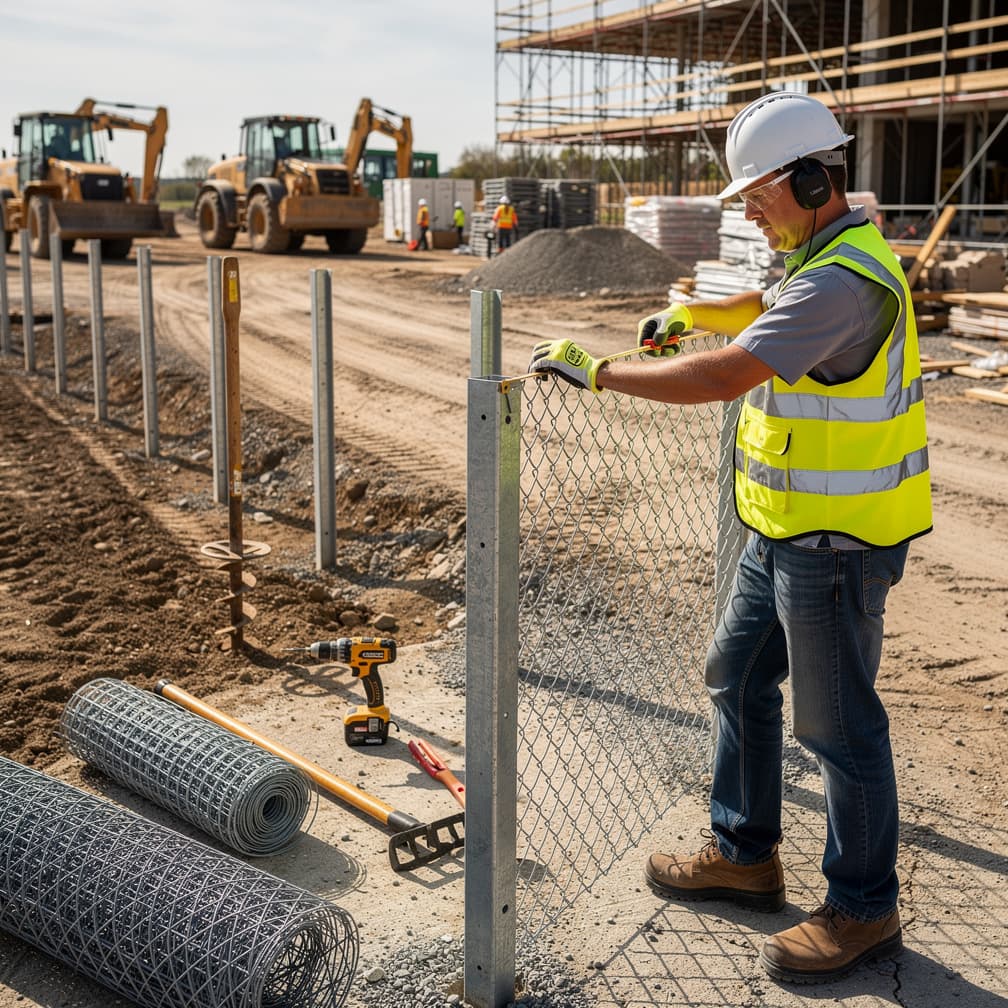

Quoting a fence business is mostly an inventory exercise, and the inventory is never the fence itself. Underwriters want the payroll, the vehicle list, the tools you haul, and an honest description of how deep the work goes. Assemble those four things before you shop fencing contractor insurance in Phoenix and the quotes come back comparable instead of scattered. Leave the equipment list vague and every carrier guesses differently, which is how identical crews end up with wildly different numbers. Deductibles deserve the same attention: a low one feels safe until you see the premium, and a high one is fine until a stolen post driver falls underneath it. Decide what you can absorb, then let participating carriers compete on the same Phoenix file.
What Makes Phoenix Different
Certificates are the currency of this trade, and they get demanded by people who never touch a shovel. A property manager can hold your start date until a current certificate names the right entity. The homeowner rarely asks; the third party standing behind the homeowner tends to. Getting a certificate reissued midweek is easy when your policy already contains the wording it needs. It is not easy when the wording has to be endorsed and the carrier wants a week to think. So the real question for a Phoenix contractor is what your paper can say, and how fast. Ask which entities a policy will add and how the request actually reaches the carrier. That answer decides whether a signed Phoenix job starts on time or waits.
Local Risk Factors in Phoenix
Before the hottest stretch, look at your schedule rather than your policy. Starting earlier, splitting the day, and moving the heavy digging to the front of the week are decisions that cut the exposure a carrier is pricing. The truck matters too, since a cooling system that fails with a loaded trailer on a hot afternoon strands a crew and a day of revenue, and Commercial Auto terms about towing and downtime differ more than owners expect. Read that section of a Phoenix quote. Then remember that heat claims in Arizona are mostly people claims, and people claims are the ones that follow your loss history the longest.
What Coverage Does a Fencing Contractor in Phoenix Need?
General Liability
The neighbor, the visitor, and the property you were never hired to touch: that is who this line is about. General Liability may respond when a fence lands over a boundary, an auger opens a sprinkler line, or somebody trips near an open hole. Redoing your own defective run is commonly excluded, and that gap surprises people.
Example: A crew sets forty feet of cedar three feet inside the neighbor's yard, and the neighbor demands removal plus damages. Defense and the third-party claim are what a liability form is generally meant to take on.
Workers Compensation
Backs, hands, and knees do the work in this trade, and an employer carries the cost when one gives out. Workers Compensation is built for employee injury, and it typically handles medical care and lost wages while generally limiting an employee's ability to sue you. Rules vary by state, and the Arizona Department of Insurance and Financial Institutions publishes the current requirements for employers.
Example: A helper lifting a wet post on uneven ground tears something in his back and misses six weeks. The medical bills and part of the wages he does not earn may fall to this policy rather than to you.
Commercial Auto
Nothing reaches the job without the truck, and personal auto forms commonly exclude business use. Commercial Auto is written for the vehicles, trailers, and hired equipment that haul posts and panels, and it typically addresses injury to others plus damage to the vehicle itself depending on what you buy. Tools inside generally sit on another form.
Example: A gust catches a privacy panel off the trailer on the way to a Phoenix job and it goes through the windshield behind you. The other driver's injuries and repairs are the kind of loss this policy may take up.
Tools & Equipment (Inland Marine)
Augers, post drivers, compressors, levels, and the saw all live on a trailer rather than in a shop. Inland Marine is meant for property that moves, and it may respond to theft or damage between sites, subject to conditions about locks, attendance, and what you can prove you owned. Wear and tear is not a covered peril.
Example: A trailer gets broken into overnight at a stalled Phoenix site, and the post driver and compressor are gone by morning. Replacing them quickly is what this coverage is intended to make possible, subject to the deductible.
How Much Does Fencing Contractor Insurance Cost in Phoenix?
Fencing Contractor Insurance is a bundle of separate policies, priced separately. The ranges below are typical figures for Phoenix for each line, except workers compensation, which is rated per $100 of payroll; a quote prices each one against your own operations.
| Coverage | Typical range | What moves your price |
|---|---|---|
| General Liability Insurance | $150 - $450 per month | Industry and risk classification, annual revenue, number of employees |
| Workers Compensation Insurance | $0.75 - $2.74 per $100 of payroll | Employee classification codes, total annual payroll, experience modification rate |
| Commercial Auto Insurance | $240 - $675 per month | Fleet size and vehicle types, driver records and experience, coverage limits and deductibles |
| Inland Marine Insurance | $30 - $150 per month | Total insured value of the scheduled property, type and age of the equipment, where it is stored and how far it travels |
Prices shown are general estimates, not guaranteed rates or quotes. Your actual premium will depend on the insurer, coverage selected, business details, location, claims history, and other underwriting factors. Learn about our pricing methodology.
What Are the Insurance Requirements for a Fencing Contractor in Phoenix?
Workers' comp is generally required once you have your first employee. Arizona generally requires employers to carry workers' compensation at that point. Common exemptions include sole proprietors, partners, and working members of LLCs. Confirm current thresholds with your state's workers' compensation agency before you hire.
State auto liability minimums apply to business vehicles. Arizona's minimum auto liability limits are $25,000/$50,000/$15,000 (bodily injury per person / per accident / property damage). Contracts and lenders often require more than the state floor.
Where to verify licensing and coverage rules. The Arizona Department of Insurance and Financial Institutions publishes consumer guidance and current insurance requirements for Arizona businesses. When a contract or lease demands specific wording, the Arizona Department of Insurance and Financial Institutions's guidance is the authoritative place to check.
Get Your Fencing Contractor Quote in Phoenix
Compare rates from multiple carriers. Free quotes, no obligation.
Operating in Phoenix
- A property manager can hold your start date until a current certificate names the right entity, so a policy that lapsed quietly in the off-season costs you the Phoenix job before anyone mentions insurance.
- Post holes stay open between the dig and the pour, and an open hole on a residential lot is an injury waiting for a curious kid. Photograph your barricades before you leave a Phoenix site.
- Material rides staged on the customer's property for days, and it belongs to you until it is installed. A stolen pallet of cedar is your loss rather than theirs.
- Locate requests take time nobody has, and augering before the marks are down is the fastest route to a claim involving a utility, a repair crew, and an angry street.
How to Buy: Advice for Phoenix Owners
Subcontracted crews are the exposure that shows up at audit, not at binding. If you hand overflow work to another outfit, collect their certificate before their truck reaches the site and keep it on file. Uninsured subcontractors are commonly treated as your own payroll, which means you pay for coverage you thought you had avoided. General Liability quotes ask about subcontracted work for the same reason, and an honest answer today is cheaper than a correction later. Workers Compensation questions follow the same logic, since rules vary by state and by who is legally your employee. Set a rule that no crew works under your name on a Phoenix site without current paper, and hold it in the weeks when it is hardest. Check the Arizona Department of Insurance and Financial Institutions's guidance before deciding how to classify the people on your sites. Then compare quotes from participating carriers with your real subcontracting picture on the page.
FAQ
Fencing Contractor Insurance in Phoenix: FAQ
Price follows your payroll, your driving, your claims history, and how deep the work goes, rather than your address alone. A one-truck crew setting residential picket lines prices differently from an outfit augering near foundations and hanging automated gates. Participating carriers in Arizona read the same submission differently, which is why identical crews get different numbers. Every current range by coverage sits in the cost table further down this page.
That is a third-party property dispute, and General Liability is the line most likely to be tested. What it takes on depends on the form: damage to the neighbor's land and the argument over it usually sit inside the policy, while pulling and resetting your own defective run is commonly excluded. Read the your-work exclusion before you assume the whole fix falls to a carrier.
Usually not. Standard liability forms tend to exclude the cost of repairing or replacing your own defective work, because that is a quality problem rather than an accident. Damage that your bad work causes to something else can be a different story and may fall inside the policy. The distinction is narrow and it decides claims, so ask a carrier to explain it against a real scenario before you buy.
An Inland Marine policy is built around property that moves between Phoenix sites, and theft is one of the perils it commonly addresses. The conditions matter more than the headline: many forms turn on whether the trailer was locked, whether the property was attended, and whether you can prove what you owned. Photograph serial numbers and keep receipts, since a claim without evidence of ownership is a slow claim.
Rarely, and that gap surprises one-truck operations every year. Personal auto forms commonly exclude vehicles used in a business, so an accident while hauling panels may be denied under the policy you assumed would answer. Commercial Auto exists for that use, and it also raises the question of hired and borrowed vehicles for the days you rent a trailer. Ask before the hitch, not after.
It is an endorsement that extends rights under your policy to another party for the work you do for them. Contracts demand it so the party hiring you can lean on your coverage instead of their own when something goes wrong. A certificate alone does not create it. The endorsement does, so ask which form a carrier attaches and whether blanket wording is available before you promise anything.
Sources
- 1.Arizona Department of Insurance and Financial Institutions(Arizona Department of Insurance and Financial Institutions publishes consumer guidance for insurance buyers.)


