







































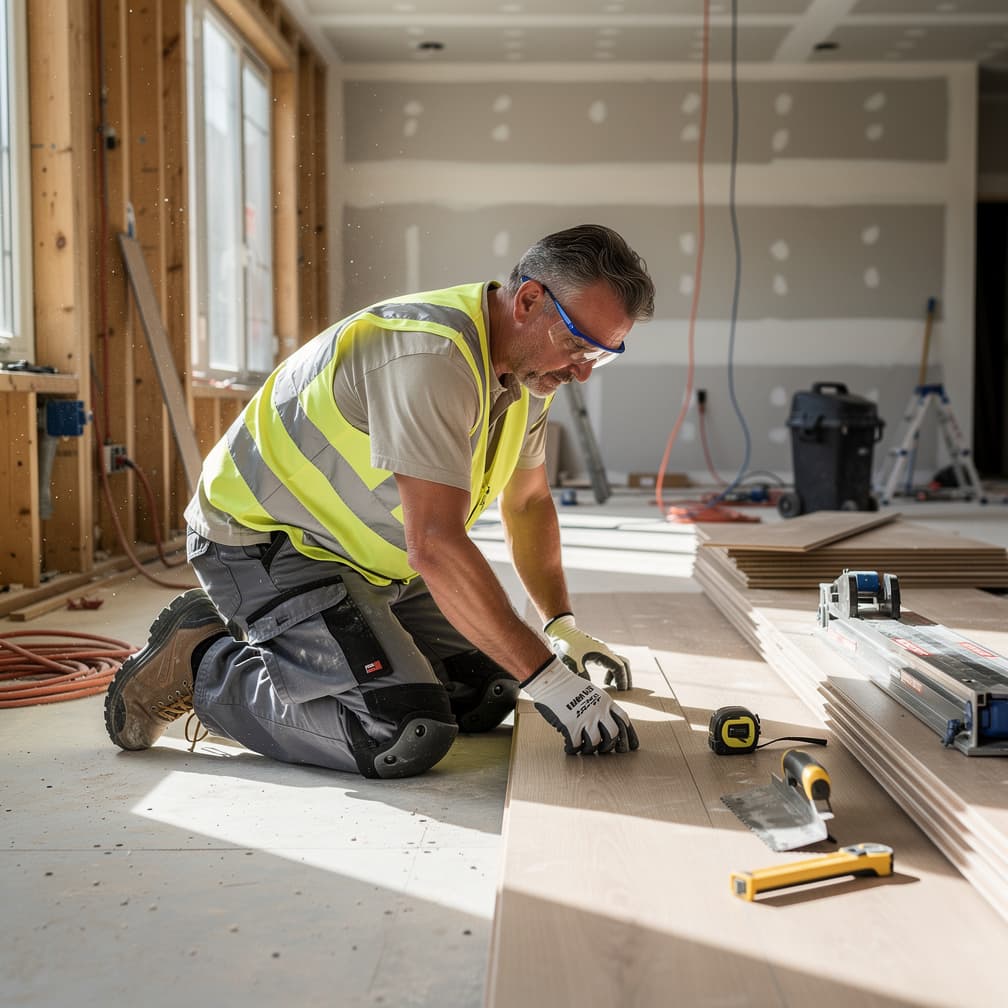

General Liability for a flooring crew commonly runs between $35 and $130 a month, and where you land in that band has more to do with your own file than with Surprise. Payroll moves it. So does the mix of residential and commercial work, and whether you sub out demolition or handle it in house. A claim history full of scratched hardwood and cracked tile moves it hardest of all. Buying flooring contractor insurance in Surprise on the monthly figure alone tends to fail the first time a limit gets tested, or the first time a builder reads your certificate closely. Ask what a quote assumes about your payroll, your subs, and your limits before you compare it to anything. Comparing quotes from participating carriers only works when the assumptions underneath them match.
What Makes Surprise Different
Certificate wording, limits, and endorsements travel together, and a client rejects the set rather than one piece. A certificate is only evidence; the endorsement behind it is what actually changes the policy. Plenty of contractors send the certificate, assume the wording followed, and learn otherwise at claim time. Check that the endorsement your Surprise client demanded exists on the policy and names the right party. One typo in a company name can leave the wrong entity standing on your paperwork. If a Surprise contract names an entity that no longer exists, ask for a corrected exhibit. Correcting it takes an email before the job and a lawyer after the loss. Chase the wording while the job is still boring and nobody has been damaged yet.
Local Risk Factors in Surprise
Extreme heat is a crew problem first. Kneeling on a slab in an unconditioned house in Surprise, carrying rolls up stairs, and running a grinder in a closed room all turn dangerous quickly when the building has no cooling yet. Heat illness claims are real, and Workers Compensation may respond when a worker needs care, depending on how the claim is documented and reported. Shade, water, and an earlier start cost almost nothing next to a claim and a sidelined installer. Adhesives care about it too, since open times shrink in heat and a rushed spread in Maricopa County becomes a callback that no policy treats as an accident.
What Coverage Does a Flooring Contractor in Surprise Need?
General Liability
Builders, property managers, and public bid offices ask for this line by name before a crew loads in. It can respond to third-party injury and to damage your work does to somebody else's property: the gouged stair rail, the customer who trips on torn-up subfloor, the legal defense that follows. Workmanship disputes and gradual moisture failure typically fall outside it.
Example: A tool cart rolls into a freshly painted stairwell wall on the way to an upstairs bedroom, and the homeowner in Surprise wants the whole wall repainted. General Liability might pick up that repair, subject to your deductible.
Workers Compensation
Injuries to your own crew sit outside the liability line entirely, and that gap is what this coverage exists to close. Kneeling all day, lifting rolls up stairs, and handling blades produce strains and cuts, and medical care plus lost wages can be covered here. Cost tracks payroll and class code. A builder in Surprise can demand proof of it before an award.
Example: An installer carrying a roll of carpet up a flight of stairs slips on the landing and tears a shoulder. Workers Compensation can help cover the treatment and the wages he misses while healing.
Commercial Auto
Your personal auto policy generally steps back once the van is hauling planks, adhesive, and a floor sander for the business. This line is built for those vehicles, and it can respond to damage, injury, and the liability that follows a crash. Every truck that carries material belongs on the list, because the one left off is the one in the accident.
Example: A loaded van rear-ends a car on the way to a scheduled install, and two addresses lose their crew that week. Commercial Auto is intended to answer for the other driver's damage and the injuries claimed.
Tools & Equipment (Inland Marine)
Saws, grinders, moisture meters, and the sander live in a truck rather than in a building, and most property coverage is written around a fixed address. This line follows equipment that moves, so it can respond to theft or sudden damage at a jobsite or in transit. Material you own but have not installed can sometimes be added. Wear and mechanical breakdown usually are not.
Example: Somebody cuts the lock on a trailer overnight, and the sander, two saws, and a box of meters are gone before the crew arrives. Inland Marine may step in for the replacements.
How Much Does Flooring Contractor Insurance Cost in Surprise?
Flooring Contractor Insurance is a bundle of separate policies, priced separately. The ranges below are typical figures for Surprise for each line, except workers compensation, which is rated per $100 of payroll; a quote prices each one against your own operations.
| Coverage | Typical range | What moves your price |
|---|---|---|
| General Liability Insurance | $110 - $350 per month | Industry and risk classification, annual revenue, number of employees |
| Workers Compensation Insurance | $0.75 - $2.74 per $100 of payroll | Employee classification codes, total annual payroll, experience modification rate |
| Commercial Auto Insurance | $190 - $480 per month | Fleet size and vehicle types, driver records and experience, coverage limits and deductibles |
| Inland Marine Insurance | $25 - $100 per month | Total insured value of the scheduled property, type and age of the equipment, where it is stored and how far it travels |
Prices shown are general estimates, not guaranteed rates or quotes. Your actual premium will depend on the insurer, coverage selected, business details, location, claims history, and other underwriting factors. Learn about our pricing methodology.
What Are the Insurance Requirements for a Flooring Contractor in Surprise?
Workers' comp is generally required once you have your first employee. Arizona generally requires employers to carry workers' compensation at that point. Common exemptions include sole proprietors, partners, and working members of LLCs. Confirm current thresholds with your state's workers' compensation agency before you hire.
State auto liability minimums apply to business vehicles. Arizona's minimum auto liability limits are $25,000/$50,000/$15,000 (bodily injury per person / per accident / property damage). Contracts and lenders often require more than the state floor.
Where to verify licensing and coverage rules. The Arizona Department of Insurance and Financial Institutions publishes consumer guidance and current insurance requirements for Arizona businesses. When a contract or lease demands specific wording, the Arizona Department of Insurance and Financial Institutions's guidance is the authoritative place to check.
Get Your Flooring Contractor Quote in Surprise
Compare rates from multiple carriers. Free quotes, no obligation.
Operating in Surprise
- Subs get hired for a week of stair work and then disappear, but their certificate is what your auditor asks about a year later. Collect it before they start or pay for their payroll at audit.
- A slab that reads wet ends the day before it begins, and the builder standing next to you wants the floor down anyway. The written refusal decides who owns the cupping six months later.
- Tools ride between two or three addresses a day in Surprise, so most of the exposure lives in the truck bed rather than in any shop or storage unit.
- A helper hired for a single day of demolition is still somebody who can get hurt on your job, and headcount assumptions made at quoting time get tested at claim time.
How to Buy: Advice for Surprise Owners
Limits and deductibles are two different decisions, and owners often trade the wrong one. A higher deductible lowers the premium and moves the small damage claims, the scratched hardwood and the cracked tile, back onto you. Those are the claims a flooring business actually has, so pick a deductible you could pay in a bad month. Limits work the other way: they matter on the loss that never happens until it does, and contracts often set them for you anyway. General Liability limits demanded by a Surprise builder are a floor, and you can carry more. Workers Compensation does not work that way, since its cost tracks payroll and claim history instead of a deductible you pick. Check the Arizona Department of Insurance and Financial Institutions's guidance before deciding how limits are described in your state. When you compare quotes from participating carriers, line the deductibles up first or the premiums mean nothing.
FAQ
Flooring Contractor Insurance in Surprise: FAQ
General contractors ask first, usually before the first delivery lands. Property managers ask before your crew books the freight elevator. Public work and school jobs put the requirement into the bid documents, so a missing endorsement can disqualify an otherwise strong bid. When a homeowner in Surprise hires you directly, nobody asks for the paperwork at all, and that is exactly why direct residential work leaves more of the damage sitting on your invoice.
Usually not. Workmanship disputes, cupping over a wet slab, and gradual failure sit outside what General Liability generally answers for, because a policy responds to accidents rather than to the quality of the work. Sudden damage is a different question: a tool cart through a stair rail is an accident. Document moisture readings and written approvals, since those records settle most callback arguments before insurance ever enters the conversation.
Often, and the form decides. Inland Marine is built for equipment that moves, and it may respond to theft or damage away from a fixed location. Some policies treat an overnight vehicle theft differently than a shop burglary, and some expect the trailer to be locked. Ask where the coverage applies, then list the sander, the saws, the grinders, and the moisture meters with honest replacement values.
It is an endorsement that extends part of your policy's protection to another party for claims arising out of your work. A general contractor asks for it so your coverage answers first when your crew causes the damage. A certificate alone adds nobody; the endorsement behind it does the work. Blanket wording can reach whoever your contract requires, while scheduled wording reaches only the names typed onto the form.
Generally not, once the vehicle is used for the business. Personal policies commonly exclude regular business use, and a claim can be denied after the fact when an adjuster learns what the van was carrying. Commercial Auto is the line built for that vehicle, and it might respond to the damage, the injury, and the liability that follows. List every vehicle that carries material, including the one you drive twice a month.
That is the classic General Liability claim for this trade. The line might respond to third-party bodily injury arising out of your work, including defense costs, subject to the limits you bought. An install in Surprise that runs through an occupied home raises the odds, since a family keeps walking a torn-up hallway while you work. Report it the day it happens and keep photographs of the area.
Sources
- 1.Arizona Department of Insurance and Financial Institutions(Arizona Department of Insurance and Financial Institutions publishes consumer guidance for insurance buyers.)


