







































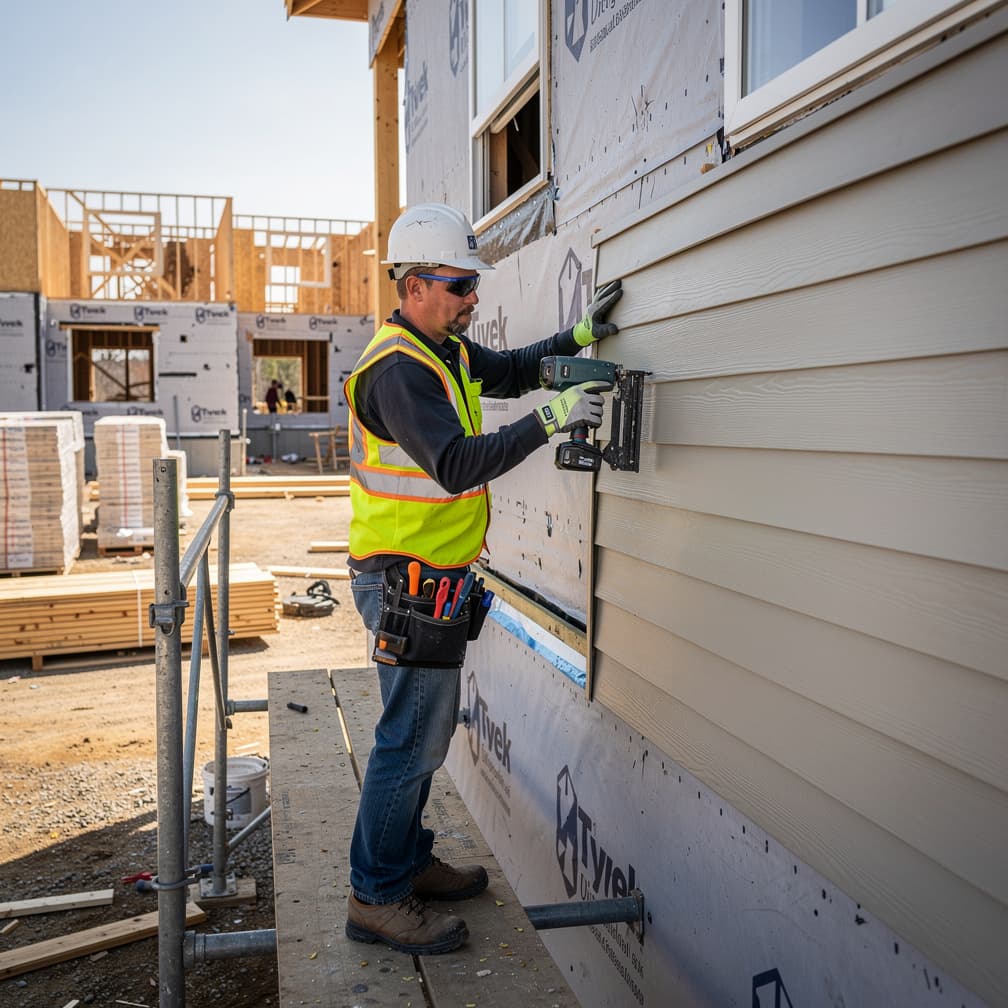

As a siding contractor in Tempe, you sign the insurance clause before you ever touch a wall, and that clause usually asks for limits, additional-insured status, and a waiver of subrogation. Signing first and shopping later is how owners end up buying a policy that cannot satisfy the contract they already committed to. Bring the contract to the quote. Siding contractor insurance in Tempe should be built against the paperwork you actually sign rather than a generic package. If a job calls for primary and noncontributory wording, that is an endorsement, and endorsements have prices and eligibility rules. A carrier that will not write the wording cannot do the job, whatever the monthly number says. The sections below break the clause into the pieces you have to buy.
What Makes Tempe Different
Freeze, heat, and wind each change how panels go on, and none of them change your deadline. Material moves with temperature, and an install fastened wrong in the cold can buckle later in the sun. That is a workmanship complaint, and workmanship complaints are the ones policies handle least generously. Your own work is typically carved out, though damage it causes elsewhere in the house may not be. The distinction decides whether a claim is a claim or a callback you swallow yourself. So build weather rules into the scope you sign with an owner in Tempe, in writing. Manufacturer instructions exist partly to give you that argument later, so follow them and note it. Carriers in Arizona will ask, and the file either answers the question or it does not.
Local Risk Factors in Tempe
Before a heat wave, look at the material on your trailer and not only at the people. Sealed vinyl in a hot box warps, adhesives cure wrong, and caulk that cooked in a truck fails on a wall two years later where nobody can prove why. Inland Marine generally responds to sudden accidental loss rather than to material degraded by the conditions you left it in, so that is a storage decision instead of a claim. Heat also stretches a job across more days in Maricopa County, and more days on a site is more exposure to everything else on this page. Ask what your policy in Arizona says about property left in a vehicle, then decide what gets carried home each night.
What Coverage Does a Siding Contractor in Tempe Need?
General Liability
The owner or general contractor who hires you asks for this one by name, and the certificate they want is proof it exists. General Liability can respond to a stranger hurt near your scaffold and to property damage your crew causes to gutters, windows, or landscaping. Your own defective work is typically carved out, while the damage it causes to the rest of the house may be treated differently.
Example: A ladder shifts, a downspout tears loose from the fascia, and the homeowner sends you the repair invoice along with a bill from the landscaper whose beds it landed in. This line may take it from there.
Workers Compensation
A fall from staging ends a career and starts a claim on the same afternoon. Workers Compensation can pay medical bills and a share of lost wages for an injured employee, and it typically bars that employee from suing you over the same injury. Who counts as an employee varies by state, and uninsured subs usually get charged back onto your payroll at audit.
Example: A helper on the second course misses a rung with a bundle of trim in one hand and lands wrong on frozen ground. The medical bills and part of his lost wages could fall here.
Commercial Auto
Trucks, vans, and the trailer hauling ladders and panels drop outside a personal auto policy the moment they earn money. Commercial Auto rates on your vehicle list, your driving radius, and who is allowed to drive. It might answer for injury and property damage after an accident on the way to a job in Tempe, subject to the drivers you disclosed.
Example: Reversing out of a tight driveway with panels past the tailgate, the trailer clips a parked car and the neighbor calls a lawyer rather than you. Claims like that one may sit here.
Tools & Equipment (Inland Marine)
Property that leaves your shop is where a building policy stops, and that gap is why this line exists. Inland Marine can help cover ladders, staging, compressors, nailers, and brakes against theft or damage between job sites, subject to the schedule you filed. Gear left off the schedule is usually yours to replace, and wear on old equipment is not a claim.
Example: The trailer sits locked at a job in Tempe on a quiet night, and by morning the compressor and two nailers are gone. Scheduled equipment is generally where this coverage does its work.
How Much Does Siding Contractor Insurance Cost in Tempe?
Siding Contractor Insurance is a bundle of separate policies, priced separately. The ranges below are typical figures for Tempe for each line, except workers compensation, which is rated per $100 of payroll; a quote prices each one against your own operations.
| Coverage | Typical range | What moves your price |
|---|---|---|
| General Liability Insurance | $170 - $525 per month | Industry and risk classification, annual revenue, number of employees |
| Workers Compensation Insurance | $0.75 - $2.74 per $100 of payroll | Employee classification codes, total annual payroll, experience modification rate |
| Commercial Auto Insurance | $240 - $625 per month | Fleet size and vehicle types, driver records and experience, coverage limits and deductibles |
| Inland Marine Insurance | $35 - $150 per month | Total insured value of the scheduled property, type and age of the equipment, where it is stored and how far it travels |
Prices shown are general estimates, not guaranteed rates or quotes. Your actual premium will depend on the insurer, coverage selected, business details, location, claims history, and other underwriting factors. Learn about our pricing methodology.
What Are the Insurance Requirements for a Siding Contractor in Tempe?
Workers' comp is generally required once you have your first employee. Arizona generally requires employers to carry workers' compensation at that point. Common exemptions include sole proprietors, partners, and working members of LLCs. Confirm current thresholds with your state's workers' compensation agency before you hire.
State auto liability minimums apply to business vehicles. Arizona's minimum auto liability limits are $25,000/$50,000/$15,000 (bodily injury per person / per accident / property damage). Contracts and lenders often require more than the state floor.
Where to verify licensing and coverage rules. The Arizona Department of Insurance and Financial Institutions publishes consumer guidance and current insurance requirements for Arizona businesses. When a contract or lease demands specific wording, the Arizona Department of Insurance and Financial Institutions's guidance is the authoritative place to check.
Get Your Siding Contractor Quote in Tempe
Compare rates from multiple carriers. Free quotes, no obligation.
Operating in Tempe
- Debris zones are the injury exposure nobody bids. Cut-offs, fasteners, and bundled trim left on the ground put a stranger inside your work area, and that call usually arrives weeks after the crew packed up.
- Carriers in Arizona judge a wet-wall file on what it shows, so the photographs from your tear-off are the only version of that wall anyone can still examine once the stain appears.
- A homeowner who files on their own policy can send their insurer after yours, and that demand shows up with an adjuster's file already built. Your dated notes are the only counterweight you get.
- Crews drive more than they climb, and jobs spread across Maricopa County keep a loaded trailer on the road for hours. Backing out of a driveway with panels past the tailgate is where a routine day turns into a lawsuit.
How to Buy: Advice for Tempe Owners
Claims are a process, and the process is worth shopping. Ask how a loss gets reported after hours, since an open wall and an arriving storm do not wait for business hours. Ask who calls the homeowner back and how quickly an adjuster reaches a site out in Maricopa County. Ask what the carrier expects in the file: photographs, the signed scope, dated notes, the manufacturer instructions you followed. General Liability disputes over water intrusion turn on documentation more than on argument, so the file you build during the job is the file that settles it. Slow handling costs you the customer even when the loss gets paid. Check the Arizona Department of Insurance and Financial Institutions's guidance before deciding whose complaint record you can live with. Comparing quotes from participating carriers should include how each behaves on the worst day, not only the price on the best.
FAQ
Siding Contractor Insurance in Tempe: FAQ
Someone walks past an open work zone, catches a foot on a bundle of trim or a scaffold leg, and goes down. You may hear nothing that day. The call arrives weeks later from a lawyer, and General Liability is the line that may answer for the injury and for the defense. Fence the debris zone and photograph it daily, because the file you never built is the one you end up needing.
Usually within a stated territory, though that detail is worth confirming rather than assuming. Underwriters ask for your radius of operation, and understating it to shave premium creates an argument at claim time. Vehicles are the sensitive part, since longer runs mean more miles and more exposure, and the rating reflects that. Tell a carrier where you actually work in Arizona and let the quote price it.
It depends on what a bad month looks like for you. A higher deductible on an equipment schedule lowers premium and moves risk onto your cash: a stolen nailer becomes an annoyance you fund, a stolen trailer of staging becomes a week you fund. Set it where a bad day stays survivable. Then look at limits, which run the other way, since layers above the first tier usually cost less per dollar.
Payroll, working height, and claims history do most of the work. A crew doing single-story vinyl prices differently from one hanging fiber cement four stories up, and three clean years is worth more than any amount of shopping. Subcontractor spend matters too, since uninsured subs typically get charged back at audit. General Liability is quoted off the operation you describe, and carriers in Arizona weigh the same description differently.
It depends on what got wet. General Liability might respond to damage your work causes to the rest of the structure, meaning the drywall, the flooring, and the insulation somebody now has to tear out. The panels you fastened wrong are usually a different story, because your own work product is typically carved out and redoing the wall often lands on you. Read those two clauses side by side before you need either one.
They can, and contracts often say so in writing. Naming an additional insured is an endorsement on your policy rather than a line on a certificate, and the certificate is only evidence that the endorsement exists. Ask what your carrier charges to add a party, and ask whether the wording reaches completed operations, since water claims tend to surface after the crew has gone.
Sources
- 1.Arizona Department of Insurance and Financial Institutions(Arizona Department of Insurance and Financial Institutions publishes consumer guidance for insurance buyers.)


