







































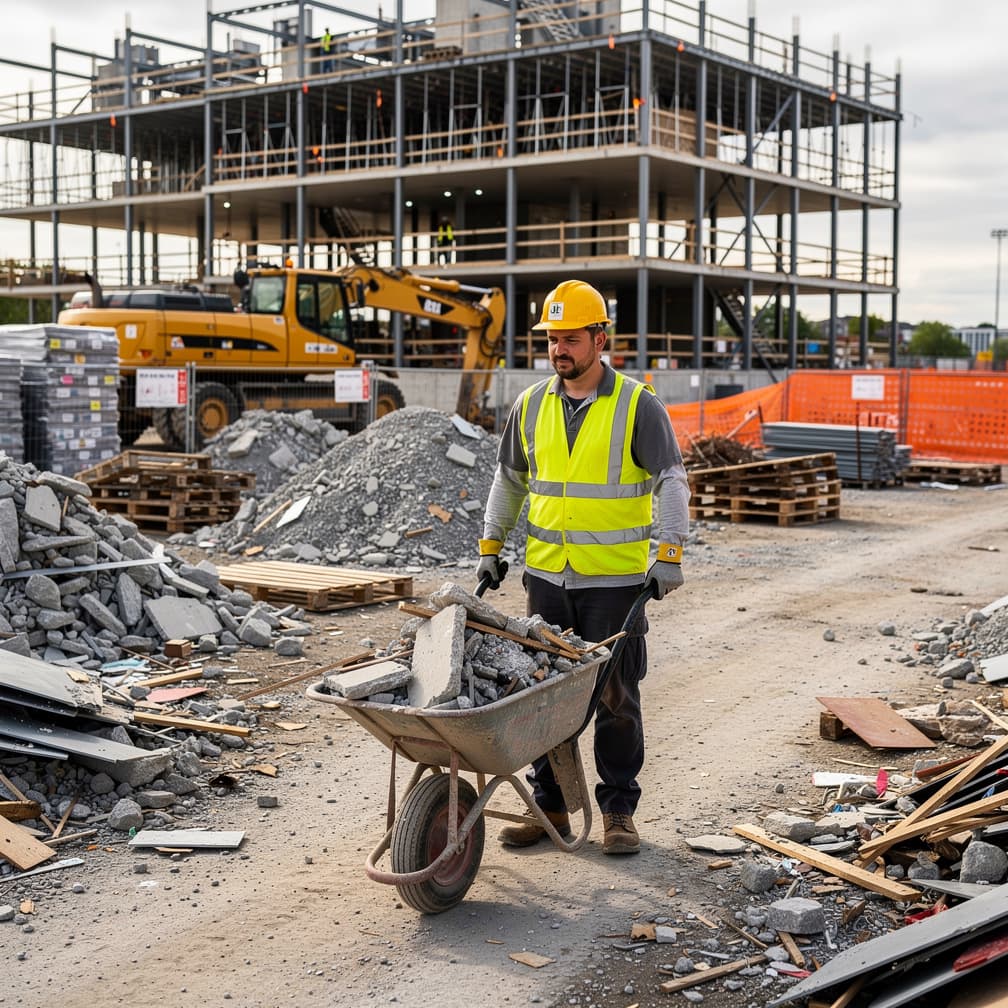

About $242,000 is the median home value in Tucson, and the driveways, gates, and plantings around those houses are what a loaded trailer has to squeeze past. Residential cleanout work is property damage work: the load is worth nothing, and the surroundings are worth plenty. Debris removal insurance in Tucson earns its keep on the small stuff, like a cracked apron, a gouged gate post, or a flower bed flattened under a tire. Claims like that are frequent, and frequency is what underwriters price. Photograph the approach before you drop a box, because a documented before shot is the least expensive defense you own. Then put identical property damage limits in front of participating carriers, since that limit is what a homeowner's repair estimate actually tests.
What Makes Tucson Different
Payroll drives more of your premium than any single piece of equipment sitting in the yard. Labor classification matters too: a driver, a laborer, and an operator do not price the same. Misclassify to save money and the audit finds it, then bills the difference plus the argument. Loss history moves the number next, and small frequent claims move it more than owners expect. Three fence repairs paid from the policy read worse than one larger, plainly unavoidable accident. Consider paying small damage out of pocket, and ask each quote how that choice affects renewals. Deductible choice belongs in the same conversation, because it changes which losses you report at all. Hand identical payroll figures to participating carriers in Arizona, then compare what comes back for Tucson work.
Local Risk Factors in Tucson
A crew starting before dawn to beat the heat is a different crew than the one your policy imagined, and early hours put tired drivers on the road at exactly the wrong time. Fatigue never appears on an application, and it appears in most claim files. The other heat exposure is odor and pests: debris that sat in a container through a hot stretch generates complaints from neighbors, and complaints turn into claims once somebody gets sick. Pull loaded boxes faster in a heat stretch, and ask each participating carrier in Arizona what a Tucson nuisance complaint looks like on their form.
What Coverage Does a Debris Removal in Tucson Need?
General Liability
Property managers, general contractors, and municipal clerks ask for this one by name before a truck reaches the site. It can help cover third-party injury and property damage arising out of your work: a cracked driveway, a neighbor's fence, a slip at a residential cleanout. Damage to your own loader and injuries to your own crew sit outside it.
Example: Your crew drags a loaded container across a homeowner's driveway in Tucson and cracks the apron in three places. The repair estimate lands a week later, and the policy may take the claim subject to your deductible.
Commercial Auto
Miles are the exposure here. Trucks and trailers running between a demolition job and a disposal facility sit outside what a liability form addresses, and this line is meant to answer for the collision, the injuries, and the damage your vehicle does to others. Rating follows units, gross weight, radius, and driver records. Cargo riding on the trailer usually raises separate questions.
Example: A loaded trailer clips a parked sedan while backing out of a tight alley, and the owner's repair estimate runs to a door and a quarter panel. That claim would typically be handled here.
Workers Compensation
A helper who slips on wet plywood at a cleanout needs medical care, and this is the line built to answer for it. It can pay for treatment and lost wages for injured employees, and it generally limits your exposure to the injury lawsuit that might otherwise follow. Rating runs on payroll by job class, so a driver, a laborer, and an operator price differently. Requirements vary by state.
Example: An operator wrenches a shoulder forcing a frozen pile onto a trailer and misses six weeks of work. Medical bills and a share of the lost wages might be picked up under this line, subject to the state's rules.
Commercial Umbrella
Primary limits are finite, and a loaded truck meeting a passenger car is where a debris hauler finds the edge of them. This line sits above General Liability and Commercial Auto, adding limit once an underlying policy is exhausted. Municipal and demolition contracts frequently demand figures a small program cannot reach alone. It follows the underlying forms, so their exclusions usually carry upward.
Example: An intersection collision with your grapple truck injures two people, and the demands exceed what the vehicle policy holds. The excess layer above it could pick up what remains, depending on how the tower was built.
How Much Does Debris Removal Insurance Cost in Tucson?
Debris Removal Insurance is a bundle of separate policies, priced separately. The ranges below are typical figures for Tucson for each line, except workers compensation, which is rated per $100 of payroll; a quote prices each one against your own operations.
| Coverage | Typical range | What moves your price |
|---|---|---|
| General Liability Insurance | $230 - $700 per month | Industry and risk classification, annual revenue, number of employees |
| Commercial Auto Insurance | $430 - $1,200 per month | Fleet size and vehicle types, driver records and experience, coverage limits and deductibles |
| Workers Compensation Insurance | $0.75 - $2.74 per $100 of payroll | Employee classification codes, total annual payroll, experience modification rate |
| Commercial Umbrella Insurance | $130 - $420 per month | Umbrella limit requested, limits carried on the underlying policies, loss history on those underlying policies |
Prices shown are general estimates, not guaranteed rates or quotes. Your actual premium will depend on the insurer, coverage selected, business details, location, claims history, and other underwriting factors. Learn about our pricing methodology.
What Are the Insurance Requirements for a Debris Removal in Tucson?
Workers' comp is generally required once you have your first employee. Arizona generally requires employers to carry workers' compensation at that point. Common exemptions include sole proprietors, partners, and working members of LLCs. Confirm current thresholds with your state's workers' compensation agency before you hire.
State auto liability minimums apply to business vehicles. Arizona's minimum auto liability limits are $25,000/$50,000/$15,000 (bodily injury per person / per accident / property damage). Contracts and lenders often require more than the state floor.
Where to verify licensing and coverage rules. The Arizona Department of Insurance and Financial Institutions publishes consumer guidance and current insurance requirements for Arizona businesses. When a contract or lease demands specific wording, the Arizona Department of Insurance and Financial Institutions's guidance is the authoritative place to check.
Get Your Debris Removal Quote in Tucson
Compare rates from multiple carriers. Free quotes, no obligation.
Operating in Tucson
- Gate attendants at disposal facilities in Arizona check paperwork before they check the load, and an expired certificate stops the truck with a full box still behind it.
- A property manager can hold your invoice until a current certificate names the management company, so a lapsed policy in Tucson costs you cash flow before it ever costs you a claim.
- Tipping fees are due at the scale whether or not the customer has paid you, so the working capital that would absorb a deductible is thinner than your profit and loss suggests.
- Nails and screws left in a driveway keep finding tires for weeks after the pile is gone, and the complaint that follows is a property damage claim rather than a service call.
How to Buy: Advice for Tucson Owners
Certificates are logistics, and logistics is where jobs get lost. Every property manager, owner, and general contractor who asks for proof goes on a holder list, and every renewal means reissuing all of them. Decide now where that list lives and who updates it, because the request always lands while you are under a load. Ask each carrier how additional-insured endorsements get added mid-term, and whether the wording your contracts demand is available at all. General Liability is the line most of those requests target, though a municipal contract may also ask for Workers Compensation proof and a waiver. Check the Arizona Department of Insurance and Financial Institutions's guidance before deciding which requests you can safely agree to. Then compare participating carriers on paperwork handling as seriously as on price, because the paper is what a customer in Tucson actually sees.
FAQ
Debris Removal Insurance in Tucson: FAQ
Anyone can bring a claim, and dust or falling material drifting onto adjoining property is a routine complaint in this trade. General Liability may respond to third-party property damage depending on the facts and the policy's exclusions, and it commonly funds the defense as well. Control measures help more than coverage does: wetting the pile, screening the load, and photographing the neighbor's property before you start. Read the pollution language, since it varies.
Generally not. The lines on this page address injuries and damage you cause to other people, plus the vehicles you drive; your own loader, grapple attachment, or mini excavator is property, and property coverage is a separate purchase. Owners discover this after a theft from an open lot or a hydraulic failure. Ask each quote what happens to an owned machine, and get the answer in writing.
That depends on the carrier, and it is worth asking before you need one. Certificates are usually routine once a policy is active; the delay is usually the endorsement behind them, since additional-insured wording has to be added to the policy itself. Ask for the endorsement at the same time you ask for the certificate. A job start date is a poor moment to learn your carrier's process.
Usually higher limits and more specific wording. Public agencies tend to demand additional-insured status, sometimes waivers of subrogation, and proof that stays current across the whole term. Those limits can push a small operation from a primary policy alone into a Commercial Umbrella, and that cost belongs in the bid. Read the insurance exhibit before you price the work, because the requirement is not negotiable after you win a Tucson contract.
Per-occurrence is the most one incident can draw; aggregate is the ceiling for the whole policy term. A hauler can reach that ceiling faster than most trades, because one loading-area accident can produce separate demands from the customer, the property owner, and the neighbor, and a busy year stacks small driveway repairs on top of it. Once the aggregate is spent, later claims sit on you. Contracts often name both figures, so read which one is being demanded.
It can, mostly through payroll. Extra hands hired for a cleanup stretch show up at audit whether or not you reported them in advance, and the reconciliation arrives after the money is spent. Vehicles added for the surge matter too, especially a borrowed trailer nobody wrote down. Tell participating carriers in Arizona what actually changed rather than letting the audit find it, since a surprise gets priced less kindly than a disclosure.
Sources
- 1.U.S. Census Bureau, ACS 5-Year Estimates (2023), table B25077(The median home value in Tucson is about $242,000.)
- 2.Arizona Department of Insurance and Financial Institutions(Arizona Department of Insurance and Financial Institutions publishes consumer guidance for insurance buyers.)


