







































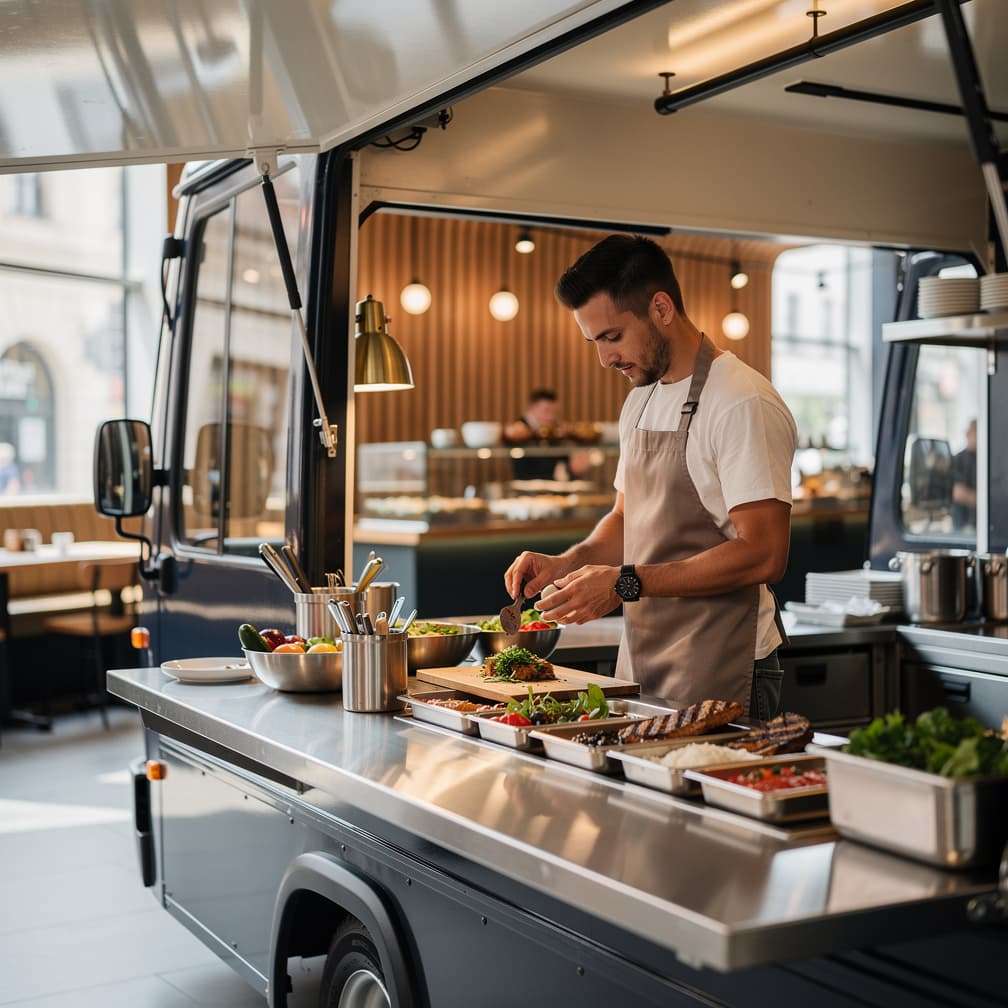

As a food truck working in Tucson, two different desks want proof of coverage and neither accepts the other's paperwork. A permit office wants evidence a policy exists. A venue wants naming on it, at limits it picked, on a certificate dated before load-in. Food truck insurance in Tucson is bought once and proved over and over, which is why the certificate process matters as much as the policy wording. Every request carries a lead time, and the ones that arrive late cost a service day. Set the policy up so certificates issue fast, and keep every requirements sheet anyone has ever sent you. The rest of this page is about getting that right the first time.
What Makes Tucson Different
Additional insured and certificate holder sound alike on paper and do two completely different things. A certificate holder simply gets told the policy exists, and that is the whole of the arrangement. An additional insured gets rights under your policy, which is what the venue actually wanted. Handing over a certificate when the contract asked for an endorsement satisfies nobody who reads it. It also leaves you exposed on a promise you already signed and cannot walk back now. Ask which one the contract demands, then ask whether participating carriers in Arizona include that endorsement. If a venue in Tucson rejects your paperwork at load-in, the difference is usually this one. Two words, one endorsement, and an evening of revenue riding on telling them apart.
Local Risk Factors in Tucson
Extreme heat attacks the two things a food truck cannot operate without: the refrigeration and the generator. A compressor that quits at the peak of a hot afternoon in Tucson takes the inventory down with it, and a generator that overheats ends the service on the spot. Whether any of that is a claim turns on a distinction owners rarely ask about, because mechanical breakdown and sudden accidental damage are treated differently, and breakdown is commonly a separate add-on rather than part of a standard property form. Commercial property coverage may respond where heat causes physical damage, while a unit that simply wore out in the heat generally reads as maintenance. Ask which one your policy in Arizona was built for.
What Coverage Does a Food Truck in Tucson Need?
Commercial Auto
Every permit office and lot operator assumes the rig on the road is insured as a commercial vehicle, because a personal auto policy generally excludes business use. Commercial Auto is the line built for the truck itself: liability on the road, damage to the chassis, and theft of the vehicle. What it typically does not reach is the kitchen equipment bolted inside it.
Example: You back into a bollard leaving a lunch spot and crack the rear panel along with the propane cabinet door. The vehicle damage may fall to this line, subject to your deductible.
General Liability
A stranger standing on pavement you do not own, waiting for food you cooked, is the exposure this line exists for. General Liability could respond to a customer's injury near the window, or to a claim that what you served made someone sick, though products wording varies from form to form. It is also the coverage venues name on their certificates.
Example: A customer trips over your power cord at a brewery lot, breaks a wrist, and hires a lawyer within the week. Defense and any settlement could land here, depending on the limits you carry.
Commercial Property
Flood sits outside it, wear and tear sits outside it, and a compressor that slowly gave up sits outside it too. What Commercial Property is for is the sudden loss: fire in the hood, a storm through the roof, theft of equipment while the truck is parked. Whether your grill and refrigeration are scheduled or blanketed decides what a rebuild actually returns.
Example: A grease fire takes the hood and the flat top overnight in Tucson, and the rig sits idle until an adjuster values the kitchen. That equipment loss might be answered here.
Workers Compensation
Where General Liability stops is where this one starts, because the injured person is your own crew rather than a customer. Workers Compensation rates per hundred dollars of payroll, and it typically responds to medical costs and lost wages when someone gets burned at the fryer or hurt loading the truck. Thresholds for who must carry it vary by state.
Example: Your window worker slips on grease during a rush, tears a knee, and misses six weeks of shifts. Medical bills and a share of the lost wages may be picked up under this line.
How Much Does Food Truck Insurance Cost in Tucson?
Food Truck Insurance is a bundle of separate policies, priced separately. The ranges below are typical figures for Tucson for each line, except workers compensation, which is rated per $100 of payroll; a quote prices each one against your own operations.
| Coverage | Typical range | What moves your price |
|---|---|---|
| Commercial Auto Insurance | $210 - $625 per month | Fleet size and vehicle types, driver records and experience, coverage limits and deductibles |
| General Liability Insurance | $55 - $210 per month | Industry and risk classification, annual revenue, number of employees |
| Commercial Property Insurance | $80 - $290 per month | Building value and construction type, roof age and condition, fire protection class |
| Workers Compensation Insurance | $0.75 - $2.74 per $100 of payroll | Employee classification codes, total annual payroll, experience modification rate |
Prices shown are general estimates, not guaranteed rates or quotes. Your actual premium will depend on the insurer, coverage selected, business details, location, claims history, and other underwriting factors. Learn about our pricing methodology.
What Are the Insurance Requirements for a Food Truck in Tucson?
Workers' comp is generally required once you have your first employee. Arizona generally requires employers to carry workers' compensation at that point. Common exemptions include sole proprietors, partners, and working members of LLCs. Confirm current thresholds with your state's workers' compensation agency before you hire.
State auto liability minimums apply to business vehicles. Arizona's minimum auto liability limits are $25,000/$50,000/$15,000 (bodily injury per person / per accident / property damage). Contracts and lenders often require more than the state floor.
Flood damage is typically excluded from standard policies. Standard commercial property and builders-risk-type policies typically exclude flood damage. Flood exposure varies address by address, so check your premises in FEMA's Flood Map Service Center before deciding; if you sit in a mapped flood zone, a separate policy through the National Flood Insurance Program is the usual starting point.
Where to verify licensing and coverage rules. The Arizona Department of Insurance and Financial Institutions publishes consumer guidance and current insurance requirements for Arizona businesses. When a contract or lease demands specific wording, the Arizona Department of Insurance and Financial Institutions's guidance is the authoritative place to check.
Get Your Food Truck Quote in Tucson
Compare rates from multiple carriers. Free quotes, no obligation.
Operating in Tucson
- A menu board or canopy that blows into a parked car is a liability claim rather than an equipment claim, and the two carry separate deductibles.
- Certificates expire, and a venue in Tucson that accepted last season's copy can bounce it this season without telling you why until you think to ask.
- The truck is worth less than the kitchen inside it on most rigs, which is why a quote built around the vehicle alone leaves the expensive half of your business undescribed.
- Bookings that pull you outside Pima County change the radius on your application, and a claim that happens beyond the radius you declared is a conversation nobody enjoys.
How to Buy: Advice for Tucson Owners
Before you compare prices, decide which single loss would actually end your season. For most trucks that is the rig itself: Commercial Auto answers for the vehicle, and Commercial Property is where the kitchen bolted inside it may sit. A quote that prices the truck and shrugs at the fryer, the flat top, and the refrigeration is half a quote. Get an equipment list on paper with values you could defend to an adjuster in Tucson. Ask each carrier which form the equipment falls under and whether it is scheduled or blanket. Ask what happens to that same equipment while it is in transit, because the answer varies more than you would think. Check the Arizona Department of Insurance and Financial Institutions's guidance before deciding how much of a rebuild you want to fund yourself. With the list in hand, CPK puts participating carriers' offers next to each other so the differences are visible.
FAQ
Food Truck Insurance in Tucson: FAQ
A personal auto policy generally excludes a vehicle used to run a business, and a food truck is about as business-use as a vehicle gets. Commercial Auto is the line built for it, and it can respond to damage and to liability while the rig is on the road. Skipping it usually means learning that at the worst possible moment. Tell the carrier what the truck actually is, modifications included.
It means the venue wants rights under your policy rather than a note saying the policy exists. That takes an endorsement, which your carrier has to issue and which sometimes carries a small charge. A certificate on its own lists them as a holder, which is a weaker thing and a common reason paperwork gets bounced at load-in. Ask for the endorsement by name and allow a few days for it.
Claims that someone got sick from what you served are usually argued under General Liability, and whether the products angle is included or excluded depends on the form in front of you. Some policies carve it out entirely. Ask the question directly and get the answer in writing, because it is not something you want to research after a complaint has already arrived.
The bill moves on drivers you can name: the value of the equipment inside the truck, how far you drive and where, your payroll, your claims history, and the limits a venue demands. The territory around Tucson matters too, since carriers rate congestion and local loss patterns before they ever look at your record. The cost table on this page shows current ranges line by line.
Often, yes. Many carriers can issue an additional insured endorsement for a specific entity, and some can do it for a single booking. It takes lead time, so ask when you accept the date rather than on the morning of the event. Check whether the contract also wants primary and non-contributory wording, because that is a separate request and it changes what your policy does first.
Theft of the vehicle itself typically falls to Commercial Auto, while the equipment and inventory inside it may sit under a property form instead. That can mean two deductibles on one bad night. Where you park in Tucson is a rating fact, so if the storage answer on your application does not match reality, expect a hard conversation. Photographs and receipts shorten every one of these claims.
Sources
- 1.Arizona Department of Insurance and Financial Institutions(Arizona Department of Insurance and Financial Institutions publishes consumer guidance for insurance buyers.)
- 2.FEMA / FloodSmart(Flood coverage is typically purchased separately; FEMA administers the National Flood Insurance Program.)


