







































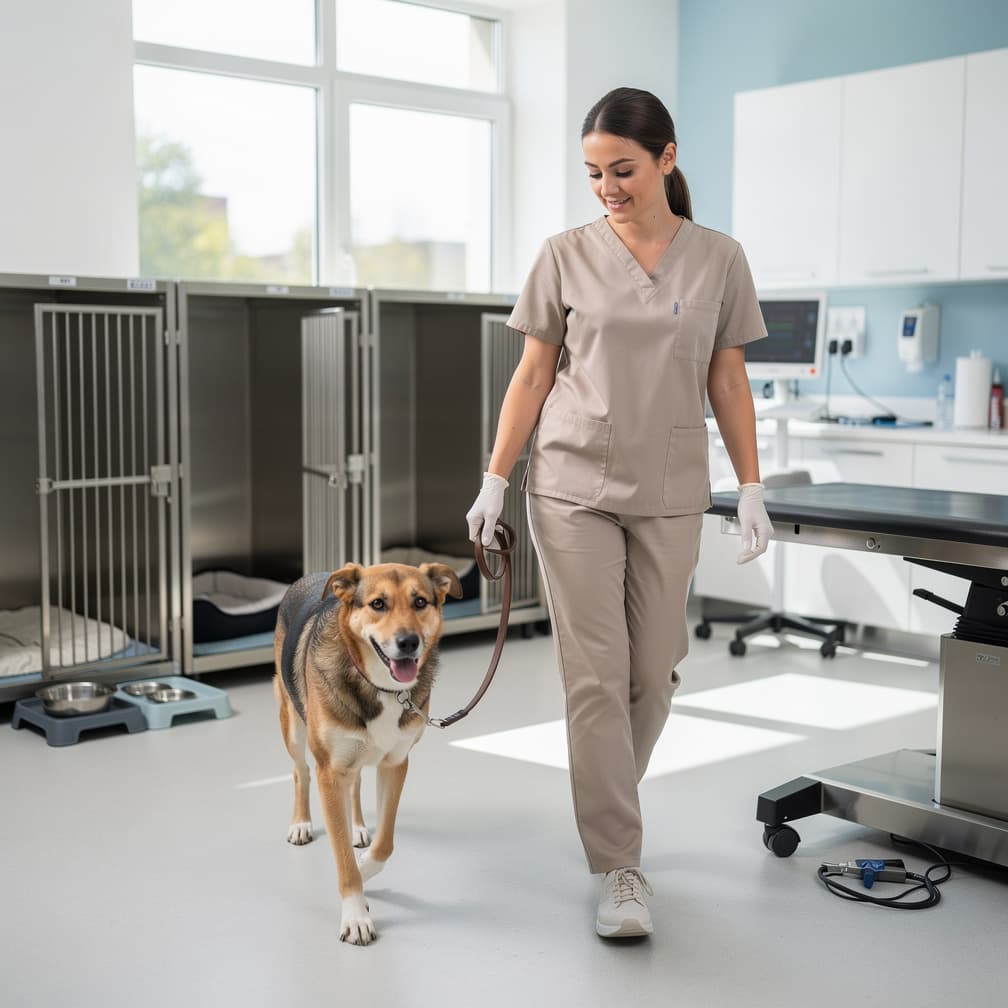

With about 3,400 businesses in Yuma County, the bench of adjusters, kennel builders, and fence contractors who could put your runs back after a fire is a short one. That thinness is the honest argument for dog boarding insurance in Yuma written against rebuild reality rather than against what you once paid for the property. A rebuild that takes three months instead of three weeks is three months of boarders sleeping somewhere else, and not all of them come back. Word of mouth carries a small market, and it carries the story of a closed kennel just as well. Replacement cost, not market value, is the figure to argue about with a carrier. Everything you should bring to that conversation is set out below.
What Makes Yuma Different
Scarcity is the defining fact of a thin market, and about 12 dog boarding businesses serve Yuma County. Your holiday weeks sell out and your slow weeks are genuinely slow, with very little sitting between them. A kennel at capacity with tired handlers is a different risk than the same kennel in a quiet stretch. Carriers price the year rather than the week, so the peak is the part you have to describe honestly. Scarcity also means a turned-away owner has few options, which raises the odds you take a dog you should refuse. Refusal is a business decision with an insurance consequence, since aggression history is where bite claims begin. Write your intake rules down and follow them, because a written standard is far easier to defend later. Then ask participating carriers how they view intake screening when they price a boarding operation.
Local Risk Factors in Yuma
A heat wave rearranges the working day: play moves to dawn, the yard shuts by mid-morning, and thirty dogs need exercise you cannot give them outdoors. Bored dogs indoors are dogs that scuffle, and the claims follow the boredom. Handlers working in that heat make their own errors, and heat illness is a Workers Compensation matter rather than a liability one. Cooling, shade, and water are risk controls a carrier in Yuma will ask you about directly. The generator that keeps ventilation running through an outage in Yuma County is the single most useful object on the property.
What Coverage Does a Dog Boarding in Yuma Need?
General Liability
Landlords, referral vets, and booking platforms ask for this line by name before they let you open or list. It is generally the coverage reached for when a visitor slips at the pickup counter or a boarded dog bites a person, and it commonly picks up the legal defense that arrives with the demand. Injury to an animal in your custody is treated differently, so ask about that wording specifically.
Example: A neighbor leans over the fence to pet a boarder, gets nipped, and files a claim two months later for stitches and time off work. Third-party injury of that kind is what the line is generally meant to answer.
Commercial Property
Flood sits outside this form and gets bought separately, which matters more to a kennel than to most tenants because runs sit at ground level. What it can help cover is the building, the fencing, the kennel doors, the washers, and the ventilation, subject to how the policy values them. A chewed gate stays maintenance.
Example: A dryer packed with bedding overheats overnight and the fire takes the laundry room, two runs, and the food store. Damage of that sort may fall to this line, subject to your deductible and the valuation basis.
Professional Liability
A dose missed, a feeding chart ignored, a dog put in the wrong playgroup: allegations about the care you were paid to provide sit here rather than with a straightforward injury claim. Cover is typically built around errors, omissions, and supervision failures, and it usually turns on what your records can show. It settles no argument about whether the owner believes you.
Example: An owner alleges her dog's illness started in your kennel and that staff ignored the diet she left in writing. A supervision and care allegation like that is what this line is intended to address.
Workers Compensation
Where liability handles the visitor, this line handles the handler. Lifting, restraining, cleaning, and breaking up a scuffle are how kennel staff get hurt, and medical costs plus lost wages are what it is meant to answer. Whether it is mandatory at your headcount varies by state, and it is rated per $100 of payroll rather than as a flat premium.
Example: A handler takes a bite through the forearm separating two dogs and spends the next two weeks off the schedule. Medical bills and a share of the wages lost are commonly what this coverage picks up.
How Much Does Dog Boarding Insurance Cost in Yuma?
Dog Boarding Insurance is a bundle of separate policies, priced separately. The ranges below are typical figures for Yuma for each line, except workers compensation, which is rated per $100 of payroll; a quote prices each one against your own operations.
| Coverage | Typical range | What moves your price |
|---|---|---|
| General Liability Insurance | $90 - $300 per month | Industry and risk classification, annual revenue, number of employees |
| Commercial Property Insurance | $90 - $300 per month | Building value and construction type, roof age and condition, fire protection class |
| Professional Liability Insurance | $45 - $180 per month | The services you actually perform, annual revenue or billed fees, limit and retention selected |
| Workers Compensation Insurance | $0.75 - $2.74 per $100 of payroll | Employee classification codes, total annual payroll, experience modification rate |
Prices shown are general estimates, not guaranteed rates or quotes. Your actual premium will depend on the insurer, coverage selected, business details, location, claims history, and other underwriting factors. Learn about our pricing methodology.
What Are the Insurance Requirements for a Dog Boarding in Yuma?
Workers' comp is generally required once you have your first employee. Arizona generally requires employers to carry workers' compensation at that point. Common exemptions include sole proprietors, partners, and working members of LLCs. Confirm current thresholds with your state's workers' compensation agency before you hire.
Flood damage is typically excluded from standard policies. Standard commercial property and builders-risk-type policies typically exclude flood damage. Flood exposure varies address by address, so check your premises in FEMA's Flood Map Service Center before deciding; if you sit in a mapped flood zone, a separate policy through the National Flood Insurance Program is the usual starting point.
Where to verify licensing and coverage rules. The Arizona Department of Insurance and Financial Institutions publishes consumer guidance and current insurance requirements for Arizona businesses. When a contract or lease demands specific wording, the Arizona Department of Insurance and Financial Institutions's guidance is the authoritative place to check.
Get Your Dog Boarding Quote in Yuma
Compare rates from multiple carriers. Free quotes, no obligation.
Operating in Yuma
- Medication schedules arrive handwritten on the back of a receipt. If a dose gets missed, the argument becomes about your process, and your process is whatever you can show in writing.
- Laundry runs constantly in a kennel, and a dryer is a fire the building does not survive well. Lint, bedding, and a machine left running overnight is the combination that becomes a property claim.
- A veterinary practice in Yuma that sends you overflow bookings can ask to be named on your policy before the first dog arrives, and that request is an endorsement rather than a favor.
- Theft here is rarely the cash drawer. It is the pressure washer, the clippers, and the generator, and replacing them in Yuma County can take longer than filing the police report did.
How to Buy: Advice for Yuma Owners
Count your people honestly, including the part-timer who covers two nights a week. Workers Compensation is rated per $100 of payroll and animal handling is not a clerical class code, so headcount and hours drive that number more than anything else you do. Lifting, restraining, and cleaning are where the injuries come from, and they come out of routine tasks rather than dramatic ones. Owners who leave a helper off the schedule find the omission at audit, and the correction is not a friendly one. General Liability answers the visitor who gets hurt, which is a wholly separate question from the handler who does. Requirements vary by state; check the Arizona Department of Insurance and Financial Institutions's guidance before deciding. Then give the identical payroll figure to every participating carrier in Yuma so the comparison means something.
FAQ
Dog Boarding Insurance in Yuma: FAQ
Yes, and commercial leases routinely do. Naming a landlord as an additional insured is an endorsement on your policy, not a line typed onto a certificate, and the carrier has to agree to issue it. Send the exact lease wording while you are still quoting, because retrofitting the endorsement later is slower and occasionally impossible. A certificate without the underlying endorsement fills a file and does nothing else.
The per-occurrence limit is the most a policy may pay for one incident, such as a single scuffle in the play yard. The aggregate caps what it may pay across the whole term, however many separate incidents your kennel logs. Three bad afternoons in a busy year can reach that ceiling long before renewal, and once it is used the rest of the term runs thin. Ask a carrier what happens after the aggregate is exhausted.
Illness allegations are about supervision, feeding, and medication rather than an accident, so they tend to land as a care question instead of a straightforward injury one. Professional Liability may respond where an owner alleges a failure or omission in the care you provided. What no form does is settle the argument about whether the illness started in your building, which is why intake records and medication logs earn their keep.
Standard property forms typically exclude flood, and flood coverage is written and priced separately. That catches owners after a storm, because water from a burst pipe and water rising off the ground are treated as different events by the same policy. If your runs sit low or your building is near water, ask about a separate flood policy rather than assuming the property form reaches that far.
Expect questions on dog capacity, average and peak dogs on site, overnight numbers, whether you run open playgroups, staff headcount, gross payroll, building size and construction, and several years of claims history. Intake screening and vaccination policy come up as well, because they predict claims. Participating carriers in Arizona ask the same core questions even where their forms differ, so bring real numbers: payroll gets reconciled at audit and a low guess turns into a bill.
Give every carrier identical inputs, then compare structure before price. Ask each for the per-occurrence limit, whether defense costs sit inside or outside that limit, what the aggregate does after a first claim, and whether property is valued at replacement cost. Participating carriers in Arizona weigh the same submission differently, so a spread is normal. The smallest number attached to the narrowest terms is rarely the useful one.
Sources
- 1.U.S. Census Bureau, County Business Patterns (2022), Yuma County(Yuma County has about 3,400 business establishments.; Yuma County has about 12 businesses in this trade's category (NAICS group 812910).)
- 2.Arizona Department of Insurance and Financial Institutions(Arizona Department of Insurance and Financial Institutions publishes consumer guidance for insurance buyers.)
- 3.FEMA / FloodSmart(Flood coverage is typically purchased separately; FEMA administers the National Flood Insurance Program.)


