







































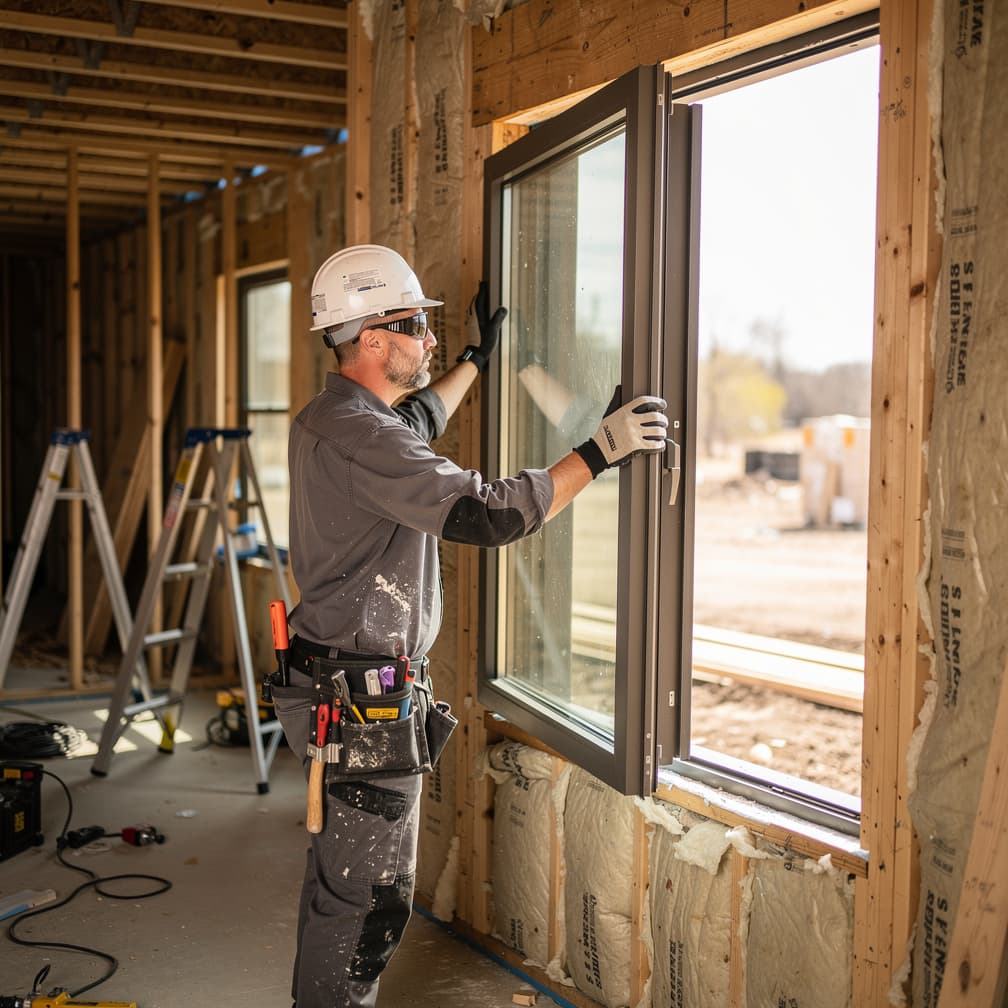

Across Washington County, about 6,100 businesses share the same building stock that eventually needs new glass and new doors. Steady volume means your exposure is continuous rather than seasonal. A shop that installs every single week has a claim frequency question to answer, and frequency gets priced more harshly than severity. Window and door installer insurance in Fayetteville should be sized to the year you actually have, instead of the slow quarter you remember. Job counts, crew size, and your residential to commercial mix all feed that sizing. Getting them right at quote time keeps renewal from turning into an argument. The material below walks through each input, so you can gather it once and shop it everywhere.
What Makes Fayetteville Different
Weather delays hurt more when the drive to the jobsite is already an hour each way. A Fayetteville job an hour out can commit your only crew to one town for a week. Losing two days there does not mean picking up a nearby job on the same tank of fuel. It means the truck sits, the crew gets paid or gets sent home, and the schedule compresses. Compressed schedules are when installers rush, and rushing is when a pane meets a door frame. Carriers see that pattern in loss runs even if you never connect it back to weather. Building slack into the Fayetteville schedule is a risk control measure that costs you nothing. Nobody prices it that way, and your loss history will show whether you did it.
Local Risk Factors in Fayetteville
Before a storm line moves through, the decision worth making is about the crew rather than the glass. Sending installers home early costs a half day; keeping them on a second-story opening costs far more if the wind arrives ahead of the forecast in Fayetteville. Workers Compensation is the line that handles an injury, and it does nothing about the judgment call that produced it. Carriers read loss runs as a story about supervision, and a pattern of weather-related injuries on Washington County jobs tells that story plainly. Write the stand-down rule down and let the crew invoke it without calling you first.
What Coverage Does a Window & Door Installer in Fayetteville Need?
General Liability
General contractors, property managers, and permit desks ask for this one by name before a crew opens a wall. It can help cover third-party bodily injury and damage to a client's property, the gouged floor or the ruined trim beside an opening. It typically excludes your own faulty workmanship and any injury to your employees.
Example: A frame slips off the horses and gouges a client's new hardwood on the way down. The repair invoice and the argument that follows are what this line is generally meant to take on.
Workers Compensation
Nothing else on this page answers when an installer tears a shoulder lifting a patio door, which is the whole reason this line exists. It is intended to handle medical treatment and a share of lost wages for crew hurt on the job. Rules about who must be covered vary by state, and payroll is what it gets rated on.
Example: Two installers carry a storefront unit up a stairwell and the one walking backwards misses a step. Treatment, time away, and the wage gap that follows can fall to this coverage.
Commercial Auto
Your personal policy typically excludes the truck the moment it is hauling frames for money, and that gap is what this line fills. It may respond to injury and property damage you cause on the road, and comprehensive can be added for the van itself. Trailers usually have to be scheduled by name, so ask.
Example: A van pulls out of a Fayetteville supply yard with a loaded trailer and clips a parked car. Repairs to the other vehicle and any injury claim behind it are what this policy is designed to address.
Tools & Equipment (Inland Marine)
Saws, ladders, levels, and a trailer full of frames are the property that never sits still, and a shop policy usually stops at the shop door. This line is built for gear in transit, in a locked van, or staged at a jobsite. Theft and damage are the common triggers, and storage conditions decide a great deal.
Example: Somebody cuts the lock on a trailer parked overnight behind a Fayetteville jobsite and takes every cordless tool inside it. Replacing that kit is the sort of loss this coverage often picks up.
How Much Does Window & Door Installer Insurance Cost in Fayetteville?
Window & Door Installer Insurance is a bundle of separate policies, priced separately. The ranges below are typical figures for Fayetteville for each line, except workers compensation, which is rated per $100 of payroll; a quote prices each one against your own operations.
| Coverage | Typical range | What moves your price |
|---|---|---|
| General Liability Insurance | $130 - $430 per month | Industry and risk classification, annual revenue, number of employees |
| Workers Compensation Insurance | $0.75 - $2.74 per $100 of payroll | Employee classification codes, total annual payroll, experience modification rate |
| Commercial Auto Insurance | $210 - $600 per month | Fleet size and vehicle types, driver records and experience, coverage limits and deductibles |
| Inland Marine Insurance | $35 - $130 per month | Total insured value of the scheduled property, type and age of the equipment, where it is stored and how far it travels |
Prices shown are general estimates, not guaranteed rates or quotes. Your actual premium will depend on the insurer, coverage selected, business details, location, claims history, and other underwriting factors. Learn about our pricing methodology.
What Are the Insurance Requirements for a Window & Door Installer in Fayetteville?
Workers' comp is generally required once you have 3 or more employees. Arkansas generally requires employers to carry workers' compensation at that point. Common exemptions include sole proprietors, partners, and farm laborers. Confirm current thresholds with your state's workers' compensation agency before you hire.
State auto liability minimums apply to business vehicles. Arkansas's minimum auto liability limits are $25,000/$50,000/$25,000 (bodily injury per person / per accident / property damage). Contracts and lenders often require more than the state floor.
Where to verify licensing and coverage rules. The Arkansas Insurance Department publishes consumer guidance and current insurance requirements for Arkansas businesses. When a contract or lease demands specific wording, the Arkansas Insurance Department's guidance is the authoritative place to check.
Get Your Window & Door Installer Quote in Fayetteville
Compare rates from multiple carriers. Free quotes, no obligation.
Operating in Fayetteville
- Permit inspectors arrive on their own schedule, and a failed inspection on an egress opening in Fayetteville stops the job until it is corrected, with the crew already paid for the day.
- Leaks announce themselves seasons later, which is why completed operations wording matters so much to a trade whose mistakes stay invisible on the day of the invoice.
- Payroll for this trade rises and falls with the schedule, and the number you estimated at bind is the number your audit will test against reality in Arkansas.
- A client's dog, a client's kid, and a client's furniture are all inside the room where you are cutting, and none of them will move themselves out of the way.
How to Buy: Advice for Fayetteville Owners
Adding your first employee is the moment this whole conversation changes. Until then the exposure is your own body and your own tools; the day somebody else lifts a door with you, payroll enters the picture. Workers Compensation rules and thresholds vary by state, and the answer for one installer differs from the answer for four. Confirm the details with the Arkansas Insurance Department before you decide it does not apply to you in Arkansas. General Liability does not answer for employee injuries, which is the gap people discover at the worst possible moment. If your Fayetteville crew changes mid-year, tell the carrier then instead of at audit. Bring the real headcount to CPK and let participating carriers quote the shop you actually run today.
FAQ
Window & Door Installer Insurance in Fayetteville: FAQ
Yes, and the sooner the better. A policy priced for house swaps describes a shop that no longer exists once you are setting storefront entrances over a public sidewalk. Carriers audit the work you actually did, so a quiet shift becomes an expensive reconciliation. Raising it early lets you re-shop the whole program in Arkansas instead of patching an endorsement onto the wrong policy.
Payroll, vehicle count, revenue, and claims history drive the number far more than the Fayetteville address on your invoices. A solo installer swapping double hungs prices nothing like a four-person crew setting storefront glass. The share of your work that is commercial matters too, since bigger openings mean bigger claims. Quotes only become comparable once every carrier gets the same payroll and vehicle figures.
The unit itself is usually your loss rather than a liability claim, because General Liability is built for damage to other people's property instead of the product in your hands. If the shattering pane cuts a bystander or gouges a client's floor, that is a different question, and the liability side might respond. Glass in transit or staged on site can fall under an equipment form, depending on how your policy is written.
An additional insured endorsement extends your liability policy to a client, so a claim arising from your work reaches your carrier rather than theirs. Builders and property managers ask for it because it moves the cost of your mistakes off their balance sheet. Blanket versions apply to any client your contract requires; specific versions get issued per project. Match the wording your contract names, because form numbers are not interchangeable.
Usually not. General Liability typically excludes your own faulty workmanship, so tearing out and resetting a badly installed unit comes out of your pocket. What it might respond to is the collateral damage: the swollen floor, the stained drywall, the ruined trim under a leak nobody noticed for a season. That line between your work and everything around it decides most install claims.
Homeowners can sue, and homeowners live inside the jobsite while you work in it. A scratched hardwood floor or a cracked tile under a patio door is the routine claim on residential installs, and it is exactly what General Liability is meant for. A homeowner in Fayetteville may never ask for your certificate, and their lender or the permit office might.
Sources
- 1.U.S. Census Bureau, County Business Patterns (2022), Washington County(Washington County has about 6,100 business establishments.)
- 2.Arkansas Insurance Department(Arkansas Insurance Department publishes consumer guidance for insurance buyers.)


