







































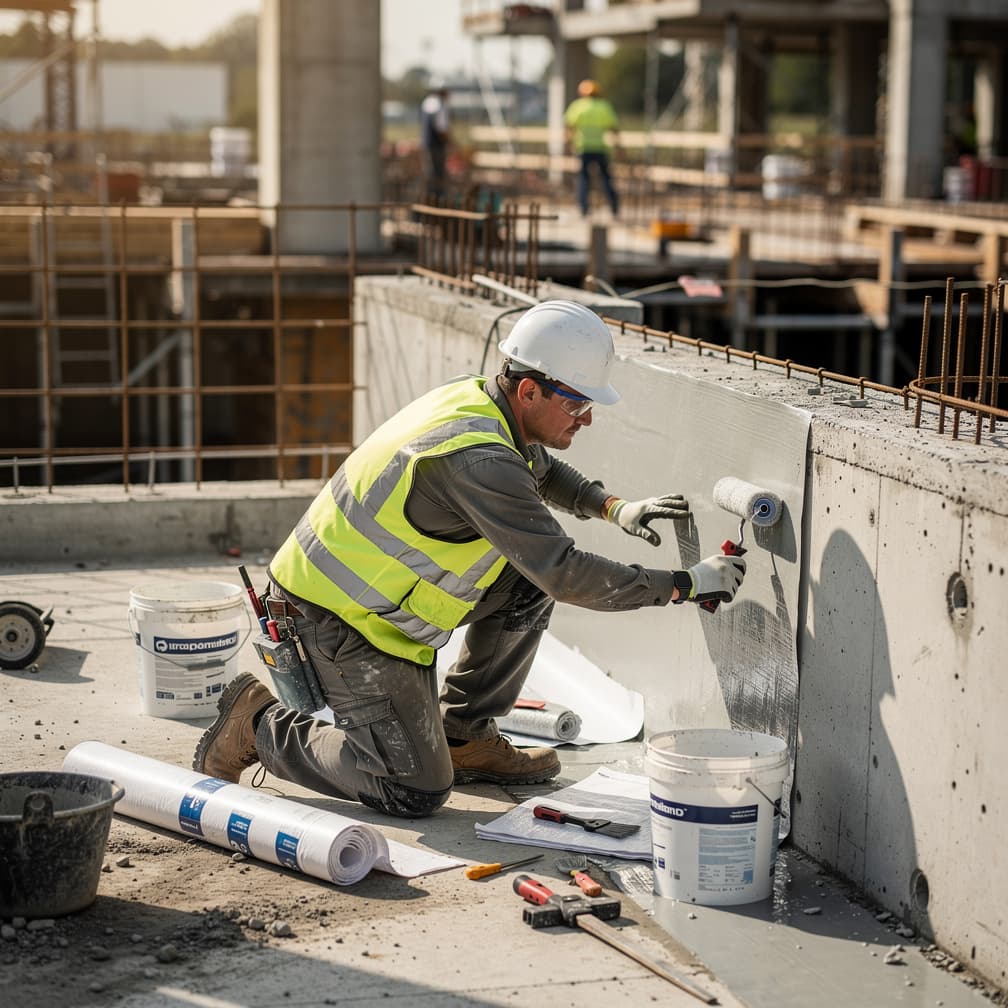

Being the contractor whose name is on the membrane means the callback comes to you, whatever actually failed. Grading, gutters, a cracked footing, a slab someone else poured: an owner in Little Rock calls the last person who worked on the water. Waterproofing contractor insurance in Little Rock does not settle that argument for you, and knowing what it does settle is the point of this page. Third-party damage and injury are generally where the policy lives, and the cost of redoing your own work generally is not. Between those two facts sits most of what a bad job really costs. Weigh the quotes on their exclusions before you weigh them on price, because that is where the difference actually lives.
What Makes Little Rock Different
Certificates of insurance get requested before the scope of work is even finalized on most commercial jobs. A property manager can hold your start date until the certificate names the right additional insured. The request has less to do with trust than with the lender and the building's own carrier. Owners want proof that a leak into a tenant's space lands on someone else's policy first. If a building in Little Rock hands you a contract, read the insurance exhibit before the price page. The exhibit sets your limits, your notice duties, and whether your policy has to sit primary. Those terms decide what you must buy, so learning them after signing rarely ends comfortably. Ask for the exhibit early and quote against it, rather than against a guess about Little Rock work.
Local Risk Factors in Little Rock
A severe storm week collapses a schedule that took months to build, and stalled work in Pulaski County does nothing to pause payroll or a truck payment. Coverage does not pay for lost days, which surprises owners who assumed otherwise. What it may do is answer for third-party damage your work causes, so keep those two categories separate in your head when the season turns rough. Add weather days to your Little Rock contracts, price the risk of standing down into the bid, and treat the policy as an answer to damage rather than to delay. The clearest contract usually wins the argument that follows a bad week.
What Coverage Does a Waterproofing Contractor in Little Rock Need?
General Liability
Water gets past your membrane and into a client's flooring, framing, and stored goods, and the demand that follows is what this line exists for. It can help cover third-party property damage and injuries tied to your work, including a visitor who goes down on a wet garage slab. Tearing out and redoing your own failed installation is work product, and standard forms typically leave it outside.
Example: An injection job seeps overnight, soaking a finished lower level's flooring and the inventory a client stacked against the wall. The repair demand and the lawyer's letter behind it are the kind of claim this line may take on.
Workers Compensation
General contractors and building owners ask for proof of it before your crew reaches the site, and requirements vary by state once you have employees. It can help cover medical care and lost wages after an installer slips on a wet slab, strains a back hauling pails, or reacts badly to fumes in a sealed crawl space. Owners who exclude themselves still have to document that choice.
Example: An installer in a Little Rock crawl space loses his footing on wet plastic sheeting and tears a shoulder. The medical bills and the weeks he cannot work are what this coverage is meant to address.
Commercial Auto
A personal auto policy typically excludes the trip the moment your van is carrying pails, pumps, and crew between job sites. This is the line that may answer instead, for injuries and property damage after an at-fault accident, and for the vehicle itself where you bought that piece rather than liability alone. Tools inside the van are usually a separate question with a separate answer.
Example: A loaded van rear-ends a sedan on the way to an emergency callback, bending two bumpers and a driver's neck. The claims coming from the other car could land here.
Commercial Umbrella
Limits run out quietly. When one leak reaches several units and the demands arrive together, a primary liability limit can be exhausted before the file closes, and this line sits above the ones you already carry to add height. It generally follows those underlying policies, including the auto line, and it requires minimum limits sitting beneath it.
Example: A membrane failure in a mixed-use building wets two tenants and a mechanical room, and the combined demands run past the primary limit. Coverage stacked above it might pick up the rest.
How Much Does Waterproofing Contractor Insurance Cost in Little Rock?
Waterproofing Contractor Insurance is a bundle of separate policies, priced separately. The ranges below are typical figures for Little Rock for each line, except workers compensation, which is rated per $100 of payroll; a quote prices each one against your own operations.
| Coverage | Typical range | What moves your price |
|---|---|---|
| General Liability Insurance | $210 - $575 per month | Industry and risk classification, annual revenue, number of employees |
| Workers Compensation Insurance | $0.75 - $2.74 per $100 of payroll | Employee classification codes, total annual payroll, experience modification rate |
| Commercial Auto Insurance | $240 - $675 per month | Fleet size and vehicle types, driver records and experience, coverage limits and deductibles |
| Commercial Umbrella Insurance | $85 - $280 per month | Umbrella limit requested, limits carried on the underlying policies, loss history on those underlying policies |
Prices shown are general estimates, not guaranteed rates or quotes. Your actual premium will depend on the insurer, coverage selected, business details, location, claims history, and other underwriting factors. Learn about our pricing methodology.
What Are the Insurance Requirements for a Waterproofing Contractor in Little Rock?
Workers' comp is generally required once you have 3 or more employees. Arkansas generally requires employers to carry workers' compensation at that point. Common exemptions include sole proprietors, partners, and farm laborers. Confirm current thresholds with your state's workers' compensation agency before you hire.
State auto liability minimums apply to business vehicles. Arkansas's minimum auto liability limits are $25,000/$50,000/$25,000 (bodily injury per person / per accident / property damage). Contracts and lenders often require more than the state floor.
Where to verify licensing and coverage rules. The Arkansas Insurance Department publishes consumer guidance and current insurance requirements for Arkansas businesses. When a contract or lease demands specific wording, the Arkansas Insurance Department's guidance is the authoritative place to check.
Get Your Waterproofing Contractor Quote in Little Rock
Compare rates from multiple carriers. Free quotes, no obligation.
Operating in Little Rock
- Crawl spaces offer no second exit, poor light, and standing water. An injury down there takes longer to reach an ambulance, and a longer injury is a larger workers compensation claim by the time it closes.
- Rain fills your voicemail and empties your schedule in the same week, because the water that generates calls also stops exterior work. Promising dates you cannot hold is how a rushed membrane becomes next season's defect claim.
- The last contractor to touch the water gets the call, even when the real failure was grading, gutters, or a footing somebody else poured. Your job file needs photographs of what you found the day you arrived.
- Municipal permit work can require a filed certificate before an inspection happens, and those requirements change without anyone telling the contractors. Treat proof of coverage as a lead-time item on a Little Rock job, the way you treat material delivery.
How to Buy: Advice for Little Rock Owners
Workmanship allegations are the claims that decide whether this trade sleeps well. When a drainage system does not perform, the owner does not care why, and the demand letter arrives naming your company. General Liability generally reaches the resulting damage to a client's property and generally not the cost of tearing out and redoing your own installation. Knowing that boundary before you quote a job changes how you price the warranty work you keep in-house. Ask each carrier where defense costs sit, inside the limit or outside it, since defense on a defect fight starts long before anyone assigns blame. Commercial Umbrella can add room above a primary limit that a long dispute erodes. Check the Arkansas Insurance Department's guidance before deciding on limits for a Little Rock operation, then use CPK to see how participating carriers price the same structure.
FAQ
Waterproofing Contractor Insurance in Little Rock: FAQ
Many forms carry a mold or fungus exclusion, and some add a narrow amount of it back by endorsement. Mold is the natural sequel to water intrusion, which makes this the exclusion worth reading first in this trade. Ask each carrier exactly where mold sits on its form, and compare those answers before you compare the premiums, because two quotes at one price can differ here completely.
Payroll leads, since injuries follow people rather than invoices. After that come your split between residential and commercial work, excavation depth, whether you own the trucks, subcontractor spend, limits, deductibles, and claims history. Prior water and defect claims move a renewal further than any market condition. None of it is guesswork, so an accurate submission from a Little Rock shop usually prices better than an optimistic one.
Usually not, once the vehicle is working for the business. A personal form typically excludes the trip when the van is carrying pails, pumps, and crew between job sites, and learning that after an accident is expensive. Commercial Auto is the line built for it, rated on vehicles, drivers, and how far you travel. List every vehicle that touches a job, including one titled in your own name.
It extends your policy to a client for claims arising out of your work, so a leak into a tenant's space starts with your carrier instead of theirs. It arrives as an endorsement, editions differ, and the edition a contract names may not be one your carrier writes. Send the contract wording to the carrier before you sign, since fixing it afterward means buying whatever fits.
The per-occurrence limit is the most a policy may pay for one leak. The aggregate is the ceiling on everything a single policy year produces. Two bad basements in one year can exhaust that aggregate, leaving every later job standing behind nothing. Per-project aggregate wording separates one client's claim from the rest, which is why large owners ask for it by name in their exhibits.
Generally no. Redoing your own installation is your work product, and standard forms typically exclude it. Damage that the failure causes to other property is a different question, and that is where the liability side may come in. Price your warranty work knowing the redo sits with you, and keep photographs of substrate conditions so the argument stays about facts rather than memory.
Sources
- 1.Arkansas Insurance Department(Arkansas Insurance Department publishes consumer guidance for insurance buyers.)


