







































Updated July 10, 2026

Why Bike Shop Businesses Need Insurance
A bike shop rarely operates like a plain retail store. You sell completed bikes, frames, components, accessories, and apparel, but you also take custody of customer property, perform assembly, install parts, and complete repair work that customers rely on when they ride away. That mix changes how you should review insurance.
Start with the front of the house. The showroom creates ordinary retail liability issues, including customer falls, damaged personal property, and allegations that store conditions caused an injury. General liability insurance is the core place to review those exposures. It also matters when a customer claims a product sale or store operation caused property damage or bodily injury. If your shop hosts fittings, demo events, or busy pickup lines at the service counter, describe that traffic clearly during quoting instead of treating the business like a quiet specialty retailer.
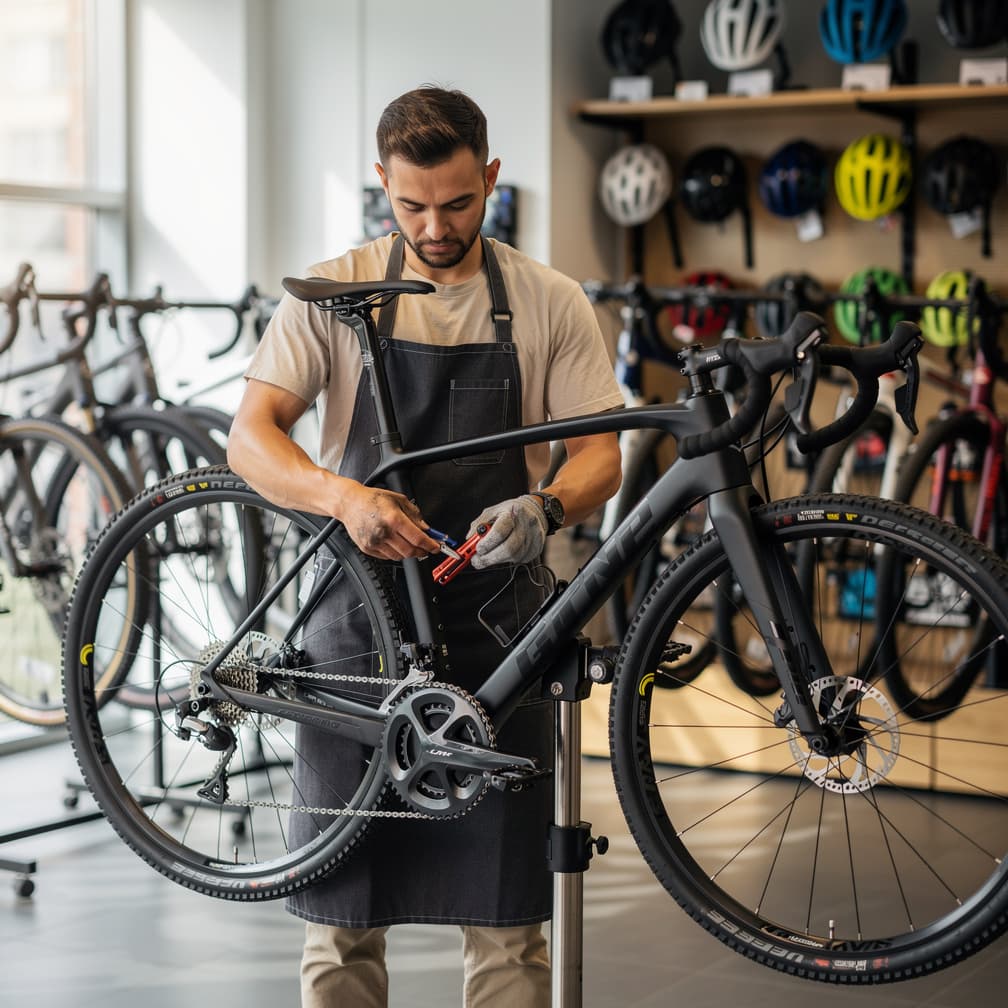
Then look at the service side. A repair counter adds a different layer because your staff handles customer bikes, installs components, adjusts brakes and drivetrains, mounts tires, and completes tune ups and assembly work. That means your insurance review should not stop at the sales floor. You need to explain how much repair work you do, what kinds of bikes you service, how bikes move through intake and storage, and whether completed work is checked before release. Those details help shape how an underwriter views your operations and where you may want tighter policy review.
Commercial property insurance should be built around what would interrupt your business fastest. For many shops, that includes display inventory, backroom stock, repair tools, stands, diagnostic equipment, shelving, counters, and point of sale systems. Storage conditions matter. A shop with dense inventory in a small backroom, bikes hanging from ceiling racks, and parts stacked in receiving areas presents a different property picture than a minimalist showroom with limited stock on hand. If you keep premium bikes on the floor or store customer bikes overnight awaiting pickup, make sure those values and routines are part of the application discussion.
Workers compensation insurance becomes important as soon as your staff does more than ring up sales. Mechanics lift bikes, use hand tools, work around sharp components, and repeat the same motions all day. Even sales staff may move boxed bikes, build displays, or help with intake and pickup. Payroll, job duties, and how work is divided between retail and service all affect how this coverage should be reviewed.
A business owners policy package is often worth considering for a bike shop with a fixed storefront because it can combine general liability insurance and commercial property insurance in one structure. That can simplify renewals and make it easier to review the relationship between your liability limits, property values, and deductibles in one place. It is still important to read the policy around service operations, inventory valuation, and any conditions tied to theft protection or premises maintenance.
Cost usually turns on operational details more than a generic class label. Carriers often look at location, the value of bikes and parts on hand, payroll, repair volume, prior claims, chosen limits, and deductibles. A shop with a large service department and high inventory concentration may need a different approach than a small neighborhood retailer focused on accessories and basic tune ups. Before you buy or renew, walk the shop from the customer entrance to the back storage area and list what could be stolen, damaged, dropped, or alleged after a repair. That is the practical checklist that leads to a better quote.
Recommended Coverage for Bike Shop Businesses
Based on the risks bike shop businesses face, these coverage types are essential:

General Liability
Essential coverage for every business, protect against third-party bodily injury, property damage, and advertising claims.

Commercial Property
Safeguard your business property, equipment, and inventory against damage and loss.

Workers Compensation
Help cover your employees' medical expenses and lost wages for work-related injuries and illnesses.

Business Owners Policy
Bundle property and liability coverage into one convenient, cost-effective policy for small businesses.
Common Risks for Bike Shop Businesses
- A customer slips in the showroom or service area and is injured while browsing bikes or accessories.
- A repaired bike later fails after service, creating a completed operations claim tied to the work performed.
- A sold bike or replacement part is alleged to have caused bodily injury or property damage after leaving the shop.
- Display bikes, e-bikes, helmets, and accessories are stolen from the storefront, backroom, or storage area.
- Tools, stands, pumps, diagnostic gear, and service equipment are damaged by fire, storm damage, or vandalism.
- A busy sales floor or repair bay leads to accidental damage to a customer’s bike, gear, or other property.
Get Your Bike Shop Insurance Quote
Compare rates from multiple carriers. Free quotes, no obligation.
What Happens Without Proper Coverage?
Bike shops face claims from several directions at once, and the problem is not always the dramatic loss owners picture first. A customer can slip near the entrance on a rainy day, trip over a bike stand, or claim that store conditions caused an injury while browsing the showroom. General liability insurance is usually the first place to review those exposures because customer traffic is part of the business model, not an occasional event.
The repair counter creates another reason to carry coverage that fits your actual operations. Once you take in a customer bike, your work affects equipment the rider depends on. A dispute can start after a brake adjustment, wheel installation, drivetrain repair, or assembly issue, even if your staff followed normal procedures. Parts sales can create similar friction if a customer alleges that an item was defective, installed incorrectly, or contributed to damage after the sale. That is why a bike shop insurance review should include both retail activity and service work, not just one or the other.
Property losses can be just as disruptive as liability claims. Bike shops often carry concentrated value in a relatively small footprint, with display models on the floor, boxed inventory in storage, and specialized tools at the repair bench. A theft, fire, or water loss can leave you unable to sell core models, complete repairs, or access the equipment your mechanics use every day. Commercial property insurance is the coverage many owners review to protect that physical side of the operation.
If you employ mechanics, sales associates, or stock staff, the work is hands on. Lifting bikes, unpacking shipments, using cutting tools, and repeating the same motions at the bench can all lead to injuries that interrupt staffing and cash flow, and a missing mechanic slows the service queue for every booked customer.
You also need insurance because landlords, lenders, and vendors often ask for proof of coverage before a lease, financing arrangement, or supply relationship moves forward. Gather your lease requirements, inventory values, payroll details, and a clear description of repair operations before you request quotes. That gives you a policy review built around how your shop actually earns revenue.
Insurance Tips for Bike Shop Owners
Separate your retail sales activity from your repair and assembly work before quoting, because a shop with heavy service volume presents a different liability picture than a sales focused showroom.
Build your commercial property review around replaceability, not just purchase cost, especially for display bikes, backroom inventory, repair tools, workstands, and point of sale equipment that keep daily operations moving.
Match workers compensation classifications and payroll estimates to what employees really do, since mechanics, sales staff, and mixed duty employees can create different exposure patterns inside one shop.
Ask how the policy review handles customer traffic through the showroom and service counter, because pickup lines, test rides, and crowded aisles can change your general liability exposure.
Document where bikes and parts are stored overnight, how theft prevention works, and which items are kept on the sales floor, since storage routines directly affect property underwriting and claim readiness.
Review deductibles against your cash reserves before binding coverage, because a lower premium can create a harder recovery if a theft or property loss interrupts sales and repairs at the same time.
How Much Does Bike Shop Insurance Cost?
Bike Shop Insurance is a bundle of separate policies, priced separately. The ranges below are typical figures nationally for each line, except workers compensation, which is rated per $100 of payroll; a quote prices each one against your own operations.
| Coverage | Typical range | What moves your price |
|---|---|---|
| General Liability Insurance | $55 - $160 per month | Industry and risk classification, annual revenue, number of employees |
| Commercial Property Insurance | $80 - $250 per month | Building value and construction type, roof age and condition, fire protection class |
| Workers Compensation Insurance | $0.75 - $2.74 per $100 of payroll | Employee classification codes, total annual payroll, experience modification rate |
| Business Owners Policy Insurance | $80 - $250 per month | Annual revenue and industry class, building and contents values, square footage and building age |
Prices shown are general estimates, not guaranteed rates or quotes. Your actual premium will depend on the insurer, coverage selected, business details, location, claims history, and other underwriting factors. Learn about our pricing methodology.
FAQ
Frequently Asked Questions About Bike Shop Insurance
General liability and commercial property coverage come first, with workers compensation added once you have employees. Many owners also consider a business owners policy when they want liability and property reviewed together for one storefront operation.
Repair and assembly work can be included in the review, but describe it clearly during quoting. A shop that installs parts, adjusts brakes, and builds bikes presents different liability questions than a retailer focused mainly on sales.
Inventory belongs in the commercial property review, along with parts, accessories, and display models. Total what stays on the floor, what is boxed in storage, and what would be hardest to replace quickly after a loss.
Once employees lift bikes, use tools, and perform repetitive service work, workers compensation becomes a core need, and most states legally require it for employers. Even if your team also handles sales, the repair side changes the injury exposure.
A business owners policy can be a practical fit for a fixed storefront because it combines general liability and commercial property coverage in one structure. It still needs a careful review of inventory values, service operations, and deductibles.
Location, payroll, repair volume, inventory value, claims history, limits, and deductibles drive the price. A shop with dense stock, active service work, and more employees is priced differently than a small accessory focused retailer.
Yes, shops that do both are common, but the quote should reflect both revenue streams. Explain your parts sales, assembly work, intake process, and how customer bikes are stored before and after service.
Gather your lease requirements, payroll details, inventory values, tool lists, and a clear description of repair operations. That information helps you review limits, deductibles, and whether the policy structure fits your actual workflow.
Updated March 31, 2026