







































Updated July 10, 2026

Why Cell Phone Repair Businesses Need Insurance
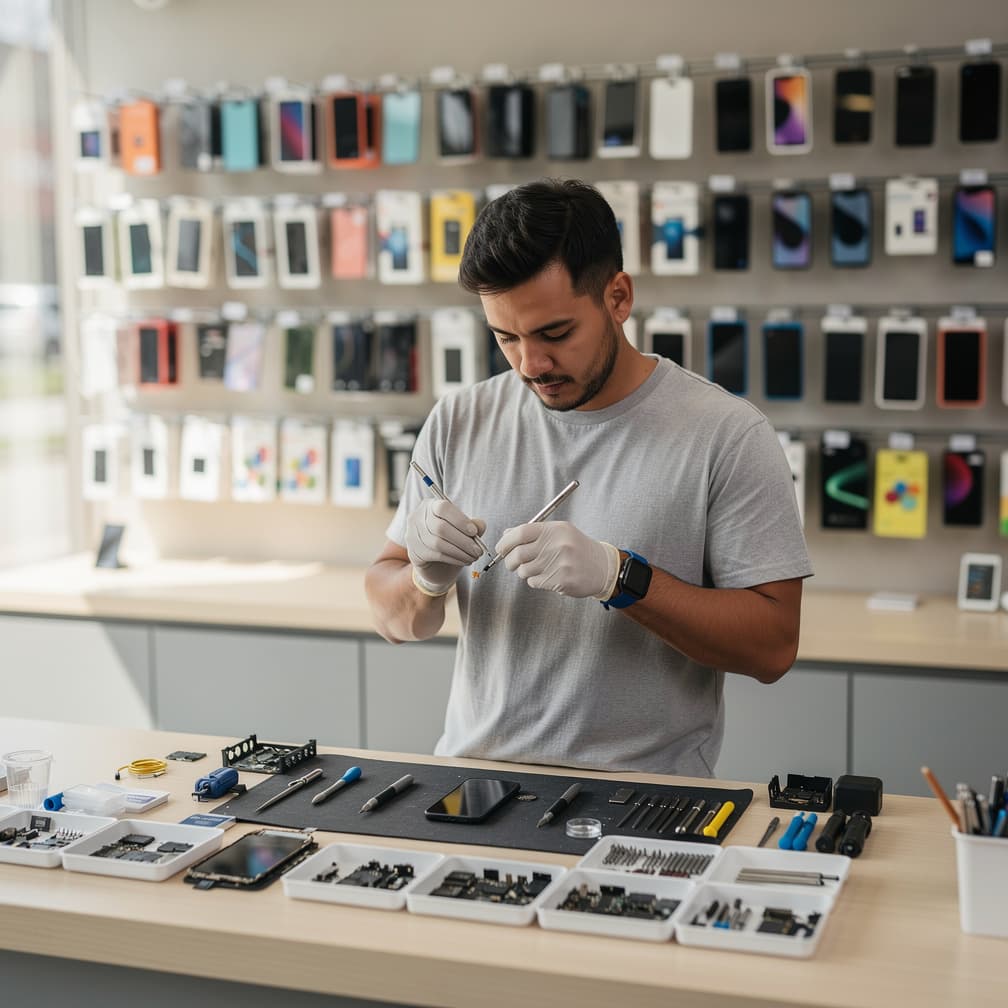
Most cell phone repair claims start with ordinary shop activity, not unusual events. A customer walks in with a cracked screen, a swollen battery, charging-port failure, water exposure, or a phone that will not boot after a drop. Your technician checks the device, documents condition, opens the housing, disconnects components, installs parts, tests function, and explains the result. Each step creates a different insurance question, and a useful quote separates them instead of treating the shop like a generic retail business.
General liability insurance is usually the first layer to review because your operation brings customers, delivery drivers, and vendors into a small workspace with display cases, cords, stools, tools, and packaged accessories. If someone trips near the counter, alleges injury in your shop, or claims you damaged their property during intake or pickup, that is where liability protection often comes into the conversation. It is also the section many landlords and shopping center managers want to see before move-in or renewal, so your limits should be reviewed against lease language rather than guessed.
Commercial property insurance becomes more important as soon as you list what keeps the shop running. Repair benches, microscopes, heat tools, hand tools, testing equipment, computers, receipt printers, security systems, shelving, and replacement parts all represent property that may need to be scheduled or at least accounted for accurately. If you built out a counter area, installed locked storage, or added signage and fixtures, those improvements should be discussed during the quote process. A shop that carries a deeper stock of screens, batteries, adhesives, and charging components has a different property profile than a shop that orders parts only after intake.
Professional liability insurance deserves close attention in this trade because many disputes are about the quality of the work, the diagnosis, or the advice given to the customer. A phone may arrive with hidden internal damage, prior repair issues, aftermarket parts, or water intrusion that complicates the outcome. Even if your technician follows procedure, a customer may still argue that the repair caused data loss, disabled a feature, or failed to solve the original problem. That is different from a slip-and-fall claim, and it is why repair shops often compare professional liability terms carefully.
A business owners policy can be a practical option when you want property and general liability reviewed together. It may suit a shop with a fixed location, standard retail hours, and a straightforward service model. Still, you should compare it against separate policies if your operation includes multiple locations, heavier bench work, or a broader mix of electronics services that changes your exposure.
Cost is usually driven by the shape of the business rather than a single headline factor. Carriers often look at your location, square footage, repair volume, payroll, claims history, property values, selected limits, and deductible choices. The way you store customer devices matters too. Phones waiting for pickup, units held for parts approval, and devices left overnight create a different risk profile than same-day counter service only. If you subcontract difficult board work, use mail-in intake, or operate from a kiosk with limited secure storage, bring that up early so the quote is built around real operations.
The strongest quote request reads like a shop walkthrough. List your services, note whether you perform microsoldering or only modular part replacement, describe where customer devices are kept before and after repair, and identify any lease or vendor insurance requirements. Then compare how each policy handles the parts of your business that create the most friction: customer traffic, repair errors, shop property, and downtime after a covered loss.
Recommended Coverage for Cell Phone Repair Businesses
Based on the risks cell phone repair businesses face, these coverage types are essential:

General Liability
Essential coverage for every business, protect against third-party bodily injury, property damage, and advertising claims.

Commercial Property
Safeguard your business property, equipment, and inventory against damage and loss.

Professional Liability
Protect your business from claims of negligence, errors, and omissions in your professional services.

Business Owners Policy
Bundle property and liability coverage into one convenient, cost-effective policy for small businesses.
Common Risks for Cell Phone Repair Businesses
- A customer claims their phone was scratched, cracked, or otherwise damaged while your technician was replacing a screen or battery.
- A repair job is delayed or completed incorrectly, leading to a client claim about lost time, extra service costs, or a disputed invoice.
- Replacement parts fail after installation and the customer alleges the part caused additional device damage or service interruption.
- A customer slips and falls inside the repair counter, mall kiosk, or in-store repair shop while waiting for service.
- Tools, diagnostic equipment, or spare inventory are stolen, vandalized, or damaged by fire, storm, or equipment breakdown.
- A shop error, missed step, or incomplete repair leads to an omissions, negligence, or professional liability claim.
Get Your Cell Phone Repair Insurance Quote
Compare rates from multiple carriers. Free quotes, no obligation.
What Happens Without Proper Coverage?
Cell phone repair work creates a mix of storefront, bench, and service-risk exposures that can turn into expensive disputes quickly. A customer may slip near your intake counter. A small fire or water event could damage tools, fixtures, and parts inventory. A break-in might leave you replacing shop equipment while also trying to explain delays to customers whose devices are still in your possession. Those are not abstract risks for this trade, they are operational interruptions that can stop revenue while you sort out repairs, cleanup, and claim handling.
The bigger pressure point for many shops is the customer device itself. People bring you phones they rely on for work, banking, travel, and family communication. If a repair does not resolve the issue, if a device stops functioning after service, or if a customer believes your technician caused additional damage during disassembly or testing, the disagreement can move beyond a refund request. Professional liability insurance is built for that kind of allegation, where the complaint centers on your diagnosis, workmanship, or service recommendation rather than a premises injury.
Property coverage matters because a repair shop depends on more than inventory on a shelf. Your benches, specialty tools, testing equipment, computers, and security setup support every intake and every completed ticket. If a covered property loss takes those out of service, you are not just replacing equipment, you are also dealing with delayed repairs, rescheduled pickups, and possible reputational strain with repeat customers. That is why many owners review commercial property insurance alongside a business owners policy instead of treating property as an afterthought.
Insurance also helps when another party sets the terms before you can start or continue operating. Landlords often ask for proof of coverage before signing or renewing a lease. Some vendors, event operators, and commercial partners want to see liability protection before they place you in a kiosk, shared retail space, or service arrangement. If you plan to expand from a single counter to a larger storefront or a second location, those requests usually become more formal, not less.
A useful buying approach is to map coverage to the way claims would actually arise in your shop. Review customer-facing liability, shop property, and repair-error exposure separately. Then ask for limits and deductibles that fit your lease obligations, equipment values, and tolerance for downtime before you request a final quote.
Insurance Tips for Cell Phone Repair Owners
Ask for front-of-house customer traffic exposure and bench repair exposure to be quoted separately, because a busy intake counter and a soldering workstation do not create the same claim pattern.
Review commercial property values using a current list of tools, testing equipment, fixtures, security devices, and replacement parts, so the quote reflects what it would take to reopen after a covered loss.
Compare a business owners policy against standalone general liability and commercial property insurance if your shop has multiple locations, unusual hours, or a broader electronics repair menu.
Describe your repair scope clearly, including screen replacements, battery swaps, charging-port work, diagnostics, software resets, and any board-level service, because professional liability review depends on what your technicians actually do.
Bring your lease, kiosk agreement, or shopping center insurance requirements to the quote review, so liability limits and proof-of-coverage requests are handled before move-in or renewal deadlines.
Explain how customer devices are tagged, stored, and secured during intake, repair, and pickup, because overnight storage and delayed pickups can change how underwriters view your operation.
If you rely on a few key technicians for advanced repairs, discuss how downtime would affect open tickets and customer communication after a covered property loss, then review whether your policy structure matches that interruption risk.
How Much Does Cell Phone Repair Insurance Cost?
Cell Phone Repair Insurance is a bundle of separate policies, priced separately. The ranges below are typical figures nationally for each line; a quote prices each one against your own operations.
| Coverage | Typical range | What moves your price |
|---|---|---|
| General Liability Insurance | $45 - $130 per month | Industry and risk classification, annual revenue, number of employees |
| Commercial Property Insurance | $60 - $190 per month | Building value and construction type, roof age and condition, fire protection class |
| Professional Liability Insurance | $60 - $190 per month | The services you actually perform, annual revenue or billed fees, limit and retention selected |
| Business Owners Policy Insurance | $65 - $180 per month | Annual revenue and industry class, building and contents values, square footage and building age |
Prices shown are general estimates, not guaranteed rates or quotes. Your actual premium will depend on the insurer, coverage selected, business details, location, claims history, and other underwriting factors. Learn about our pricing methodology.
FAQ
Frequently Asked Questions About Cell Phone Repair Insurance
Most shops start with general liability, commercial property, professional liability, and a business owners policy. Storefront setup, repair scope, equipment, and how customer devices are handled during intake and storage set the emphasis.
It handles third party bodily injury and property damage claims, such as a customer slipping near the counter or alleging damage in your workspace. Repair error allegations tied to your service work need their own coverage conversation.
If a customer could claim your diagnosis, recommendation, or completed repair caused additional loss, yes, it deserves a serious look. Complex troubleshooting, board level work, and disputed outcomes after a device leaves the bench are the classic triggers.
It can, when you want general liability and commercial property handled together for a fixed location. Compare it against separate policies if you run multiple sites or a more complex service model.
Location, payroll, claims history, property values, selected limits, deductibles, and the kind of repair work performed. Secure storage practices, customer traffic, and overnight device holding also influence pricing.
Benches, tools, testing equipment, fixtures, computers, and parts inventory are exactly what it should be scheduled around. Match the coverage to what you actually own and use, not a generic retail estimate.
Yes, and property managers usually do before occupancy or renewal. Bring the lease or kiosk agreement into the quote process so liability limits and requested terms are settled before deadlines arrive.
Prepare a service list, equipment inventory, parts estimate, payroll details, claims history, and any lease requirements. Note whether you do same day repairs, keep devices overnight, or send work between locations.
Updated March 31, 2026