







































Updated July 10, 2026

Why Electronics Store Businesses Need Insurance
Most electronics retailers do not have a single exposure. You are balancing open-door retail traffic, expensive inventory, employee handling, vendor deliveries, and digital transactions at the same time. That is why an electronics store insurance quote works best when it is built from your actual floor plan and workflow instead of a broad retail label.
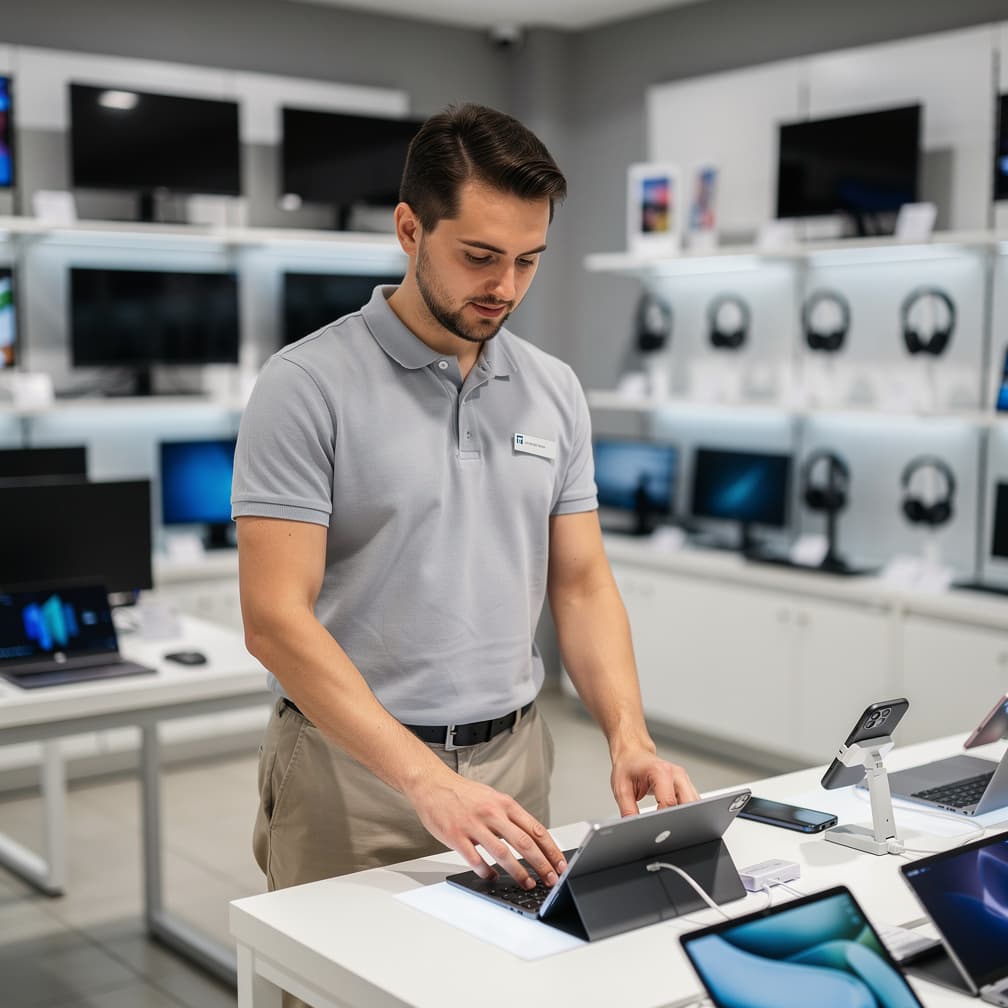
Start with the customer-facing side of the business. General liability insurance is commonly reviewed for slip and fall claims, damage to a visitor's property, allegations tied to signage or marketing, and the legal costs that can follow a routine incident. In an electronics store, those claims often grow out of ordinary conditions: charging cords near a demo station, a customer backing into a glass case, or a boxed television being moved through a narrow aisle during store hours. If you host product demonstrations or promotional events, that public interaction should be part of the underwriting discussion.
Then look at the property side with more precision than just the storefront address. Commercial property insurance should be reviewed around your inventory concentration, display fixtures, checkout equipment, security features, and any stock kept in a back room or off-site storage area. Electronics retailers often carry merchandise that is compact, easy to move, and attractive to thieves, so the way you secure small devices, accessories, and higher-ticket items can affect both underwriting and claim readiness. If your business depends on branded build-outs, illuminated signage, or custom counters, those details belong in the application as well.
Cyber liability insurance is not only for large online sellers. A local electronics shop may still process card payments, maintain customer contact records, collect service requests, or use cloud-based point of sale and inventory systems. If a payment system is compromised or customer information is exposed, the financial damage can extend beyond the immediate technical problem. Your review should cover what data you collect, where it is stored, who can access it, and how your store handles remote logins, software updates, and vendor integrations.
A business owners policy can make sense if you want core liability and property coverage packaged together, but it still needs careful review. The convenience of a package does not replace the need to check limits, property valuation, deductibles, and any conditions that matter for electronics inventory. If you operate more than one location, sell online in addition to in-store, or split space between retail and repair intake, say that early so the quote is built around the full operation.
Cost usually turns on practical factors, not a single headline price. Carriers often look at your location, sales volume, inventory values, security controls, claims history, chosen limits, and deductible structure. A kiosk with limited stock presents a different profile than a full showroom with locked cases, receiving deliveries, and daily card processing. Before you request terms, gather your lease insurance requirements, an inventory estimate, details on your alarm and camera setup, and a clear description of how customers interact with merchandise. That gives you a better chance of getting terms that fit the way your store actually trades.
Recommended Coverage for Electronics Store Businesses
Based on the risks electronics store businesses face, these coverage types are essential:

General Liability
Essential coverage for every business, protect against third-party bodily injury, property damage, and advertising claims.

Commercial Property
Safeguard your business property, equipment, and inventory against damage and loss.

Cyber Liability
Defend your business against data breaches, cyberattacks, and digital liability with cyber coverage.

Business Owners Policy
Bundle property and liability coverage into one convenient, cost-effective policy for small businesses.
Common Risks for Electronics Store Businesses
- Customer injury on a crowded sales floor or near display tables
- Slip and fall claims from cords, boxes, or wet entry areas
- Theft exposure for high-value phones, tablets, laptops, and accessories
- Product claims if a device, charger, or accessory malfunctions after sale
- Cyber attacks affecting payment systems, repair records, or customer data
- Building damage or business interruption after vandalism, storm damage, or fire risk events
Get Your Electronics Store Insurance Quote
Compare rates from multiple carriers. Free quotes, no obligation.
What Happens Without Proper Coverage?
Electronics retail creates claims from ordinary moments, not just rare disasters. A customer can trip near a display area, a staff member can accidentally damage a visitor's property during a product demonstration, or a dispute over advertising can turn into a third-party claim with defense costs attached. General liability insurance is reviewed for those day-to-day exposures because even a small incident can become expensive once medical bills, legal fees, or settlement discussions begin.
Property risk is just as immediate. Your business may rely on concentrated inventory, glass showcases, point of sale hardware, and branded fixtures that are costly to replace and central to daily sales. A break-in, fire, or other covered property loss can interrupt operations well beyond the value of the damaged items. If key merchandise is gone or the sales floor is unusable, the problem is not only replacement cost, it is lost selling time and a disrupted customer experience. That is why commercial property insurance should be reviewed with realistic values and a current picture of what is on site.
Cyber exposure is easy to underestimate in this trade. Even a single-location store may process payment cards, keep customer contact details for orders, or track repair requests through connected software. If that system is breached or locked up, you may face notification issues, forensic expenses, and customer trust problems at the same time. Cyber liability insurance can be an important part of the conversation when your revenue depends on digital transactions and functioning systems.
The format of the store shapes all of this. A kiosk concentrates a small amount of high-theft stock with no back room. A showroom adds demo traffic and custody of customer devices at a repair counter. A store that also sells online adds shipping and data flows on top of walk-in trade. Say which one you are early, because the right policy structure follows the format.
You may also need insurance to satisfy practical business gates before a loss ever happens. Landlords often ask for proof of coverage before occupancy, and vendors, event organizers, or commercial clients may want certificates before they allow you on site or finalize a relationship. Review those requirements before signing a lease or expanding your product lines, then request a quote built around your inventory, customer traffic, and payment systems.
Insurance Tips for Electronics Store Owners
Review general liability insurance around how customers physically interact with merchandise, because open demo tables and crowded aisles can change your injury and property damage exposure.
Set commercial property limits from current inventory, fixtures, and checkout equipment rather than an old estimate, especially if your product mix shifts toward higher-value devices.
Discuss cyber liability insurance if you process card payments, store customer contact information, or rely on cloud-based point of sale systems for daily operations.
Ask whether a business owners policy fits your store's footprint and sales model, but still check deductibles, valuation method, and any conditions affecting electronics inventory.
Bring your lease, vendor insurance requirements, and any certificate requests to the quote review so liability limits can be matched to real contractual obligations.
Explain whether you operate a kiosk, storefront, showroom, or mixed retail and repair counter, because the layout changes customer flow and property concentration.
Document alarms, cameras, locked display cases, and stockroom controls before applying, since security practices can influence underwriting and future claim handling.
How Much Does Electronics Store Insurance Cost?
Electronics Store Insurance is a bundle of separate policies, priced separately. The ranges below are typical figures nationally for each line; a quote prices each one against your own operations.
| Coverage | Typical range | What moves your price |
|---|---|---|
| General Liability Insurance | $55 - $170 per month | Industry and risk classification, annual revenue, number of employees |
| Commercial Property Insurance | $130 - $440 per month | Building value and construction type, roof age and condition, fire protection class |
| Cyber Liability Insurance | $40 - $160 per month | Records held and how sensitive they are, annual revenue and industry, multi-factor authentication and backup practices |
| Business Owners Policy Insurance | $100 - $340 per month | Annual revenue and industry class, building and contents values, square footage and building age |
Prices shown are general estimates, not guaranteed rates or quotes. Your actual premium will depend on the insurer, coverage selected, business details, location, claims history, and other underwriting factors. Learn about our pricing methodology.
FAQ
Frequently Asked Questions About Electronics Store Insurance
General liability, commercial property, and cyber liability coverage are the usual starting points, with a business owners policy as a bundling option. The right mix depends on your inventory values, customer traffic, payment systems, and whether you also handle repair intake or online orders.
Theft of stock is a commercial property question, and the response depends on your policy terms, limits, and how the loss happened. Review stock values, storage practices, and security controls before binding so the property side matches your real exposure.
Size offers little protection here. If you process card payments, store customer information, or rely on connected point of sale software, a single system issue can disrupt sales and create response costs, so data handling belongs in the quote review.
Availability depends on carrier guidelines, and many electronics stores qualify. The package combines core property and liability coverage, but limits, deductibles, and how the policy treats inventory and fixtures still need review.
Carriers look at practical operating details: location, inventory concentration, customer foot traffic, security measures, claims history, chosen limits, and deductible structure. A kiosk and a full showroom do not present the same underwriting profile.
Customer injury claims tied to normal retail activity are what general liability is built around, subject to policy terms. If shoppers test devices, move through tight aisles, or gather around demo areas, describe that interaction accurately in the application.
Very likely. Landlords often ask for proof of coverage before occupancy, so review the lease early and match requested liability terms and certificate requirements to the way your store actually operates.
Updated March 31, 2026