







































Updated July 10, 2026

Why Machine Shop Businesses Need Insurance
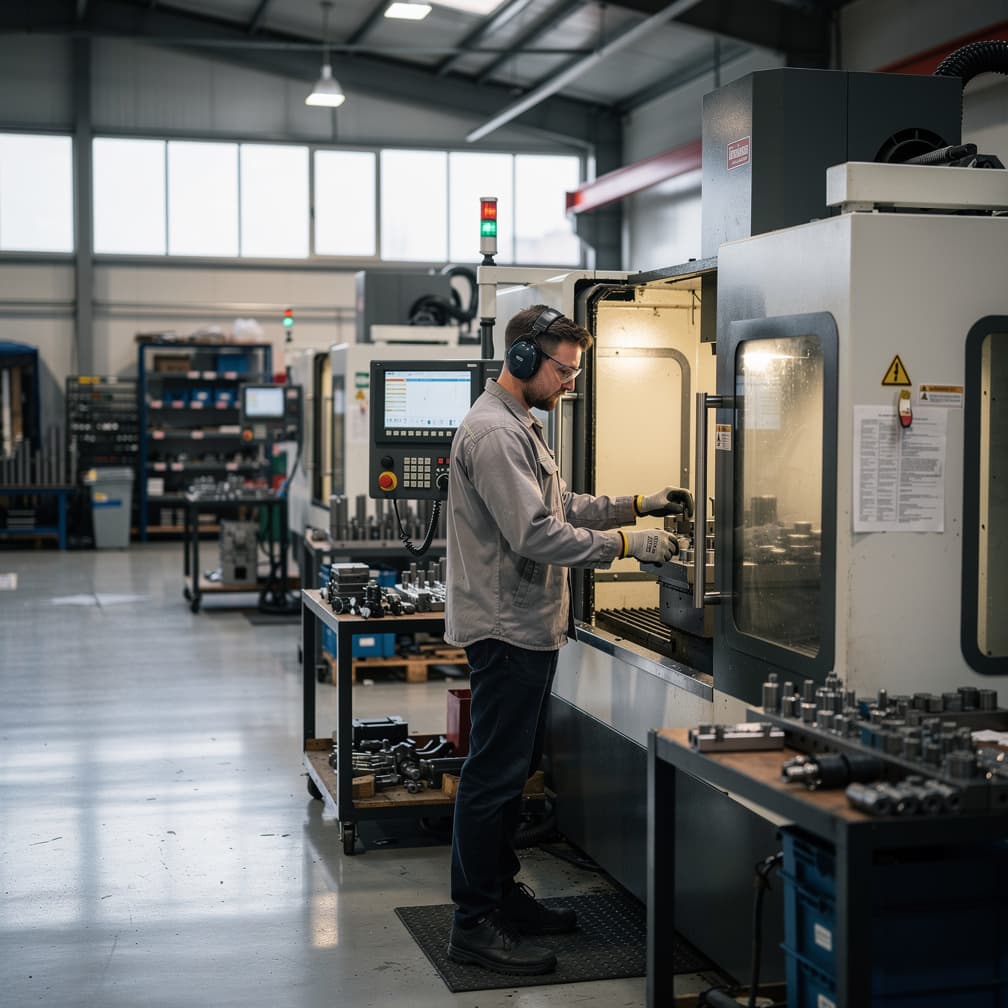
A machine shop rarely has just one exposure. You may receive raw stock, cut and machine it, send it through fabrication or finishing, assemble components, inspect tolerances, package the order, and release it to a customer who builds it into a larger product or process. Each step changes what can go wrong and which policy should respond first. That is why a machine shop insurance review works best when it starts with operations, not with a generic application.
Begin with how work moves through the shop. CNC machining, manual mills and lathes, welding or fabrication support, deburring, finishing, and light assembly create different injury patterns and property concerns. A slip by a visiting customer, damage to a neighboring tenant from shop operations, or a claim that your completed part caused downstream damage after delivery usually points back to general liability insurance. That policy should be reviewed around your actual premises traffic, the type of customers you serve, whether you install anything, and how much completed operations exposure you carry once parts leave your control.
Commercial property insurance should be shaped around what you would need to resume production after a fire, theft, or other covered property loss. For a machine shop, that often means more than walls and office furniture. Think through machine tools, benches, compressors, raw material, finished inventory waiting for pickup, computers that run programming and design files, and the small but essential items that keep jobs moving. If you lease space, review what the lease makes you responsible for inside the unit. If you own the building, review the building limit separately from business personal property so you do not blur the two.
Workers compensation insurance deserves close attention because machine shops combine heavy equipment with repetitive hand work and material handling. Setup personnel, machinists, welders, helpers, drivers, and office staff do not present the same payroll exposure. If one employee loads stock, another programs CNC equipment, and another handles shipping, your classifications and payroll estimates should reflect that reality as closely as possible. A rushed estimate can create audit problems later.
Inland marine insurance is often overlooked until a loss happens away from the main shop. If you move specialty tools, gauges, fixtures, laptops, or other mobile property to a customer site, trade event, temporary workspace, or secondary storage location, property coverage tied only to the main premises may leave gaps. The same review applies if you regularly transport items between buildings or keep valuable equipment in vehicles during service calls or deliveries.
Commercial umbrella insurance becomes more relevant as your contracts get larger, your customers become more demanding, or your shop takes on work where a failure could cause significant third party damage. Umbrella coverage is not a substitute for reviewing the underlying policies carefully, but it can add another layer of liability limits above them when a serious claim breaks through the primary policy.
The strongest quote process usually comes from a clean operational summary. Describe your materials, your typical part use, whether you do prototype or production work, any finishing or assembly you perform, who picks up and delivers, and whether customers supply material or specifications. Also note any subcontracted steps, because responsibility can become blurry when work leaves your floor and returns later. If your shop has quality control procedures, inspection records, machine maintenance routines, and written safety practices, bring those into the conversation. They help an underwriter understand not just what you make, but how consistently you control the risk around making it.
Before you buy or renew, compare limits against customer contracts, confirm property values against current replacement needs, separate mobile tools from fixed shop contents, and review payroll by role instead of using one broad estimate. That gives you a quote built around the way your machine shop actually produces parts and handles loss exposure.
Recommended Coverage for Machine Shop Businesses
Based on the risks machine shop businesses face, these coverage types are essential:

General Liability
Essential coverage for every business, protect against third-party bodily injury, property damage, and advertising claims.

Commercial Property
Safeguard your business property, equipment, and inventory against damage and loss.

Workers Compensation
Help cover your employees' medical expenses and lost wages for work-related injuries and illnesses.

Inland Marine
Protect tools, equipment, and goods in transit or stored at locations away from your primary premises.

Commercial Umbrella
Extend your liability limits beyond your primary policies for extra protection against catastrophic claims.
Common Risks for Machine Shop Businesses
- A machined part fails after delivery and leads to a third-party claim tied to completed operations coverage.
- A customer or vendor is injured while walking through the shop and files a bodily injury claim.
- A CNC machine or critical production unit breaks down and interrupts scheduled work.
- Tools, gauges, or mobile property are damaged or stolen while stored on site or moved between locations.
- A fire, storm, vandalism event, or building damage shuts down production and affects revenue.
- A contract requires higher limits, umbrella coverage, or proof of workers compensation before work can begin.
Get Your Machine Shop Insurance Quote
Compare rates from multiple carriers. Free quotes, no obligation.
What Happens Without Proper Coverage?
Machine shops face a mix of premises, production, and post-delivery risk that can be hard to sort out after a claim. If a customer walks the floor and is injured near active equipment, if a spark or electrical issue damages your space, or if a finished part allegedly causes damage after installation, you need to know which policy is intended to respond and where your limits may be thin. Buying coverage without mapping those scenarios first often leaves owners with assumptions instead of answers.
The timing pressure is real. Certificates are usually requested before a purchase order is released, not after, and additional insured wording can hold up a job even when the price and the parts are ready. One serious event can also test several policies at once: liability for an injured visitor, property for the damaged equipment, workers compensation for the machinist, and umbrella limits if the numbers climb.
There is also an audit angle many owners meet the hard way. Workers compensation premiums are trued up against actual payroll, so a rushed estimate at binding can turn into an unwelcome bill at year end. Keeping payroll broken out by role, and keeping the equipment schedule current as machines are added, does as much for your renewal as any coverage decision.
Landlords, lenders, and customers often want proof of coverage that matches the risk they see in your operation. Line up those requirements against your actual workflow, then request a quote built around your machines, people, property, and completed work.
Insurance Tips for Machine Shop Owners
Separate fixed shop contents from mobile tools and measuring equipment so your commercial property and inland marine review follows where each item actually lives and travels.
Break payroll out by real job roles, including machinists, setup staff, fabrication support, drivers, and office employees, because workers compensation pricing and audit results depend on accurate classification.
Review customer contracts before binding coverage, especially if they ask for higher liability limits, additional insured status, or proof of completed operations protection tied to delivered parts.
Update your equipment and property schedule whenever you add CNC machines, compressors, fixtures, or programming hardware, because an outdated list can leave key production assets undervalued after a loss.
Describe whether you handle prototypes, repair work, repeat production, or mixed operations, since the way parts are used after delivery affects how liability exposure should be evaluated.
Ask how finished inventory, customer-supplied material, and work in process are treated at your location, because those values can build quickly during busy production periods.
Bring your quality control, inspection, and machine maintenance procedures into the quote discussion, because they help show how your shop manages completed operations and equipment-related loss exposure.
How Much Does Machine Shop Insurance Cost?
Machine Shop Insurance is a bundle of separate policies, priced separately. The ranges below are typical figures nationally for each line, except workers compensation, which is rated per $100 of payroll; a quote prices each one against your own operations.
| Coverage | Typical range | What moves your price |
|---|---|---|
| General Liability Insurance | $120 - $370 per month | Industry and risk classification, annual revenue, number of employees |
| Commercial Property Insurance | $190 - $625 per month | Building value and construction type, roof age and condition, fire protection class |
| Workers Compensation Insurance | $0.75 - $2.74 per $100 of payroll | Employee classification codes, total annual payroll, experience modification rate |
| Inland Marine Insurance | $35 - $150 per month | Total insured value of the scheduled property, type and age of the equipment, where it is stored and how far it travels |
| Commercial Umbrella Insurance | $75 - $250 per month | Umbrella limit requested, limits carried on the underlying policies, loss history on those underlying policies |
Prices shown are general estimates, not guaranteed rates or quotes. Your actual premium will depend on the insurer, coverage selected, business details, location, claims history, and other underwriting factors. Learn about our pricing methodology.
FAQ
Frequently Asked Questions About Machine Shop Insurance
A machine shop usually reviews general liability insurance, commercial property insurance, workers compensation insurance, inland marine insurance, and commercial umbrella insurance. The right mix depends on your equipment, payroll, customer contracts, mobile tools, and whether your completed parts create post-delivery liability exposure.
Yes, in most cases. Employees work around cutting equipment, material handling, repetitive tasks, and active production areas, so payroll should be matched to actual job duties, especially when setup, machining, fabrication, shipping, and office work all happen under one roof.
Sometimes. Certain third party claims tied to completed work can fall under general liability, but the facts of the loss and the policy terms decide it. Look at how your parts are used, whether you install anything, and what your contracts require before relying on assumptions.
You often do when tools, gauges, fixtures, laptops, or other mobile property travel off site or between locations. If valuable equipment leaves the insured premises regularly, ask for terms that follow that movement instead of assuming premises-based property coverage does.
Fixed equipment and other business property usually run through commercial property insurance, with values based on what it would take to replace essential production assets. Keep your equipment schedule current and separate mobile items that may need inland marine treatment.
Umbrella coverage earns its place when customer contracts call for higher liability limits or when a serious bodily injury or property damage claim could exceed primary coverage. It works best after you confirm the underlying liability policies match your actual operations.
Operations, payroll, property values, equipment mix, customer requirements, claims history, and the way parts move from raw material to finished delivery drive most of the quote. Clear descriptions of fabrication, finishing, assembly, and mobile property use help produce numbers you can actually compare.
You can buy the same core policy types, but the limits, property values, payroll basis, and liability review should fit the actual work. Prototype jobs, repair work, and short runs create a different insurance profile than larger repeat production operations.
Updated March 31, 2026