







































Updated July 10, 2026

Why Music School Businesses Need Insurance
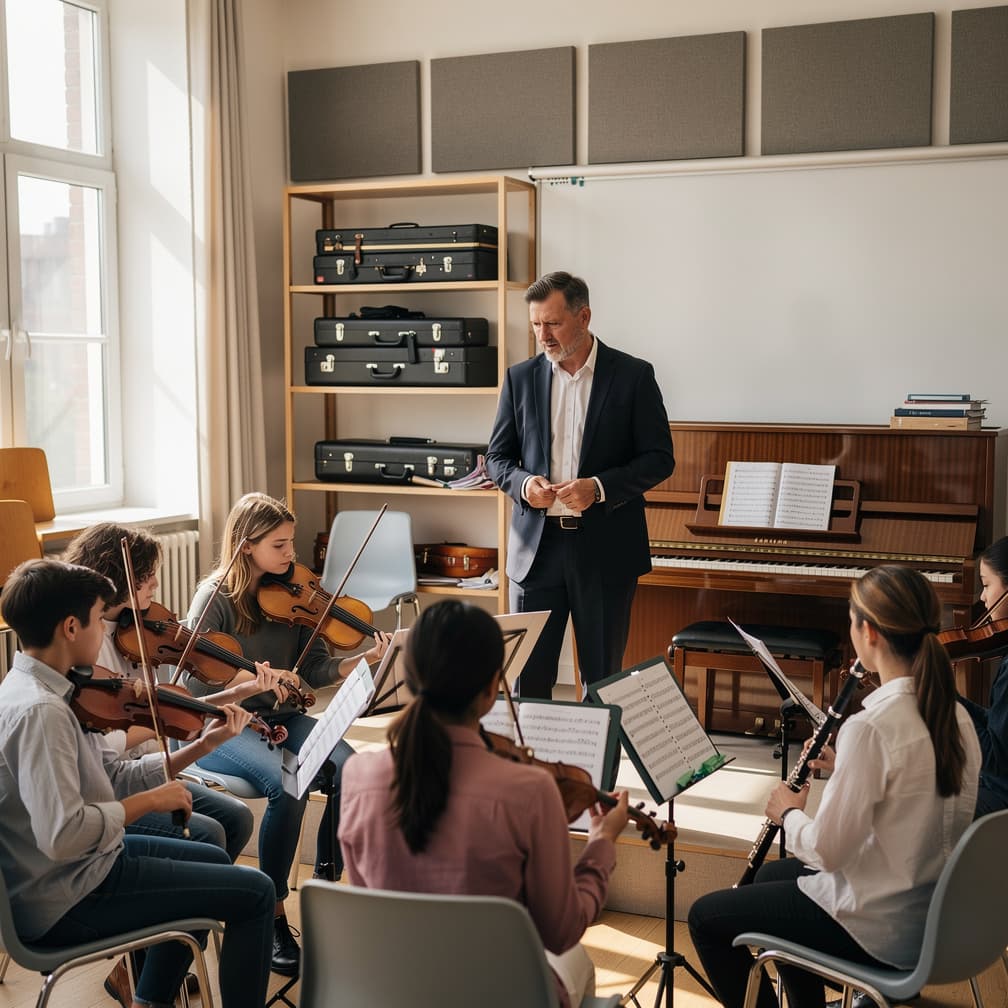
Most music schools do not have a single exposure. You are running a teaching business, an occupied premises, and often a place where valuable instruments and audio equipment move in and out of rooms all day. That mix is why a quote should be built from your actual operations instead of a generic office template. A small studio with one instructor and a waiting area presents one set of issues. A larger academy with multiple teachers, ensemble rehearsals, recital space, and front desk traffic presents another.
Start with how people use the premises. Students arrive early, parents wait, younger children may move between lobby areas and lesson rooms, and instructors often reset chairs, stands, cables, and keyboards between sessions. General liability insurance is the first stop for those third party injury and property damage exposures. If someone slips on a wet entry, trips over equipment during a class change, or alleges damage caused by your operations during an event, you want the policy terms and limits reviewed against those routines, not against an abstract business description.
Then look at property. A music school may own upright pianos, digital keyboards, drum kits, amplifiers, microphones, recording gear, computers, desks, shelving, and teaching materials. Even a modest program can accumulate a meaningful concentration of equipment over time. Commercial property insurance needs a current inventory, replacement values, and a clear distinction between business property you own and any property owned by instructors, students, or landlords. If you have built out lesson rooms, installed acoustic treatments, or added reception fixtures, include those improvements in the discussion so the quote reflects what is actually inside the space.
Professional liability insurance deserves equal attention because your service is instruction. Families and adult students are paying for teaching, supervision, scheduling, and a professional learning environment. If a complaint turns into an allegation that your school failed in its instructional duties or supervision, the issue is different from a simple premises injury claim. That is why owners carry professional liability alongside general liability instead of assuming one policy form addresses both.
A business owners policy can make sense when your school fits the carrier's appetite and you want property and liability packaged together. Even then, the details still matter. You should ask how the policy treats shared spaces, recital use, landlord requirements, and the value of instruments and electronics kept on site. If you operate from more than one location, use independent contractors, or run classes in borrowed venues, say that early in the quote process so the structure can be reviewed before binding.
Cost scales with the size of your premises exposure, the value of your business property, your payroll or instructor setup, your claims history, and the limits and deductibles you choose. The practical next step is to prepare a room list, equipment schedule, lease insurance requirements, and a description of your lesson formats, then compare how each quote addresses those details.
Recommended Coverage for Music School Businesses
Based on the risks music school businesses face, these coverage types are essential:

General Liability
Essential coverage for every business, protect against third-party bodily injury, property damage, and advertising claims.

Commercial Property
Safeguard your business property, equipment, and inventory against damage and loss.

Professional Liability
Protect your business from claims of negligence, errors, and omissions in your professional services.

Business Owners Policy
Bundle property and liability coverage into one convenient, cost-effective policy for small businesses.
Common Risks for Music School Businesses
- A student or parent slips in a hallway, waiting area, or recital room and files a third-party claim for bodily injury.
- A visiting client damages a rented instrument, keyboard, or amp during a lesson and the school is asked to pay for property damage.
- A teacher or staff member gives a lesson-related instruction that leads to a negligence or omissions claim from a parent or student.
- A fire, theft, storm, or vandalism event damages the studio space, instruments, or teaching equipment and interrupts classes.
- An equipment breakdown affects pianos, sound systems, or practice-room gear and disrupts scheduled lessons.
- A contract, lease, or venue agreement requires specific liability coverage or proof of insurance before the school can operate.
- A multi-location academy needs consistent coverage across different rooms, instructors, and campuses, creating gaps if the policy is not tailored.
Get Your Music School Insurance Quote
Compare rates from multiple carriers. Free quotes, no obligation.
What Happens Without Proper Coverage?
Music schools face claims that come from ordinary daily movement, not just unusual events. Students carry instruments through hallways, parents enter and exit during busy lesson blocks, and instructors rearrange equipment between sessions. A simple slip near the entrance or a trip over a stand or cable can turn into a bodily injury claim. If your school leases space, the landlord may also expect you to address accidental damage to the premises caused by your operations. Those conversations start with liability basics and end with the lease's fine print.
Property risk is just as practical. Your school may depend on pianos, keyboards, percussion, sound equipment, computers, office furniture, and teaching materials to keep the schedule running. If that property is damaged, stolen, or otherwise unavailable, the disruption affects more than the replacement cost. It can interrupt lessons, force room changes, and create refund or rescheduling pressure with families. Set property limits from the actual equipment and buildout you rely on, not a rough estimate made from memory.
The teaching side creates a separate reason to carry coverage. A music school is selling instruction, supervision, and a structured learning environment. If a parent or adult student alleges that your school made an instructional error, failed to supervise appropriately, or handled a teaching issue poorly, that claim may not fit neatly into a premises liability framework. Coverage for the teaching itself matters because the service you sell is instruction, not just the room it happens in.
Insurance also helps you clear business checkpoints before a problem happens. A lease may require liability coverage. A venue may ask for proof of insurance before a recital or showcase. Some owners also need coverage in place before signing a new space, adding instructors, or expanding into a second location. Those are easier conversations when your policy structure already matches your operations.
Before buying, walk through your school as if you were underwriting it. Note where students wait, where instruments are stored, who teaches under your name, and what property would be hardest to replace quickly. Then ask for a quote built around those facts, with limits and deductibles reviewed against the way your school actually runs.
Insurance Tips for Music School Owners
Build your equipment schedule from room to room, including keyboards, pianos, percussion, amps, microphones, computers, and front desk property, so your commercial property discussion starts with what you truly rely on each day.
Review your lease before requesting a quote, because landlord insurance requirements often shape liability limits, property responsibilities, and whether improvements you made to lesson rooms should be included.
Separate premises claims from teaching claims during the quote process, since a student injury in a hallway and an allegation tied to instruction can trigger different coverage discussions.
If you use multiple instructors, explain whether they are employees or independent contractors and whether they teach only at your location or also at homes, schools, or recital venues.
Ask how a business owners policy is being structured for your school, especially if you have recital space, shared common areas, or more than one location under the same brand.
Keep a current inventory with photos, serial information, and approximate replacement values, because vague property descriptions make it harder to judge whether limits are sized appropriately.
Describe your class formats clearly, including private lessons, group instruction, ensemble rehearsals, and performances, so the liability review reflects how many people are on site and how they use the space.
How Much Does Music School Insurance Cost?
Music School Insurance is a bundle of separate policies, priced separately. The ranges below are typical figures nationally for each line; a quote prices each one against your own operations.
| Coverage | Typical range | What moves your price |
|---|---|---|
| General Liability Insurance | $55 - $160 per month | Industry and risk classification, annual revenue, number of employees |
| Commercial Property Insurance | $65 - $230 per month | Building value and construction type, roof age and condition, fire protection class |
| Professional Liability Insurance | $55 - $160 per month | The services you actually perform, annual revenue or billed fees, limit and retention selected |
| Business Owners Policy Insurance | $80 - $230 per month | Annual revenue and industry class, building and contents values, square footage and building age |
Prices shown are general estimates, not guaranteed rates or quotes. Your actual premium will depend on the insurer, coverage selected, business details, location, claims history, and other underwriting factors. Learn about our pricing methodology.
FAQ
Frequently Asked Questions About Music School Insurance
Start with four: general liability for premises incidents, commercial property for instruments and equipment, professional liability for instruction complaints, and possibly a business owners policy to package the first two. Your lease and venue contracts then dictate specific limits.
Owned instruments and gear run through the commercial property side of the program, with limits that should track current replacement values. Higher value pieces such as pianos and recording equipment deserve to be listed individually rather than lumped into a contents estimate.
It belongs in the program because you sell instruction and supervision, not room rental. An allegation of negligent teaching or a supervision lapse with a young student is a service claim, and it needs different coverage than a slip in the hallway.
Not by itself. It answers third party injury and property damage claims, but it leaves instrument losses and teaching allegations on the table. Academies with real equipment and multiple instructors need the fuller structure.
Many music schools fit the underwriting profile, and the package can simplify the structure. The details still need attention: recital use, shared spaces, equipment values, and any second location should each be confirmed against the policy rather than assumed into it.
Premises exposure, business property values, payroll or instructor setup, claims history, and chosen limits and deductibles set the rate. A specific, well documented description of operations reads better to underwriters than a broad category label, and prices accordingly.
Performances concentrate people and move equipment, which changes the liability picture for that day. On site recitals should be reflected in the policy, and outside venues frequently require their own certificates, so raise performance plans before binding rather than after booking.
Lease requirements, instructor roster, class formats, location details, and a room by room equipment inventory. Note which instruments belong to the school, which to teachers, and which to students; ownership boundaries are exactly where property claims get complicated.
Updated March 31, 2026