







































Updated July 10, 2026

Why Plastics Manufacturer Businesses Need Insurance
Plastics manufacturing creates a layered insurance problem because your losses can start in raw material handling, show up in production, and mature into a liability claim long after the shipment leaves your dock. A useful insurance review follows that chain. It looks at how resin, colorants, additives, and regrind enter the plant, how they are stored, how they feed into mixers or hoppers, how parts are formed through extrusion or molding, and how finished goods are packed, warehoused, and shipped. Each handoff changes the exposure.
Commercial property insurance is where the operational review begins. A plastics facility depends on specialized machinery, electrical service, process heat, molds, dies, material handling systems, storage racks, and inventory that can be damaged by fire, smoke, water, contamination, or a production incident. If your plant relies on a few critical machines, the practical question is not just what the building is worth. It is how long you can tolerate downtime if one line stops, a storage area is damaged, or finished goods become unsellable. Property limits and deductibles should be reviewed with that interruption in mind, along with the value concentration in raw materials, work in process, and completed stock.
General liability insurance matters for the parts of your risk that reach beyond your own walls. Visitors on the premises, loading dock incidents, and damage allegations tied to your operations can all trigger claims. For plastics manufacturers, that conversation often extends into product-related allegations. If a component fails in assembly, does not meet tolerance, reacts poorly to heat or chemicals, or creates contamination concerns, the dispute can escalate quickly. Even when the root cause is still being investigated, you need liability limits that fit the customers, industries, and contracts you serve.
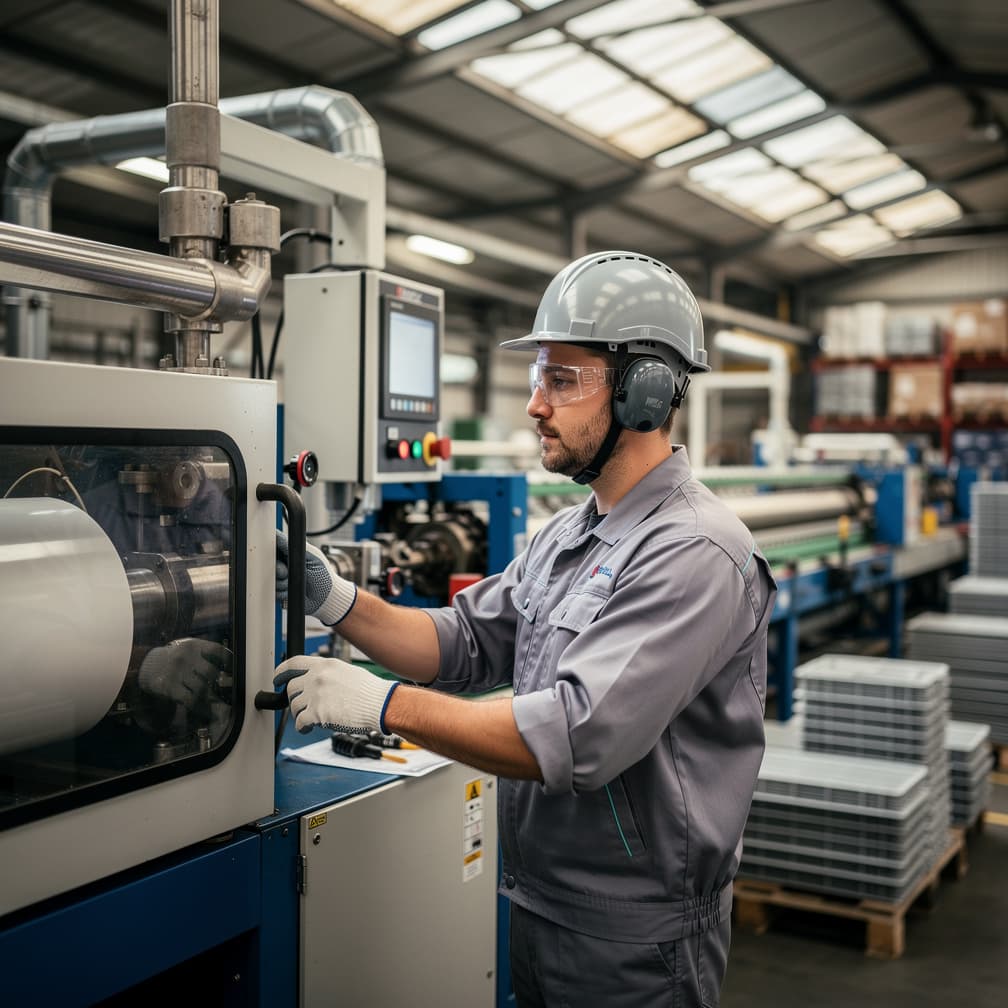
Workers compensation insurance should be reviewed against the real shop floor environment. Plastics plants can involve repetitive motion, hot surfaces, moving equipment, material handling, maintenance work, and forklift traffic. Payroll affects premium, but classification accuracy matters too. If your operation includes warehousing, machine setup, tool changes, quality control, or in-house maintenance, your insurance review should reflect who does what, where they do it, and how often they move between tasks.
Commercial umbrella insurance becomes important when your contracts, customer expectations, or loss scenarios can exceed the limits of your underlying liability policies. That is common when you supply parts used in larger finished products, ship to demanding commercial buyers, or operate a facility with significant foot traffic, vehicle movement, and concentrated production values. Umbrella limits should be sized to the severity of a plausible claim, not chosen as an afterthought.
The strongest quote process includes a close look at quality control and change management. Underwriters want to understand resin traceability, batch controls, inspection steps, scrap handling, mold maintenance, housekeeping around dust or debris, and how you document customer specifications. Those details help explain whether a defect is likely to be isolated or spread across a large production run. They also affect how underwriters view your operation.
If you run multiple processes, private-label production, or custom jobs with frequent setup changes, say that early. A plant making commodity packaging has a different claim pattern than one producing tight-tolerance components for another manufacturer. The more clearly you map your equipment, products, customers, and contractual requirements, the easier it is to review limits, deductibles, and policy structure before a shutdown or defect claim forces the issue.
Recommended Coverage for Plastics Manufacturer Businesses
Based on the risks plastics manufacturer businesses face, these coverage types are essential:

General Liability
Essential coverage for every business, protect against third-party bodily injury, property damage, and advertising claims.

Commercial Property
Safeguard your business property, equipment, and inventory against damage and loss.

Workers Compensation
Help cover your employees' medical expenses and lost wages for work-related injuries and illnesses.

Commercial Umbrella
Extend your liability limits beyond your primary policies for extra protection against catastrophic claims.
Common Risks for Plastics Manufacturer Businesses
- Product defect claims tied to molded, formed, or fabricated plastic parts that fail customer specifications
- Chemical exposure incidents involving resins, additives, cleaners, or other production materials
- Equipment breakdown on extruders, presses, mixers, or molding machines that stops output
- Fire risk from heat, electrical issues, or stored materials in production and warehouse areas
- Storm damage or vandalism affecting the building, loading docks, inventory, or outdoor storage
- Third-party claims from visitors, contractors, or customers injured at the facility
Get Your Plastics Manufacturer Insurance Quote
Compare rates from multiple carriers. Free quotes, no obligation.
What Happens Without Proper Coverage?
One event hitting property, operations, and liability simultaneously is the signature plastics loss. A hopper issue, overheated barrel, mold problem, or contaminated material lot can damage equipment, spoil inventory, and halt production before anyone knows whether customer orders will slip. For plants built on continuous throughput, the downtime cost rivals the physical damage.
Traceability is what decides whether a defect stays small. Resin lot records, batch controls, inspection logs, and changeover documentation determine whether a bad part is an isolated replacement or a full production run pulled from a customer's line. Underwriters read those records the same way a claims adjuster eventually will, which makes quality documentation part of the insurance conversation, not separate from it.
Approved vendor lists keep the pressure constant. Supply agreements demand specific limits and umbrella support before work begins, and staying on a customer's list can hinge on evidence of coverage arriving on time. Adjusting limits during placement costs little; discovering a shortfall after a customer's insurance requirements arrive costs deals.
Shop floor realities round out the case: heat, repetitive tasks, lifting, machine interaction, and forklift traffic generate steady injury exposure, and a staffing disruption on a key line slows output while the claim is still open. Bring your equipment list, payroll, loss runs, contract requirements, and a plain description of the process, and the resulting terms will map to your real exposures rather than a manufacturing average.
Insurance Tips for Plastics Manufacturer Owners
Map your production flow before requesting quotes, because underwriters can review property values and liability exposure more accurately when they understand where raw materials, work in process, and finished goods concentrate inside the plant.
Separate building, machinery, molds, and inventory values carefully, since a plastics operation can carry large amounts of stock and specialized equipment that are easy to undervalue during a fast renewal.
Review general liability limits against the industries you supply, especially if your components are built into another manufacturer’s finished product and a defect allegation could expand beyond a simple replacement order.
Check that workers compensation classifications match actual job duties on the floor, including setup, maintenance, warehousing, and forklift activity, rather than relying on a broad manufacturing description.
Use your largest customer contracts to test umbrella limits, because required insurance language often reveals whether your current liability structure is too thin for the work you want to keep or win.
Discuss material handling and housekeeping practices during the quote process, since resin storage, regrind handling, dust, and scrap control all help explain how likely a fire, contamination, or slip incident may be.
Bring quality control documentation to the insurance review, including traceability, inspection steps, and changeover procedures, because those records help show whether a defect would likely stay isolated or affect an entire run.
How Much Does Plastics Manufacturer Insurance Cost?
Plastics Manufacturer Insurance is a bundle of separate policies, priced separately. The ranges below are typical figures nationally for each line, except workers compensation, which is rated per $100 of payroll; a quote prices each one against your own operations.
| Coverage | Typical range | What moves your price |
|---|---|---|
| General Liability Insurance | $220 - $700 per month | Industry and risk classification, annual revenue, number of employees |
| Commercial Property Insurance | $330 - $1,175 per month | Building value and construction type, roof age and condition, fire protection class |
| Workers Compensation Insurance | $0.75 - $2.74 per $100 of payroll | Employee classification codes, total annual payroll, experience modification rate |
| Commercial Umbrella Insurance | $130 - $440 per month | Umbrella limit requested, limits carried on the underlying policies, loss history on those underlying policies |
Prices shown are general estimates, not guaranteed rates or quotes. Your actual premium will depend on the insurer, coverage selected, business details, location, claims history, and other underwriting factors. Learn about our pricing methodology.
FAQ
Frequently Asked Questions About Plastics Manufacturer Insurance
General liability, commercial property, workers compensation, and commercial umbrella anchor the program for most plants. Machinery, inventory, payroll, customer contracts, and the downstream risk of a defective component decide how each policy should be sized.
Describe the process, not just the business: how materials move through mixing, molding, extrusion, storage, and shipping, plus equipment, payroll, property values, and customer requirements. Limits and deductibles reviewed around real interruption points fit better than any template.
Certain damage allegations tied to your operations or products can fall within it, depending on policy terms and the facts. The sharper review is how a defect claim could develop after delivery, particularly when your part is buried inside another manufacturer's finished product.
Dependence, in a word. Buildings, specialized machinery, molds, electrical systems, and inventory can all be made unusable by one production incident, so values and deductibles should be set against how much downtime the operation can realistically absorb.
The work defines it: heat, repetitive motion, lifting, machine interaction, and forklift traffic are the daily exposures. Accurate job duties and payroll keep the policy aligned with how the floor actually operates rather than with a broad class description.
When customer contracts require higher limits or one serious claim could exceed primary coverage, the review earns its place. Parts that go into another company's product raise the ceiling on plausible losses, and umbrella capacity is how that ceiling gets addressed.
Payroll, property values, equipment concentration, claims history, product type, customer requirements, and chosen limits and deductibles all feed the premium. Specialized machinery and broader product exposure invite a more detailed underwriting review, and pricing follows that detail.
Current policies, loss runs, payroll records, an equipment schedule, property values, and major customer insurance requirements, plus a summary of any process changes, new products, or shifts in material handling. Renewals reviewed against that file catch drift before it becomes a gap.
Updated March 31, 2026