







































Updated July 10, 2026

Why Printing Company Businesses Need Insurance
Your insurance decisions get more practical when you look at the shop the way a claim would. Start at intake. A customer sends files, approves a proof, or walks in with a deadline that leaves little room for delay. From there, work moves through prepress, printing, cutting, folding, binding, packing, and delivery. Each step changes what is at risk and which policy is most likely to respond.
General liability insurance is typically the first layer to review because it addresses third-party bodily injury and property damage claims tied to your operations. In a printing company, that can involve a customer slipping in the lobby, a delivery creating accidental damage at a client site, or a visitor getting hurt near an active production area. If you lease space, sign vendor agreements, or work with commercial clients, liability limits should be reviewed against those contract requirements before you renew or take on larger accounts.
Commercial property insurance is where many print shops need a closer reading. A printing operation depends on specialized equipment, but it also depends on the supporting property around it: computers that drive production, finishing equipment that completes the job, shelving, worktables, and stock on hand. Paper, packaging, inks, and other materials can represent a meaningful concentration of value, especially before a large run or seasonal order. If your values are understated, a covered property loss can leave you short on the funds needed to replace equipment or rebuild inventory at the moment you need to restart production.
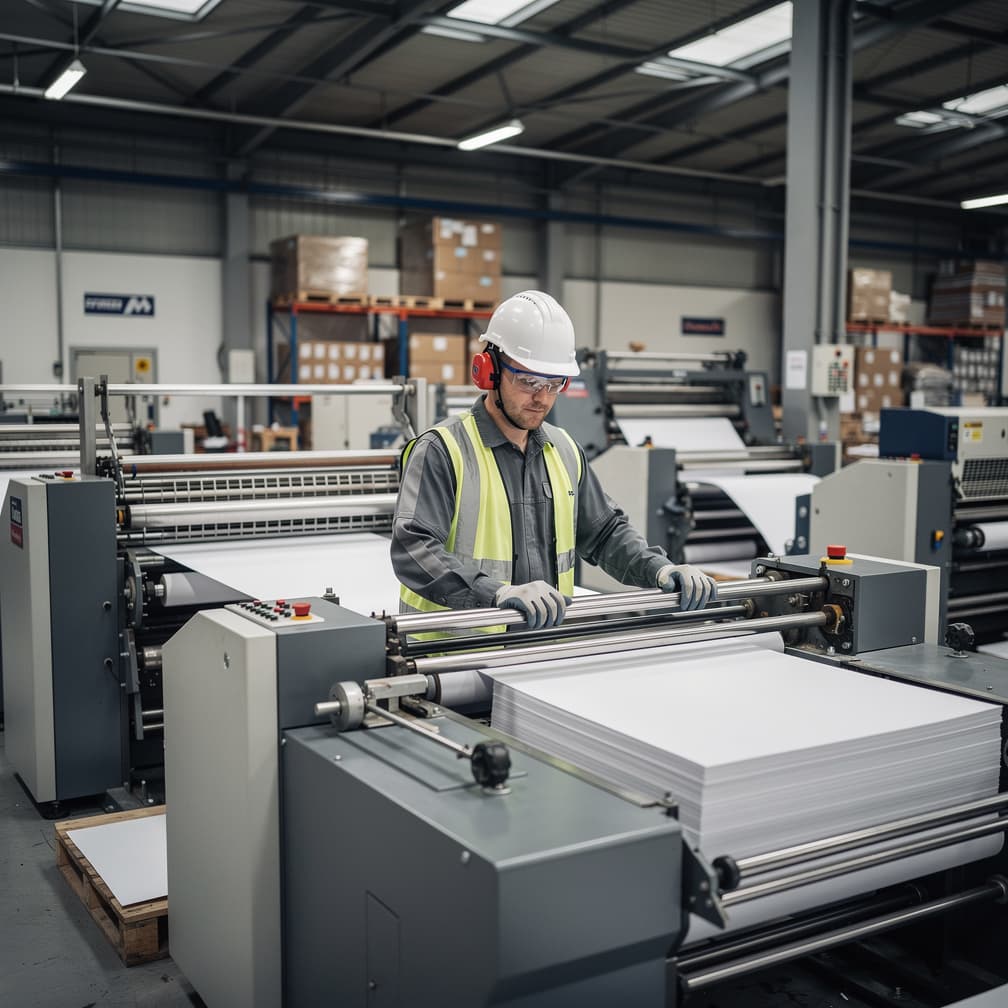
Workers compensation insurance should be reviewed with your actual floor activity in mind. Print shops often involve lifting cartons, feeding stock, clearing jams, trimming, binding, and standing for long stretches around moving equipment. Office staff, designers, production workers, and drivers do not present the same exposure profile, so your payroll and job duties should be described accurately. If roles have changed since your last policy period, update them before you request terms.
Inland marine insurance is often the difference between a quote that looks complete and one that actually follows the way your property moves. Many printing businesses send tools, samples, display materials, or portable equipment off premises. Some pick up customer materials, deliver finished work, or move items between a shop, storage space, and event or installation locations. Property coverage tied mainly to the premises may not address those mobile exposures the way you expect, so this is the place to ask direct questions.
The interaction between these coverages matters. A water loss might damage stock and equipment at the shop. A separate incident could involve a driver unloading finished materials at a client location. Customer property in your care can also be damaged while staged, packed, or moved between sites. Looking at each policy in isolation can leave gaps in how your operation actually functions under pressure.
A useful printing company insurance review is specific. Identify your press and finishing bottlenecks, note any customer property in your care, and flag anything that regularly travels off site. Then compare limits, deductibles, property values, and payroll assumptions against current operations before you request terms.
Recommended Coverage for Printing Company Businesses
Based on the risks printing company businesses face, these coverage types are essential:

General Liability
Essential coverage for every business, protect against third-party bodily injury, property damage, and advertising claims.

Commercial Property
Safeguard your business property, equipment, and inventory against damage and loss.

Workers Compensation
Help cover your employees' medical expenses and lost wages for work-related injuries and illnesses.

Inland Marine
Protect tools, equipment, and goods in transit or stored at locations away from your primary premises.
Common Risks for Printing Company Businesses
- Color-matching errors that lead a client to request reprints or replacement costs
- Missed print runs that disrupt a customer deadline and trigger third-party claims
- Slip and fall incidents in the lobby, press area, or pickup counter
- Equipment breakdown on presses, finishing machines, or bindery tools that stops production
- Fire risk or storm damage affecting paper inventory, finished jobs, and the production floor
- Theft or vandalism involving tools, mobile property, or stored materials
Get Your Printing Company Insurance Quote
Compare rates from multiple carriers. Free quotes, no obligation.
What Happens Without Proper Coverage?
Deadlines change the cost of every disruption in print work. Other businesses lose revenue when equipment goes down; a print shop also breaks promised delivery windows, and clients with event dates or product launches do not reschedule around your repairs. The gap between a manageable loss and a client exodus is measured in days, which is why downtime tolerance belongs in the insurance review alongside property values.
Customer property deepens the exposure in ways owners overlook. Client supplied materials, approved proofs, and finished jobs awaiting pickup all sit in your care, and a water leak that ruins a customer's wedding invitations or a trade show order creates a dispute your own property limit does not answer. How the policy treats property of others deserves a direct question.
Seasonal inventory swings quietly undermine limits. Paper and substrate stock purchased ahead of a holiday season or a large contract can double what sits on the racks, and values declared during a slow month leave the difference uninsured. Timing the property review against your real purchasing calendar closes that gap.
Proof of coverage requests arrive with the best jobs: commercial clients, event venues, and landlords all ask before contracts are signed. Walk your workflow, note where visitors stand and what moves on trucks, then request a free, no-obligation quote built around those specifics.
Insurance Tips for Printing Company Owners
Separate your fixed production equipment from property that regularly travels off premises, so your quote can address both shop-based and mobile exposures without assuming one policy section handles everything.
Review paper, substrate, packaging, and finished goods values before busy seasons or large contracts, because inventory swings can leave your commercial property limits out of step with what is actually on hand.
Describe each role the way the work is really performed, including production, bindery, design, counter service, and delivery duties, so workers compensation insurance reflects current payroll and injury exposure.
Ask whether customer materials, proofs, or finished jobs in your care are being considered during the quote review, especially if items are stored temporarily before pickup, shipment, or installation.
Match liability limits to lease terms and client contract requirements before you bid larger jobs, because proof of coverage requests often surface after pricing is already committed.
List the equipment that would stop production first if damaged, including presses and finishing bottlenecks, then review deductibles and property values with those operational choke points in mind.
How Much Does Printing Company Insurance Cost?
Printing Company Insurance is a bundle of separate policies, priced separately. The ranges below are typical figures nationally for each line, except workers compensation, which is rated per $100 of payroll; a quote prices each one against your own operations.
| Coverage | Typical range | What moves your price |
|---|---|---|
| General Liability Insurance | $75 - $210 per month | Industry and risk classification, annual revenue, number of employees |
| Commercial Property Insurance | $160 - $525 per month | Building value and construction type, roof age and condition, fire protection class |
| Workers Compensation Insurance | $0.75 - $2.74 per $100 of payroll | Employee classification codes, total annual payroll, experience modification rate |
| Inland Marine Insurance | $30 - $100 per month | Total insured value of the scheduled property, type and age of the equipment, where it is stored and how far it travels |
Prices shown are general estimates, not guaranteed rates or quotes. Your actual premium will depend on the insurer, coverage selected, business details, location, claims history, and other underwriting factors. Learn about our pricing methodology.
FAQ
Frequently Asked Questions About Printing Company Insurance
General liability, commercial property, workers compensation, and inland marine make up the core set. Production floor layout, delivery activity, equipment values, payroll, and whether materials leave the shop decide how each one should be sized.
Once tools, sample kits, customer materials, or finished work move off premises, the answer trends yes. Deliveries, event setups, and property moving between locations create transit exposures a premises based policy can miss, so ask how the quote handles them.
Actual floor duties drive the policy, not a generic office profile. Production work, bindery tasks, lifting, cutting, and delivery driving carry different injury exposure than design or counter work, and describing each role accurately keeps classifications and premiums honest.
Presses, finishing equipment, computers, and paper or substrate stock can all fall within the review, depending on policy terms. Keeping values current matters most, since inventory that swells before large runs can quietly outgrow the declared limits.
Because your work reaches their premises: deliveries, installations, and activity at another party's location all carry liability exposure they want addressed before granting access. Contract and lease requirements surface early, so checking required limits before bidding avoids delays.
Payroll, property values, equipment mix, claims history, delivery activity, chosen limits, and deductibles shape the premium. Shops with higher value presses, more floor labor, or more off site property movement warrant a closer underwriting look and price accordingly.
Rarely through a single coverage section, because shop property and mobile property are reviewed under different parts of a program. Delivered work, tools, and samples off site each need to be scheduled and valued deliberately rather than assumed covered.
An equipment list, estimated inventory values, payroll by job duty, delivery details, and any lease or client insurance requirements. With those in hand, limits, deductibles, and coverage structure can be matched to the actual workflow instead of a template.
Updated March 31, 2026