







































Updated July 10, 2026

Why Timber & Logging Businesses Need Insurance
Before coverage is bound, a timber and logging insurance review should map to the way your operation moves through a tract from first cut to final haul. That usually means looking at who is felling, who is skidding, who is loading, who is hauling, and which parts of the work are done by employees versus subcontractors. A policy that looks adequate on a basic application can miss important details if your equipment travels constantly, your crews rotate between sites, or your contracts shift responsibility for access roads, loading areas, or damage to adjacent property.
General liability insurance is often the starting point for third party claims tied to active operations. In this trade, that can mean a falling tree damaging a neighboring structure, a loader contact claim, or an allegation that your crew caused property damage while entering or exiting a tract. The key is to review how your work is described, where operations take place, and whether your limits fit the size of the jobs you bid. If a landowner, mill, or prime contractor asks for higher limits, that request should be checked before work begins rather than after a certificate is requested.
Workers compensation insurance deserves close attention because logging losses are often severe even when the crew is experienced. Cutting, limbing, bucking, loading, maintenance work, and roadside activity all create injury exposure. Payroll classification, crew duties, and owner involvement should be reviewed carefully so the policy reflects who is actually doing field work, who is driving, and who is handling shop or supervisory tasks. If your operation uses seasonal labor or mixed duties, that should be discussed up front.
Commercial auto insurance is not just about a truck title. It should reflect how vehicles are used across rural roads, job entrances, public highways, and mill routes. A logging business may have pickups, service bodies, trailers, and heavier units with different drivers and different radius patterns. If employees use personal vehicles for errands or site visits, that should be part of the conversation as well. The same goes for attached equipment, towing, and whether units cross state lines.
Inland marine insurance is often where mobile property is either properly scheduled or accidentally overlooked. Logging operations rely on equipment and tools that do not stay in one place, and losses can happen during transport, at a landing, in a service area, or while equipment is temporarily stored between jobs. A careful schedule helps you decide what should be listed individually, what values need updating, and whether newly acquired equipment procedures are clear enough for a growing fleet.
Commercial umbrella insurance can help when the underlying liability exposure is larger than a base policy limit comfortably handles. That discussion often comes up for operators with multiple trucks, larger crews, higher value contracts, or work near roads, utilities, or neighboring property. The practical step is to review your contracts, vehicle exposure, and worst case injury scenarios together, then decide whether higher excess limits make sense for the way you operate now, not the way the business looked a few years ago.
Recommended Coverage for Timber & Logging Businesses
Based on the risks timber & logging businesses face, these coverage types are essential:

General Liability
Essential coverage for every business, protect against third-party bodily injury, property damage, and advertising claims.

Workers Compensation
Help cover your employees' medical expenses and lost wages for work-related injuries and illnesses.

Commercial Auto
Protect your business vehicles and drivers with comprehensive commercial auto coverage.

Inland Marine
Protect tools, equipment, and goods in transit or stored at locations away from your primary premises.

Commercial Umbrella
Extend your liability limits beyond your primary policies for extra protection against catastrophic claims.
Common Risks for Timber & Logging Businesses
- Falling tree impact that causes bodily injury to landowners, bystanders, or nearby workers
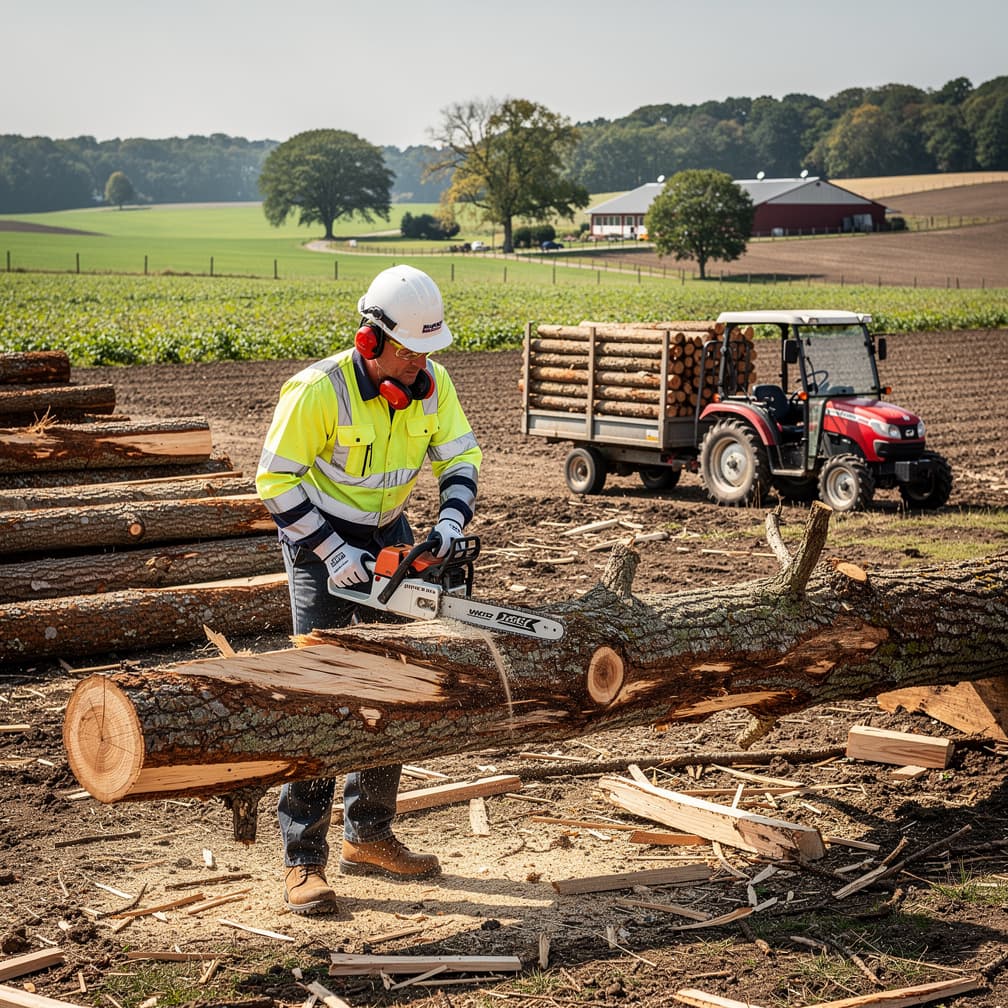
- Saw injuries and other workplace injury exposures during active timber cutting and tree harvesting
- Property damage to fences, gates, structures, or adjacent land during logging operations
- Vehicle accident risk for trucks and trailers moving crews and equipment between rural job sites
- Equipment in transit damage when machines and attachments are hauled over long distances or rough terrain
- Third-party claims and legal defense costs after a job-site incident leads to a lawsuit
Get Your Timber & Logging Insurance Quote
Compare rates from multiple carriers. Free quotes, no obligation.
What Happens Without Proper Coverage?
Timber and logging losses tend to be expensive because one incident can involve injury, equipment movement, vehicles, and third party property at the same time. A tree can fall outside the intended zone. A loader can damage another party's equipment during loading. A truck can be involved in a road claim while moving logs, fuel, or parts between locations. If your coverage is not aligned with those operations, the gap usually shows up at the worst possible moment, after a contract is signed and a claim is already in motion.
Insurance also matters because this trade depends on access. Landowners, mills, timber buyers, and prime contractors often want proof of coverage before they let work begin, and the details matter. A certificate may need to show the right business name, the right lines of coverage, and limits that match the contract. If you wait until the day work starts to review those requirements, you can end up scrambling to change limits, add vehicles, or clarify who is performing which part of the job.
Each line has a distinct job in this trade, and the gaps show at the seams: an injury during limbing, a damage allegation at the tract entrance, a road claim while hauling logs, or a winch that disappears from a landing between jobs. Umbrella limits enter the conversation when one severe claim, usually a serious injury or a major property loss, could push past the underlying policies.
The buying decision is less about checking a box and more about protecting continuity. One uncovered truck, one unscheduled piece of equipment, or one payroll classification issue can disrupt cash flow, delay jobs, and strain contract relationships. Before you request a quote, gather your vehicle list, equipment schedule, payroll by duty, driver information, and current contracts. Then review how each policy line responds to the way your crews cut, load, haul, and move from site to site.
Insurance Tips for Timber & Logging Owners
Separate field payroll from shop, supervisory, and driving duties as clearly as possible before quoting, because mixed job descriptions can make workers compensation review less accurate for a logging operation.
Review every owned, leased, and hired vehicle used in the business, including pickups, service trucks, trailers, and log hauling units, so commercial auto coverage matches how equipment and timber actually move.
Schedule mobile tools and equipment under inland marine insurance with current values and plain descriptions, especially if saws, winches, attachments, or portable gear move between tracts every week.
Compare your general liability and umbrella limits against the requirements in landowner, mill, and subcontract agreements before work starts, because certificate requests often surface after the job is already lined up.
Ask how newly acquired equipment, temporary replacements, and borrowed items are handled, so a fast equipment change does not leave a gap while your crew is trying to keep production moving.
Document who is subcontracting, who is hauling, and who is responsible for certificates of insurance, because unclear job responsibility can create claim disputes after property damage or injury allegations arise.
Bring a current equipment schedule, driver list, loss history, and copies of active contracts into the quote process, so the policy review is built around your actual operation instead of a generic class description.
How Much Does Timber & Logging Insurance Cost?
Timber & Logging Insurance is a bundle of separate policies, priced separately. The ranges below are typical figures nationally for each line, except workers compensation, which is rated per $100 of payroll; a quote prices each one against your own operations.
| Coverage | Typical range | What moves your price |
|---|---|---|
| General Liability Insurance | $420 - $1,550 per month | Industry and risk classification, annual revenue, number of employees |
| Workers Compensation Insurance | $0.75 - $2.74 per $100 of payroll | Employee classification codes, total annual payroll, experience modification rate |
| Commercial Auto Insurance | $800 - $2,900 per month | Fleet size and vehicle types, driver records and experience, coverage limits and deductibles |
| Inland Marine Insurance | $170 - $850 per month | Total insured value of the scheduled property, type and age of the equipment, where it is stored and how far it travels |
| Commercial Umbrella Insurance | $210 - $1,000 per month | Umbrella limit requested, limits carried on the underlying policies, loss history on those underlying policies |
Prices shown are general estimates, not guaranteed rates or quotes. Your actual premium will depend on the insurer, coverage selected, business details, location, claims history, and other underwriting factors. Learn about our pricing methodology.
FAQ
Frequently Asked Questions About Timber & Logging Insurance
The core review centers on general liability, workers compensation, commercial auto, and inland marine coverage, with umbrella limits added when contracts or loss severity demand it. The right mix depends on crew duties, equipment values, vehicle use, and what your agreements require.
Chainsaws, portable tools, and other mobile equipment are usually a job for inland marine coverage rather than property insurance tied to one building address. Check how items are scheduled, valued, transported, and replaced after a covered loss.
Because logging injuries tend to be severe even for experienced crews. Felling, limbing, loading, maintenance, and roadside work in changing conditions all carry injury exposure, so payroll should be broken out by duty and by who actually performs field work.
Yes, for every unit the business runs: log trucks, pickups, service vehicles, and trailers moving between tracts, mills, and repair stops. Driver assignments, towing, and route patterns all affect how the policy should be structured.
They can, and most do. Landowners, mills, and prime contractors often hold access or hauling until certificates arrive, so review requested limits, named insured details, and contract language early enough to align coverage before the start date.
Payroll, crew duties, vehicle use, equipment values, claims history, and the liability limits your contracts demand set most of the price. Complete schedules and clear job descriptions are the fastest route to an accurate quote.
It makes sense when severe injury potential, vehicle exposure, or contract requirements push past the comfort of base liability limits. Weigh it alongside general liability and commercial auto rather than as a separate afterthought.
Gather your equipment schedule, vehicle list, driver information, payroll by job duty, loss history, and current contracts. That detail lets the reviewer match coverage to how your crews cut, load, haul, and travel.
Updated March 31, 2026