







































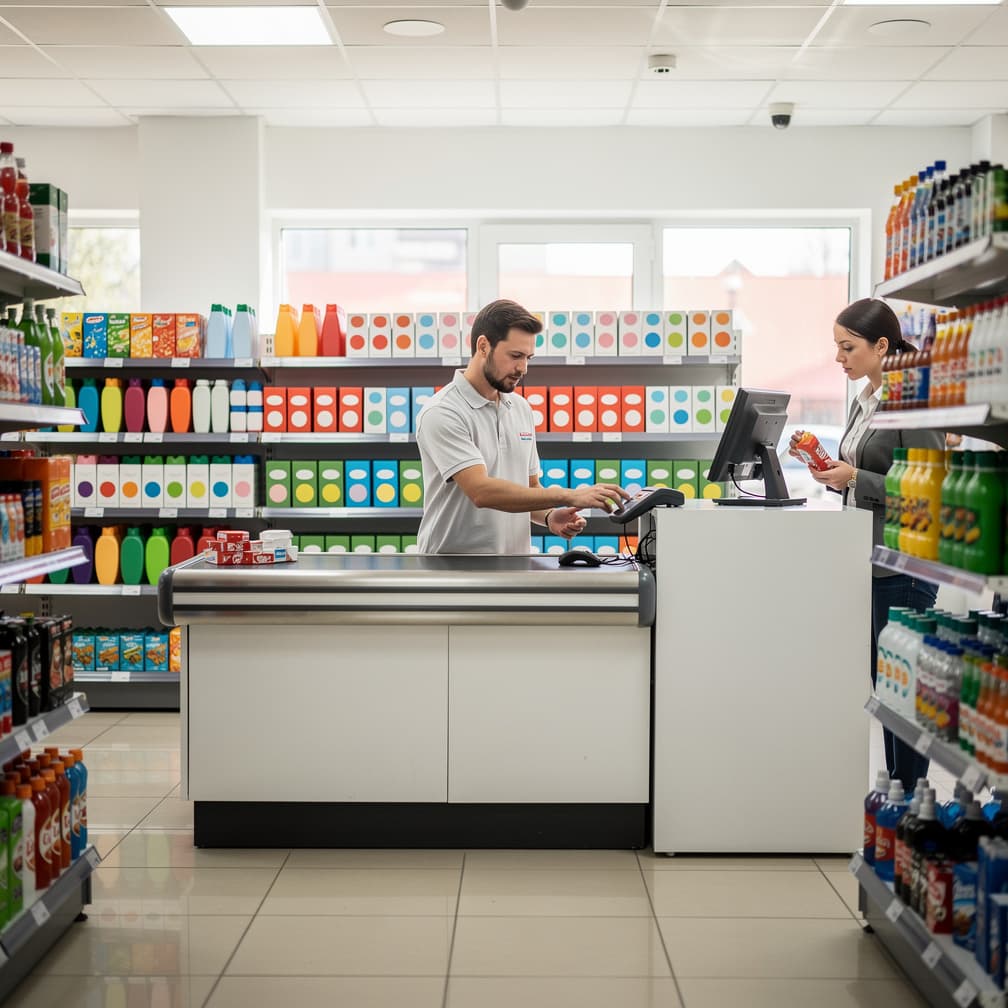

As a convenience store in Bakersfield, you are open when other businesses are dark, and that alone shapes your file. Convenience store insurance in Bakersfield has to account for the hours nobody else works: the lone clerk, the drawer in the middle of the night, the street-facing glass after close. Late hours push the theft and injury questions to the front and change how an underwriter reads your application. Cameras, a drop safe, and a documented cash limit at the register are what get asked about. They are also the easiest items on that list to fix this week. What follows breaks down the lines stores commonly carry and the ranges behind them, so the quote conversation starts with you already knowing your own answers.
What Makes Bakersfield Different
Hours of operation move your price further than most owners expect them to move it. A store open around the clock has exposure at hours when help is furthest away. Underwriters in California read that as more theft risk and more time alone at a register. Cutting hours is a business decision, so nobody sensible suggests you make it for a premium. Controls are the other lever: cameras, a drop safe, a posted cash limit, lighting at the door. Those cost little relative to the credit they can earn, and they hold up in a claim review. A quote for a store in Bakersfield will ask about each of those items by name. Have the answers written down and the conversation takes ten minutes instead of three days.
Local Risk Factors in Bakersfield
An evacuation closes a store that is still standing, which is the version owners never plan for. Staff cannot get in, deliveries stop, and the coolers run on whatever power remains. Civil authority terms decide whether those days count, and wording filed in California typically asks for damage somewhere nearby rather than an order alone. A Business Owners Policy can carry income terms for a store in Kern County, though the trigger and the waiting period live in the fine print. Read both while the sky is clear. The stock in your cases does not wait for an adjuster to reach the area.
What Coverage Does a Convenience Store in Bakersfield Need?
General Liability
A shopper goes down near the beverage station, and the medical bills arrive well before the lawsuit does. This is the line generally meant for third-party injury and property damage on your floor, and it is what a landlord names in a lease exhibit. It typically leaves out injuries to your own staff, which belong on workers compensation instead.
Example: A stack of cases tips as a customer reaches past it and she breaks a wrist; general liability can help cover the treatment and the claim her lawyer files afterward.
Commercial Property
Lenders and landlords ask for it, and the coolers, shelving, counters, and stock inside your walls are why you would want it regardless. It may respond to fire, wind, and theft damage to the building and the contents you own. Flood typically sits outside the form, and equipment that simply wore out reads as maintenance rather than a loss.
Example: Fire from an electrical fault in the back room chars the stockroom and smokes the shelves; commercial property may answer for the rebuild and for the inventory that came out with it.
Commercial Crime
Money is not inventory, and a standard property form treats it that way. This is the line usually written for stolen cash, lottery proceeds, forged instruments, and employee dishonesty, with separate limits for money on the premises and money in transit. Underwriters price the procedure behind the drawer rather than the balance in it, so a written closing routine carries weight.
Example: A trusted clerk voids sales for months and pockets the difference before a count in Bakersfield finds the pattern; commercial crime could pick up the loss once it is documented.
Workers Compensation
Payroll is the basis and duties set the rate, which is why classifying each clerk and stocker matters more than headcount does. It is generally the line for on-the-job injuries: a back strained lifting cases, a hand cut breaking down cardboard, a fall inside a walk-in. Thresholds for who counts as an employee vary, and the California Department of Insurance publishes the current requirements for California.
Example: A stocker slips on a wet freezer floor and misses six weeks; workers compensation is designed to take on the medical care and part of the wages he loses while out.
Business Owners Policy
Where the property and liability sides get bought as two separate contracts, a package folds them into one and often prices better than the pieces do apart. For a small store it is a common starting structure. Workers compensation stays outside it, the crime limit inside tends to be modest, and spoilage may have to be added back by endorsement.
Example: A storm takes the sign down and a shopper trips over the debris the next morning in Bakersfield; a business owners policy might handle both sides of that week under one claim number.
How Much Does Convenience Store Insurance Cost in Bakersfield?
Convenience Store Insurance is a bundle of separate policies, priced separately. The ranges below are typical figures for Bakersfield for each line, except workers compensation, which is rated per $100 of payroll; a quote prices each one against your own operations.
| Coverage | Typical range | What moves your price |
|---|---|---|
| General Liability Insurance | $100 - $340 per month | Industry and risk classification, annual revenue, number of employees |
| Commercial Property Insurance | $220 - $775 per month | Building value and construction type, roof age and condition, fire protection class |
| Commercial Crime Insurance | $30 - $120 per month | Employees who handle money or inventory, internal controls and separation of duties, funds and securities on hand |
| Workers Compensation Insurance | $0.75 - $2.74 per $100 of payroll | Employee classification codes, total annual payroll, experience modification rate |
| Business Owners Policy Insurance | $200 - $600 per month | Annual revenue and industry class, building and contents values, square footage and building age |
Prices shown are general estimates, not guaranteed rates or quotes. Your actual premium will depend on the insurer, coverage selected, business details, location, claims history, and other underwriting factors. Learn about our pricing methodology.
What Are the Insurance Requirements for a Convenience Store in Bakersfield?
Workers' comp is generally required once you have your first employee. California generally requires employers to carry workers' compensation at that point. Common exemptions include sole proprietors and some partners. Confirm current thresholds with your state's workers' compensation agency before you hire.
Flood damage is typically excluded from standard policies. Standard commercial property and builders-risk-type policies typically exclude flood damage. Flood exposure varies address by address, so check your premises in FEMA's Flood Map Service Center before deciding; if you sit in a mapped flood zone, a separate policy through the National Flood Insurance Program is the usual starting point.
Where to verify licensing and coverage rules. The California Department of Insurance publishes consumer guidance and current insurance requirements for California businesses. When a contract or lease demands specific wording, the California Department of Insurance's guidance is the authoritative place to check.
Get Your Convenience Store Quote in Bakersfield
Compare rates from multiple carriers. Free quotes, no obligation.
Operating in Bakersfield
- A franchisor and a distributor can each impose limits on your policy, and a store in Bakersfield can end up satisfying three different requirement sets from three counterparties with one program.
- The certificate a landlord asks for has to name the legal entity that signed the lease, not the sign above the door. A mismatch sends the paperwork back for reissue while your opening date stands still.
- Deliveries land during the busiest hour, and a pallet parked in an aisle is a slip claim standing up. The receiving routine you wrote for speed is the one an adjuster reads later.
- A store in Bakersfield that runs an overnight shift gets underwritten on what happens at the register when help is far away. Camera coverage, a drop safe, and a posted cash limit all get asked about by name.
How to Buy: Advice for Bakersfield Owners
Gather your numbers before you call anyone: annual revenue, payroll by role, hours of operation, square footage, the year the roof was last done, and a list of what sits in the coolers. Workers Compensation is rated on payroll and duties, so an estimate you invent becomes an audit bill you never budgeted. General Liability wants your sales and your foot traffic. Commercial Property wants replacement cost, not what you paid. A quote built on guesses gets re-rated later, and the correction only moves one direction. The application asks narrow questions for exactly that reason. The California Department of Insurance publishes consumer guidance on how premium audits work. Answer once, carefully, and let CPK put that same submission in front of participating carriers writing in Bakersfield.
FAQ
Convenience Store Insurance in Bakersfield: FAQ
Usually, though often as scheduled items rather than automatic ones. Exterior signage, awnings, and coolers outside the walls are frequently left off a building limit or capped low. If a windy stretch takes the sign down, that detail decides whether you file a claim or write a check. Ask which items are scheduled and get the list in writing, since wording varies by carrier and by California.
The coverage renews and the paper does not, which is enough to stop work. A vendor in Bakersfield can pause deliveries, and a property manager can treat the gap as a technical default on a lease you have paid faithfully. Nothing about the risk changed; only the evidence did. Ask a carrier how reissuance works at renewal, and put that date in the same calendar as the rent.
Yes. Fryers, hoods, and grills raise the fire question, and a suppression system over that equipment is among the first items an underwriter asks about. Packaged goods and a coffee pot sit in an easier band. Adding hot food to an existing store changes the exposure the day it is installed, so tell the carrier then, because an unreported change is an argument waiting for a claim.
That money is treated as money, not as inventory, and a standard property form generally handles it narrowly. Cash, lottery proceeds, and drawer contents are usually addressed under a commercial crime policy with separate limits for money on the premises and money in transit. Ask what those limits are, because they routinely stop well below what a busy store holds at its peak.
On the property side, expect one on every loss you file. A wind or hail deductible can be written as a percentage of building value instead of a flat amount, which makes it much larger than owners expect. Liability claims often work differently, and some forms apply a deductible to the payment while others leave it alone. Compare quotes at one deductible you could fund on a bad week, and read how the storm number is written.
Most leases require proof of coverage before possession, and a property manager can hold the keys until a certificate naming the owner arrives. That certificate only gets issued once a policy is bound, so the policy has to exist first. Start the paperwork a few weeks before your target opening date in Bakersfield, because endorsements and corrections to a legal entity name take longer than anyone plans for.
Sources
- 1.California Department of Insurance(California Department of Insurance publishes consumer guidance for insurance buyers.)
- 2.FEMA / FloodSmart(Flood coverage is typically purchased separately; FEMA administers the National Flood Insurance Program.)


