







































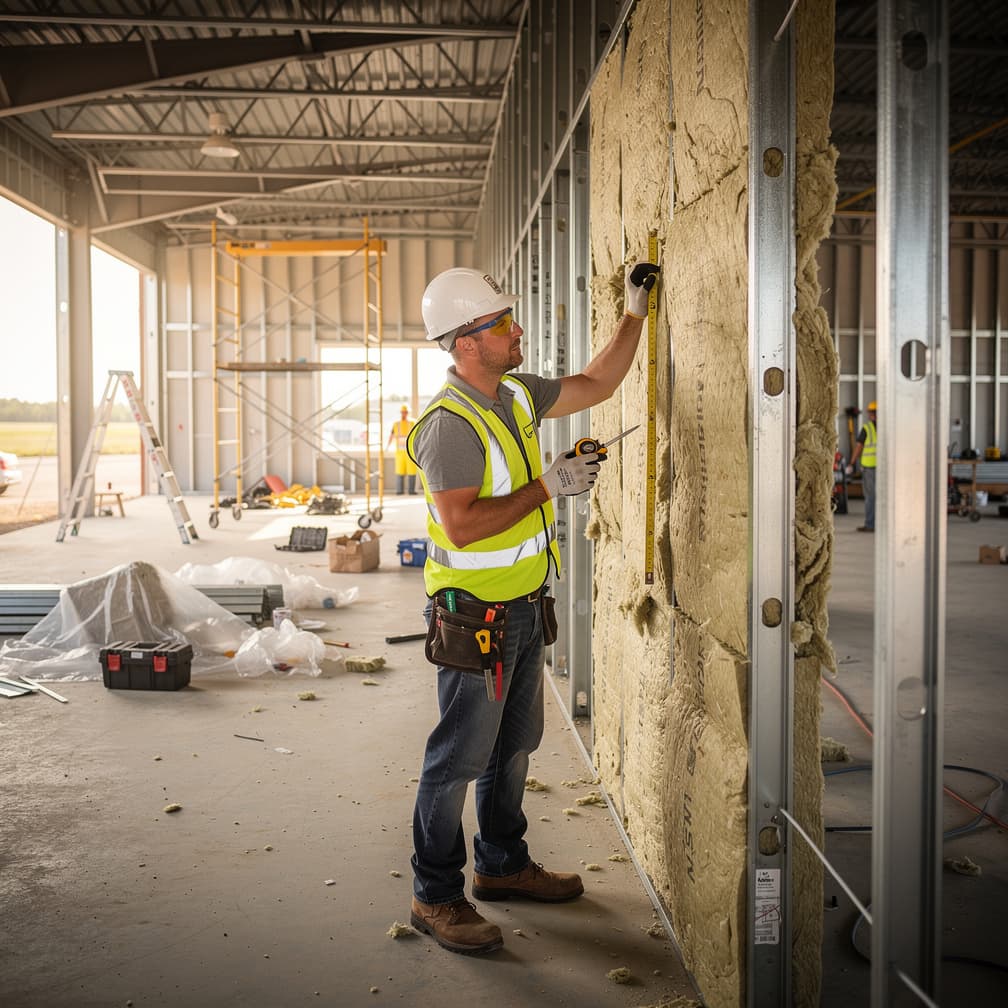

The about 4,700 businesses in Butte County all operate inside buildings with insulation behind the walls, and none of that work stays visible once the drywall goes up. Invisibility is the risk in this trade: a claim usually surfaces long after your invoice was paid and your crew moved on. Anyone buying insulation contractor insurance in Chico should ask how the form treats a loss reported months after the job closed. Completed operations wording holds that answer, and it reads differently from one carrier to the next. A moisture problem blamed on a vapor barrier becomes a slow argument between three parties and their experts. The narrowest form argues the hardest. What follows is meant to make that wording legible before you sign.
What Makes Chico Different
Handshake jobs leave no insurance exhibit at all, which feels simpler right up until something breaks. Without a written scope, the argument after a damaged ceiling becomes your memory against the customer's memory. Carriers defend claims with documents, and a job with no documents is a job with no defense. A short written scope, a photo set, and a signed change order cost nothing at all to produce. They also tell an adjuster what you were hired to do and what you never once touched. On Butte County work that crosses into other trades' areas, that boundary is the entire question later. Whose hose, whose ladder, whose ceiling: the file either answers those questions or it does not. Write it down before the job in Chico starts, because nobody reconstructs it fairly afterward.
Local Risk Factors in Chico
Ask where your material sits relative to fire risk before you sign a lease on a yard, because the answer can change what a policy costs and whether one is available at all. Carriers in California have pulled back in some areas, and availability is a real constraint rather than a pricing detail. If your shop in Chico is hard to insure, the honest fix is where you keep things rather than which form you buy. Vehicles are more forgiving, since a truck can be moved and a building cannot. Confirm the details with the California Department of Insurance.
What Coverage Does an Insulation Contractor in Chico Need?
General Liability
Builders, property managers, and permit offices ask for this one by name before a crew gets on site. It can help cover third-party bodily injury and damage your work does to somebody else's property, from a cracked ceiling to a scratched hardwood floor. Redoing your own faulty installation generally sits outside it, and that boundary decides most disputes.
Example: A hose drags across a homeowner's stair rail on the way to the attic and pulls it off the wall. The repair claim may fall to this policy.
Workers Compensation
Where liability coverage looks after other people, this line looks after your own crew. Medical treatment and lost wages tied to a jobsite injury, or to an illness linked to insulation handling, are typically what it addresses. It rates against payroll and gets audited at year end. Whether an owner is included depends on California.
Example: An installer working a summer attic goes down with heat illness and spends the night in a hospital. The treatment and the missed weeks are commonly handled here.
Commercial Auto
A pickup pulling a trailer of batts is doing business work, and a personal policy usually stops applying the moment it does. This line is meant for the vehicles you own or hire: liability after a collision, damage to the truck itself where that coverage was purchased, and the crew riding along. Mechanical breakdown typically sits outside it.
Example: Your driver misjudges a turn with a loaded trailer and clips a parked car outside a job in Chico. Repairs to both vehicles could be addressed under this coverage.
Commercial Umbrella
Limits, rather than gaps, are what this one addresses. It sits above General Liability and Commercial Auto and generally comes into play only once one of those has run out, which is why a subcontract demanding high limits often makes it the practical answer. Whatever the underlying form excludes, it usually excludes as well.
Example: A serious highway collision leaves injuries that run past the limit on your auto policy. The remainder might be picked up by the layer sitting above it.
How Much Does Insulation Contractor Insurance Cost in Chico?
Insulation Contractor Insurance is a bundle of separate policies, priced separately. The ranges below are typical figures for Chico for each line, except workers compensation, which is rated per $100 of payroll; a quote prices each one against your own operations.
| Coverage | Typical range | What moves your price |
|---|---|---|
| General Liability Insurance | $200 - $650 per month | Industry and risk classification, annual revenue, number of employees |
| Workers Compensation Insurance | $0.75 - $2.74 per $100 of payroll | Employee classification codes, total annual payroll, experience modification rate |
| Commercial Auto Insurance | $280 - $800 per month | Fleet size and vehicle types, driver records and experience, coverage limits and deductibles |
| Commercial Umbrella Insurance | $95 - $300 per month | Umbrella limit requested, limits carried on the underlying policies, loss history on those underlying policies |
Prices shown are general estimates, not guaranteed rates or quotes. Your actual premium will depend on the insurer, coverage selected, business details, location, claims history, and other underwriting factors. Learn about our pricing methodology.
What Are the Insurance Requirements for an Insulation Contractor in Chico?
Workers' comp is generally required once you have your first employee. California generally requires employers to carry workers' compensation at that point. Common exemptions include sole proprietors and some partners. Confirm current thresholds with your state's workers' compensation agency before you hire.
State auto liability minimums apply to business vehicles. California's minimum auto liability limits are $30,000/$60,000/$15,000 (bodily injury per person / per accident / property damage). Contracts and lenders often require more than the state floor.
Where to verify licensing and coverage rules. The California Department of Insurance publishes consumer guidance and current insurance requirements for California businesses. When a contract or lease demands specific wording, the California Department of Insurance's guidance is the authoritative place to check.
Get Your Insulation Contractor Quote in Chico
Compare rates from multiple carriers. Free quotes, no obligation.
Operating in Chico
- A single ceiling repair can need drywall, paint, and a cleaning crew, and the vendors available in Butte County decide how long your customer stays angry while the claim sits open.
- Old attics hide knob and tube wiring, rodent damage, and framing nobody has looked at in decades. Documenting what you found before starting separates a claim you defend from one you simply lose.
- Trailers get rear ended more often than they get stolen, and a loaded trailer on a Chico street puts your material, your crew, and a stranger into the same accident report.
- Loss runs follow you between carriers. Three small claims from three scuffed ceilings can reprice your program for years, which is why the deductible you pick decides more than it appears to.
How to Buy: Advice for Chico Owners
Ask every quote one blunt question: what happens when the complaint is about the work itself? Faulty workmanship is the classic gap, and General Liability generally responds to damage your work causes rather than to redoing the work. A ceiling your crew wrecked and a wall cavity you filled badly are two different arguments, and only one of them is likely insurable. That distinction decides whether a callback is a warranty expense or a coverage question. Know it before a customer in Chico is standing in the hallway holding photographs. A Commercial Umbrella will not repair that gap either, since it only raises limits over what the underlying form already agrees to answer. The California Department of Insurance publishes consumer guidance on what standard business policies typically exclude. Compare forms from participating carriers on the exclusions first, then on price.
FAQ
Insulation Contractor Insurance in Chico: FAQ
Payroll rates the workers side of your program, so every added installer moves the number without anyone calling you. Classification matters too, since the rate attached to attic installation is not the rate attached to office work. The estimate you give at the start becomes an audit at the end, and the audit sets the real figure. Update that estimate midyear whenever the crew changes.
Per-occurrence is the ceiling on any single claim. The aggregate is a yearly tank that every claim drains, and three drywall repairs across a busy install season can empty a surprising share of it before anything serious happens. Once it is spent, the certificate you handed a builder months earlier still shows the original figure, and nobody notifies them. Ask where both numbers stand at renewal.
Yes, and most subcontracts do. Naming someone as an additional insured is an endorsement on your own policy rather than a line typed onto a certificate, and the two versions in circulation treat completed work differently. Because insulation claims usually surface long after the crew leaves, that difference matters more here than in trades whose work stays visible. If a builder in Chico demands the broader form, price it into the bid.
Two separate claims can open from the same second. The injured worker is a Workers Compensation matter, running on its own reporting rules and its own clock. The wrecked ceiling and whatever sat under it is third-party property damage, which is a liability question. Different adjusters and different forms handle them, even though it was one boot and one joist. Report both promptly instead of waiting to see how the repair goes.
Usually not. An empty calendar is a business problem, and standard forms are built around physical damage and liability rather than lost scheduling. If bagged material got soaked or a trailer was damaged, that is a property question with its own answer. The canceled days themselves come out of your margin. Build float into your bids rather than expecting a policy to absorb the season.
A deductible is your share of every loss, so a repair smaller than it produces no payment and still creates a record once you report it. A low deductible makes it tempting to turn minor drywall repairs into claims, and a string of small claims can cost more at renewal than the repairs would have. Decide the number that makes a loss worth reporting, then hold to it.
Sources
- 1.U.S. Census Bureau, County Business Patterns (2022), Butte County(Butte County has about 4,700 business establishments.)
- 2.California Department of Insurance(California Department of Insurance publishes consumer guidance for insurance buyers.)


