







































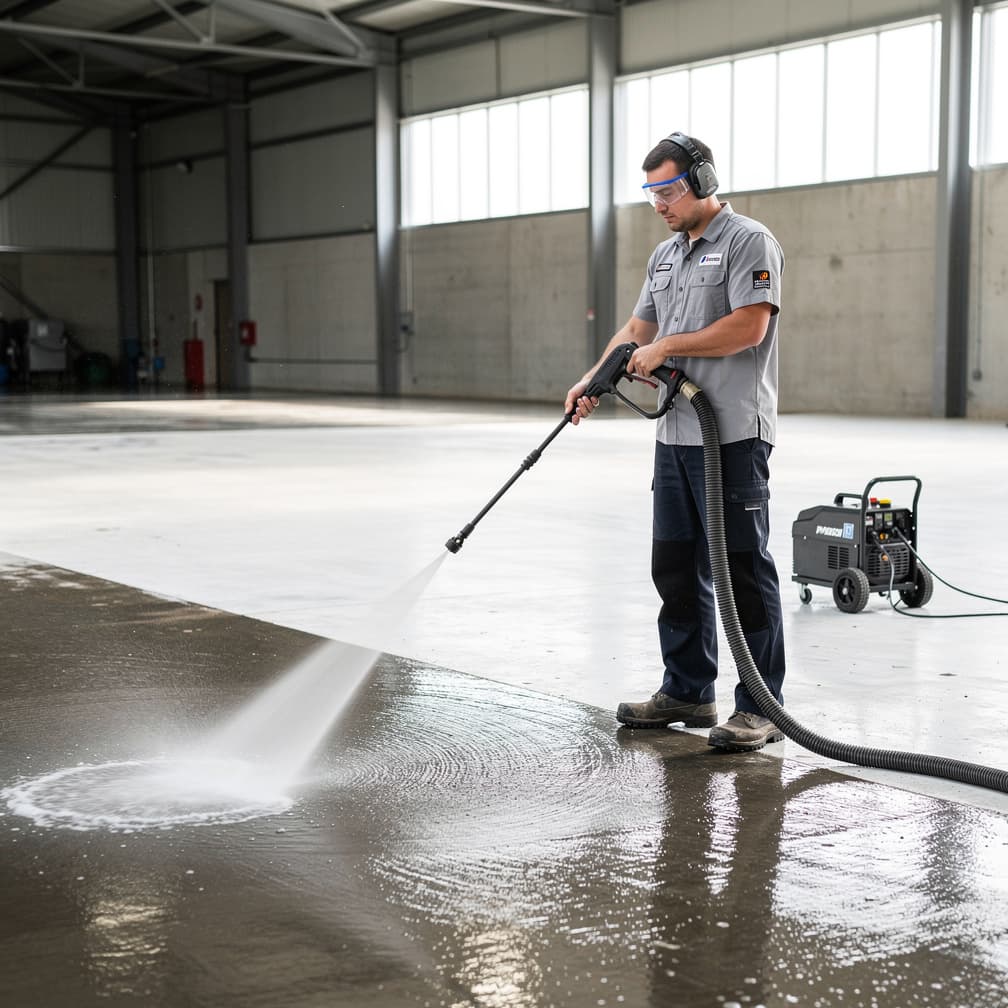

As a pressure washing business in Concord, you are paid to apply enough force to strip a surface without ruining it, and the margin between those two outcomes is measured in seconds. That single fact drives everything about pressure washing insurance in Concord. A held wand etches concrete. A wrong tip fuzzes cedar. Detergent that runs downhill finds a garden bed the client planted last season. None of those is negligence in the dramatic sense; all of them are claims. The policy question is whether a routine mistake stays a repair bill or turns into a lawsuit with your name on the caption. Limits, deductibles, and exclusions decide that, and they are the parts owners read last.
What Makes Concord Different
Every job you take places your equipment on ground somebody else controls and insures separately. Market size decides how often that ground belongs to a professional owner instead of a homeowner. Professional owners bring contracts; homeowners bring expectations, and the two fail in completely different ways. A homeowner in Concord can leave a review and withhold payment over an etched patio. A building owner can send a demand letter and copy their risk manager on it. The second path is where limits get tested and where a low deductible stops feeling clever. Knowing which mix you actually serve in Concord is the first honest input to a quote. Describe that mix accurately when you shop, because a mispriced policy is a claim-time problem.
Local Risk Factors in Concord
Before smoke season, look at where the trailer and the chemicals live, because a fuel and chemical load in an open yard is its own conversation. Fire is generally a covered peril on standard property forms, but equipment that moves between jobs is usually written on a separate line with its own rules about location. Those rules decide whether gear lost at a customer's site gets treated the same as gear lost at your yard. There is also a demand side: ash and soot cleanup fills a calendar fast, and a full calendar is when crews rush. Check the California Department of Insurance's guidance before deciding what your setup in California actually needs.
What Coverage Does a Pressure Washing in Concord Need?
General Liability
Third-party damage is the whole story here: the client's etched concrete, the neighbor's overspray-dusted car, the tenant who slips on an entry you just rinsed. Landlords and property managers demand this line before a work order releases. It typically will not answer for damage to the exact surface you were hired to clean, which is the exclusion worth asking about.
Example: A wand lingers a beat too long and a customer's stamped patio comes back swirled and permanent; the repair bill and the argument behind it are what General Liability may take on.
Commercial Auto
Your truck hauls a trailer, a tank, and everything that earns money, which is why personal auto policies commonly exclude the trip entirely. This line is meant for business vehicle use: collisions between jobs, damage to the truck, and liability when a loaded trailer is involved. Hired and non-owned wording matters when a helper drives their own car for supplies.
Example: A helper backs the trailer into a bollard at a strip center and clips a parked sedan on the way out; Commercial Auto is generally the line that picks up the vehicle damage.
Tools & Equipment (Inland Marine)
Pumps, hoses, reels, wands, tanks, and surface cleaners rarely sit still, and that movement is exactly what a standard property form handles poorly. Inland Marine is intended for gear in transit and at job sites, including theft from a locked trailer. Wear, mechanical breakdown, and a pump left full through a freeze usually fall outside it.
Example: The trailer is emptied overnight at a yard and the surface cleaner, two reels, and a spare pump are gone by first light; equipment coverage might fund the replacement.
Workers Compensation
Employees get hurt in ways your clients never see: a hot-water burn, a fall from a ladder at second-story siding, a back that gives out under a hose reel. This line is rated per $100 of payroll and is intended for medical costs and lost wages after a work injury. Requirements vary by state, so check the California Department of Insurance's guidance before deciding.
Example: A helper slips on a wet loading dock and fractures a wrist halfway through a soft-wash job; the medical bills and part of the lost pay are what Workers Compensation is meant to handle.
How Much Does Pressure Washing Insurance Cost in Concord?
Pressure Washing Insurance is a bundle of separate policies, priced separately. The ranges below are typical figures for Concord for each line, except workers compensation, which is rated per $100 of payroll; a quote prices each one against your own operations.
| Coverage | Typical range | What moves your price |
|---|---|---|
| General Liability Insurance | $100 - $310 per month | Industry and risk classification, annual revenue, number of employees |
| Commercial Auto Insurance | $230 - $550 per month | Fleet size and vehicle types, driver records and experience, coverage limits and deductibles |
| Inland Marine Insurance | $25 - $100 per month | Total insured value of the scheduled property, type and age of the equipment, where it is stored and how far it travels |
| Workers Compensation Insurance | $0.75 - $2.74 per $100 of payroll | Employee classification codes, total annual payroll, experience modification rate |
Prices shown are general estimates, not guaranteed rates or quotes. Your actual premium will depend on the insurer, coverage selected, business details, location, claims history, and other underwriting factors. Learn about our pricing methodology.
What Are the Insurance Requirements for a Pressure Washing in Concord?
Workers' comp is generally required once you have your first employee. California generally requires employers to carry workers' compensation at that point. Common exemptions include sole proprietors and some partners. Confirm current thresholds with your state's workers' compensation agency before you hire.
State auto liability minimums apply to business vehicles. California's minimum auto liability limits are $30,000/$60,000/$15,000 (bodily injury per person / per accident / property damage). Contracts and lenders often require more than the state floor.
Where to verify licensing and coverage rules. The California Department of Insurance publishes consumer guidance and current insurance requirements for California businesses. When a contract or lease demands specific wording, the California Department of Insurance's guidance is the authoritative place to check.
Get Your Pressure Washing Quote in Concord
Compare rates from multiple carriers. Free quotes, no obligation.
Operating in Concord
- Vendor packets in Concord can demand additional insured status, primary and non-contributory wording, and a waiver of subrogation, and the person sending it has no authority to drop any of it.
- Chemical choice is a coverage question, not only a cleaning question, since a detergent that lifts algae off a walkway also kills a client's border planting on the way to the drain.
- A general contractor can put you on a Concord site under their insurance exhibit, which means the project sets your limits and endorsements, and your preferences stop mattering that day.
- Hot surfaces flash chemicals off faster, so crews reapply, dwell times drift, and painted siding starts giving up its finish, which is the quiet way a wash becomes a repair bill.
How to Buy: Advice for Concord Owners
Payroll is the input that decides two different bills, so get it right once. Workers Compensation is rated per $100 of payroll and trued up at audit, which means a low estimate is a loan you repay later with nothing saved. Classify honestly: the person on the wand and the person driving are not always the same class. If you use subcontractors in Concord, collect their certificates and keep them, because uninsured subs are commonly treated as your payroll when the auditor arrives. That single filing habit can change a renewal more than shopping does. General Liability audits can work the same way when the policy is rated on revenue or payroll. The California Department of Insurance publishes the current requirements for employer coverage in your state, and the rules genuinely vary. Then compare quotes from participating carriers using the same payroll figures on every submission.
FAQ
Pressure Washing Insurance in Concord: FAQ
That depends on where the trailer sat and how the policy defines it. Inland Marine is generally the line built for pumps, hoses, reels, wands, and surface cleaners that move between jobs, and theft from a locked trailer is a common peril under it. Some policies treat gear at a fixed yard differently from gear in transit. Read the location wording and the deductible together before you assume a trailer parked in Concord qualifies.
You request it from whoever issued the policy, and you give them the exact entity name, address, and limit wording the client demanded. Certificates are documents that describe coverage; they do not create it, which is why the endorsements behind them matter more. A mismatch between the requested wording and what your policy carries gets the certificate bounced back. Build the request into your onboarding so a crew never waits on paperwork.
Sometimes, and pollution wording is where it turns. A General Liability policy may treat killed plantings as property damage, but many forms carry pollution exclusions that can catch chemical runoff depending on how it is worded and where the water went. A storm drain is not a flower bed in a claims file. Describe your chemicals honestly at quote time and ask specifically how runoff is handled.
Yes, and that request is usually non-negotiable because the person delivering it did not write it. Lease exhibits and vendor packets set minimum limits, required endorsements, and notice terms, and they were drafted to protect the building. If a landlord in Concord demands a limit above your policy, you either raise it or lose the account. Ask what the higher limit costs before you assume it is out of reach.
Revenue, payroll by role, years in business, your loss history, a vehicle and driver list, and an equipment inventory. Then the details that actually move the price: which surfaces you agree to work on, whether you go above one story, what chemicals you use, and where the trailer sits overnight. Vague answers produce vague policies. Send the same package to every participating carrier in California so the quotes stay comparable.
That is the claim General Liability exists for, and it is the most common one in this trade. A wet surface you created, a person who never hired you, and an injury is textbook third-party bodily injury. Whether a claim gets paid turns on the facts and the policy wording, not on whether you set a cone out, though the cone helps your defense. Defense costs can start before anyone decides fault.
Sources
- 1.California Department of Insurance(California Department of Insurance publishes consumer guidance for insurance buyers.)


