







































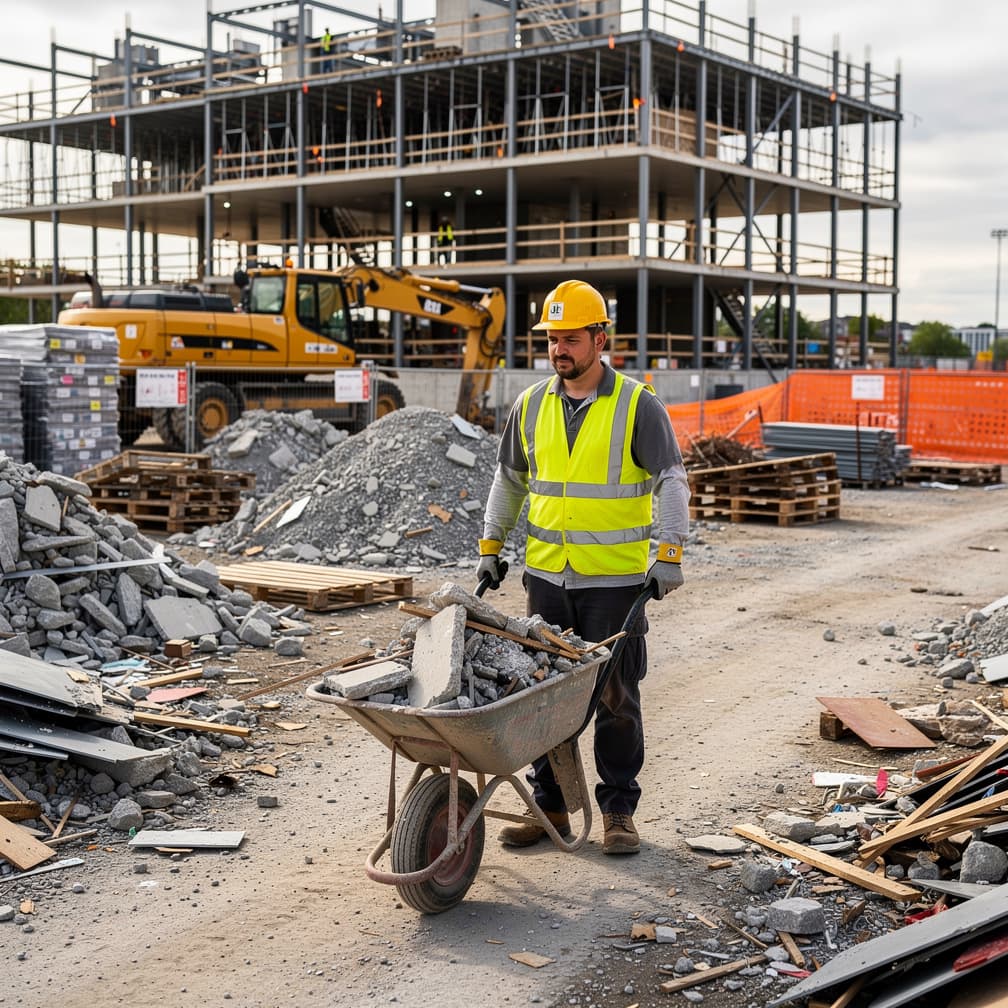

General liability for a debris removal outfit commonly starts around $35 a month, which is small next to one driveway replacement. Cost is rarely the reason owners delay, though. The reason is that nobody demands proof until the morning work is supposed to start, and then a property manager asks for a certificate and the job waits. Debris removal insurance in Corona is priced mostly on payroll, vehicles, and what you haul, so two outfits doing identical work can land in different rate territory. Claims history outweighs all of it after the first year. Gather your driver list and payroll figures first, then put identical limits in front of participating carriers in California, because a smaller number on smaller limits was never actually cheaper.
What Makes Corona Different
Rates in a metro market absorb what your competitors do, because class pricing pools everyone together. About 45,500 business establishments crowd Riverside County, and crowded roads are where hauling losses actually happen. Traffic density, tight alleys, and street parking all sit behind the vehicle number on your quote. You cannot change the traffic, but you can change who drives and how carefully you hire. Motor vehicle records are the lever underwriters actually respond to on this class of business. Pull them before you quote, and be ready to explain anything a carrier will find anyway. A driver you keep for convenience can cost more than the job that driver is running. That trade-off is worth pricing honestly, and comparing quotes is how you see the real number.
Local Risk Factors in Corona
Wildfire cleanup is a specialty that looks like ordinary hauling until you read the rules. Burned material can carry contaminants, ash handling has its own requirements, and a claim alleging improper disposal after a fire cleanup arrives long after the truck left. General Liability may respond to a third-party disposal allegation depending on the exclusions, and the pollution language is exactly where those claims live, so read it rather than assume it. Smoke also closes roads and stalls work in Riverside County for reasons no schedule anticipated. Ask participating carriers in California whether the work you are being asked to do is contemplated by the policy you already hold.
What Coverage Does a Debris Removal in Corona Need?
General Liability
Property managers, general contractors, and municipal clerks ask for this one by name before a truck reaches the site. It can help cover third-party injury and property damage arising out of your work: a cracked driveway, a neighbor's fence, a slip at a residential cleanout. Damage to your own loader and injuries to your own crew sit outside it.
Example: Your crew drags a loaded container across a homeowner's driveway in Corona and cracks the apron in three places. The repair estimate lands a week later, and the policy may take the claim subject to your deductible.
Commercial Auto
Miles are the exposure here. Trucks and trailers running between a demolition job and a disposal facility sit outside what a liability form addresses, and this line is meant to answer for the collision, the injuries, and the damage your vehicle does to others. Rating follows units, gross weight, radius, and driver records. Cargo riding on the trailer usually raises separate questions.
Example: A loaded trailer clips a parked sedan while backing out of a tight alley, and the owner's repair estimate runs to a door and a quarter panel. That claim would typically be handled here.
Workers Compensation
A helper who slips on wet plywood at a cleanout needs medical care, and this is the line built to answer for it. It can pay for treatment and lost wages for injured employees, and it generally limits your exposure to the injury lawsuit that might otherwise follow. Rating runs on payroll by job class, so a driver, a laborer, and an operator price differently. Requirements vary by state.
Example: An operator wrenches a shoulder forcing a frozen pile onto a trailer and misses six weeks of work. Medical bills and a share of the lost wages might be picked up under this line, subject to the state's rules.
Commercial Umbrella
Primary limits are finite, and a loaded truck meeting a passenger car is where a debris hauler finds the edge of them. This line sits above General Liability and Commercial Auto, adding limit once an underlying policy is exhausted. Municipal and demolition contracts frequently demand figures a small program cannot reach alone. It follows the underlying forms, so their exclusions usually carry upward.
Example: An intersection collision with your grapple truck injures two people, and the demands exceed what the vehicle policy holds. The excess layer above it could pick up what remains, depending on how the tower was built.
How Much Does Debris Removal Insurance Cost in Corona?
Debris Removal Insurance is a bundle of separate policies, priced separately. The ranges below are typical figures for Corona for each line, except workers compensation, which is rated per $100 of payroll; a quote prices each one against your own operations.
| Coverage | Typical range | What moves your price |
|---|---|---|
| General Liability Insurance | $280 - $850 per month | Industry and risk classification, annual revenue, number of employees |
| Commercial Auto Insurance | $600 - $1,625 per month | Fleet size and vehicle types, driver records and experience, coverage limits and deductibles |
| Workers Compensation Insurance | $0.75 - $2.74 per $100 of payroll | Employee classification codes, total annual payroll, experience modification rate |
| Commercial Umbrella Insurance | $140 - $480 per month | Umbrella limit requested, limits carried on the underlying policies, loss history on those underlying policies |
Prices shown are general estimates, not guaranteed rates or quotes. Your actual premium will depend on the insurer, coverage selected, business details, location, claims history, and other underwriting factors. Learn about our pricing methodology.
What Are the Insurance Requirements for a Debris Removal in Corona?
Workers' comp is generally required once you have your first employee. California generally requires employers to carry workers' compensation at that point. Common exemptions include sole proprietors and some partners. Confirm current thresholds with your state's workers' compensation agency before you hire.
State auto liability minimums apply to business vehicles. California's minimum auto liability limits are $30,000/$60,000/$15,000 (bodily injury per person / per accident / property damage). Contracts and lenders often require more than the state floor.
Where to verify licensing and coverage rules. The California Department of Insurance publishes consumer guidance and current insurance requirements for California businesses. When a contract or lease demands specific wording, the California Department of Insurance's guidance is the authoritative place to check.
Get Your Debris Removal Quote in Corona
Compare rates from multiple carriers. Free quotes, no obligation.
Operating in Corona
- Your renewal date and your contract start dates rarely line up, and the three days between them stay invisible until a Corona customer asks for current proof.
- Keeping a driver with old violations feels easier than replacing one, right up until an underwriter pulls the records and prices your entire fleet around that history.
- Gate attendants at disposal facilities in California check paperwork before they check the load, and an expired certificate stops the truck with a full box still behind it.
- A property manager can hold your invoice until a current certificate names the management company, so a lapsed policy in Corona costs you cash flow before it ever costs you a claim.
How to Buy: Advice for Corona Owners
A demolition subcontract is a different animal from a residential cleanout, and it should change what you buy. The general contractor above you passes limits requirements down the chain, often asking for additional-insured status for the owner and the construction manager as well. Those requests land on General Liability, and the same contract usually names a Commercial Auto figure because your trucks sit on their site. Read what is being asked before you bid, and price the difference into the job. The California Department of Insurance publishes consumer guidance on commercial liability coverage, which is useful before you accept a contract's terms. When the exhibit is clear, ask participating carriers for a quote that matches it exactly, and let a Corona bid be won on margin rather than on a coverage gamble.
FAQ
Debris Removal Insurance in Corona: FAQ
It means another party gets some protection under your policy for claims arising out of your work. Owners, property managers, and general contractors ask for it so a claim from your crew's mistake reaches your policy before theirs. The wording matters: some endorsements apply only while you are on site, and others reach work you already completed. Ask which one you have before you sign a contract promising the broader version.
Anyone can bring a claim, and dust or falling material drifting onto adjoining property is a routine complaint in this trade. General Liability can respond to third-party property damage depending on the facts and the policy's exclusions, and it commonly funds the defense as well. Control measures help more than coverage does: wetting the pile, screening the load, and photographing the neighbor's property before you start. Read the pollution language, since it varies.
Generally not. The lines on this page address injuries and damage you cause to other people, plus the vehicles you drive; your own loader, grapple attachment, or mini excavator is property, and property coverage is a separate purchase. Owners discover this after a theft from an open lot or a hydraulic failure. Ask each quote what happens to an owned machine, and get the answer in writing.
That depends on the carrier, and it is worth asking before you need one. Certificates are usually routine once a policy is active; the delay is usually the endorsement behind them, since additional-insured wording has to be added to the policy itself. Ask for the endorsement at the same time you ask for the certificate. A job start date is a poor moment to learn your carrier's process.
Usually higher limits and more specific wording. Public agencies tend to demand additional-insured status, sometimes waivers of subrogation, and proof that stays current across the whole term. Those limits can push a small operation from a primary policy alone into a Commercial Umbrella, and that cost belongs in the bid. Read the insurance exhibit before you price the work, because the requirement is not negotiable after you win a Corona contract.
Per-occurrence is the most one incident can draw; aggregate is the ceiling for the whole policy term. A hauler can reach that ceiling faster than most trades, because one loading-area accident can produce separate demands from the customer, the property owner, and the neighbor, and a busy year stacks small driveway repairs on top of it. Once the aggregate is spent, later claims sit on you. Contracts often name both figures, so read which one is being demanded.
Sources
- 1.U.S. Census Bureau, County Business Patterns (2022), Riverside County(Riverside County has about 45,500 business establishments.)
- 2.California Department of Insurance(California Department of Insurance publishes consumer guidance for insurance buyers.)


