







































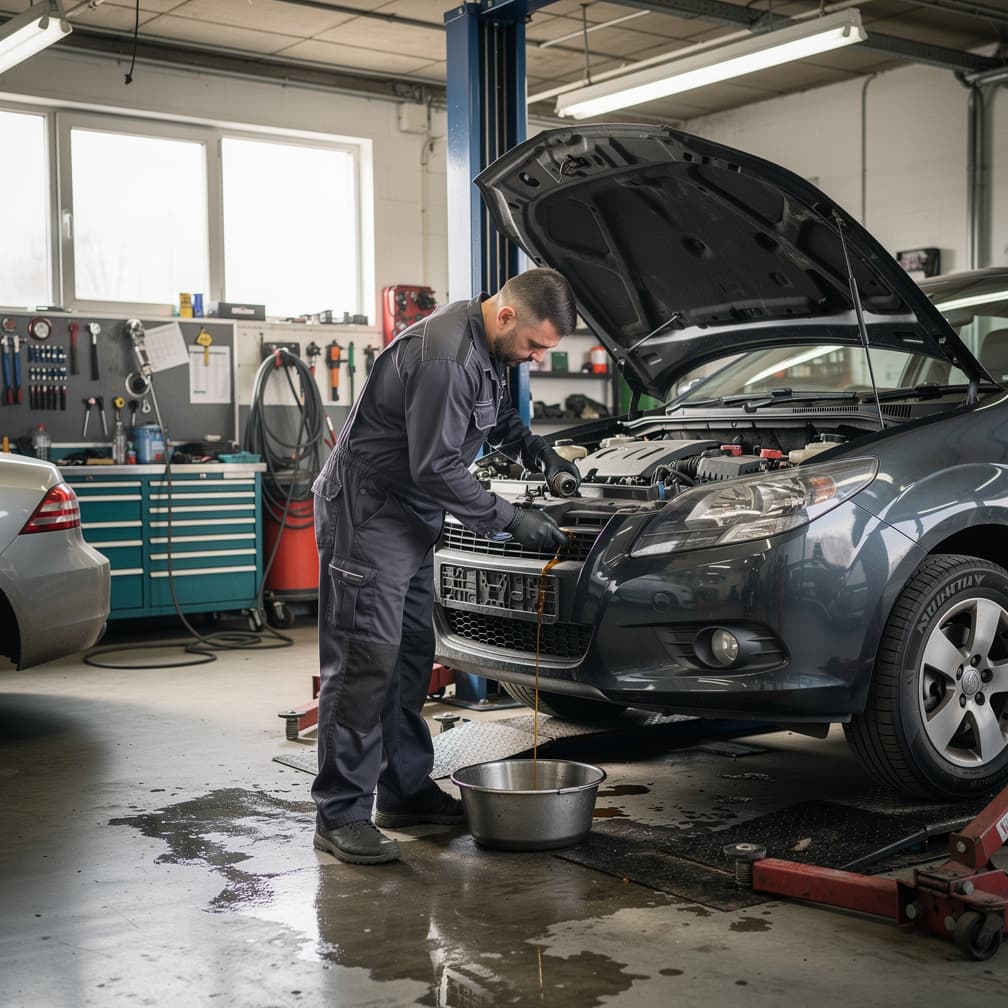

As an oil change station in El Cajon, every technician you hire changes what a claim can cost you. Lifting a wheel, wrestling a seized filter, breathing solvent in a closed bay, and walking on concrete that is never entirely dry are the ordinary ways this work hurts people. Payroll is also the number a workers compensation quote is built on, so one hire moves both sides of the ledger. Oil change station insurance in El Cajon should be priced with an honest payroll figure and an honest description of duties, because a guessed classification unwinds at audit. Underwriters check the class code, and the year-end audit corrects whatever you understated. Keep hour records and job descriptions where you can find them. Then compare quotes from participating carriers in California using the same payroll for each.
What Makes El Cajon Different
A big commercial base attracts more participating carriers willing to write shop risks like yours. San Diego County counts about 93,000 business establishments, so the appetite to quote small shops there tends to be broad. More appetite means more spread between the first quote you see and the fourth one. It does not mean every quote carries the same form, and the differences hide in the exclusions. One carrier may treat customer vehicles in your care one way and another may exclude them outright. Read the care, custody, and control language in each quote before you compare monthly figures. That single clause decides who pays when a car is damaged on your lift. Shopping in a deep market only pays if you compare the same limits and the same wording.
Local Risk Factors in El Cajon
Evacuation orders do not care whether your building burns. A shop closed for a week because the road is shut has no revenue, a full payroll, and customer cars it cannot release to anybody. Terms around lost income usually want physical damage at your own premises first, and a civil authority clause, where one exists, tends to run for a short period only. Meanwhile the vehicles in your lot belong to people who want them back. Decide now how you would release them and where the keys and records live. Ask what a participating carrier in California needs from an El Cajon shop to support a closure claim before smoke makes it real.
What Coverage Does an Oil Change Station in El Cajon Need?
General Liability
Landlords, franchise brands, and fleet accounts ask for this one by name, and it answers to the public rather than to you. Third party bodily injury and property damage arising from your operations sit inside it, subject to the limits you buy. Damage to a customer's vehicle in your care usually does not, and neither does pollution.
Example: A customer leaves the waiting area, crosses a patch of fresh oil near the bay door, and lands hard on the concrete. A claim like that is typically where this coverage starts working.
Commercial Property
Lifts, pumps, compressors, air lines, the parts shelf, the waiting room, and your inventory of oil and filters are what this line is built around, plus the building itself if you own it. The values you state at purchase drive what a partial loss settles at. Flood and ordinary wear typically sit outside it.
Example: Fire starts in an electrical panel behind the parts wall overnight and takes the shelving, the stock, and a compressor with it. A loss on that scale is generally what this line is meant to answer.
Workers Compensation
Your customers are somebody else's problem here; this line concerns only the people on your payroll. Medical care and lost wages after a technician is hurt lifting a wheel, handling hot fluid, or moving a car are what it is intended for. Who must carry it varies by state, and the California Department of Insurance publishes the current requirements.
Example: A technician wrestling a seized drain plug wrenches a shoulder and misses three weeks of shifts. The wage and medical side of that absence is what this coverage commonly picks up.
Business Owners Policy
Rather than buying liability and property separately, a smaller shop can take them as one package, often with a limited amount of lost income folded in. Many quick lube operations qualify, though fluid storage or building size can push a shop out of it. The sub-limits inside the package are where the real reading lives.
Example: A storm tears the canopy off the apron and closes both bays for nine days in El Cajon. The repairs and some of the income you did not earn can fall inside one package like this.
How Much Does Oil Change Station Insurance Cost in El Cajon?
Oil Change Station Insurance is a bundle of separate policies, priced separately. The ranges below are typical figures for El Cajon for each line, except workers compensation, which is rated per $100 of payroll; a quote prices each one against your own operations.
| Coverage | Typical range | What moves your price |
|---|---|---|
| General Liability Insurance | $110 - $380 per month | Industry and risk classification, annual revenue, number of employees |
| Commercial Property Insurance | $200 - $675 per month | Building value and construction type, roof age and condition, fire protection class |
| Workers Compensation Insurance | $0.75 - $2.74 per $100 of payroll | Employee classification codes, total annual payroll, experience modification rate |
| Business Owners Policy Insurance | $200 - $625 per month | Annual revenue and industry class, building and contents values, square footage and building age |
Prices shown are general estimates, not guaranteed rates or quotes. Your actual premium will depend on the insurer, coverage selected, business details, location, claims history, and other underwriting factors. Learn about our pricing methodology.
What Are the Insurance Requirements for an Oil Change Station in El Cajon?
Workers' comp is generally required once you have your first employee. California generally requires employers to carry workers' compensation at that point. Common exemptions include sole proprietors and some partners. Confirm current thresholds with your state's workers' compensation agency before you hire.
Flood damage is typically excluded from standard policies. Standard commercial property and builders-risk-type policies typically exclude flood damage. Flood exposure varies address by address, so check your premises in FEMA's Flood Map Service Center before deciding; if you sit in a mapped flood zone, a separate policy through the National Flood Insurance Program is the usual starting point.
Where to verify licensing and coverage rules. The California Department of Insurance publishes consumer guidance and current insurance requirements for California businesses. When a contract or lease demands specific wording, the California Department of Insurance's guidance is the authoritative place to check.
Get Your Oil Change Station Quote in El Cajon
Compare rates from multiple carriers. Free quotes, no obligation.
Operating in El Cajon
- Photographing a vehicle before it enters the bay takes eleven seconds and settles arguments that would otherwise run for months. Adjusters believe timestamps and they do not believe recollections, and neither does the customer's attorney.
- You may share a parking lot with tenants who have nothing to do with cars. A customer's vehicle dinged out there still becomes your conversation, and an El Cajon lease may already say whose insurance answers first.
- A franchise brand can audit your signage, your process, and your certificate of insurance in the same visit. The insurance article of that agreement usually names limits you cannot quietly drop at renewal.
- In a strip of units, your neighbor's fire becomes your fire, and your fluid storage makes you the neighbor everyone else worries about. Ask how the walls between units are rated before you accept a property quote in California.
How to Buy: Advice for El Cajon Owners
Read the exclusions first and the coverage summary second. In this trade the exclusions that matter are the ones about property in your care, about pollution, and about damage to the very part you were working on. A car damaged on your lift, oil that reaches a storm drain, and a filter you seated wrong are three separate arguments with three separate answers. General Liability typically excludes damage to your own work, which surprises owners the first time a claim comes back on those grounds. Commercial Property keeps its own list, and flood and earth movement usually sit outside it entirely. Ask each quote for an El Cajon shop to show you the exclusion pages rather than the brochure. Then compare quotes from participating carriers in California on what survives the exclusions, because that is the part you are actually buying.
FAQ
Oil Change Station Insurance in El Cajon: FAQ
Per occurrence is the most a policy might pay for one claim. The aggregate is the ceiling across the whole policy term, and it does not reset because a second car got damaged in the same year. A shop with two serious losses can finish the year on whatever is left. When a lease names both numbers, that is exactly why.
Sometimes, and rarely by default. Sudden mechanical or electrical breakdown is typically handled by an equipment breakdown endorsement rather than by a base property form, which is written around fire, wind, and similar causes. Ordinary wear, rust, and a part that simply reached the end of its life are usually excluded either way. Ask what triggers the endorsement before a busy week in El Cajon tests it.
Payroll split by job duty, annual revenue, bay count, the age of the building, its construction and roof, whether sprinklers exist, the value of your lifts and pumps, how used oil is stored, who hauls it away, and three to five years of loss runs. An El Cajon address is the least interesting line on the form. With the file ready, one submission can reach several participating carriers at once.
That is a pollution question, and pollution is where standard liability forms turn narrow. Most general liability policies exclude the discharge of pollutants, with limited exceptions, so cleanup costs can land squarely on you. Some carriers offer a separate form or an endorsement. Ask before there is anything to clean up, and keep your disposal contract and tank records somewhere you can find them.
Generally no. Standard property forms typically exclude flood, and it is written and priced separately, often through the federal program. That gap matters in a shop with a floor drain, a waste tank, and electrical equipment sitting low to the ground. Check what your policy calls flood against what it calls water damage from a burst line, because those are different perils with different answers in California.
The audit finds it. Workers compensation premium is built on actual payroll, so an estimate is only a placeholder until the year gets reconciled, and the difference arrives as a bill nobody budgeted. Filing a technician as counter staff ends the same way, usually with less patience attached. Report the real figures and let participating carriers in California price the real shop.
Sources
- 1.U.S. Census Bureau, County Business Patterns (2022), San Diego County(San Diego County has about 93,000 business establishments.)
- 2.California Department of Insurance(California Department of Insurance publishes consumer guidance for insurance buyers.)
- 3.FEMA / FloodSmart(Flood coverage is typically purchased separately; FEMA administers the National Flood Insurance Program.)


