







































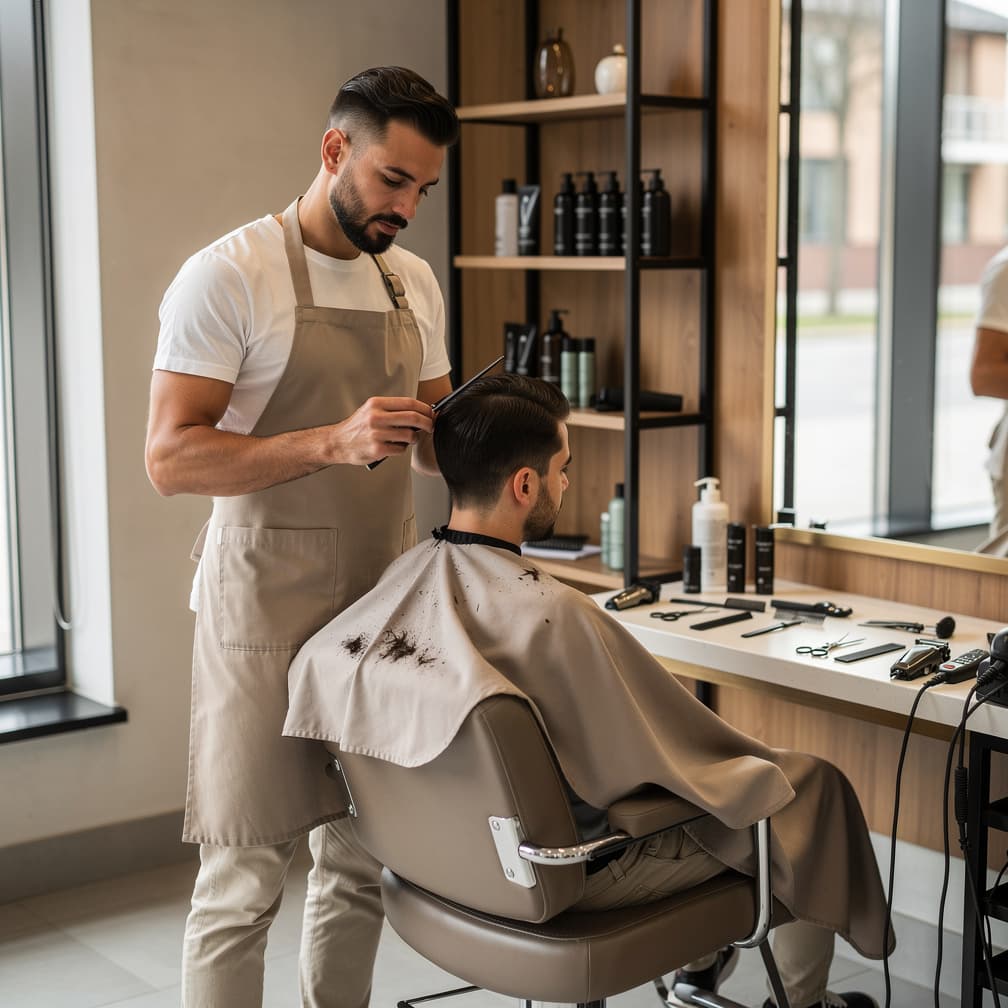

Running a barber shop in Fairfield where the nearest real competitor sits across Solano County puts your reputation and your revenue in the same chair. Barber shop insurance in Fairfield matters most in a market like that, because one disputed chemical service can pull clients out of a book that took a decade to fill. The policy will not fix that. It can keep the legal cost of a single complaint from deciding whether you open next month. Equipment loss cuts the same way where vendors are scarce, since a replacement sink or a rebuilt station waits on whoever will drive out to install it. Ask what a quote says about the days you are closed, not only about the things you replace. Then read a few side by side before you commit.
What Makes Fairfield Different
A thin market changes recovery time far more than it changes the odds of a loss. One fire in a Solano County storefront can wait on the only contractor who does buildouts nearby. Every week the doors stay closed is income nobody reimburses unless the policy was written for it. Equipment is the same story: a station, a bowl, and a mirrored wall get ordered, not stocked. Adjusters covering a rural territory carry more files and drive farther between each of them. None of that shortens a repair, and none of it shows up in a premium quote. Ask what a policy in California says about the closed weeks, not only the broken things. The answer to that question is worth more here than any discount you could negotiate.
Local Risk Factors in Fairfield
Wildfire reaches most barber shops as smoke rather than flame. Smoke gets into towels, capes, product, upholstery, and the ventilation, and a personal-care space that smells like a fire does not open for business. Smoke damage is a real property loss and is often harder to settle than a burn, because the argument becomes cleaning versus replacing. Commercial Property may respond to both the contents and the cleanup, subject to your deductible and to how the form treats smoke from a fire that never touched the building. Air quality that keeps a Fairfield block indoors for a week is a different problem, since a closure with no damage typically triggers nothing at all in California.
What Coverage Does a Barber Shop in Fairfield Need?
General Liability
Landlords, property managers, and booking platforms ask for this one by name, because a client injured inside your shop becomes their problem otherwise. General Liability is designed for third-party bodily injury and property damage: the slip near the shampoo bowl, the nick from a razor, the coffee cup knocked onto somebody's laptop. It typically does not answer for injuries to your own staff.
Example: A client crosses the wet strip between the bowl and the chair, goes down hard, and leaves with an injured wrist and a lawyer; general liability can help cover the defense and the claim.
Professional Liability
Where General Liability stops is roughly where this one starts. A client who says the color was wrong, the treatment burned her scalp, or the recommendation itself was an error is disputing your judgment rather than pointing at a hazard on the floor. Professional Liability is meant for that argument, defense costs included. Shops offering chemical services are the ones underwriters ask about first.
Example: Three days after a relaxer, a client returns with a raw scalp and the claim that the product was wrong for her hair; professional liability may respond to the dispute that follows.
Commercial Property
Stations, mirrors, clippers, shampoo bowls, the flooring, and the buildout tying them together are most of what you own. Commercial Property may help cover fire, theft, vandalism, and sudden water damage inside that room, subject to your deductible. Flood typically sits outside it and gets priced on its own, and wear and tear reads as maintenance rather than as a loss.
Example: A break-in overnight in Fairfield strips three stations of clippers and shears and leaves the front glass in pieces; commercial property is intended to address both the equipment and the door.
Workers Compensation
If barbers sit on your payroll rather than renting chairs, this is the line state rules usually reach for first. Workers Compensation is intended for employee injuries and the wage loss that follows: a cut hand, a back strained lifting a case of product, a fall in the back room. It is rated against payroll rather than sold at a flat price.
Example: A barber carrying towels through the back of the shop slips and misses a month with a torn shoulder; workers compensation can help with the medical bills and the lost wages, depending on the state.
How Much Does Barber Shop Insurance Cost in Fairfield?
Barber Shop Insurance is a bundle of separate policies, priced separately. The ranges below are typical figures for Fairfield for each line, except workers compensation, which is rated per $100 of payroll; a quote prices each one against your own operations.
| Coverage | Typical range | What moves your price |
|---|---|---|
| General Liability Insurance | $50 - $150 per month | Industry and risk classification, annual revenue, number of employees |
| Professional Liability Insurance | $35 - $130 per month | The services you actually perform, annual revenue or billed fees, limit and retention selected |
| Commercial Property Insurance | $100 - $340 per month | Building value and construction type, roof age and condition, fire protection class |
| Workers Compensation Insurance | $0.75 - $2.74 per $100 of payroll | Employee classification codes, total annual payroll, experience modification rate |
Prices shown are general estimates, not guaranteed rates or quotes. Your actual premium will depend on the insurer, coverage selected, business details, location, claims history, and other underwriting factors. Learn about our pricing methodology.
What Are the Insurance Requirements for a Barber Shop in Fairfield?
Workers' comp is generally required once you have your first employee. California generally requires employers to carry workers' compensation at that point. Common exemptions include sole proprietors and some partners. Confirm current thresholds with your state's workers' compensation agency before you hire.
Flood damage is typically excluded from standard policies. Standard commercial property and builders-risk-type policies typically exclude flood damage. Flood exposure varies address by address, so check your premises in FEMA's Flood Map Service Center before deciding; if you sit in a mapped flood zone, a separate policy through the National Flood Insurance Program is the usual starting point.
Where to verify licensing and coverage rules. The California Department of Insurance publishes consumer guidance and current insurance requirements for California businesses. When a contract or lease demands specific wording, the California Department of Insurance's guidance is the authoritative place to check.
Get Your Barber Shop Quote in Fairfield
Compare rates from multiple carriers. Free quotes, no obligation.
Operating in Fairfield
- Clippers, trimmers, and shears walk out of shops more often than owners admit, usually during business hours and usually carried by someone who looked exactly like a client.
- The wet path between the shampoo bowl and the chair is the busiest strip of floor in the shop, and it is where the injury claims that reach your policy tend to begin.
- Booth renters bring their own clients, their own products, and their own liability into your room, and none of it transfers to their policy just because you assumed it had.
- A client who reacts to a chemical service rarely complains that day. The call comes two or three days later, once the redness sets in and someone at home says to phone a lawyer.
How to Buy: Advice for Fairfield Owners
Limits and deductibles are the two dials you actually control, and they pull in opposite directions. A higher property deductible drops the premium and hands you more of every small loss, which is fine only if the shop can absorb it without borrowing. Limits work the other way: the number matters exactly once, on the worst day, and that is a bad day to learn it was chosen to hit a price. Ask what General Liability limit your lease demands, then ask whether that same number would answer a serious injury claim from a wet floor. If those answers differ, buy the larger one. Commercial Property limits should track a full rebuild of the Fairfield space. The California Department of Insurance publishes consumer guidance on comparing commercial policies. Run both dials at two settings with participating carriers and read the resulting quotes side by side.
FAQ
Barber Shop Insurance in Fairfield: FAQ
The shop's policy was written for the shop, and it was not written for you. A client who says your razor caused an injury is making a claim about your work, and the owner's carrier has every reason to point in your direction. Renters commonly carry their own General Liability for that reason, and many chair agreements require it in writing. It is also the first thing a landlord asks for if you take your own space.
Payroll, revenue, the list of services you offer, a replacement value for equipment and buildout, and your loss run from the last few years. Occupancy details matter too: square footage, whether you own or lease, and how many chairs are rented rather than staffed. Accurate answers make quotes comparable. Guessed answers make them noise, and they hand a carrier in California something to point at during a claim.
Yes, and most commercial leases do. Naming a landlord as an additional insured extends your policy to defend them for claims arising out of your operations, which is a genuine transfer of risk onto you. Broad wording can pull your carrier into disputes that have little to do with haircuts, such as a slip in the shared hallway. If a lease in Fairfield demands it, read the endorsement's exact wording before signing.
Theft of equipment from your premises is normally a property question, and Commercial Property may respond, subject to the deductible you chose. That deductible is why the answer often disappoints: a set of clippers can be worth less than the deductible, which leaves the whole loss with you. Property forms also treat wear and tear as maintenance rather than a claim, so a clipper that simply dies is your expense.
A complaint about the result of a service, rather than about a physical injury, generally reads as a professional liability matter. Professional Liability is intended for that exact argument: that your judgment or your service choice was the error. A refund and an apology settle most of them, and the ones that do not tend to arrive with a lawyer attached. Whether a policy responds turns on how the claim is framed.
Look inside the shop before you look at the market. A clean loss run does more than any negotiation, and it gets built from mats, signage, patch testing, written consent, and an incident log nobody skips. Deductibles are the lever you control directly, though raising one only makes sense if you can absorb a small loss without borrowing. Then compare quotes from participating carriers in California rather than renewing out of habit.
Sources
- 1.California Department of Insurance(California Department of Insurance publishes consumer guidance for insurance buyers.)
- 2.FEMA / FloodSmart(Flood coverage is typically purchased separately; FEMA administers the National Flood Insurance Program.)


