







































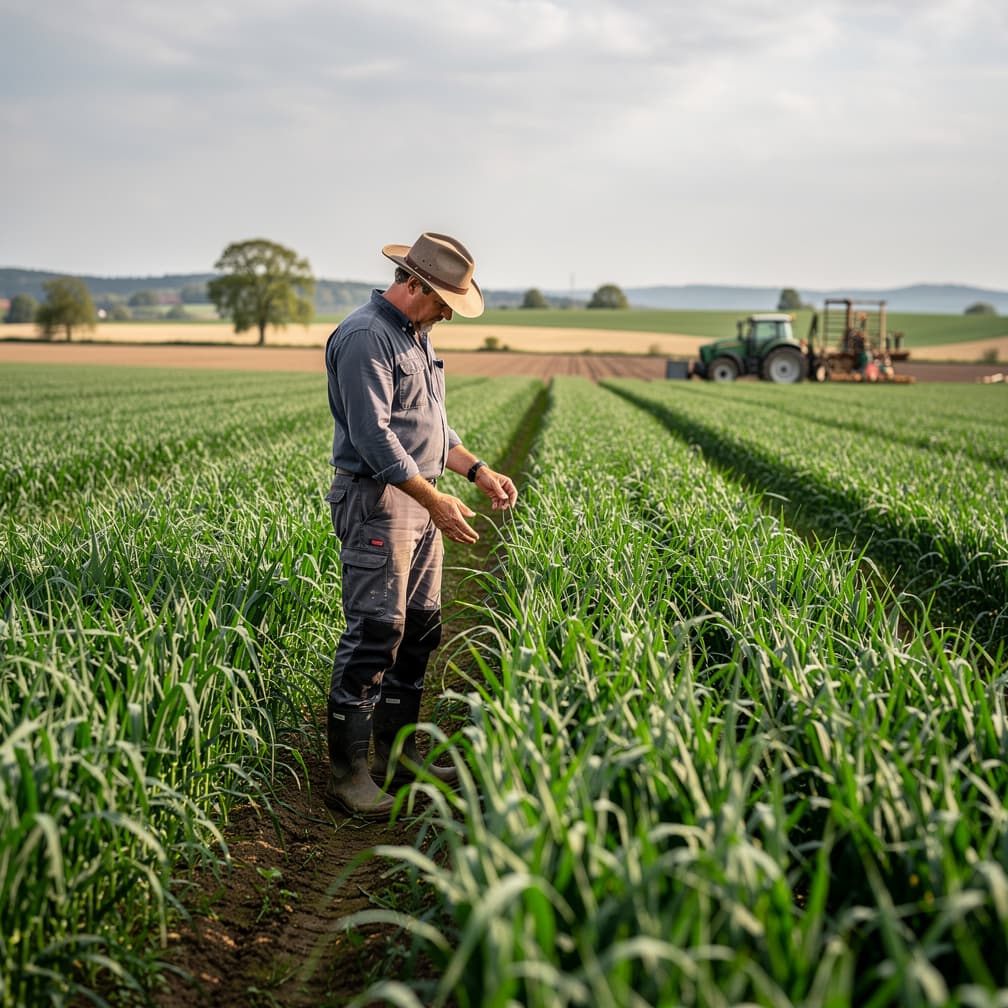

As a farm in Fremont, your paperwork problem is mostly other people's paperwork. Every buyer, packer, equipment dealer, and property manager runs a template agreement, and those templates carry insurance requirements written for businesses that look nothing like yours. Additional insured wording drafted for a warehouse still binds you the moment you sign it. With about 42,000 businesses in Alameda County, the odds that two counterparties want incompatible things on one certificate stop being theoretical. Farm insurance in Fremont has to satisfy the risk on the ground and the clauses in the drawer at the same time. Pull every active agreement before you shop. The requirement you overlooked is the one that stalls a load at the gate.
What Makes Fremont Different
A storm week breaks things, and then it stops the calendar you built the season around. The repair itself is often minor while the delay behind it is what costs real money. Ask any policy question about weather in terms of time, not only in terms of damage. Does the form say anything about lost use of a machine while it waits for parts? In a dense county, parts and crews sit closer, so that wait tends to be shorter. Participating carriers in California weigh that, and it is worth raising on the application. Weather also reshapes liability, because wet ground turns an ordinary yard into a slip claim waiting. A visitor to a Fremont operation after three days of rain is a different exposure entirely.
Local Risk Factors in Fremont
Clear the ground around every structure before the dry stretch and photograph the result, because defensible space is something underwriters ask about and adjusters look for. Wildfire underwriting in California has tightened, and appetite for exposed rural property can shift between one renewal and the next. That makes early comparison more valuable than usual, since a form quoted last year may not be quoted this year. Ask what the policy says about brush clearance, water access, and outbuilding construction, because those answers often change the terms offered. Then confirm which of your assets are actually scheduled, since a fence line and a windbreak are property too, and an owner in Fremont can easily find that neither is listed.
What Coverage Does a Farm in Fremont Need?
General Liability
Buyers, lessors, and co-ops ask for this one by name before they sign anything. It generally answers third-party claims: a visitor hurt at the fence line, a vendor who goes down in the yard, damage your operation causes to someone else's property. Injuries to your own crew sit elsewhere, and so does damage to your own machinery.
Example: A feed delivery driver steps out onto wet concrete, goes down hard, and his employer's insurer sends the medical bill your way. That is a third-party claim General Liability may be asked to answer.
Commercial Property
Flood, wear and tear, and the crop standing in the field usually sit outside this form, which is the fastest way to understand what is inside it. Barns, sheds, grain bins, shops, stored inputs, and fixed equipment are the property it typically addresses against sudden accidental damage. A lender financing a structure will often require it.
Example: Wind peels sheeting off a machine shed and rain reaches the tools underneath overnight. With the building and its contents scheduled at current values, commercial property coverage could pick up the repair.
Commercial Auto
A personal auto policy may limit or exclude business use, which is where this line starts. Farm trucks hauling feed, grain, or livestock, plus the trailers behind them, generally belong here, along with the hired hands who drive them. Hired and non-owned use is a separate question worth asking, since a borrowed trailer is a common gap.
Example: A grain truck rolls a stop sign on the way to the elevator and clips a car. The other driver's injuries and vehicle damage are the kind of loss Commercial Auto typically exists to take on.
Workers Compensation
Payroll is the meter this one runs on, at a rate per $100 of it. When a hired hand is hurt clearing an auger or lifting feed, this is the road that claim travels, and it typically addresses medical treatment and lost wages under rules that vary by state. Family labor and independent contractors classify differently, and getting that wrong is expensive at audit.
Example: An auger jams, a seasonal hand reaches in to clear it, and one emergency room visit turns into six weeks off the job. Workers Compensation is usually the line that answers an employee injury like that.
Tools & Equipment (Inland Marine)
Machinery that moves is machinery a building policy may stop following. Tractors, harvesters, portable pumps, augers, welders, and hand tools generally sit on this schedule, listed by model, serial number, and value. Watch the sub-limits for property left in the open and for theft, and ask whether mechanical breakdown is included, because it often is not.
Example: A portable pump disappears from a back field overnight, along with the fuel can beside it. Photographed serial numbers and a current schedule are what let an equipment claim in Fremont go anywhere at all.
How Much Does Farm Insurance Cost in Fremont?
Farm Insurance is a bundle of separate policies, priced separately. The ranges below are typical figures for Fremont for each line, except workers compensation, which is rated per $100 of payroll; a quote prices each one against your own operations.
| Coverage | Typical range | What moves your price |
|---|---|---|
| General Liability Insurance | $100 - $360 per month | Industry and risk classification, annual revenue, number of employees |
| Commercial Property Insurance | $350 - $1,375 per month | Building value and construction type, roof age and condition, fire protection class |
| Commercial Auto Insurance | $240 - $750 per month | Fleet size and vehicle types, driver records and experience, coverage limits and deductibles |
| Workers Compensation Insurance | $0.75 - $2.74 per $100 of payroll | Employee classification codes, total annual payroll, experience modification rate |
| Inland Marine Insurance | $100 - $420 per month | Total insured value of the scheduled property, type and age of the equipment, where it is stored and how far it travels |
Prices shown are general estimates, not guaranteed rates or quotes. Your actual premium will depend on the insurer, coverage selected, business details, location, claims history, and other underwriting factors. Learn about our pricing methodology.
What Are the Insurance Requirements for a Farm in Fremont?
Workers' comp is generally required once you have your first employee. California generally requires employers to carry workers' compensation at that point. Common exemptions include sole proprietors and some partners. Confirm current thresholds with your state's workers' compensation agency before you hire.
State auto liability minimums apply to business vehicles. California's minimum auto liability limits are $30,000/$60,000/$15,000 (bodily injury per person / per accident / property damage). Contracts and lenders often require more than the state floor.
Flood damage is typically excluded from standard policies. Standard commercial property and builders-risk-type policies typically exclude flood damage. Flood exposure varies address by address, so check your premises in FEMA's Flood Map Service Center before deciding; if you sit in a mapped flood zone, a separate policy through the National Flood Insurance Program is the usual starting point.
Where to verify licensing and coverage rules. The California Department of Insurance publishes consumer guidance and current insurance requirements for California businesses. When a contract or lease demands specific wording, the California Department of Insurance's guidance is the authoritative place to check.
Get Your Farm Quote in Fremont
Compare rates from multiple carriers. Free quotes, no obligation.
Operating in Fremont
- Grain buyers and processors run their compliance folders on renewal dates, so an expired certificate can hold a load at the scale house even when the policy behind it renewed on time.
- Fuel sitting in a yard tank is the easiest thing on a farm to steal, and a claim for it often runs straight into the sub-limit for property left in the open.
- A lender financing a combine for a Fremont operation can require proof of coverage and a loss payee endorsement for the life of the note, and it will notice the month you let it lapse.
- Custom harvest crews bring their own machines and their own insurance, and the certificate you forget to collect before the combine rolls becomes your problem the moment something breaks.
How to Buy: Advice for Fremont Owners
Ask your buyer for its insurance requirements in writing before you sign the supply agreement. A processor, a co-op, or a hauler will hand you limits, additional insured language, and sometimes a waiver of subrogation. Those three items decide whether the General Liability quote in front of you is usable at all. A cheap policy that cannot produce the endorsement is not cheap; it is unusable paperwork. Confirm the wording is available before you bind, and confirm it again at renewal when forms change. If the contract also touches hauling, the Commercial Auto side needs the same review. Take the requirements page itself to CPK and let participating carriers in California tell you which clauses they can actually meet on a Fremont submission.
FAQ
Farm Insurance in Fremont: FAQ
Payroll broken out by job type, an equipment schedule with model, year, serial number, and value, a vehicle list, acreage and what grows on it, herd counts, building values, and three to five years of loss runs. Missing pieces get estimated, and estimates get corrected at audit. A complete file in Alameda County is the difference between a quote and a guess.
Generally no. Property forms are usually built around sudden accidental physical damage, so gradual deterioration, rot, rust, and ordinary maintenance are commonly excluded. A storm that flattens a section is a different fact pattern than a section that sagged over five years. That boundary decides a lot of farm claims, so read the maintenance exclusions and budget for the upkeep separately.
Often, yes. Grain buyers, processors, co-ops, and haulers commonly ask for proof before a load moves, and many want to be listed as an additional insured. A certificate is generated from an active policy, so it cannot be produced any faster than coverage can be bound. Ask for the requirement in writing, then confirm your form supports the exact wording requested.
Payroll, reported building values, the machinery you schedule, acreage, what you raise, and your claim history. Public access moves it too, since visitors on working ground create a different picture than a closed operation does. Deductible and limit choices matter as well. Two farms with identical land can price far apart because one hires a crew and hosts buyers while the other does neither.
Usually not in the way owners expect. Commercial Property forms are generally built around buildings, contents, and sudden physical damage, and growing crops commonly sit outside that boundary. Weather loss to a standing crop is typically handled through separate arrangements. Read the schedule to see which assets are actually listed, and ask outright what happens to the crop after a storm.
It depends on the form. Inland Marine schedules often follow equipment away from the property, but coverage while a machine sits at a shop, or while it rides on a trailer, can be limited or excluded outright. Mechanical breakdown is a separate question from physical damage, and plenty of forms decline the first. Get that answer in writing before the machine leaves your gate.
Sources
- 1.U.S. Census Bureau, County Business Patterns (2022), Alameda County(Alameda County has about 42,000 business establishments.)
- 2.California Department of Insurance(California Department of Insurance publishes consumer guidance for insurance buyers.)
- 3.FEMA / FloodSmart(Flood coverage is typically purchased separately; FEMA administers the National Flood Insurance Program.)


