







































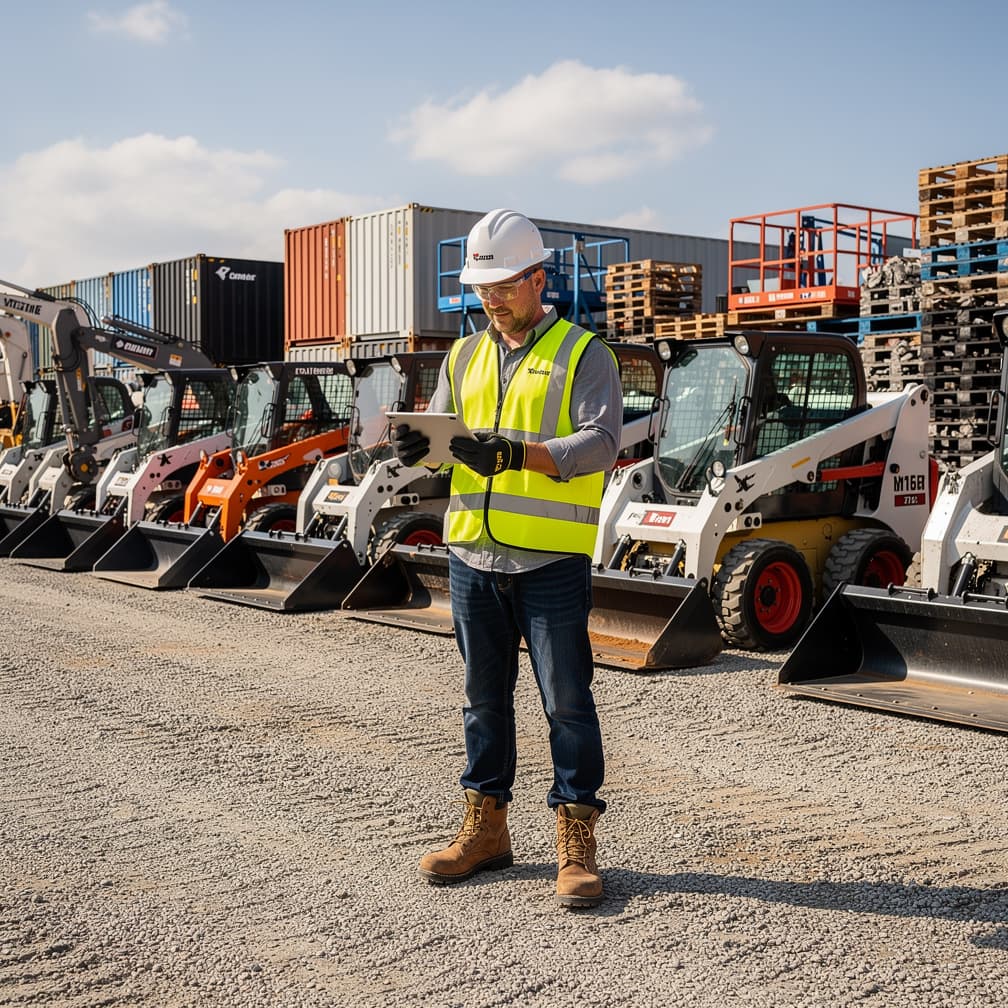

Cheap is easy to buy and expensive to own. A liability-only policy from $25 a month can look like a solved problem right up to the morning a loader is gone from a jobsite and nothing on your form has anything to say about it. Construction equipment rental insurance in Glendale is really several decisions bolted together: what limit your contracts demand, what the machines are worth, and what happens when one of them is wrecked in somebody else's hands. Underwriters in California price each of those separately. The line that answers a theft is not the line that answers a lawsuit, and buying one because it was cheap does not buy the other. Look at your equipment schedule and your signed contracts first. The quote should follow those, in that order.
What Makes Glendale Different
About 304,000 business establishments sit inside Los Angeles County, and that figure matters for one specific reason. Every construction, renovation, and facilities operation among them can rent a machine and bring its own contract. You are not negotiating with one customer type, you are absorbing whatever terms a hundred procurement departments wrote. The strictest of them sets your program, because no policy flexes rental agreement by rental agreement. That is why deep counties push limits upward faster than fleet growth ever would on its own. Underwriters see it too, and they price the mix of contracts as readily as the mix of machines. Bring your three toughest insurance exhibits to any quote conversation about Glendale work. They explain more about what you need than a description of your yard ever could.
Local Risk Factors in Glendale
Wildfire changes this trade's demand and its risk in the same week. Equipment gets pulled into fire lines, cut breaks, and cleanup work, and machines end up in smoke, heat, and terrain nobody planned to operate in. Smoke damage to cooling packages, filters, and electronics is real and surfaces later, which makes it an awkward claim to time. Fire is generally a named peril on property and equipment forms, so a scheduled unit lost to a burn may be addressed, subject to how it was stored and where it was working. Access closures are a separate matter: a machine you cannot reach in Los Angeles County is still on rent and still yours. Ask how a Glendale form handles equipment stranded behind a closure.
What Coverage Does a Construction Equipment Rental in Glendale Need?
General Liability
Contractors, landlords, and public project offices all demand proof of this one before a machine reaches the site. It is generally the line that answers third-party injury and property damage tied to your equipment, your delivery crew, and your yard. It typically does not address damage to the machines themselves, and the additional-insured wording a contract insists on lives here.
Example: A scissor lift your driver positions rolls slightly and gouges a finished stairwell. The contractor bills the repair to your company, and General Liability could pick up the property damage claim, deductible aside.
Commercial Property
The building, the shop, the parts room, the racking, and the office where your rental agreements live all sit under this form. It may respond to fire, wind, and other named perils at your address, subject to the deductible. Machines that leave the yard usually belong on an equipment form instead, and flood is typically excluded.
Example: A fire starts near the wash bay and takes the parts room and half the racking with it. Commercial Property might cover rebuilding the space and replacing what burned, depending on the cause of loss.
Tools & Equipment (Inland Marine)
Wear, mechanical breakdown, and a machine that simply aged out are not what this form exists for. What it can address is sudden, accidental loss to the units on your schedule: theft from a jobsite, damage in transit on a trailer, a unit tipped or crushed. Scheduling and storage terms decide most claims, so the list has to be right.
Example: A mini excavator disappears overnight from a job your driver delivered to at noon. If the unit was scheduled and the storage terms were met, that theft is the sort of loss an equipment form is meant to answer.
Commercial Auto
Unlike the equipment form, this one follows the vehicles: the trucks, trailers, and lowboys hauling iron out to jobs. Pricing runs off driver records, radius, and what you carry, and it can respond to liability and physical damage involving those vehicles. Where the machine on the trailer sits is a separate question, so ask how the two forms meet.
Example: Your lowboy rear-ends a car on the way to a delivery and the other driver claims an injury. Bodily injury and the wrecked vehicle typically fall to the auto policy rather than to the equipment form.
Commercial Umbrella
A contract demanding a combined limit your underlying policies cannot reach is usually why a rental company buys this. It sits above General Liability and commonly above the auto policy, extending limits rather than widening the form underneath. Minimum underlying limits are required, and a gap the base policy excludes generally stays a gap.
Example: A jobsite injury verdict runs past the liability limit your contract demanded, and the excess has to come from somewhere. That is where an umbrella would sit above the underlying limit, subject to its own terms.
How Much Does Construction Equipment Rental Insurance Cost in Glendale?
Construction Equipment Rental Insurance is a bundle of separate policies, priced separately. The ranges below are typical figures for Glendale for each line; a quote prices each one against your own operations.
| Coverage | Typical range | What moves your price |
|---|---|---|
| General Liability Insurance | $270 - $950 per month | Industry and risk classification, annual revenue, number of employees |
| Commercial Property Insurance | $300 - $1,075 per month | Building value and construction type, roof age and condition, fire protection class |
| Inland Marine Insurance | $575 - $2,200 per month | Total insured value of the scheduled property, type and age of the equipment, where it is stored and how far it travels |
| Commercial Auto Insurance | $400 - $1,200 per month | Fleet size and vehicle types, driver records and experience, coverage limits and deductibles |
| Commercial Umbrella Insurance | $140 - $525 per month | Umbrella limit requested, limits carried on the underlying policies, loss history on those underlying policies |
Prices shown are general estimates, not guaranteed rates or quotes. Your actual premium will depend on the insurer, coverage selected, business details, location, claims history, and other underwriting factors. Learn about our pricing methodology.
What Are the Insurance Requirements for a Construction Equipment Rental in Glendale?
Workers' comp is generally required once you have your first employee. California generally requires employers to carry workers' compensation at that point. Common exemptions include sole proprietors and some partners. Confirm current thresholds with your state's workers' compensation agency before you hire.
State auto liability minimums apply to business vehicles. California's minimum auto liability limits are $30,000/$60,000/$15,000 (bodily injury per person / per accident / property damage). Contracts and lenders often require more than the state floor.
Flood damage is typically excluded from standard policies. Standard commercial property and builders-risk-type policies typically exclude flood damage. Flood exposure varies address by address, so check your premises in FEMA's Flood Map Service Center before deciding; if you sit in a mapped flood zone, a separate policy through the National Flood Insurance Program is the usual starting point.
Where to verify licensing and coverage rules. The California Department of Insurance publishes consumer guidance and current insurance requirements for California businesses. When a contract or lease demands specific wording, the California Department of Insurance's guidance is the authoritative place to check.
Get Your Construction Equipment Rental Quote in Glendale
Compare rates from multiple carriers. Free quotes, no obligation.
Operating in Glendale
- A contractor in Glendale can name your company in a suit over damage on a site your crew left hours earlier, for no better reason than your name being painted on the machine.
- Loading and unloading is the moment when the truck, the trailer, and the machine all become one claim, and the policies behind each of them can read that moment very differently.
- Weekend rentals put compact machines into hands with no training and no site supervision, and the unit comes back at the start of the week with whatever happened to it in between.
- Certificates get requested at the last minute by email, and a request from a Glendale customer at eight in the morning is a machine that does not move until somebody answers it.
How to Buy: Advice for Glendale Owners
Certificates cost you jobs when they are late, so set the process up before you need it. Ask every new customer for the insurance requirement in writing at quote time, not at delivery time. Keep a running list of who has been named as additional insured, on which contract, and when that request expires. When a machine is heading to a job in Glendale, confirm the wording on file matches what the site is enforcing that week. A form number mismatch nobody read is an easy way to lose a morning. General Liability endorsements differ between carriers, so ask which form yours uses before you promise anything to a contractor. The California Department of Insurance publishes consumer guidance on how commercial policies are documented. Compare participating carriers on how easily they issue and amend certificates, because that is the part you use weekly.
FAQ
Construction Equipment Rental Insurance in Glendale: FAQ
Possibly, and the details decide it. An equipment form generally needs the unit listed on a schedule, and carriers often narrow what they pay out on a machine left unattended overnight, sometimes asking that it be immobilized or locked down. Where it sat, who held the keys, and what the police report says all get read. Ask for the exact unattended-equipment wording before a loader spends a night on a Glendale site.
Naming a contractor as additional insured pulls them under your liability policy for claims arising out of your equipment or your work. They want it because it puts your policy in front of theirs when something goes wrong near your machine. The endorsement forms vary in how broadly they read, and a contract often names a specific one. Ask which form your carrier uses before you promise the wording to anybody.
Yes, and it happens constantly. Insurance exhibits get written against project size rather than against the value of the machine you delivered, so a compact unit on a large job can carry very large requirements. You either raise limits, stack an umbrella on top, or decline the work. Reading the exhibit before you sign a Glendale project tells you which of those three you are choosing.
If the business owns trucks or trailers that haul machines, a personal auto policy is unlikely to answer for a business delivery. Commercial Auto gets priced off driver records, radius, and what rides behind the truck. Ask separately how the machine on the trailer is treated, because the vehicle policy and the equipment form can draw that line in different places, and the seam between them is where an in-transit claim stalls.
One machine, one incident, one per-occurrence limit: that is the ceiling on any single loss. The aggregate is what the policy might pay across the whole year, no matter how many machines are involved. A rental yard can meet three separate claims in one season, an injury near a lift, a scarred wall, a dispute over a delivery, and the aggregate is what runs out first. Ask where defense costs sit, because some forms let them erode the limit and others do not.
Generally not. Policies answer sudden, accidental events, and mechanical breakdown, wear, and gradual deterioration are usually excluded outright. A hose that fails from age is maintenance. A machine tipped over on a slope is a claim. That split decides which repairs belong in your budget rather than in a claim file, and it is the most useful boundary to understand before you compare quotes.
Sources
- 1.U.S. Census Bureau, County Business Patterns (2022), Los Angeles County(Los Angeles County has about 304,000 business establishments.)
- 2.California Department of Insurance(California Department of Insurance publishes consumer guidance for insurance buyers.)
- 3.FEMA / FloodSmart(Flood coverage is typically purchased separately; FEMA administers the National Flood Insurance Program.)


