







































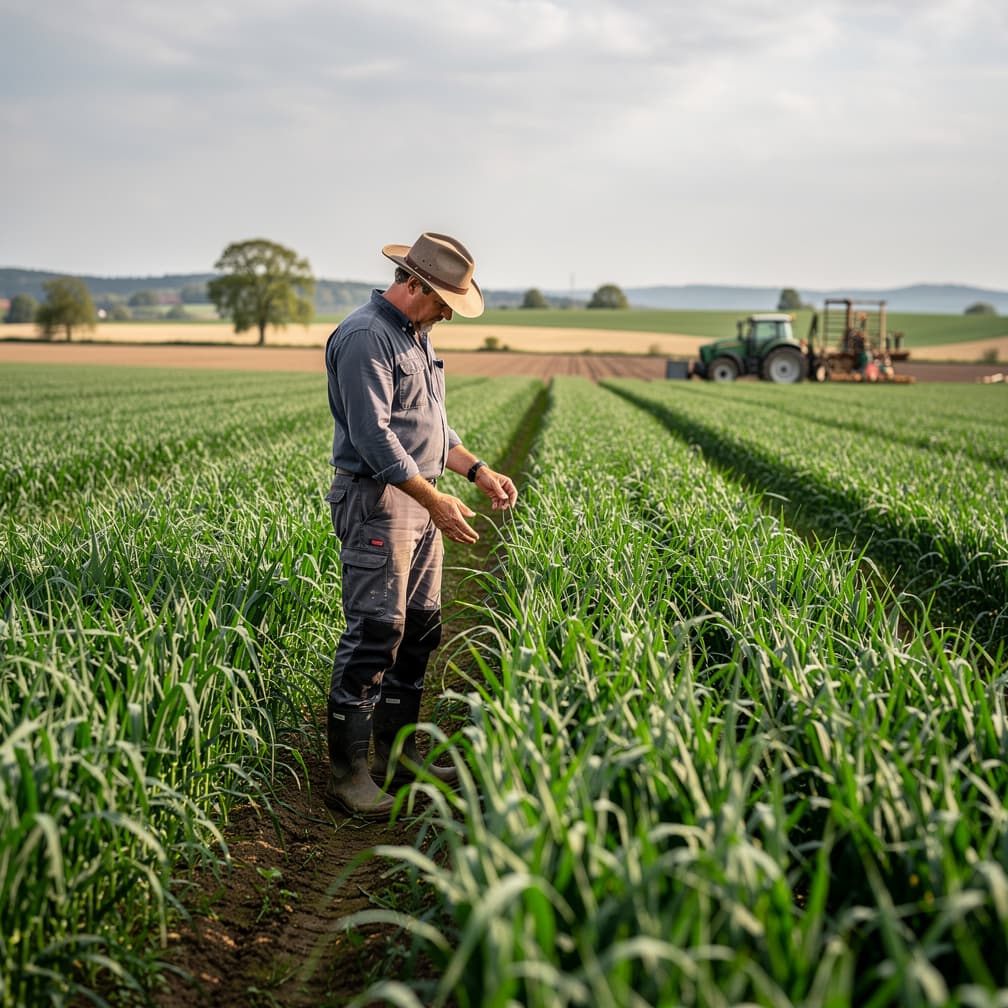

As a farm in Huntington Beach, the question that reshapes your whole policy is whether anyone actually works for you. Family labor, a seasonal crew, a neighbor helping with the harvest, and a contractor carrying his own paperwork all sit in different places on an application, and the rules governing them vary by state. Get the classification wrong and you buy the wrong product twice. Farm insurance in Huntington Beach starts with a headcount, moves to the property schedule, and ends with the limits your agreements demand. Participating carriers in California treat farm payroll differently from one another, so the same crew can price two ways on the same day. Write down who works for you, for how long, and under whose direction, then bring that page to every quote.
What Makes Huntington Beach Different
About 106,000 businesses in Orange County change who ends up on the claim, not how often claims happen. A denser economy means more vendors, more delivery drivers, and more contractors crossing your property. Each one arrives with a company behind it, and companies bring lawyers when someone gets hurt. A neighbor who trips near the barn may shrug it off; a delivery firm's insurer will not. Subrogation is the word for that, and it is why limits matter more in busy places. Density also shortens supply lines, which is the one thing working in your favor after a loss. Parts, adjusters, and repair shops sit closer, so downtime after equipment damage tends to run shorter. Price the liability side for the traffic you actually get and let proximity handle the rest.
Local Risk Factors in Huntington Beach
Wildfire moves through farm property faster than almost anywhere else, because the fuel is the product. Standing crop, hay in the field, stubble, windbreaks, and fence posts all burn, and a fire that never touches the barn can still take a season and every fence you own. Livestock losses come from smoke and from panic in confinement as much as from flame. Commercial Property may respond to fire damage to structures and contents, though the standing crop commonly sits outside that form. Smoke is its own argument, since carriers distinguish contamination from physical damage, and stored grain that smells like smoke is a hard claim to settle. Ask how smoke is treated on your form before the dry season reaches Huntington Beach, and confirm the wording with the California Department of Insurance's published guidance.
What Coverage Does a Farm in Huntington Beach Need?
General Liability
Buyers, lessors, and co-ops ask for this one by name before they sign anything. It generally answers third-party claims: a visitor hurt at the fence line, a vendor who goes down in the yard, damage your operation causes to someone else's property. Injuries to your own crew sit elsewhere, and so does damage to your own machinery.
Example: A feed delivery driver steps out onto wet concrete, goes down hard, and his employer's insurer sends the medical bill your way. That is a third-party claim General Liability may be asked to answer.
Commercial Property
Flood, wear and tear, and the crop standing in the field usually sit outside this form, which is the fastest way to understand what is inside it. Barns, sheds, grain bins, shops, stored inputs, and fixed equipment are the property it typically addresses against sudden accidental damage. A lender financing a structure will often require it.
Example: Wind peels sheeting off a machine shed and rain reaches the tools underneath overnight. With the building and its contents scheduled at current values, commercial property coverage could pick up the repair.
Commercial Auto
A personal auto policy may limit or exclude business use, which is where this line starts. Farm trucks hauling feed, grain, or livestock, plus the trailers behind them, generally belong here, along with the hired hands who drive them. Hired and non-owned use is a separate question worth asking, since a borrowed trailer is a common gap.
Example: A grain truck rolls a stop sign on the way to the elevator and clips a car. The other driver's injuries and vehicle damage are the kind of loss Commercial Auto typically exists to take on.
Workers Compensation
Payroll is the meter this one runs on, at a rate per $100 of it. When a hired hand is hurt clearing an auger or lifting feed, this is the road that claim travels, and it typically addresses medical treatment and lost wages under rules that vary by state. Family labor and independent contractors classify differently, and getting that wrong is expensive at audit.
Example: An auger jams, a seasonal hand reaches in to clear it, and one emergency room visit turns into six weeks off the job. Workers Compensation is usually the line that answers an employee injury like that.
Tools & Equipment (Inland Marine)
Machinery that moves is machinery a building policy may stop following. Tractors, harvesters, portable pumps, augers, welders, and hand tools generally sit on this schedule, listed by model, serial number, and value. Watch the sub-limits for property left in the open and for theft, and ask whether mechanical breakdown is included, because it often is not.
Example: A portable pump disappears from a back field overnight, along with the fuel can beside it. Photographed serial numbers and a current schedule are what let an equipment claim in Huntington Beach go anywhere at all.
How Much Does Farm Insurance Cost in Huntington Beach?
Farm Insurance is a bundle of separate policies, priced separately. The ranges below are typical figures for Huntington Beach for each line, except workers compensation, which is rated per $100 of payroll; a quote prices each one against your own operations.
| Coverage | Typical range | What moves your price |
|---|---|---|
| General Liability Insurance | $100 - $350 per month | Industry and risk classification, annual revenue, number of employees |
| Commercial Property Insurance | $340 - $1,325 per month | Building value and construction type, roof age and condition, fire protection class |
| Commercial Auto Insurance | $230 - $750 per month | Fleet size and vehicle types, driver records and experience, coverage limits and deductibles |
| Workers Compensation Insurance | $0.75 - $2.74 per $100 of payroll | Employee classification codes, total annual payroll, experience modification rate |
| Inland Marine Insurance | $95 - $400 per month | Total insured value of the scheduled property, type and age of the equipment, where it is stored and how far it travels |
Prices shown are general estimates, not guaranteed rates or quotes. Your actual premium will depend on the insurer, coverage selected, business details, location, claims history, and other underwriting factors. Learn about our pricing methodology.
What Are the Insurance Requirements for a Farm in Huntington Beach?
Workers' comp is generally required once you have your first employee. California generally requires employers to carry workers' compensation at that point. Common exemptions include sole proprietors and some partners. Confirm current thresholds with your state's workers' compensation agency before you hire.
State auto liability minimums apply to business vehicles. California's minimum auto liability limits are $30,000/$60,000/$15,000 (bodily injury per person / per accident / property damage). Contracts and lenders often require more than the state floor.
Flood damage is typically excluded from standard policies. Standard commercial property and builders-risk-type policies typically exclude flood damage. Flood exposure varies address by address, so check your premises in FEMA's Flood Map Service Center before deciding; if you sit in a mapped flood zone, a separate policy through the National Flood Insurance Program is the usual starting point.
Where to verify licensing and coverage rules. The California Department of Insurance publishes consumer guidance and current insurance requirements for California businesses. When a contract or lease demands specific wording, the California Department of Insurance's guidance is the authoritative place to check.
Get Your Farm Quote in Huntington Beach
Compare rates from multiple carriers. Free quotes, no obligation.
Operating in Huntington Beach
- A property manager behind a leased storage yard in Huntington Beach can withhold the keys until a certificate naming the right legal entity is sitting in the file.
- Serial numbers photographed before a theft are worth more than any adjective you use afterward, because a schedule that lists a pump generically settles like a generic pump.
- Harvest windows compress everything, so machinery that should be down for service keeps running, and the injuries in a farm claim file cluster in exactly those weeks.
- A neighbor helping load cattle for an afternoon can look like a favor and read like an employee on an application, and the rules governing that in California vary.
How to Buy: Advice for Huntington Beach Owners
Timing decides how good your options are. Shop in the quiet stretch before the season turns, when you have hours to answer underwriting questions properly and no load is waiting at the gate. Owners who shop under deadline take whatever binds fastest, and that policy tends to follow them for years. Give yourself sixty days: pull the loss runs, update the equipment schedule, confirm the headcount that drives Workers Compensation, list the trucks that drive Commercial Auto, and photograph every building. Check the California Department of Insurance's guidance before deciding whether your seasonal crew changes the answer. Then let CPK put your submission in front of participating carriers while there is still time to ask a second question. A farm in Huntington Beach that shops early is choosing; one that shops late is accepting.
FAQ
Farm Insurance in Huntington Beach: FAQ
Payroll broken out by job type, an equipment schedule with model, year, serial number, and value, a vehicle list, acreage and what grows on it, herd counts, building values, and three to five years of loss runs. Missing pieces get estimated, and estimates get corrected at audit. A complete file in Orange County is the difference between a quote and a guess.
Generally no. Property forms are usually built around sudden accidental physical damage, so gradual deterioration, rot, rust, and ordinary maintenance are commonly excluded. A storm that flattens a section is a different fact pattern than a section that sagged over five years. That boundary decides a lot of farm claims, so read the maintenance exclusions and budget for the upkeep separately.
Often, yes. Grain buyers, processors, co-ops, and haulers commonly ask for proof before a load moves, and many want to be listed as an additional insured. A certificate is generated from an active policy, so it cannot be produced any faster than coverage can be bound. Ask for the requirement in writing, then confirm your form supports the exact wording requested.
Payroll, reported building values, the machinery you schedule, acreage, what you raise, and your claim history. Public access moves it too, since visitors on working ground create a different picture than a closed operation does. Deductible and limit choices matter as well. Two farms with identical land can price far apart because one hires a crew and hosts buyers while the other does neither.
Usually not in the way owners expect. Commercial Property forms are generally built around buildings, contents, and sudden physical damage, and growing crops commonly sit outside that boundary. Weather loss to a standing crop is typically handled through separate arrangements. Read the schedule to see which assets are actually listed, and ask outright what happens to the crop after a storm.
It depends on the form. Inland Marine schedules often follow equipment away from the property, but coverage while a machine sits at a shop, or while it rides on a trailer, can be limited or excluded outright. Mechanical breakdown is a separate question from physical damage, and plenty of forms decline the first. Get that answer in writing before the machine leaves your gate.
Sources
- 1.U.S. Census Bureau, County Business Patterns (2022), Orange County(Orange County has about 106,000 business establishments.)
- 2.California Department of Insurance(California Department of Insurance publishes consumer guidance for insurance buyers.)
- 3.FEMA / FloodSmart(Flood coverage is typically purchased separately; FEMA administers the National Flood Insurance Program.)


