







































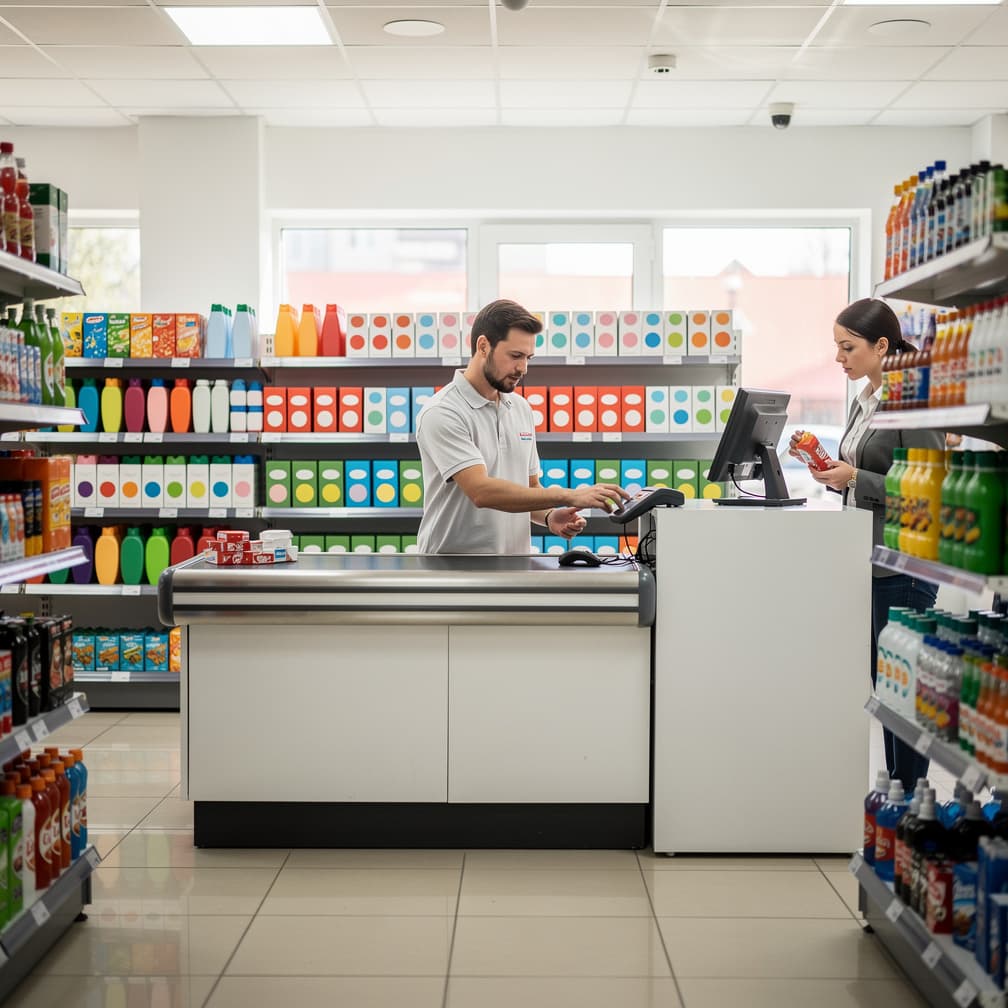

As a convenience store in Lancaster, your inventory is the most fragile occupant of your building. Milk, deli, frozen, and the coolers holding them all depend on power and on a compressor nobody thinks about until it stops. Convenience store insurance in Lancaster treats that stock differently from the shelves and fixtures around it, and spoilage terms are usually where the difference hides. A power outage, a failed unit, and a storm can reach the same case, and they do not all reach it through the same part of the contract. That is worth an hour with the actual forms. The published ranges here are a starting point; the sublimits are what decide your worst week.
What Makes Lancaster Different
Competition for staff decides more of your premium than competition for customers ever will. Turnover puts new people at the counter, on the floor, and near hot equipment every month. New hands make more mistakes, and Workers Compensation is rated on payroll and on job duties. A store in Lancaster that trains and documents that training gives an underwriter something to credit. Nothing on a California application asks how good your team is, and nothing rewards the answer. The application asks who does what, for how many hours, and at what hourly wage. Those three answers set the payroll basis, and the payroll basis drives most of the rate. Get them right before you shop, because a corrected basis at audit arrives as a bill.
Local Risk Factors in Lancaster
Defensible space and a clean lot are pricing, not paperwork. Carriers writing in exposed parts of California look hard at brush near a building, the roof material, and whether an engine could reach the store at all. Some pull out of a zone entirely and give very little notice before they do. A store in Lancaster shopping late in a bad season can find the field thinner than it was a year ago. Start early, and ask what would change if the vegetation beside the building came out. It is a rare question that comes back with an answer you can act on.
What Coverage Does a Convenience Store in Lancaster Need?
General Liability
A shopper goes down near the beverage station, and the medical bills arrive well before the lawsuit does. This is the line generally meant for third-party injury and property damage on your floor, and it is what a landlord names in a lease exhibit. It typically leaves out injuries to your own staff, which belong on workers compensation instead.
Example: A stack of cases tips as a customer reaches past it and she breaks a wrist; general liability can help cover the treatment and the claim her lawyer files afterward.
Commercial Property
Lenders and landlords ask for it, and the coolers, shelving, counters, and stock inside your walls are why you would want it regardless. It may respond to fire, wind, and theft damage to the building and the contents you own. Flood typically sits outside the form, and equipment that simply wore out reads as maintenance rather than a loss.
Example: Fire from an electrical fault in the back room chars the stockroom and smokes the shelves; commercial property may answer for the rebuild and for the inventory that came out with it.
Commercial Crime
Money is not inventory, and a standard property form treats it that way. This is the line usually written for stolen cash, lottery proceeds, forged instruments, and employee dishonesty, with separate limits for money on the premises and money in transit. Underwriters price the procedure behind the drawer rather than the balance in it, so a written closing routine carries weight.
Example: A trusted clerk voids sales for months and pockets the difference before a count in Lancaster finds the pattern; commercial crime could pick up the loss once it is documented.
Workers Compensation
Payroll is the basis and duties set the rate, which is why classifying each clerk and stocker matters more than headcount does. It is generally the line for on-the-job injuries: a back strained lifting cases, a hand cut breaking down cardboard, a fall inside a walk-in. Thresholds for who counts as an employee vary, and the California Department of Insurance publishes the current requirements for California.
Example: A stocker slips on a wet freezer floor and misses six weeks; workers compensation is designed to take on the medical care and part of the wages he loses while out.
Business Owners Policy
Where the property and liability sides get bought as two separate contracts, a package folds them into one and often prices better than the pieces do apart. For a small store it is a common starting structure. Workers compensation stays outside it, the crime limit inside tends to be modest, and spoilage may have to be added back by endorsement.
Example: A storm takes the sign down and a shopper trips over the debris the next morning in Lancaster; a business owners policy might handle both sides of that week under one claim number.
How Much Does Convenience Store Insurance Cost in Lancaster?
Convenience Store Insurance is a bundle of separate policies, priced separately. The ranges below are typical figures for Lancaster for each line, except workers compensation, which is rated per $100 of payroll; a quote prices each one against your own operations.
| Coverage | Typical range | What moves your price |
|---|---|---|
| General Liability Insurance | $100 - $330 per month | Industry and risk classification, annual revenue, number of employees |
| Commercial Property Insurance | $230 - $825 per month | Building value and construction type, roof age and condition, fire protection class |
| Commercial Crime Insurance | $30 - $120 per month | Employees who handle money or inventory, internal controls and separation of duties, funds and securities on hand |
| Workers Compensation Insurance | $0.75 - $2.74 per $100 of payroll | Employee classification codes, total annual payroll, experience modification rate |
| Business Owners Policy Insurance | $200 - $625 per month | Annual revenue and industry class, building and contents values, square footage and building age |
Prices shown are general estimates, not guaranteed rates or quotes. Your actual premium will depend on the insurer, coverage selected, business details, location, claims history, and other underwriting factors. Learn about our pricing methodology.
What Are the Insurance Requirements for a Convenience Store in Lancaster?
Workers' comp is generally required once you have your first employee. California generally requires employers to carry workers' compensation at that point. Common exemptions include sole proprietors and some partners. Confirm current thresholds with your state's workers' compensation agency before you hire.
Flood damage is typically excluded from standard policies. Standard commercial property and builders-risk-type policies typically exclude flood damage. Flood exposure varies address by address, so check your premises in FEMA's Flood Map Service Center before deciding; if you sit in a mapped flood zone, a separate policy through the National Flood Insurance Program is the usual starting point.
Where to verify licensing and coverage rules. The California Department of Insurance publishes consumer guidance and current insurance requirements for California businesses. When a contract or lease demands specific wording, the California Department of Insurance's guidance is the authoritative place to check.
Get Your Convenience Store Quote in Lancaster
Compare rates from multiple carriers. Free quotes, no obligation.
Operating in Lancaster
- Rules on who counts as an employee are set state by state, and a part-time clerk in California can sit on the wrong side of a threshold you were sure you understood.
- Fryer hoods need cleaning on a schedule, and the record of that cleaning is what an investigator asks for first. An undocumented hood turns a straightforward fire loss into an argument.
- Parking lot lighting becomes a premises question the moment it gets dark. A customer hurt between the door and a car in Lancaster is standing on your premises as far as a claim is concerned.
- Employee theft rarely arrives as one dramatic night. It shows up as a drawer reading short across months, which is why the date you discovered it can matter as much as the amount taken.
How to Buy: Advice for Lancaster Owners
Photograph everything before you shop. The coolers, the walk-in, the fryer if you have one, shelving, the counter, and the roof seen from your Lancaster parking lot. Commercial Property quotes rest on what you tell an underwriter is there and what replacing it would cost, and photos settle both questions faster than a phone call does. Outdoor signage and exterior coolers are frequently scheduled separately or left off the building limit, so ask about each by name. If the landlord insures the shell, your limit only has to reach your own improvements and contents, which can lower the figure honestly. A Business Owners Policy may fold that property into one contract alongside your liability. Check the California Department of Insurance's guidance before deciding how a total loss gets valued in California. With one photo set and one inventory list, CPK can put identical facts in front of participating carriers.
FAQ
Convenience Store Insurance in Lancaster: FAQ
That money is treated as money, not as inventory, and a standard property form generally handles it narrowly. Cash, lottery proceeds, and drawer contents are usually addressed under a commercial crime policy with separate limits for money on the premises and money in transit. Ask what those limits are, because they routinely stop well below what a busy store holds at its peak.
On the property side, expect one on every loss you file. A wind or hail deductible can be written as a percentage of building value instead of a flat amount, which makes it much larger than owners expect. Liability claims often work differently, and some forms apply a deductible to the payment while others leave it alone. Compare quotes at one deductible you could fund on a bad week, and read how the storm number is written.
Most leases require proof of coverage before possession, and a property manager can hold the keys until a certificate naming the owner arrives. That certificate only gets issued once a policy is bound, so the policy has to exist first. Start the paperwork a few weeks before your target opening date in Lancaster, because endorsements and corrections to a legal entity name take longer than anyone plans for.
Price follows exposure. Payroll, hours of operation, whether you prepare hot food, how much cash sits in the drawer, the age and condition of the building, and your claim history all move the number. Two stores with identical floor plans can land a category apart on those inputs alone. The cost table on this page shows the published ranges; where you sit inside them depends on those answers.
General Liability is the line usually meant for a third-party injury on your floor, including the medical bills and any lawsuit that follows. It typically does not respond to an employee injury, which belongs on workers compensation instead. Wet-floor claims turn on documentation, so a floor-check sheet and dated photos of your mats do real work if a customer in Lancaster alleges the hazard was ignored.
Sometimes, and rarely by default. Spoilage is commonly written as an endorsement carrying its own sublimit, and the answer can depend on whether the cause was equipment breakdown or a power failure off your premises. Both are often separate buy-backs. Ask every quote three things: is spoilage included, what is the sublimit, and does an outage beyond your walls count. Those answers vary more between carriers than the premium does.
Sources
- 1.California Department of Insurance(California Department of Insurance publishes consumer guidance for insurance buyers.)
- 2.FEMA / FloodSmart(Flood coverage is typically purchased separately; FEMA administers the National Flood Insurance Program.)


