







































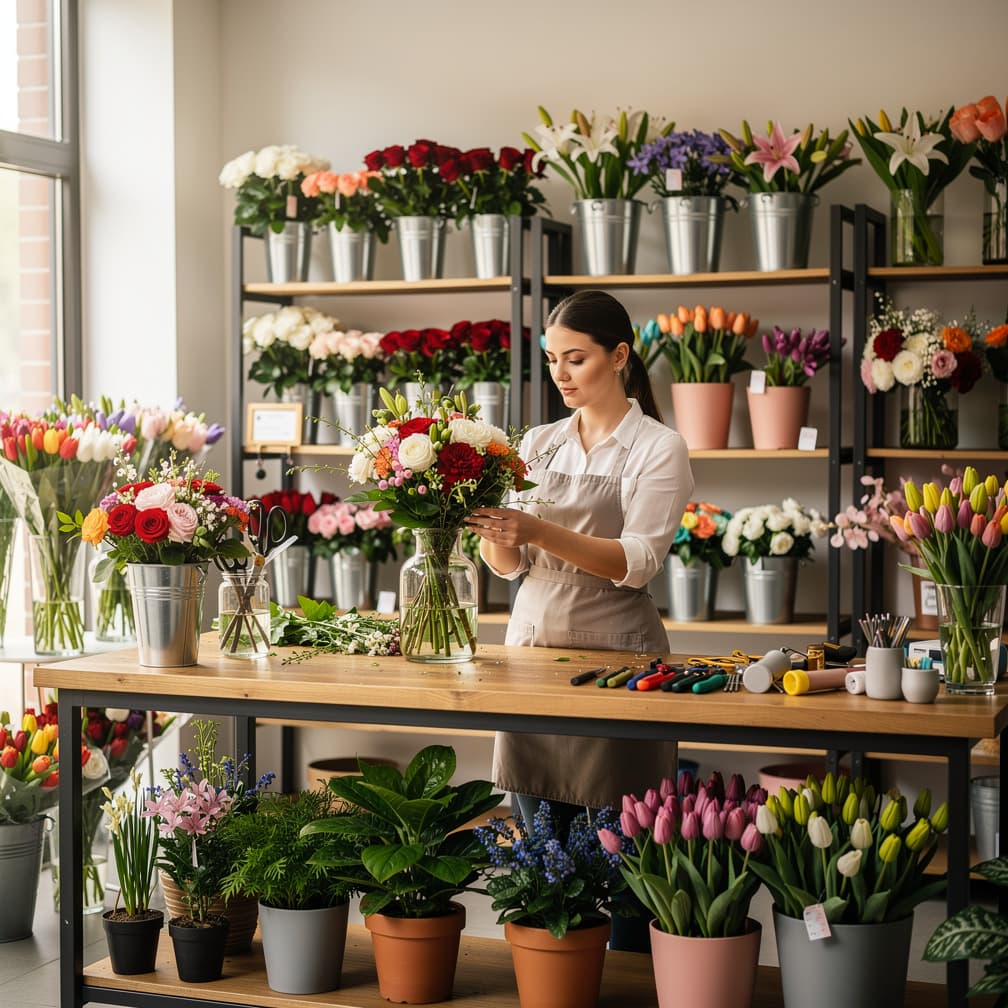

General Liability for florists typically starts around $35 a month, which is small next to one slip-and-fall claim at a busy counter. Florist insurance in Los Angeles gets priced off things you already know: your square footage, your sales, whether you deliver, and how much stock sits in the cooler the weekend before a holiday. A quote that ignores those details is a quote you cannot trust. Claims history moves the number more than any comparison page can promise. Deductibles move it too, and a low deductible on perishable stock can look clever until you read what the wording says about spoilage. Read the ranges below, then compare quotes from participating carriers using the real figures from your Los Angeles shop.
What Makes Los Angeles Different
A power outage in Los Angeles lasting a day is an ordinary event, and it empties a cooler just the same. Where crews cover a wide area, restoration can take longer than cut flowers can possibly wait. Generators, cooler alarms, and a plan to move stock are cheaper than the claim they prevent. Insurers notice those measures, and some of them reflect it in the price of a quote. Ask whether yours does before you spend, so the investment is a decision instead of a hope. If an outage in Los Angeles runs past the point where stock is salvageable, document the temperature log. That log separates a paid spoilage claim from an argument about how long the unit sat warm. Buy the thermometer that records; the one that only displays helps nobody at claim time.
Local Risk Factors in Los Angeles
Before fire season, decide where the stock goes if the block is evacuated and who holds the keys to move it. That plan beats an endorsement, because a policy answers for a loss and not for the decision nobody made at dawn. Coolers on generator power, a van kept fueled, and dated photographs of the shop are the practical half of this. The insurance half is narrower than owners expect: ask what your policy in Los Angeles says about smoke, about spoilage, and about the days the doors stay shut. Wildfire terms vary enough across California that the answer for one shop is not the answer for the next one.
What Coverage Does a Florist in Los Angeles Need?
General Liability
Landlords, venues, and corporate accounts ask for this line by name before they let you through the door. It typically responds to injury or property damage suffered by someone else: a customer who slips near a wet display, or a stand knocked into a client's television during a setup. Damage to your own stock and your own cooler sits elsewhere.
Example: A customer catches a heel on a dripping bucket by the pickup counter and breaks a wrist; general liability can help cover the medical claim and the defense costs that follow it.
Commercial Property
The cooler, the stock inside it, the display cases, the worktables, and the improvements you paid for belong to you rather than your landlord. This line is meant to answer for them after fire, storm damage, vandalism, or theft, up to the limit you set. Flood typically falls outside it, and mechanical breakdown often has to be added.
Example: Someone puts a rock through the storefront overnight and a night of open air finishes the arrangements behind it; commercial property may respond to the glass and the ruined inventory alike.
Commercial Auto
Personal auto policies commonly exclude driving done for a business, which leaves every wedding drop-off and event run exposed until this line exists. It generally covers your liability for a crash you cause, and comprehensive terms can reach hail, theft, or fire on the vehicle itself. What rides in the back is its own question worth asking.
Example: A driver backs into a parked car at a hotel loading zone with the ceremony order still in the van; commercial auto is usually the line that answers for the other vehicle.
Business Owners Policy
Built for small storefronts, this packages the liability and property sides into one policy and often prices below buying them apart. The convenience is real and so is the catch: limits inside a bundle come preset, and the stock number can sit under what your cooler in Los Angeles holds at peak. Vehicles are usually rated separately.
Example: Wind takes the sign and the window on the same night; a business owners policy might settle the repairs and the ruined stock behind them inside one claim rather than two.
How Much Does Florist Insurance Cost in Los Angeles?
Florist Insurance is a bundle of separate policies, priced separately. The ranges below are typical figures for Los Angeles for each line; a quote prices each one against your own operations.
| Coverage | Typical range | What moves your price |
|---|---|---|
| General Liability Insurance | $55 - $160 per month | Industry and risk classification, annual revenue, number of employees |
| Commercial Property Insurance | $120 - $380 per month | Building value and construction type, roof age and condition, fire protection class |
| Commercial Auto Insurance | $220 - $525 per month | Fleet size and vehicle types, driver records and experience, coverage limits and deductibles |
| Business Owners Policy Insurance | $110 - $290 per month | Annual revenue and industry class, building and contents values, square footage and building age |
Prices shown are general estimates, not guaranteed rates or quotes. Your actual premium will depend on the insurer, coverage selected, business details, location, claims history, and other underwriting factors. Learn about our pricing methodology.
What Are the Insurance Requirements for a Florist in Los Angeles?
Workers' comp is generally required once you have your first employee. California generally requires employers to carry workers' compensation at that point. Common exemptions include sole proprietors and some partners. Confirm current thresholds with your state's workers' compensation agency before you hire.
State auto liability minimums apply to business vehicles. California's minimum auto liability limits are $30,000/$60,000/$15,000 (bodily injury per person / per accident / property damage). Contracts and lenders often require more than the state floor.
Flood damage is typically excluded from standard policies. Standard commercial property and builders-risk-type policies typically exclude flood damage. Flood exposure varies address by address, so check your premises in FEMA's Flood Map Service Center before deciding; if you sit in a mapped flood zone, a separate policy through the National Flood Insurance Program is the usual starting point.
Where to verify licensing and coverage rules. The California Department of Insurance publishes consumer guidance and current insurance requirements for California businesses. When a contract or lease demands specific wording, the California Department of Insurance's guidance is the authoritative place to check.
Get Your Florist Quote in Los Angeles
Compare rates from multiple carriers. Free quotes, no obligation.
Operating in Los Angeles
- Buckets leak, misters drift, and the tile near a pickup counter is wet more hours than it is dry. A slip claim starts there more often than anywhere else in the shop.
- A venue in Los Angeles can refuse a load-in over a certificate that names the wrong entity, even when the coverage sitting behind it is perfectly good.
- Cash handling at close is a small exposure with a long tail: a theft claim is usually where an owner learns whether the policy schedules money separately or ignores it.
- Seasonal orders mean seasonal drivers, and a driver left off the policy becomes a question your carrier gets to ask after a crash in Los Angeles rather than before it.
How to Buy: Advice for Los Angeles Owners
Theft is the loss most flower shops treat as shrinkage until the year it is not. A storage room cleared out, a cash drawer taken at close, or an arrangement lifted from an unlocked van are three different claims. Ask specifically what happens to property away from the premises, because a van is not a building and the wording knows the difference. Commercial Property generally handles what sits inside your walls. Commercial Auto is a vehicle line, and what rides in the back is its own question with its own answer. Get that boundary in writing before you assume the contents come along. The California Department of Insurance publishes consumer guidance on reading a commercial property form. Line the answers up across quotes from participating carriers in Los Angeles County, then choose on wording rather than on the monthly figure.
FAQ
Florist Insurance in Los Angeles: FAQ
Start with what the contracts you sign in Los Angeles demand, because that number is a floor other people set. Then price your own worst plausible day: a customer injured at the counter, a claim that runs into defense costs, a second claim in the same year. Aggregate limits are yearly ceilings, so two bad claims can exhaust what looked like plenty. Ask what the next limit up costs before assuming it is out of reach.
Per-occurrence is the most a policy may pay for one claim; aggregate is the most it may pay across the policy year. A shop with steady foot traffic can see several small slip claims in one season, and each draws the aggregate down. Once the aggregate is gone, the per-occurrence number means nothing until renewal. Ask how defense costs are treated too, since defense paid inside the limit shrinks both figures.
Damage from wind, a vehicle, or vandalism is typically a property question, and glass is usually part of it. The bigger loss is often behind the glass: stock exposed to heat, rain, or an open building overnight. Commercial Property might respond to both, subject to your limit and your deductible. Board-up costs and the days you cannot open may be treated separately, so ask about those specifically.
Most venues want a certificate on file before a vendor reaches the loading dock, and some want to be named on the policy. The request tends to arrive with the booking, which is why a lapse gets expensive: reinstating coverage takes longer than issuing a certificate. Keep the policy live year-round, including the slow months, and keep the wording an account in Los Angeles can ask for somewhere you can find it.
Annual sales, stock values, square footage, building details, your vehicles, your drivers, and your loss runs. Photographs of the cooler and display cases help, and a dated equipment list helps more. Guessing at these numbers buys a quote that changes at underwriting. Carriers that see the same facts are quoting the same shop, which is the only way a comparison in Los Angeles means anything.
A Business Owners Policy packages the storefront lines together and often prices below buying them apart. The catch is the packaging: limits inside a bundle are preset, and the stock limit in particular can sit under what a florist holds at peak. Check each limit against your own numbers before the convenience decides for you. Separate policies take more work to assemble and can be shaped exactly to the shop.
Sources
- 1.California Department of Insurance(California Department of Insurance publishes consumer guidance for insurance buyers.)
- 2.FEMA / FloodSmart(Flood coverage is typically purchased separately; FEMA administers the National Flood Insurance Program.)


