







































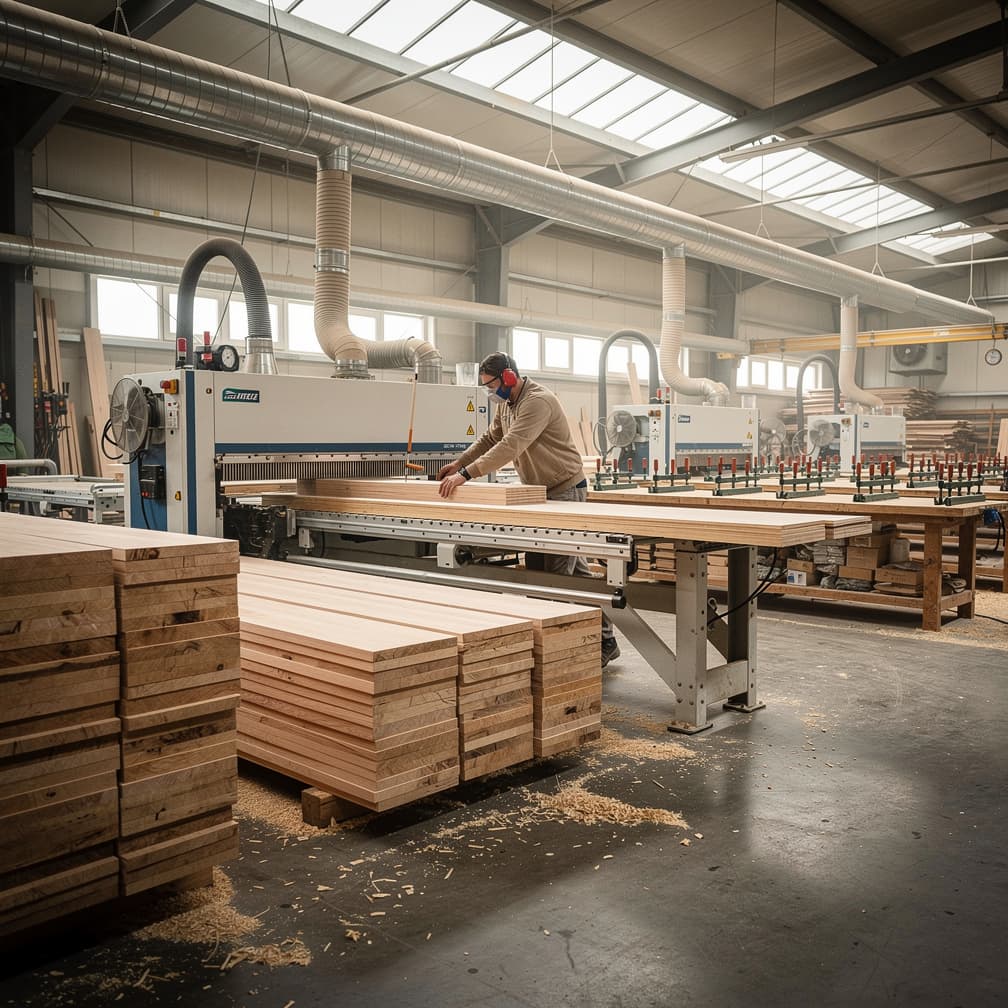

Tools coverage can start around $20 a month, and a low price is exactly why owners stop reading. Limits are where woodworking shop insurance in Los Angeles fails quietly, because the equipment schedule you set on day one is still the schedule after four new machines arrive. A claim settles against what is listed, not against what is bolted to your floor. Add the wide belt sander, the dust collector, and the router table the day they land, and value them at what replacement actually costs now. Participating carriers in California read that list closely, and an honest one gets you a defensible answer at claim time. The same discipline applies to client work parked in your shop between milling and install, which owners rarely think to value at all. Fix the schedule, then shop the price.
What Makes Los Angeles Different
A storm week does not have to touch your building to cost you the month. Power flickers, the dust collector trips, and a finish schedule that depended on stable humidity slides two days. Installs get pushed, deliveries stack up, and the client's cabinets occupy your floor instead of their kitchen. Ask what a policy says about income lost while the shop stands intact but idle, because that gap catches people. Ask, too, what happens to stock and work in progress if water reaches the building from any direction. Standard property forms answer some causes of loss and exclude flood outright, and that boundary deserves attention before the sky proves it. Weather exposure in California varies enough that participating carriers price the same shop differently across a short distance. Bring the question to a quote in Los Angeles instead of to a claim.
Local Risk Factors in Los Angeles
Long before smoke season, get your photographs, serial numbers, and equipment values into a file that lives somewhere other than the shop. Wildfire claims arrive in waves, adjusters in California are stretched thin, and a documented submission moves through a queue better than a described one. Ask what the policy says about smoke reaching material that looks fine and finishes badly, because that argument is worth having in advance. Ask what happens to a client's slab that was in your bay. A shop in Los Angeles with its list ready is not reconstructing its own history from memory during the worst month it has had.
What Coverage Does a Woodworking Shop in Los Angeles Need?
General Liability
Landlords, builders, and property managers ask for this one by name before you unload or sign anything. It typically responds when a visitor gets hurt on your shop floor or when your crew damages something inside a customer's finished home, and defense costs usually sit inside it. Damage to the piece you built is generally a separate question.
Example: A designer walking the shop catches a boot on an extension cord near the jointer and breaks a wrist. The medical bills and any suit that follows are what a liability claim is meant to address.
Commercial Property
Flood and ordinary wear sit outside this form, and knowing that first makes the rest of it clear. What remains is the shop: the building if you own it, machinery bolted to the floor, lumber and sheet goods on the racks, and client work awaiting delivery, which often carries a smaller sublimit of its own.
Example: A pile of finishing rags ignites overnight and the fire takes the booth, the sander, and a rack of walnut billed to next month's job. Rebuilding that equipment and stock is what this line is generally written to handle.
Workers Compensation
Blades, dust, and heavy panels put your people in the way of predictable injuries. Coverage for a work-related injury generally handles medical care and a share of lost wages, and it is rated per hundred dollars of payroll by classification. What applies to your shop depends on where you operate and who is on the payroll.
Example: A helper feeding stock into the shaper loses focus late in a long shift and takes stitches across two fingers. The clinic visit and the days he cannot work are what this line typically picks up.
Tools & Equipment (Inland Marine)
Property coverage tends to stop at the building line, and this one follows the tools that leave it. Track saws, routers, clamps, and the kit that rides out to an install can be scheduled here, along with gear stored in a locked trailer. Items you never listed are usually the ones nobody pays for.
Example: A shop bay gets popped over the weekend and the router kit, the track saw, and a case of blades are gone before you open up on a Los Angeles morning. A schedule with serial numbers is what a claim like that usually turns on.
How Much Does Woodworking Shop Insurance Cost in Los Angeles?
Woodworking Shop Insurance is a bundle of separate policies, priced separately. The ranges below are typical figures for Los Angeles for each line, except workers compensation, which is rated per $100 of payroll; a quote prices each one against your own operations.
| Coverage | Typical range | What moves your price |
|---|---|---|
| General Liability Insurance | $160 - $550 per month | Industry and risk classification, annual revenue, number of employees |
| Commercial Property Insurance | $400 - $1,450 per month | Building value and construction type, roof age and condition, fire protection class |
| Workers Compensation Insurance | $0.75 - $2.74 per $100 of payroll | Employee classification codes, total annual payroll, experience modification rate |
| Inland Marine Insurance | $45 - $190 per month | Total insured value of the scheduled property, type and age of the equipment, where it is stored and how far it travels |
Prices shown are general estimates, not guaranteed rates or quotes. Your actual premium will depend on the insurer, coverage selected, business details, location, claims history, and other underwriting factors. Learn about our pricing methodology.
What Are the Insurance Requirements for a Woodworking Shop in Los Angeles?
Workers' comp is generally required once you have your first employee. California generally requires employers to carry workers' compensation at that point. Common exemptions include sole proprietors and some partners. Confirm current thresholds with your state's workers' compensation agency before you hire.
Flood damage is typically excluded from standard policies. Standard commercial property and builders-risk-type policies typically exclude flood damage. Flood exposure varies address by address, so check your premises in FEMA's Flood Map Service Center before deciding; if you sit in a mapped flood zone, a separate policy through the National Flood Insurance Program is the usual starting point.
Where to verify licensing and coverage rules. The California Department of Insurance publishes consumer guidance and current insurance requirements for California businesses. When a contract or lease demands specific wording, the California Department of Insurance's guidance is the authoritative place to check.
Get Your Woodworking Shop Quote in Los Angeles
Compare rates from multiple carriers. Free quotes, no obligation.
Operating in Los Angeles
- Lumber that got wet is scrap with a delivery date attached, and a client in Los Angeles counts the delay rather than the cause.
- A shop in Los Angeles County that finishes with spray answers different underwriting questions than one that wipes on oil, and the quote reflects the difference.
- Year-end payroll audits reprice what you already spent, so a helper you booked as office staff turns into an expensive correction on a California worksheet.
- Machines fail on the job that matters most. A downed wide belt sander becomes a work order behind other work orders, and that queue is the loss nobody quoted.
How to Buy: Advice for Los Angeles Owners
Photograph the tools, write down the serial numbers, then price the list at what replacement costs today. That takes an afternoon and it separates a theft claim you can prove from an argument you lose. Inland Marine is built around portable property, and it usually asks where an item sleeps: the shop, a jobsite, or a locked trailer. Answer honestly, because a claim tests the answer you gave on the application. General Liability does nothing for stolen tools, which catches somebody out every year. Documentation expectations vary, so check the California Department of Insurance's guidance before deciding what proof you need to keep. With the list ready, compare participating carriers in California through CPK on the schedule itself, since two shops with identical tools get quoted very differently.
FAQ
Woodworking Shop Insurance in Los Angeles: FAQ
It is the part of a loss that stays on your side before anything responds. Raising it lowers the premium and converts a monthly certainty into a one-time shock, which lands during the week your revenue stops. Different lines often carry different deductibles, so read them separately rather than as one number. Pick what you could fund during a bad month, not what looks tidy on a spreadsheet.
Each carrier reads a finishing operation its own way, and appetite is a real thing rather than a marketing word. One weighs sprinklers heavily, another weighs claims history, another does not want spray on the books at all. The terms differ too: limits, deductibles, the sublimit for property of others, and what the equipment schedule includes. Line the terms up first and the price difference finally means something.
A landlord can require proof before handing over keys, and commercial leases usually spell out limits and endorsements in an exhibit. That is a contract term rather than a rule, so it varies building to building. A woodworking tenant tends to draw extra questions about the finishing area, dust collection, and how solvent rags get stored. Read the exhibit before signing, since the policy you buy has to match what you already promised a landlord in Los Angeles.
Payroll, the replacement value of your machinery, your finishing setup, and your claims history do most of the work. A shop that sprays lacquer prices differently than one that finishes by hand, even at identical square footage. Limits and deductibles then push the number in either direction. Two quotes that look far apart usually differ on terms rather than on generosity, so line up the deductible and the limit before you compare the price.
General Liability is the line that typically responds when a visitor gets hurt on your floor, subject to the form and its limits. Pickup day and walkthroughs put people beside running machines and offcuts, and reasonable care is owed the moment they clear the door. Defense costs generally start when the demand letter arrives, long before fault gets settled. Whether a particular claim is paid depends on the facts and on your wording.
Inland Marine is built around portable property and commonly reaches tools away from the shop, though the schedule and the location wording decide the answer. Some policies limit items left in a trailer overnight or ask for signs of forced entry. A building-based form may stop at the wall. Keep serial numbers and photographs on file, because a theft claim tends to settle on the evidence you already had.
Sources
- 1.California Department of Insurance(California Department of Insurance publishes consumer guidance for insurance buyers.)
- 2.FEMA / FloodSmart(Flood coverage is typically purchased separately; FEMA administers the National Flood Insurance Program.)


