







































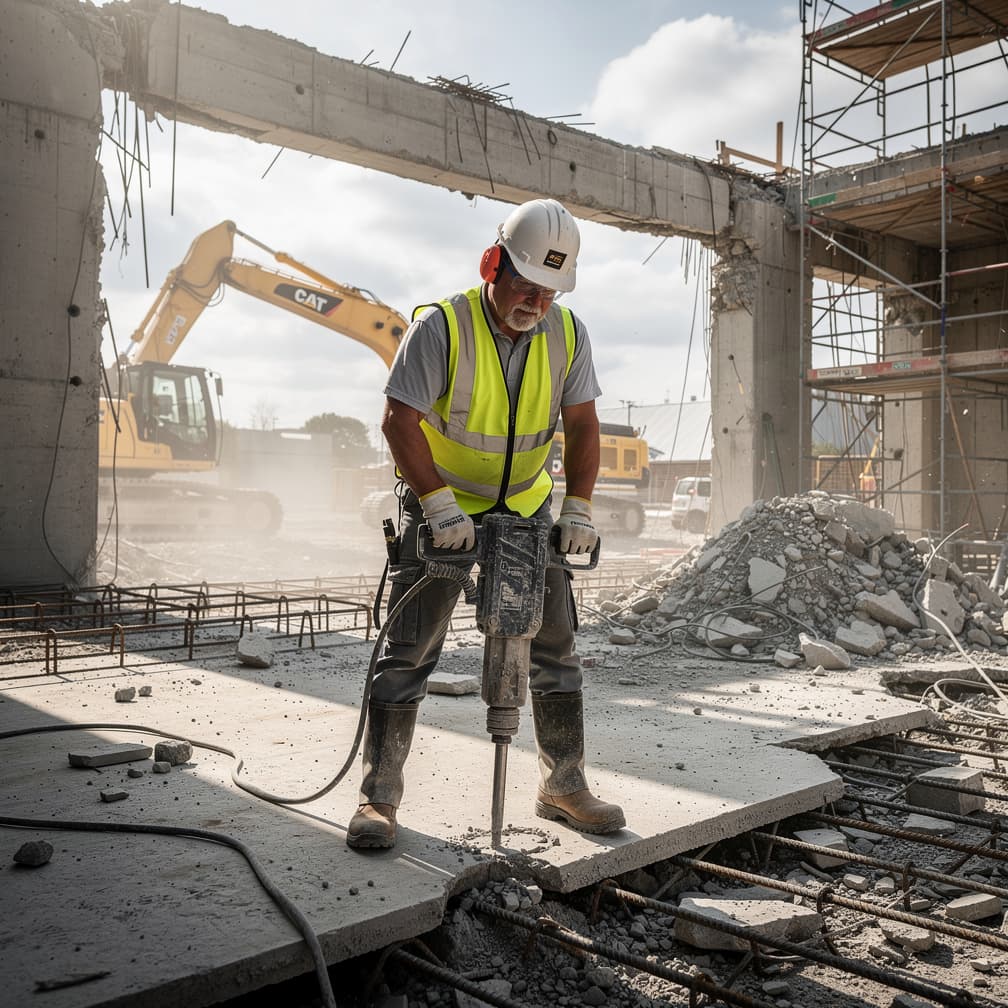

Wages drive the first number on a demolition quote. Workers Compensation on a teardown crew is rated per $100 of payroll, and the rate sits well above what an office trade pays, because your people work under unstable material with heavy debris underfoot. That single input usually outweighs everything else on a quote for demolition contractor insurance in Oceanside. Experience modification follows you: two lost-time injuries in three years can reset your rate long after both people are back at work. A crowded bidding pool adds pressure of its own, since owners there ask for higher limits before they ask for a price. Cutting payroll is not the lever. Documenting light-duty return to work and clean site controls is, and participating carriers in California weigh that record differently from each other. Start with the numbers a quote actually needs.
What Makes Oceanside Different
Adjacency prices this trade. Two teardowns with identical square footage and identical crews can price a long way apart if one sits on an open lot and the other shares a wall with an occupied building. Underwriters ask about setbacks, adjacent occupancy, and what is overhead, because that is where the severe losses live. Tight parcels also mean street closures, pedestrian routing, and traffic near your gate, which is more third-party exposure per day of work. A busy schedule in Oceanside makes it constant rather than occasional. Higher limits usually follow, and higher limits cost money that has to be in the bid. Participating carriers in California that write this class ask the same questions in a different order, so one job can come back at two prices. Contractors who quote the same number regardless of the parcel are subsidizing their hardest jobs with their easiest ones.
Local Risk Factors in Oceanside
Wildfire changes a demolition contractor's calendar in two directions at once. Smoke and evacuation zones close active sites, and the work that follows a fire is often demolition of what is left, which puts your crews inside burned structures that lost their integrity before you arrived. Those buildings behave nothing like a planned teardown: floors have been carrying heat, connections are compromised, and what looks solid gives without warning. Injury exposure rises, and Workers Compensation is the line that carries it. Your own equipment parked near an active fire in San Diego County is a scheduled-property question, and where the machine was matters more than what happened to it. Ask a participating carrier in California how it treats gear moved out of an evacuation zone and gear that could not be moved at all.
What Coverage Does a Demolition Contractor in Oceanside Need?
General Liability
Owners, general contractors, and permit offices ask for this one by name before a crew comes through the gate. It is the line that typically answers when your teardown injures somebody who does not work for you, or damages property you were not hired to remove. Damage to the structure in your care, contamination, and earth movement often sit outside it, so read those exclusions before you lean on it.
Example: A brick parapet drops outside the fence line and cracks the windshield and hood of a car parked at the curb. The owner's repair bill and the claim behind it are the kind of third-party damage this line is meant to answer.
Workers Compensation
Crews work under unstable structures with heavy debris underfoot, which is why this is the line a general contractor checks first on your certificate. Medical costs and lost wages from an on-the-job injury are typically what it addresses, rated per $100 of payroll. Rules on who must carry it differ by state, and it does nothing for injuries to people who do not work for you.
Example: A laborer clearing rubble takes a chunk of masonry to the ankle and misses six weeks. Treatment and a share of the missed wages typically fall inside this line, and the claim follows your experience modification into next year's price.
Commercial Auto
Trucks, trailers, and the loads on them put your business on public roads, and that exposure never touches a general liability form. Damage you cause with a company vehicle, and damage to the vehicle itself, are what this line is usually written for. Personal auto policies commonly exclude business use, which is the gap contractors find after a crash rather than before one.
Example: A loaded trailer clips a utility pole on the way to the transfer station and spills concrete across a lane. The pole owner, the cleanup, and the damage to your truck could all run through this coverage.
Tools & Equipment (Inland Marine)
Everything that earns you money moves: breakers, saws, torches, hand tools, and the attachments that live on the trailer between sites. Scheduled equipment coverage is built around a list, and what is on the list is what gets settled. Wear and tear, mechanical breakdown, and gear you never added after buying it typically sit outside it, so the schedule is the whole game.
Example: A trailer is emptied overnight behind temporary fencing and the hydraulic breaker is gone by the first shift. If the breaker was on your schedule, replacement might be handled here; if it was not, it is your loss.
Commercial Umbrella
Contracts sometimes demand a limit that runs past what a primary policy carries, and buying that limit twice is expensive. An umbrella sits above your liability and auto lines and can extend the ceiling once the underlying limit is exhausted. It follows the underlying form, so an exclusion below is generally an exclusion above, and it does nothing to widen what is covered.
Example: A wall collapse injures two people and damages the storefront next door, and the primary limit is spent on the injuries alone. The remainder of the property claim could reach the umbrella sitting above it.
How Much Does Demolition Contractor Insurance Cost in Oceanside?
Demolition Contractor Insurance is a bundle of separate policies, priced separately. The ranges below are typical figures for Oceanside for each line, except workers compensation, which is rated per $100 of payroll; a quote prices each one against your own operations.
| Coverage | Typical range | What moves your price |
|---|---|---|
| General Liability Insurance | $675 - $2,600 per month | Industry and risk classification, annual revenue, number of employees |
| Workers Compensation Insurance | $0.75 - $2.74 per $100 of payroll | Employee classification codes, total annual payroll, experience modification rate |
| Commercial Auto Insurance | $575 - $1,975 per month | Fleet size and vehicle types, driver records and experience, coverage limits and deductibles |
| Inland Marine Insurance | $130 - $650 per month | Total insured value of the scheduled property, type and age of the equipment, where it is stored and how far it travels |
| Commercial Umbrella Insurance | $250 - $1,050 per month | Umbrella limit requested, limits carried on the underlying policies, loss history on those underlying policies |
Prices shown are general estimates, not guaranteed rates or quotes. Your actual premium will depend on the insurer, coverage selected, business details, location, claims history, and other underwriting factors. Learn about our pricing methodology.
What Are the Insurance Requirements for a Demolition Contractor in Oceanside?
Workers' comp is generally required once you have your first employee. California generally requires employers to carry workers' compensation at that point. Common exemptions include sole proprietors and some partners. Confirm current thresholds with your state's workers' compensation agency before you hire.
State auto liability minimums apply to business vehicles. California's minimum auto liability limits are $30,000/$60,000/$15,000 (bodily injury per person / per accident / property damage). Contracts and lenders often require more than the state floor.
Where to verify licensing and coverage rules. The California Department of Insurance publishes consumer guidance and current insurance requirements for California businesses. When a contract or lease demands specific wording, the California Department of Insurance's guidance is the authoritative place to check.
Get Your Demolition Contractor Quote in Oceanside
Compare rates from multiple carriers. Free quotes, no obligation.
Operating in Oceanside
- Disposal sites and scale houses can refuse a load from a hauler whose insurance is not on file, and a truck turned away with a full bed costs you the afternoon, the tipping fee, and the drive back to an Oceanside job with the load still on.
- Attachments walk overnight far more often than machines do, since a hydraulic breaker fits in the bed of a pickup and an excavator does not. Anything missing from your equipment schedule is missing from the settlement.
- An owner in Oceanside can withhold final payment over a damaged fence you never thought was yours, and small property disputes like that get settled out of your pocket long before a policy limit is relevant.
- Temporary fencing is a safety measure and an underwriting answer at the same time. Underwriters ask whether the site is secured, and that answer is easier to give at renewal when you already do it.
How to Buy: Advice for Oceanside Owners
Cheap quotes are usually narrow quotes, and demolition is the trade where that shows. Coverage for small contractors can start from $25 a month at the general small-business anchor, but a teardown crew working next to occupied buildings is not that risk and should not expect that price. What moves your number is payroll, structure class, adjacency, and claims. Ask each participating carrier to show you the exclusions that make its price lower, and ask what a buy-back costs. Inland Marine is the easy add that contractors skip and regret after a trailer gets emptied overnight, and General Liability is where the exclusions hide. The California Department of Insurance publishes consumer guidance on comparing policies with different terms. Compare quotes from participating carriers in California on what each form does, then let price settle it.
FAQ
Demolition Contractor Insurance in Oceanside: FAQ
Price is built from your payroll, the structures you take down, how close they sit to occupied buildings, your equipment values, and your claim history. Two crews with the same revenue can land far apart on the same submission. Published ranges describe a market rather than your business. The fastest way to a real number is a clean file: payroll by class, a vehicle list, an equipment schedule, and three years of loss runs.
General Liability is the line that usually responds to third-party property damage caused by your work, subject to the form's exclusions. Damage from earth movement or vibration during a teardown can be treated differently, and property in your care and control often sits outside the form entirely. Ask a participating carrier to walk through those three situations with a real adjacent structure in mind before you assume the answer.
A trespasser is still a claimant, and injury claims from people who should not have been inside the fence are common in this trade. General Liability can respond to third-party bodily injury, but your site controls decide how the claim goes: locked gates, signage, and a record of who was authorized. Without those, a defense gets expensive even when you did nothing wrong.
Adding an owner or general contractor as an additional insured extends your liability policy's defense and indemnity to them for claims arising out of your work. They ask because a lawsuit over your teardown will name them too. The endorsement form matters: some versions stop when you leave the site, which is a problem when a demolition claim surfaces months later. Match the form to the wording your contract names.
A personal auto policy typically excludes business use, and hauling debris or towing a trailer is business use. That gap shows up after a crash, when the personal insurer denies and the loss lands on you. Commercial Auto is written for the vehicles and trailers you actually run, and it may extend to hired and non-owned use when a foreman drives a rental. Ask specifically about trailers, since some forms treat them separately.
Any owner, general contractor, lender, or disposal site can ask for one, and each may want to be listed as the holder. A certificate is a summary of coverage rather than the coverage itself, and it proves nothing about endorsements unless those are attached. Keep a per-job list of who needs what and check the expiration dates, because a lapsed certificate stops work faster than a lapsed policy does.
Sources
- 1.California Department of Insurance(California Department of Insurance publishes consumer guidance for insurance buyers.)


